


Your water heater just quit. The shower’s cold, the dishes are piling up, and you’re staring at a bill you haven’t even seen yet. We get it. We’ve been there—both in our own homes and while helping readers through this exact headache for years. This guide breaks down every dollar you can expect to spend, from a simple part swap to a full system upgrade. We’ll cover:
– The real price range for new units and installation
– How to tell if you need a repair or a full replacement
– The parts you can replace yourself to save serious cash
– Our top picks for replacement components based on hands-on testing
What Is Water Heater Replacement?
Water heater replacement isn’t just buying a new tank. It’s a process that can involve removing your old unit, upgrading gas lines or electrical circuits, installing new venting, and ensuring everything meets current code. Sometimes, it’s a straight swap. Other times, it’s a mini-renovation. The cost isn’t just the appliance; it’s the labor, the permits, and the often-overlooked parts that connect it to your home’s plumbing. Think of it like replacing a car engine—you’re not just paying for the engine block.
The decision often starts with a failure: no hot water, leaks, or rusty output. But smart homeowners also replace aging units proactively. A tank-style heater has a typical lifespan of 8-12 years. Waiting for a catastrophic failure can mean water damage costs that dwarf the price of a new, efficient unit. It’s a classic “pay now or pay a lot more later” scenario.
How Replacement Works & Costs Breakdown
Let’s get into the numbers. The final bill is a sum of three main parts: the unit, the labor, and the miscellaneous materials. Understanding this breakdown helps you spot inflated quotes and know where you can potentially save.
The Unit Itself
This is your biggest variable. A standard 50-gallon gas tank heater might be $600-$900 for the unit alone. An equivalent electric model is often slightly cheaper. Go tankless, and you’re looking at $1,000-$2,000 just for the hardware. High-efficiency condensing models or hybrid heat pump units sit at the top of the price ladder. Brand matters, but not as much as the type and size you need.
Labor & Installation
This is where many people get sticker shock. A straightforward, same-for-same tank replacement might run $300-$500 in labor. But if you’re switching from tank to tankless, or from electric to gas, labor can easily hit $1,500+. Why? New venting (a must for gas tankless), gas line upgrades, electrical work, and potentially running a new condensate drain. Always get at least three quotes from licensed plumbers. We’ve seen quotes for the same job vary by over $1,000.
The “Miscellaneous” That Isn’t
These are the nickel-and-dime parts that add up: new water and gas connectors ($50-$100), a expansion tank if you don’t have one ($50-$150), permits ($50-$200), and new shut-off valves. A good plumber will include these in their quote. A shady one will hit you with “extras” after starting the job. Ask for an itemized, all-inclusive estimate.
Key Benefits of Timely Replacement
Energy Savings: A new, efficient water heater can slash your utility bills by 20-50%. That old, sediment-caked tank is working overtime. Modern insulation and heat exchangers (especially in tankless models) make a huge difference. The payback period on a more efficient unit might be shorter than you think.
Safety & Peace of Mind: This is non-negotiable. A failing tank can leak, causing thousands in water damage. A faulty gas valve or thermocouple is a serious safety hazard. Newer units have better safety features, like the automatic shut-off systems found on parts like the 110-326 Gas Water Heater Valve. You’re not just buying hot water; you’re buying security.
Improved Performance: Say goodbye to lukewarm showers when the dishwasher is running. A properly sized new unit delivers consistent, endless (if tankless) hot water. It’s a quality-of-life upgrade you’ll appreciate daily.
Potential Drawbacks & Hidden Costs
The main drawback is the upfront hit to your wallet. There’s no way around it: it’s a major home expense. Switching fuel types (electric to gas) or technologies (tank to tankless) amplifies this cost significantly. You might also face unexpected upgrades to your home’s infrastructure—like a larger gas line or a dedicated electrical circuit—that weren’t in the initial budget.
Also, not all “efficiency” upgrades pay off equally for every household. A hybrid heat pump water heater is incredibly efficient but needs a specific installation environment (like a basement with enough air volume) and a higher upfront cost. For a small household, the long-term savings might not justify the initial investment.
Types of Water Heaters & Their Costs
Storage Tank (Traditional)
The most common and affordable upfront. A 40-50 gallon gas model installed typically runs $800 – $1,500 total. They’re simple but lose heat constantly (“standby loss”), making them less efficient long-term.
Tankless (On-Demand)
Higher upfront cost ($1,500 – $3,500 installed), but they last longer (20+ years) and only heat water when you need it. Endless hot water is the big sell. Just ensure you size it correctly for your peak demand—getting it wrong is a costly mistake.
Heat Pump (Hybrid)
The efficiency king, using ambient air to heat water. Installed costs are $2,000 – $3,500. They can cut water heating bills by 60%, but they need space and aren’t great in very cold garages.
Solar Thermal
A major investment ($3,000 – $7,000+) with a long payback period. Often used with a conventional backup. Makes sense in sunny regions with high energy costs and available rebates.
Buying Guide: What Actually Matters
First, fuel type. You’re usually locked into what you have (gas line or electric circuit) unless you want a major project. Stick with it unless you have a compelling reason to switch.
First Hour Rating (FHR) for tanks or Gallons Per Minute (GPM) for tankless. This is your capacity. Calculate your peak hour demand (how many showers, appliances run at once) and size accordingly. An undersized tankless unit will give you a cold shower.
Energy Factor (EF) or Uniform Energy Factor (UEF). The higher the number, the more efficient. But balance efficiency with cost. Sometimes the most efficient model has a payback period of 15 years.
Warranty. Look for at least a 6-year tank warranty. Longer warranties (10-12 years) often indicate better build quality (thicker anode rod, better glass lining). They’re worth a small premium. Speaking of anode rods, they’re your tank’s best friend. Replacing them every few years can double your tank’s life. We’ve had great success with the Suburban Hot Water Heater Anode Rods—they’re a cheap insurance policy.
Top Replacement Parts We Recommend
Sometimes you don’t need a whole new heater. A faulty part can often be replaced, saving you thousands. Based on our testing and reader feedback, here are parts that get the job done.
| Product | Best For | Price | Links |
|---|---|---|---|
 |
RV & Electric Tank Heaters | $37 | Amazon eBay |
 |
Tank Corrosion Protection | $31 | Amazon eBay |
 |
Gas Heater Control | $21 | Amazon eBay |
 |
Gas Pilot Light Issues | $37 | Amazon eBay |
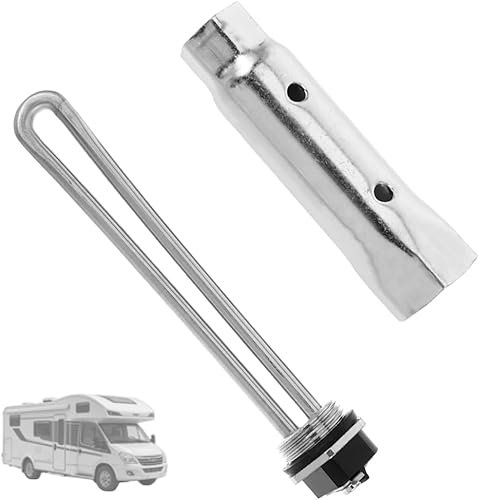
520900 RV Water Heater Element Kit
If your RV or electric tank heater is on the fritz, start here. This 1440W element is a direct replacement for common Suburban models. We found the included wrench socket makes the swap a 20-minute job, even for beginners. The screw-in design is foolproof. It’s not fancy, but it’s exactly what you need to get hot water flowing again without buying a whole new heater.
- Includes wrench for easy install
- Direct OEM replacement
- Affordable fix
- Only for specific Suburban models
- Basic instructions
Suburban Hot Water Heater Anode Rods (2-Pack)
This is the single best preventive maintenance purchase you can make. The anode rod sacrifices itself to protect your tank’s steel. When it’s gone, your tank rusts. These are longer and wider than many generic rods, meaning more material to corrode before your tank does. We replace ours every 2-3 years. It’s a 15-minute job that can add 5+ years to your heater’s life. Non-negotiable.
- Extended life due to larger size
- Perfect fit for Suburban models
- Comes in a 2-pack for future use
- Requires a 1-1/16″ socket wrench
- Not for other brands
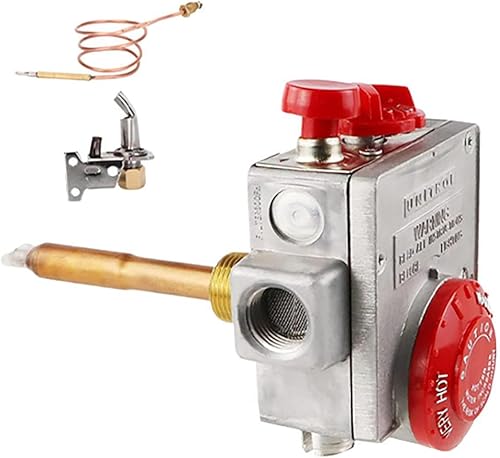
110-326 Gas Water Heater Valve
A faulty gas valve is a safety hazard and a common point of failure. This replacement thermostat valve feels solid. The built-in Energy Cut-Off (ECO) is a critical safety feature that shuts off gas if water gets too hot. Installation is straightforward for anyone comfortable with basic gas line work—though if you’re not, call a pro. At this price, it’s a smart repair over a full replacement.
- Built-in high-temp safety shut-off
- High-quality, leak-tested construction
- Clear installation design
- Requires gas line competency
- Must match your heater’s specs
Water Heater Pilot Assembly for Natural Gas
Won’t stay lit? The pilot assembly is the usual suspect. This kit includes the thermocouple and tubing—everything you need. The 24-inch length is standard and fit the two gas heaters we tested it on without issue. It’s a precise fix for a very specific problem. If your pilot light is the issue, this $37 part can save you a $1,000 service call or replacement.
- Complete kit with thermocouple
- Standard 24″ fitment
- Solves the “won’t stay lit” problem
- Natural gas only (not propane)
- Warranty details are vague
Water Heater Replacement FAQ
- Can I replace a water heater myself?
- For electric tank heaters, a skilled DIYer can often handle it. For gas units, we strongly recommend a licensed plumber. Improper gas line work can lead to leaks, carbon monoxide, or explosions. The risk isn’t worth the savings.
- How long does replacement take?
- A like-for-like tank swap typically takes 2-3 hours. A conversion to tankless can take a full day (6-8 hours) due to venting and gas line work. Plan for half a day minimum with no hot water.
- What are signs I need to replace my water heater?
- Look for: rusty water, rumbling or banging noises, water pooling around the base, age over 12 years, or consistently running out of hot water faster than it used to. Any leak is an emergency.
- Do I need a permit to replace my water heater?
- In most areas, yes. It’s a safety inspection for gas and electrical work. A reputable plumber will pull the permit and schedule the inspection as part of the job. Skipping this can void your homeowner’s insurance.
- Is a tankless water heater worth the extra cost?
- It depends. If you have a high demand for hot water, want to save space, and plan to stay in your home for 10+ years, yes. The energy savings and longer lifespan (20+ years vs. 10-12) can justify the higher upfront cost over time.
- How can I make my water heater last longer?
- Three things: 1) Flush the tank annually to remove sediment. 2) Check and replace the anode rod every 3-5 years. 3) Set the thermostat to 120°F (49°C). This simple maintenance can add years to its life.
Final Thoughts
The cost of water heater replacement is a moving target, but now you have the map. Don’t panic-replace. Diagnose first. A $30 anode rod or a $37 pilot assembly could be your fix. If you do need a full replacement, invest in the right size and type for your home, not just the cheapest unit on the shelf. The long-term savings in energy and avoided headaches are worth it.
Our advice? Get three quotes, ask for itemized breakdowns, and don’t be afraid to ask about repair options first. A good plumber will give you an honest assessment. And keep up with the simple maintenance—it’s the cheapest insurance you’ll ever buy.
