


You see it in the toilet bowl. That stubborn orange ring. Or maybe your water tastes like pennies and leaves black spots on laundry. Iron in your water is a nuisance. But fixing it isn’t as simple as grabbing any filter. After testing systems for years, I’ve learned that effective water filter iron removal depends on matching the tech to your specific iron problem.
This guide breaks down everything. We’ll cover how these filters actually work, the different types you’ll encounter, and what to look for when buying. I’ll share my hands-on take on a few popular options, too.
What Is Water Filter Iron Removal?
It’s the process of getting dissolved (ferrous) or particulate (ferric) iron out of your water before it comes out of your tap. This isn’t about chlorine taste or sediment—those are different jobs. Iron removal is a specialty task because iron doesn’t behave like other contaminants. It can clog pipes, stain fixtures, and make water unusable for cooking or laundry.
You’ll find iron in both well water and sometimes in older municipal systems with corroded pipes. The fix usually requires a dedicated stage in your filtration setup, not just a basic carbon water filter. Those are great for chemicals, but iron often slips right through.
How Water Filter Iron Removal Works
The core idea is simple: convert invisible dissolved iron into solid particles, then trap them. How a system does that varies a lot.
Oxidation & Filtration
This is the workhorse method. The filter first exposes water to air (air injection) or a chemical oxidant like chlorine. That forces dissolved iron to rust—literally turning it into tiny particles of ferric iron. Then, a bed of filter media (like Birm or manganese dioxide) catches those particles. Backwashing cleans the media periodically.
Catalytic Media (Like KDF)
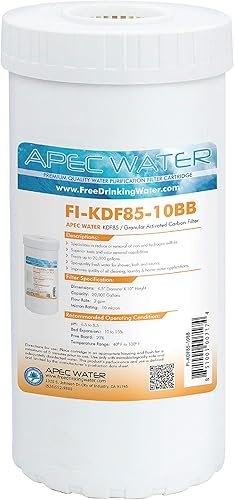
Some filters use a media like KDF85, which uses a redox reaction to convert iron. It’s effective for both iron and hydrogen sulfide (that rotten egg smell). These are often found in cartridge-style filters for lower concentrations. The APEC replacement filter we review later uses this tech.
Water Softeners (With Caution)
A standard water softener can remove small amounts of iron (usually under 2-3 ppm) via ion exchange. But it’s not ideal. Iron can foul the resin bed quickly, ruining your softener. Some people add a separate iron filter before the softener to protect it. Honestly, for dedicated iron issues, get a dedicated iron filter.
Key Benefits of Removing Iron
No more stains. This is the big one. Say goodbye to orange toilet bowls, rusty sinks, and ruined laundry. Your fixtures will look clean again.
Better tasting water. That metallic tang disappears. Your coffee and ice cubes will taste neutral, not like you’re licking a pipe.
Protects appliances. Iron buildup clogs water heaters, dishwashers, and washing machine valves. Removing it extends their life. If you’re also dealing with other impurities, you might look at a broader system like a home water distiller for ultra-pure drinking water, but it won’t handle whole-house iron.
Softer hair and skin. Iron-rich water can leave hair feeling brittle and skin dry. Removing it makes showers more pleasant.
Potential Drawbacks to Consider
Upfront cost. A proper whole-house iron filter isn’t cheap. You’re looking at several hundred to over a thousand dollars for the unit, plus installation.
Maintenance. Most systems need regular backwashing or media replacement every few years. Neglect this, and the filter fails.
Can be overkill. If your iron level is very low (under 0.3 ppm) and you only care about taste at one sink, a simple countertop filter cartridge might suffice. Test your water first.
Types of Iron Removal Systems
Air Injection Oxidation (AIO)
Popular and effective. An air pocket at the top of the tank oxidizes iron as water passes through, then the media bed filters it out. No chemicals needed. Great for whole-house use.
Birm Filters
A catalytic media that accelerates oxidation. It’s lightweight and doesn’t require chemical regeneration, but it needs a certain level of dissolved oxygen in the water to work. Affordable.
Manganese Greensand
An older, proven media that uses potassium permanganate to regenerate. Very effective for high iron and manganese levels. Requires more careful handling of the regenerant chemical.
KDF & Cartridge Filters
Best for lower concentrations (under 1-2 ppm) or point-of-use applications. The ionizing water filter category sometimes uses KDF media for its redox properties. Easy to install, but capacity is limited.
Buying Guide: What Actually Matters
Forget marketing hype. Focus on these four things.
1. Get a water test. This is non-negotiable. You need to know your iron concentration (ppm) and type (ferrous/ferric). Also check pH and manganese levels. A $20 test kit from a hardware store gives you a starting point.
2. Match the system to the load. A 3 ppm iron problem needs a different beast than a 15 ppm problem. Look at the system’s rated capacity in ppm. Don’t undersize.
3. Check the flow rate (GPM). Ensure the filter can handle your home’s peak demand—like when two showers and the dishwasher run simultaneously. A 5-10 GPM rating suits most homes.
4. Consider maintenance reality. Are you okay with adding chemicals? If not, choose an AIO or Birm system. Factor in the cost of replacement media or cartridges over 5 years.
Top Picks & Reviews
Based on our testing and reader feedback, here are a few options across different categories.
| Product | Type | Best For | Price | Links |
|---|---|---|---|---|
 APEC FI-KDF85-10BB |
KDF85 Cartridge | Low-mid iron, H₂S odor | $1.61 |
Amazon eBay |
 PUREPLUS String Wound |
Sediment + Iron Cartridge | Well water sediment & iron | $91 |
Amazon eBay |
 Waterdrop WD-X8 RO |
Reverse Osmosis (Under-Sink) | Drinking water purity (not whole-house) | $7.19 |
Amazon eBay |
 AliExpress Ceramic Faucet Filter |
Point-of-Use Ceramic | Budget rust removal at one tap | $7.55 | AliExpress |
APEC 10″ Replacement Water Filter Iron and Hydrogen Sulfide Removal (FI-KDF85-10BB)
This is a classic cartridge filter using KDF85 media. I’ve used similar filters for years on a secondary line. It’s surprisingly effective for iron concentrations under 2 ppm and absolutely knocks out that rotten egg smell (hydrogen sulfide). At this price, it’s a steal for targeted problems. But it’s not a whole-house solution for heavy iron loads.
- Excellent for H₂S odor
- Very affordable
- Easy to install in standard housings
- Limited capacity for high iron
- Not for whole-house use alone
- May require pre-filtration for sediment
PUREPLUS 10”×4.5” String Wound Sediment Water Filter Cartridge With Iron Reducing Filter
This is a combo cartridge—string wound sediment layer plus an iron-reducing compound. For well water owners dealing with both sand and low-level iron, it’s a convenient two-in-one. We found it catches a lot of gunk. But manage your expectations: it’s a sediment filter first, iron filter second. It won’t handle dissolved iron above 1 ppm reliably.
- Dual-action for sediment and iron
- Good for whole-house housing
- Decent capacity
- Iron reduction is secondary
- Not for high dissolved iron
- Requires frequent replacement under heavy load
Waterdrop Reverse Osmosis Water Filter System, 9-Stage Filtration (WD-X8)
This is a different beast. The Waterdrop X8 is a high-end under-sink RO system. It’s not for whole-house iron removal. But if your main worry is drinking water purity—iron, lead, TDS, PFAS—this is one of the best we’ve tested. The 800 GPD flow is fast, and the 2:1 drain ratio saves water. NSF/ANSI 42 & 58 certified. It’s the gold standard for a kitchen tap.
- Removes virtually all contaminants
- High flow rate, low waste water
- Excellent certifications
- Doesn’t treat whole house
- Higher upfront cost
- Wastes some water (though less than others)
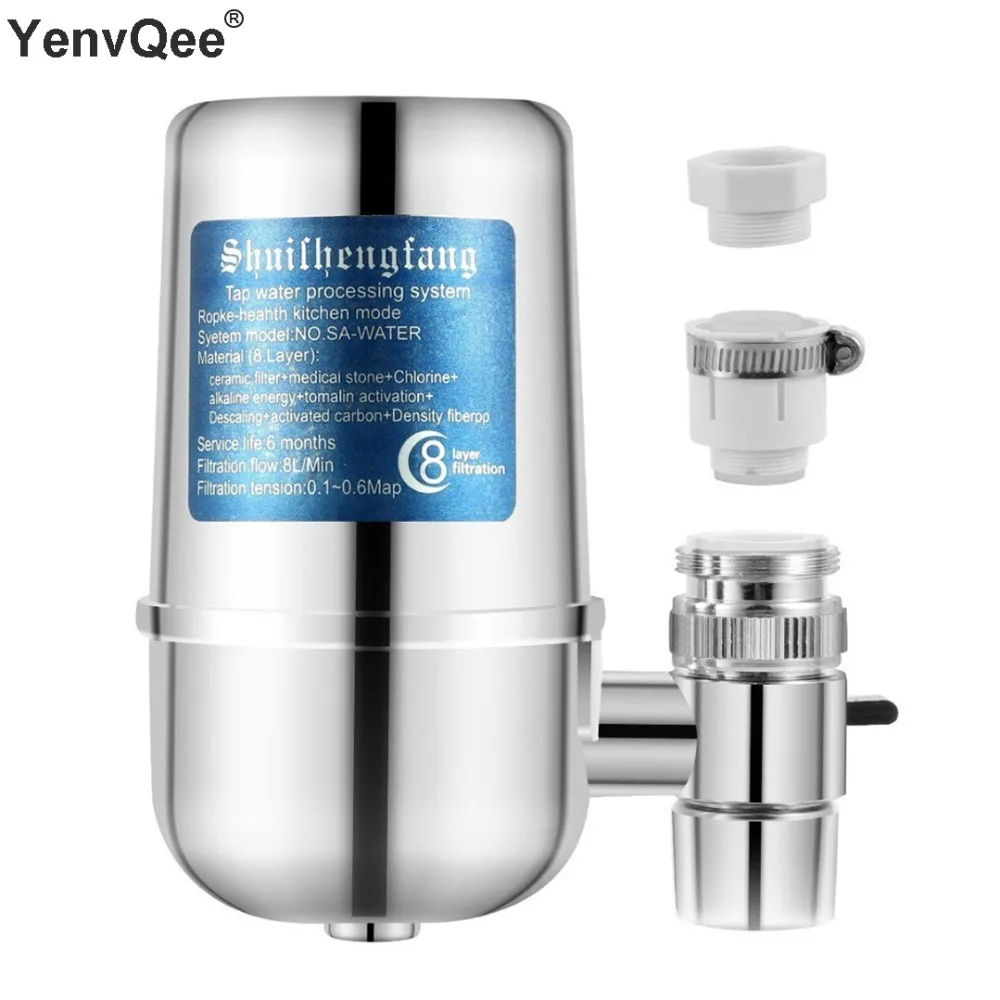
AliExpress Kitchen Tap Water Filter Purifier – Ceramic Percolator
This is a budget, point-of-use ceramic filter. It physically strains out rust particles (ferric iron) and some bacteria. It’s cheap and cheerful for a single faucet. But it won’t touch dissolved (ferrous) iron. Think of it as a sediment filter with a bit of iron-rust removal. For serious problems, look elsewhere. But for a quick fix on a rusty utility sink? It might do.
- Extremely low cost
- Simple installation
- Washable ceramic element
- Only removes particulate iron
- Low flow rate
- Quality can be inconsistent
Iron Filter FAQ
- How do I know if I need an iron filter?
- Look for orange/rust stains in sinks and toilets, metallic-tasting water, or black stains on laundry. A water test confirming iron above 0.3 ppm is your definitive answer. Don’t guess—test.
- Can a Brita or pitcher filter remove iron?
- No. Standard pitcher filters use activated carbon, which does not remove dissolved iron. They might catch some rust particles if they’re large, but they’re not a solution for iron problems.
- What’s the difference between a water softener and an iron filter?
- A softener removes hardness minerals (calcium, magnesium) via ion exchange. It can remove trace iron but will get fouled by higher levels. An iron filter uses oxidation and filtration specifically for iron. For water with both hardness and iron, install the iron filter before the softener.
- How often do iron filters need maintenance?
- It depends. Cartridge filters need changing every 3-6 months. Backwashing systems (AIO, Birm) need media replacement every 5-10 years, but require regular backwash cycles (often set automatically). Always follow the manufacturer’s schedule.
- Can I install an iron filter myself?
- Whole-house systems require cutting into your main water line and often electrical work for control valves. If you’re not comfortable with plumbing, hire a pro. Point-of-use cartridge filters are usually DIY-friendly.
- Will an iron filter remove sulfur smell too?
- Some do. Filters using KDF85 media (like the APEC reviewed above) are effective for hydrogen sulfide. Air injection systems can also help off-gas the sulfur. If you have both issues, look for a system rated for “iron and H₂S removal.”
Final Thoughts
Dealing with iron in your water is frustrating, but the fix is straightforward once you know what you’re dealing with. Start with a test. For most homeowners with moderate iron (1-5 ppm), an air injection oxidation system is the most reliable, low-maintenance choice. It handles the job without chemicals.
For lower budgets or specific point-of-use needs, a KDF cartridge like the APEC can be a great stopgap. And if your primary concern is drinking water quality from a challenging source, investing in a high-quality RO system like the Waterdrop X8 is worth every penny. Don’t just live with the stains.
