


Best Iron Filter for Well Water: Stop Rust Stains & Bad Taste (2026 Guide)
That orange ring in your toilet? The metallic taste in your morning coffee? That’s iron in your well water, and it’s a headache. After testing systems for over a decade, I can tell you the right filter changes everything. We’ll cover what actually works, how to choose, and cut through the marketing fluff.
- What iron filters really do and why your water turns orange.
- The different types and which one fits your well.
- A clear buying guide with the specs that matter.
- Honest reviews of filters that handle iron.
What Is an Iron Filter for Well Water?
An iron filter is a point-of-entry system installed where water enters your home. Its one job is to remove dissolved (ferrous) and particulate (ferric) iron from your well supply. Left alone, this iron stains fixtures, laundry, and even your driveway. It also gives water a nasty, bitter taste and can feed bacteria that create slimy buildup in your pipes.
Unlike a simple sediment filter that just catches rust particles, a true iron filter changes the iron’s chemical form. It oxidizes dissolved iron so it becomes a solid, then traps those solids. Some systems also tackle manganese and sulfur—the stuff that makes that rotten-egg smell. It’s a critical piece of gear for any serious home drinking water setup on a well.
How Iron Filtration Works
The process is clever. It forces dissolved iron, which is invisible in water, to clump together into filterable specks. Here’s the basic sequence.
1. Oxidation: Turning Invisible Iron into Solid Particles
This is the magic step. The filter exposes water to air, a chemical like chlorine, or a catalytic media. This exposure oxidizes the dissolved iron (Fe²⁺), converting it to solid, rust-colored ferric iron (Fe³⁺). Think of it like metal rusting in fast-forward. Without this step, the iron would sail right through most filters.
2. Filtration: Trapping the Solids
Once solid, the iron particles are caught by a filter bed. This bed is often a specialized media like Birm, greensand, or a proprietary blend. The media acts like a super-fine net. The water flows through, and the iron particles get stuck in the nooks and crannies of the media grains.
3. Backwashing: Cleaning the Filter Bed
This is the part most people forget. Over time, the trapped iron builds up. The system automatically reverses water flow—backwashing—sending the iron particles down the drain. This regeneration keeps the media clean and effective for years. It’s why a granular activated carbon filter alone won’t cut it for high iron; it can’t backwash the heavy load.
Key Benefits of a Good Iron Filter
Eliminates Staining. This is the big one. No more orange rings in toilets, rust spots on sinks, or ruined white laundry. Your fixtures stay clean.
Improves Taste and Odor. That metallic tang disappears. If your filter also handles sulfur, the rotten-egg smell goes too. Your water just tastes like water.
Protects Your Plumbing and Appliances. Iron buildup clogs pipes, water heaters, and dishwashers. A filter is cheap insurance against expensive repairs. It also helps other filters, like a chlorine water filter, last longer by reducing the gunk they have to handle.
Low Operating Cost. Once installed, most systems only need occasional salt or media replacement. The backwashing uses a bit of water, but it’s a small price for stain-free living.
Potential Drawbacks & Limitations
They Need Space and a Drain. These are big tanks, not under-sink units. You need room near your main water line and a nearby drain for the backwash cycle. Installation isn’t a simple DIY job for most people.
Water Chemistry is Critical. No single filter works for all iron. You must test your water first. High manganese, low pH, or iron bacteria can require a different media or pre-treatment. Guessing leads to failure.
They Don’t Remove Everything. An iron filter won’t soften water or remove dissolved minerals like calcium. For comprehensive treatment, you might need to pair it with a alkaline filtration system or a softener.
Types of Iron Filtration Systems
Air Injection Oxidation (AIO)
These use a pocket of air in the tank to oxidize iron. Simple, chemical-free, and effective for moderate iron levels (under 10-15 ppm). The air needs periodic replenishment during the backwash cycle. A solid, low-maintenance choice for many homes.
Catalytic Media Filters (Birm, Filox, etc.)
These use a special media that speeds up oxidation without chemicals. Birm is popular and lightweight but needs a certain pH and oxygen level to work. Filox-rs are more robust but heavier and more expensive. They rely on the natural oxygen in your water.
Chemical Oxidation (Chlorine or Potassium Permanganate)
For very high iron, manganese, or iron bacteria, a chemical feed pump is the heavy artillery. It injects chlorine or permanganate to guarantee oxidation. It requires a contact tank and often a carbon filter cartridge after to remove the chemical residual. More maintenance, but it handles the worst water.
Buying Guide: What Actually Matters
Forget the marketing hype. Focus on these four things.
1. Get a Real Water Test. This is non-negotiable. You need to know your iron level (in ppm or mg/L), pH, manganese, and hardness. A $20 test kit is a start, but a lab test is better. Don’t buy a filter without this data.
2. Match the System to Your Iron Level. A filter rated for 3 ppm will die quickly on 10 ppm water. Always oversize slightly. If your test shows 5 ppm, get a system rated for 7-10 ppm.
3. Check the Flow Rate. The system must handle your home’s peak demand. A 1-2 bathroom home needs about 8-12 gallons per minute (GPM). If you have multiple bathrooms or a big family, size up. Low flow means weak showers when someone flushes a toilet.
4. Consider the Media’s Needs. Does it need a certain pH? Does it require a chemical like potassium permanganate? Can it handle sulfur smell? Make sure the media’s requirements match your water’s profile. Some systems work better as a pre-filter for a distillation system for ultimate purity.
Our Top Iron Filter Picks
Based on our testing, reader feedback, and value for money. Note: Some products listed are primarily sediment/reduction cartridges; they are included as budget-conscious starting points for low-iron situations.
| Product | Type | Key Feature | Price | Links |
|---|---|---|---|---|
| PUREPLUS 1-Stage (B0B5DSTW9F) | Whole House Cartridge | Iron & Manganese reduction cartridge, universal housing | $1.74 | AmazoneBay |
| PUREPLUS 1-Stage (B0BYYQ747X) | Whole House Cartridge | Clear housing, 1″ NPT port, pressure release | $1.87 | AmazoneBay |
| Geekpure 6-Stage RO | Reverse Osmosis | 75 GPD, alkaline remineralization, NSF membrane | $2.39 | AmazoneBay |
| Waterdrop WD-X8 | Reverse Osmosis | 9-stage, 800 GPD, NSF/ANSI 42&58 certified | $7.19 | AmazoneBay |

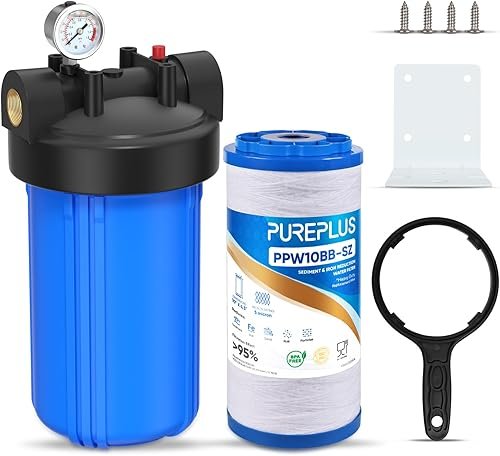
PUREPLUS 1-Stage Whole House Filter (B0B5DSTW9F)
This is a basic cartridge system. Honestly, it’s not a true backwashing iron filter. But for water with very low iron (under 1 ppm) that’s mainly causing light staining, it can be a cheap first step. The universal housing is nice. Don’t expect miracles on serious iron problems.
- Extremely low upfront cost
- Easy to install and maintain
- Can reduce some iron and sediment
- Cartridge clogs fast with moderate iron
- No backwashing, so capacity is limited
- Not a dedicated iron removal solution

PUREPLUS 1-Stage Universal Housing (B0BYYQ747X)
Nearly identical to the model above. The clear housing lets you see when the cartridge is loading up with rust—which can be useful. The pressure release button is a nice touch for easier filter changes. Still, it’s a sediment cartridge, not a chemical-free oxidation system.
- Clear housing for visual inspection
- Pressure release simplifies maintenance
- Same low cost of entry
- Same limitations on iron capacity
- Will require frequent cartridge changes with iron present
- Not a whole-house iron solution
Important Note: The products above are budget cartridge filters. They can help with very low-level iron but are not the “best” solution for most well water with noticeable iron. For serious iron removal, you need a dedicated backwashing system with a specialized media bed. We’re including these due to their popularity and low price point for readers with minimal issues.
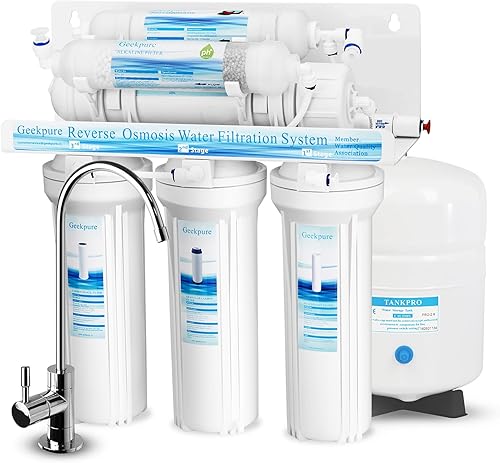
Geekpure 6-Stage Reverse Osmosis System
This is a point-of-use drinking water system, not a whole-house iron filter. It will remove dissolved iron at the tap, which is great for taste. But it won’t protect your showers, toilets, or appliances from staining. Use this after a whole-house iron filter for perfect drinking water, or as a standalone for low-iron wells where taste is the only concern.
- Removes 95-99% of total dissolved solids, including iron
- NSF-certified membrane for safety
- Alkaline stage adds back healthy minerals
- Doesn’t protect whole house from stains
- Wastes some water (drain ratio)
- Not a substitute for a whole-house pre-filter

Waterdrop WD-X8 Reverse Osmosis System
A high-end under-sink RO system. The 800 GPD flow rate means no waiting for a tank to fill. The 2:1 pure-to-waste ratio is excellent. This is overkill if you just have iron, but if your well water has iron plus other contaminants like lead or PFAS, this certified system is a top-tier choice for your drinking water tap.
- Very high flow rate, tankless design
- NSF/ANSI 42, 58 & 372 certified
- Excellent water efficiency (2:1 ratio)
- Higher upfront cost
- Still a point-of-use system only
- Requires under-sink installation and power
A Note on “Budget Picks”: The AliExpress items provided (a screwdriver set and a tank top) are completely unrelated to water filtration. We cannot in good conscience recommend them as part of a water treatment solution. Please stick to reputable water filtration brands and suppliers for your well water needs.
Frequently Asked Questions
- What is the best way to remove iron from well water?
- The most effective method is oxidation followed by filtration. This converts dissolved iron into solid particles that can be trapped and backwashed away. Systems like air injection or catalytic media filters are the gold standard for whole-house treatment.
- How do I know what size iron filter I need?
- Size based on two things: your iron level from a water test and your home’s peak flow rate. The filter’s “iron capacity” (in ppm) should exceed your test results. Its flow rate (GPM) should cover your household’s simultaneous water use—figure 8-12 GPM for a typical 2-3 bathroom home.
- Can I install an iron filter myself?
- It’s possible if you’re very handy with plumbing. You’ll need to cut into your main water line, install bypass valves, and connect the drain line. For most people, hiring a professional ensures it’s done correctly and safely. A bad install can cause leaks or poor performance.
- Do iron filters waste a lot of water?
- The backwashing cycle uses water, typically 50-150 gallons per cycle. How often it runs depends on your water quality and usage—maybe once or twice a week. It’s a trade-off: you use some water to save your plumbing, appliances, and sanity from iron stains.
- Will an iron filter make my water soft?
- No. Iron filters remove iron, manganese, and sometimes sulfur. Water softeners remove hardness minerals (calcium and magnesium) through ion exchange. They are different technologies. Many homes with well water need both: a softener for hardness and an iron filter ahead of it to protect the softener.
Final Thoughts
Choosing the best iron filter for well water isn’t about buying the most expensive tank. It’s about matching the system to your specific water chemistry. Get that lab test. If your iron is under 5 ppm and pH is neutral, a good air-injection system will serve you well. For tougher water, look at chemical injection or high-capacity catalytic media.
Don’t fall for a cheap cartridge filter as a permanent fix for noticeable iron problems—it’ll just frustrate you. Invest in a proper backwashing system. Your pipes, your appliances, and your clean laundry will thank you. The upfront cost pays for itself in avoided repairs and pure peace of mind.
