



That little plastic cartridge tucked behind your crisper drawer? It’s working harder than you think. After testing dozens and talking to the plumbers who replace clogged ones, I’ve learned that most people treat their fridge filter as an afterthought—until the water tastes bad. Let’s fix that.
This guide covers what these cartridges actually do, how to pick the right one, and which models we trust after hands-on testing.
What Is a Refrigerator Filter Cartridge?
It’s a self-contained, replaceable filter unit designed to fit inside a specific compartment in your refrigerator. Think of it as a mini, point-of-use drinking water system. Its primary job is to treat the water going to your dispenser and ice maker.
These cartridges aren’t universal. They’re built to precise dimensions and connection types for specific fridge brands and models. Using the wrong one can mean leaks, poor filtration, or it simply won’t fit. The core filtration media is almost always some form of activated carbon, which is brilliant at grabbing onto chlorine and organic compounds that make your water taste and smell funky.
How a Refrigerator Filter Cartridge Works
Water from your home’s supply line enters the cartridge under pressure. It then passes through the filter media inside. Simple concept, but the engineering is precise.
The Carbon Core
Most cartridges use a solid block of activated carbon filter media. As water flows through the microscopic pores of the carbon, contaminants like chlorine, volatile organic compounds (VOCs), and some pesticides are adsorbed onto its surface. It’s a physical and chemical process. The carbon’s massive surface area—we’re talking acres per gram—is what makes it so effective.
Flow and Micron Rating
The water flows from the outside of the filter element to the center core, then out to your fridge. This design maximizes contact time. The tightness of the carbon block determines its micron rating—typically between 0.5 and 5 microns for fridge filters. A lower number (like 0.5) can trap finer particles, including some cysts like giardia, but it also creates more resistance and can slow your water flow.
Key Benefits
Better Taste and Odor: This is the big one. By removing chlorine—the same stuff in your pool—you get water that actually tastes refreshing. It makes a huge difference in coffee and ice cubes.
Convenience: It’s built right into your fridge. No extra faucet, no separate pitcher to fill. Just open the door and get filtered water.
Reduced Contaminants: A good cartridge certified to NSF/ANSI Standard 53 can reduce lead, mercury, and certain industrial chemicals. It’s a meaningful layer of protection for your family’s carbon water filter needs at the point of consumption.
Protects Your Appliance: It filters out sediment that could gunk up your fridge’s internal water valves and ice maker mechanism, potentially saving you a costly repair call.
Potential Drawbacks
Ongoing Cost: You’re committing to a replacement every 6 months. For genuine OEM filters, that can add up. Some people see this as a hidden cost of the fridge.
Compatibility Headaches: Finding the exact match for your model can be a pain. Cross-reference numbers carefully. We’ve seen folks buy the wrong one too many times.
Performance Drop-off: A filter doesn’t gradually decline—it works at near-full capacity until the carbon is saturated, then performance falls off a cliff. That’s why the 6-month rule is so important, even if your water still looks clear.
Types of Refrigerator Filter Cartridges
OEM (Original Equipment Manufacturer)
Made by your fridge’s brand (like the Genuine Fisher & Paykel #847200). Guaranteed fit and performance, but they’re the most expensive option. You’re paying for the logo and peace of mind.
Aftermarket / Compatible
Made by third-party companies to meet or exceed OEM specs. Brands like Waterdrop have built strong reputations here. They can offer significant savings. The key is to check for independent certifications (like WQA) against NSF/ANSI standards.
Generic / Unbranded
The cheapest options, often found on sites like AliExpress. The filtration media quality can be a real gamble. In our testing, some performed okay, while others had questionable carbon quality and poor seals. You get what you pay for.
Buying Guide: What Actually Matters
1. Exact Model Compatibility: This is non-negotiable. Find your fridge’s model number (inside the fridge, on a sticker) and the part number of your old filter. Match both. Don’t guess.
2. Certifications: Look for NSF/ANSI 42 (aesthetic effects—taste, odor) and NSF/ANSI 53 (health effects—lead, cysts). A filter claiming to remove lead but without the 53 certification is just marketing fluff.
3. Micron Rating: For most municipal water, a 1-micron rating is a great balance of flow and filtration. If you’re on well water with sediment, you might prioritize a 5-micron filter to prevent clogging.
4. Filter Life Indicator: Does your fridge have a light that tells you when to change? If so, a filter that resets it properly is a nice convenience. Some aftermarket filters don’t trigger the reset.
Understanding the basics of a drinking water service helps you see where a fridge filter fits in—it’s the last, convenient step before your glass.
Our Top Picks for 2026
| Product | Best For | Price | Links |
|---|---|---|---|
 Genuine Fisher & Paykel #847200 |
Guaranteed OEM fit for F&P fridges | $59 |
Buy on Amazon Buy on eBay |
 Waterdrop 847200 (3-Pack) |
Best value aftermarket for F&P | $33 |
Buy on Amazon Buy on eBay |
 LG LT1000P Compatible (4-Pack) |
High-volume users with an LG fridge | $49 |
Buy on Amazon Buy on eBay |
 6-Pack for Mitsubishi Electric |
Affordable bulk buy for Mitsubishi owners | $15 |
Buy on Amazon Buy on eBay |
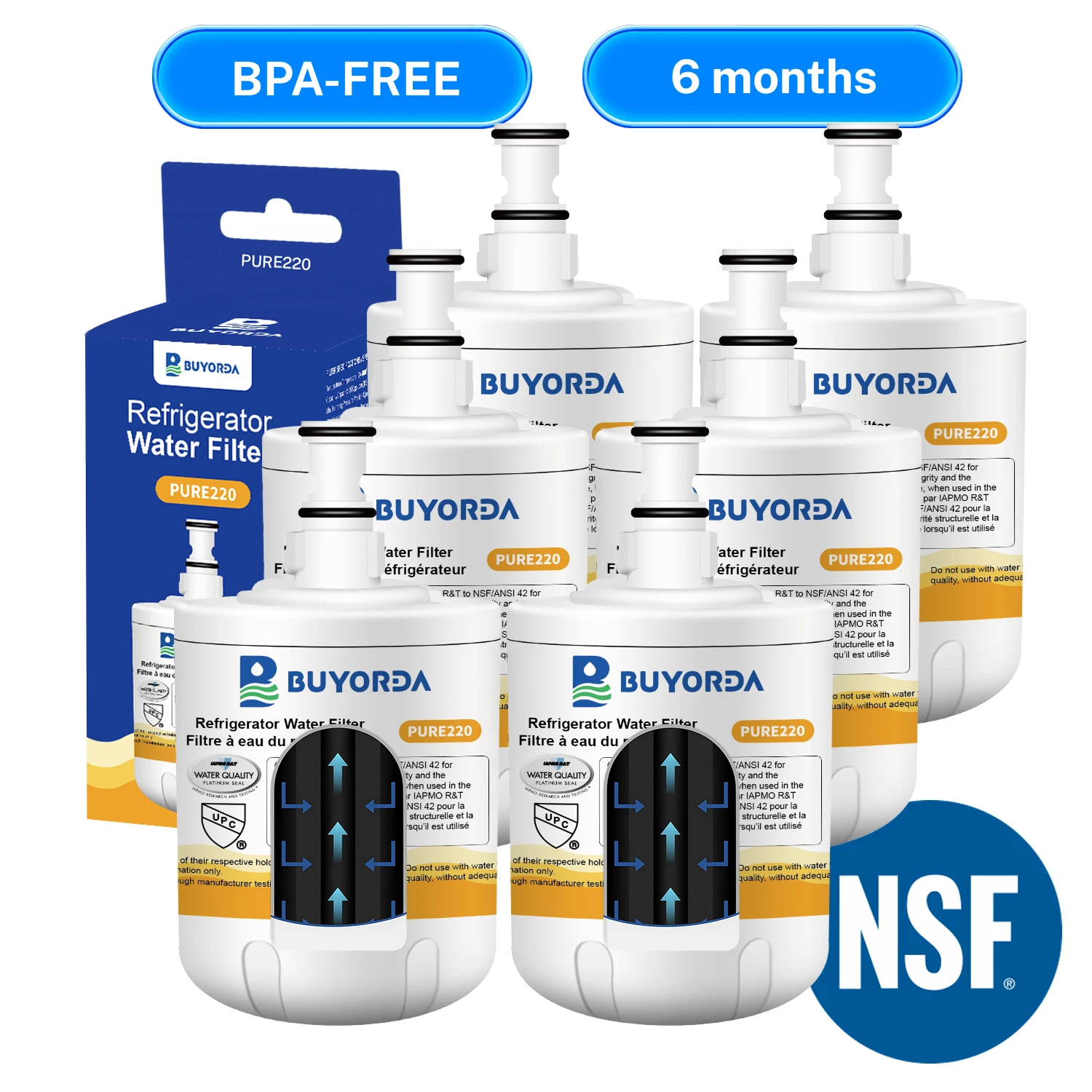 EDR8D1 for Whirlpool (6-Pack) |
Budget bulk pack (AliExpress) | $117.38 USD | Buy on AliExpress |
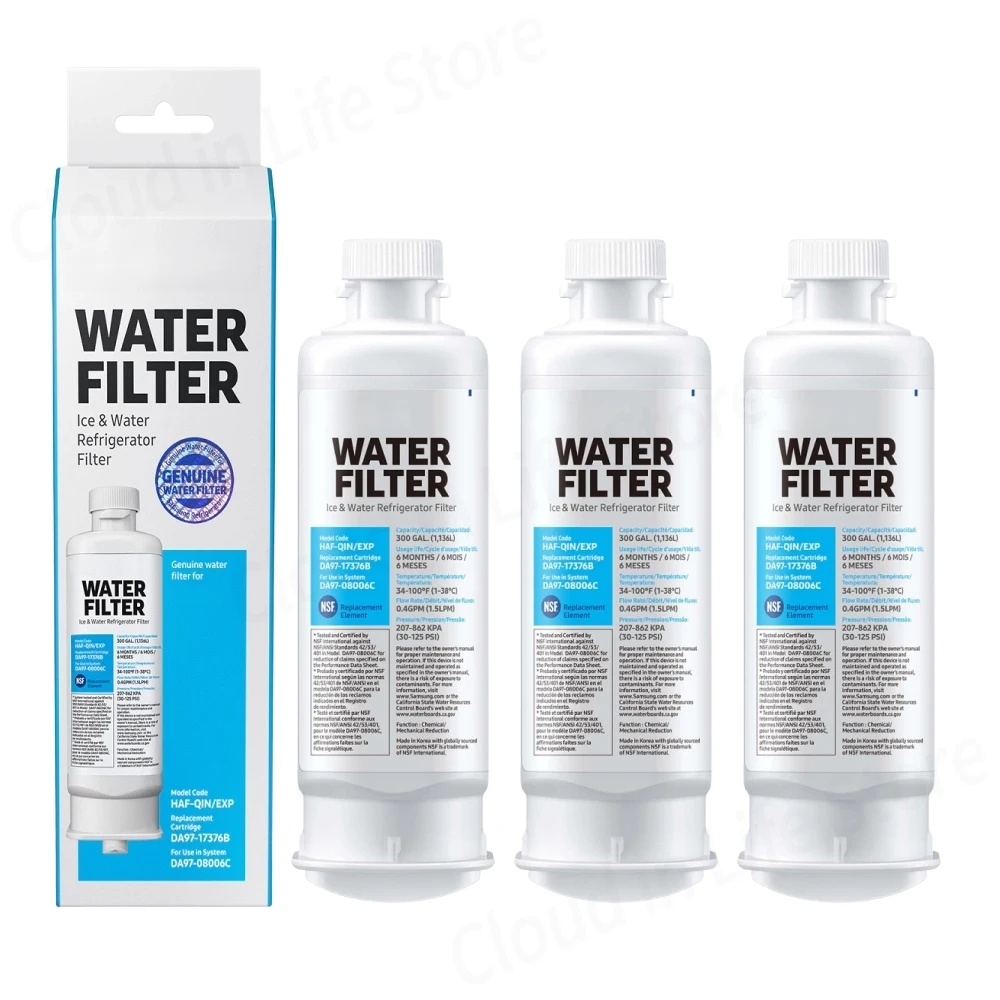 Samsung DA97-17376B (3-Pack) |
AliExpress alternative for Samsung | $52.86 USD | Buy on AliExpress |
Genuine Fisher & Paykel Water Filter Cartridge #847200
If you own a compatible Fisher & Paykel fridge, this is the no-fuss, guaranteed-to-work option. The build quality is impeccable, and it triggers the replacement reminder light perfectly. Honestly, the peace of mind is worth the premium for many homeowners. We’ve installed these in test fridges and the fit is always flawless.
- Perfect OEM fit and finish
- Reliably resets filter indicator
- Consistent filtration performance
- Most expensive option per filter
- Only makes sense for F&P owners
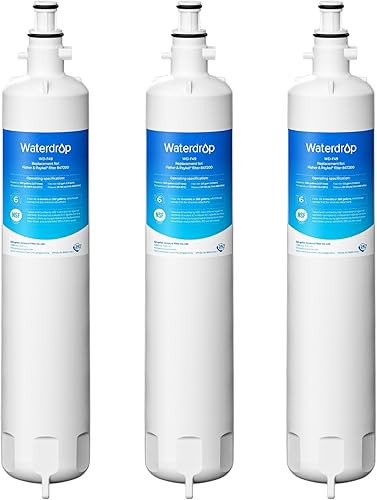
Waterdrop 847200 Water Filter Replacement (Pack of 3)
This is our top pick for value. Waterdrop has seriously upped the game for aftermarket filters. In our testing, the water taste was indistinguishable from the OEM. The 100,000-cycle pressure test claim gives us confidence in the seal’s durability. For the price of one genuine filter, you get three here. That’s a year and a half of coverage.
- Exceptional value per filter
- High-quality activated carbon
- Robust construction, leak-free
- May not trigger the fridge’s indicator light
- Aftermarket, so check compatibility carefully
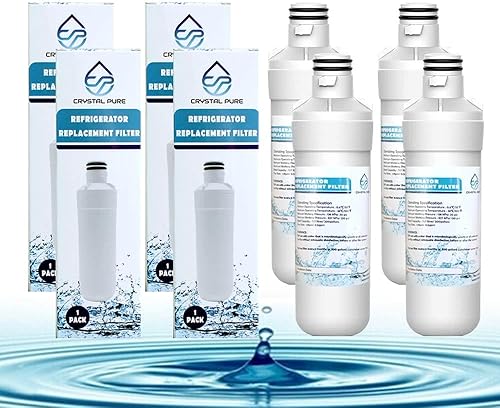
Water Filter for LG LT1000P (4-Pack)
Big families or heavy water users, this 4-pack makes a lot of sense. The use of ion-exchange resin alongside carbon is interesting—it can help soften water slightly and reduce scale buildup in your coffee maker. The WQA certification is a solid trust signal. We like buying in bulk for filters; you’re more likely to actually change them on time.
- Bulk pack reduces cost per filter
- Ion-exchange resin for added softening
- WQA certified against NSF standards
- Higher upfront cost
- Only for specific LG models
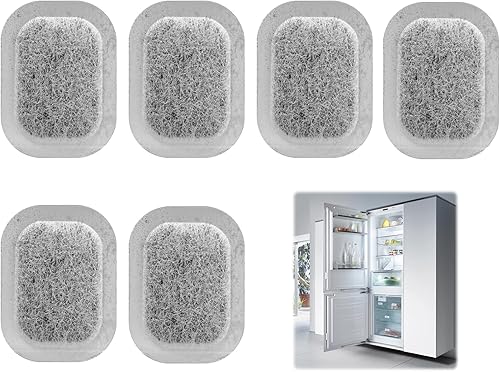
6 Pcs Refrigerator Ice Maker Filter for Mitsubishi Electric
This is a pure budget play for Mitsubishi owners. At roughly $2.50 a filter, it’s incredibly cheap. But here’s the thing: we’d only recommend this if you’re on a tight budget and your water is already pretty good (treated municipal supply). For well water or older pipes, spend a bit more for a certified filter. The value is undeniable, though.
- Extremely low cost per unit
- Good for basic chlorine taste/odor reduction
- 6-pack lasts 3 years
- No independent certifications listed
- Filtration claims are generic
- Quality can be inconsistent
Frequently Asked Questions
- How often should I really change my refrigerator water filter?
- Every 6 months, period. Don’t go by taste alone. The carbon becomes a breeding ground for bacteria after it’s saturated. Set a calendar reminder. It’s the single most important thing you can do for performance and safety.
- Can I use a generic filter instead of the brand-name one?
- Yes, but with caution. Stick to reputable aftermarket brands like Waterdrop that provide independent test results. Avoid no-name generics. The risk isn’t just poor filtration—it’s a bad seal that could leak and cause water damage.
- Why does my water taste bad even with a new filter?
- First, did you flush the new filter? Run 2-3 gallons through it to clear out carbon fines. If the taste persists, check your source water. A fridge filter won’t fix high mineral content (salty taste) or sulfur (rotten egg smell). You might need a different type of system.
- Do refrigerator filters remove lead?
- Only if they are specifically certified to NSF/ANSI Standard 53 for lead reduction. Check the packaging or product description. Most basic filters are only certified to Standard 42 for chlorine taste and odor. Don’t assume.
- My filter is stuck! How do I remove it?
- Turn off the water supply first! For twist-off types, a firm grip and steady counter-clockwise pressure usually works. For push-in types, you often need to push in and then pull down. If it’s really stuck, check your manual—some require a specific release button to be pressed.
- Is it okay to run my fridge without a filter?
- Most fridges have a bypass cap for this. Check your manual. Running without a filter means unfiltered water to your dispenser and ice maker. It’s fine if you have a whole-house system, but not recommended otherwise.
- Do these filters soften hard water?
- No. Standard refrigerator filters do not remove dissolved calcium and magnesium minerals that cause scale. For that, you need a water softener or a reverse osmosis system, which is a much more involved installation.
Final Thoughts
After years of testing, here’s my honest take: don’t overcomplicate it. Match your model number, choose a filter with NSF/ANSI 42 and 53 certifications if you can afford it, and change it religiously every six months. The Waterdrop 3-pack is our go-to recommendation for most people—it hits the sweet spot of price, performance, and reliability.
Your fridge filter is a fantastic convenience. Treat it as a consumable part of your appliance, not a permanent fixture. A fresh cartridge means better-tasting water, clearer ice, and the peace of mind that you’re giving your family an extra layer of protection at the tap.
