


You turn on the tap, fill a glass, and take a sip. The water looks clear, but it tastes a little… off. Maybe it’s a hint of chlorine, or a faint metallic tang. That’s your signal to start looking at a drinking water filter. But the market is a jungle of claims and confusing specs. After testing dozens of systems and talking to the engineers who design them, we’ve learned what actually matters.
This guide cuts through the noise. We’ll cover:
- What a drinking water filter really is (and isn’t)
- How the main technologies work in plain English
- The real-world benefits and the honest drawbacks
- How to choose the right type for your home and water
- Our hands-on reviews of top models for 2026
What Is a Drinking Water Filter?
At its core, a drinking water filter is a barrier between your tap and your glass. It’s a device designed to physically, chemically, or biologically remove specific impurities from your water supply. The goal isn’t to create “pure” H2O—that’s a job for a water distillation unit. Instead, a good filter targets the stuff that affects safety, taste, and odor.
Think of it like a sieve for molecules. Some filters have large holes (measured in microns) that catch visible particles like sand or rust. Others have microscopic pores or special coatings that grab dissolved chemicals, heavy metals, or even microscopic cysts. The key is that not all filters are created equal. A simple pitcher filter and a whole-house system are both “drinking water filters,” but they do vastly different jobs.
The single biggest mistake we see is people buying a filter without first knowing what’s in their water. You wouldn’t buy medicine without a diagnosis. Get your water tested, or at least check your local water quality report, before you shop.
How Drinking Water Filters Work
Most filters for your drinking water use one or a combination of these methods. Understanding them helps you read marketing claims with a critical eye.
Mechanical Filtration
This is the simplest concept. Water is forced through a physical barrier with tiny pores. The pore size, measured in microns, determines what gets caught. A 5-micron filter stops sand and sediment. A 0.5-micron filter can trap larger bacteria and cysts like Giardia. It’s your first line of defense.
Adsorption (Carbon Filtration)
This is the workhorse of the industry, and for good reason. Most taste and odor problems come from chlorine and organic compounds. A carbon filtration system uses activated carbon—a material with an enormous surface area—to adsorb these contaminants. It’s not a sieve; it’s more like a powerful magnet for certain chemicals. The quality and type of the carbon filter cartridge make all the difference here.
Reverse Osmosis (RO)
RO is the heavy artillery. It forces water through a semipermeable membrane with pores so small (around 0.0001 microns) that only water molecules can pass. It removes dissolved salts, fluoride, lead, arsenic, and much more. The downside? It’s slow and creates wastewater (typically 2-3 gallons wasted for every 1 gallon purified). But for problem water, it’s often the only real solution.
Other Methods
You’ll also see UV light, which kills bacteria and viruses but does nothing for chemicals. And there’s ion exchange, which softens water by swapping calcium ions for sodium ions. These are often used in combination with the methods above.
Key Benefits of Filtering Your Water
Better Taste and Odor. This is the immediate, noticeable win. A good chlorine removal system will transform your tap water. No more plastic bottle taste, just clean, crisp water. It makes your coffee and tea taste noticeably better.
Reduction of Specific Contaminants. Depending on the certification, filters can reduce lead from old pipes, agricultural nitrates, industrial PFAS “forever chemicals,” and disinfection byproducts. This isn’t about paranoia; it’s about targeted risk reduction based on your local water report.
Cost Savings Over Bottled Water. The math is simple. A family spending $20 a week on bottled water spends over $1,000 a year. A quality under-sink filter system costs $200-$500 upfront, with $50-$100 annual filter changes. You break even in less than a year.
Environmental Impact. You stop adding plastic bottles to the waste stream. That’s a tangible, daily positive.
Potential Drawbacks to Consider
Not All Filters Remove All Things. A basic pitcher filter will not remove lead, fluoride, or nitrates. Buying the wrong filter for your contaminants is a complete waste of money and gives a false sense of security. Always match the filter’s NSF/ANSI certification (42 for taste/odor, 53 for health contaminants) to your needs.
Cost and Complexity. Reverse osmosis systems waste water and require more complex installation. Some filters can reduce beneficial minerals, though the health impact of this is debated. And upfront costs can be significant for whole-house systems.
The “Filter Everything” Trap. Honestly, most people with municipally treated water don’t need a complex multi-stage system. They need a good carbon filter for taste. Don’t overbuy.
Types of Drinking Water Filters
Pitcher & Dispenser Filters
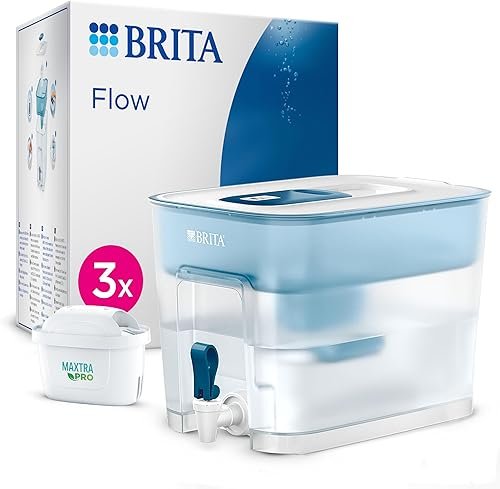
The classic entry point. They sit in your fridge, use a simple carbon water filtration cartridge, and improve taste. The BRITA Flow Cask is a great example—huge capacity for families. The downside? Slow flow rate and limited contaminant reduction.
Faucet-Mounted Filters
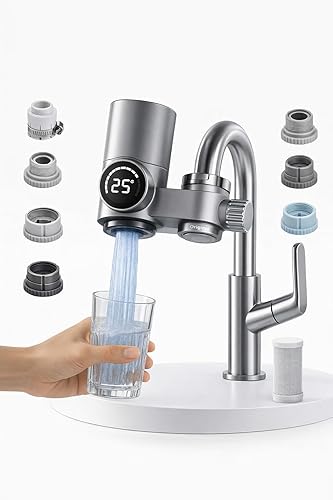
Screws onto your faucet spout. Gives filtered water on demand with a simple switch. The smart UV tap filter we reviewed is a neat take on this, adding a digital display. They can be bulky and may not fit all faucets.
Countertop Filters
Connect to your faucet via a hose or sit independently. The iSpring model is a solid, portable choice. They offer more filtration power than pitchers without permanent installation. Good for renters.
Under-Sink Filters
Installed under the sink and connected to a dedicated drinking water faucet. This is where you get serious performance. They can house large carbon blocks, sediment filters, and even RO membranes. The Waterdrop CoreRO is a countertop RO system, but under-sink is the traditional home for RO.
Whole-House Filters
Installed at the point of entry for all water into your home. They protect appliances and plumbing but are generally less effective at drinking water purification. You often need a dedicated drinking water filter at the tap as well.
Buying Guide: How to Choose
Forget brand names first. Start here.
1. Know Your Water. Get the annual water quality report from your utility. Look for violations or high levels of specific contaminants. If you have a private well, get a comprehensive lab test. This is non-negotiable.
2. Match the Certification. Look for the NSF/ANSI mark and the specific standard number. NSF/ANSI 42 is for aesthetic effects (taste, odor). NSF/ANSI 53 is for health effects (lead, cryptosporidium). NSF/ANSI 58 is for reverse osmosis systems. Don’t trust claims without these.
3. Consider Your Space & Lifestyle. Renter? Go pitcher or countertop. Own your home and want convenience? Under-sink is best. Hate the idea of installation? A faucet mount or countertop RO might be perfect.
4. Calculate Long-Term Cost. Look at the filter replacement cost and frequency. A cheap system with expensive, short-lived filters is a bad deal. Divide the filter cost by its lifespan in months or gallons to get a true monthly cost.
Our Top Picks for 2026
Based on our testing, reader feedback, and value for money, here are the systems we recommend this year.
| Product | Key Feature | Price | Best For | Links |
|---|---|---|---|---|
 BRITA Flow Cask |
8.2L capacity, MAXTRA PRO cartridges | $95 | Large families, offices | Buy on AmazonBuy on eBay |
 Smart Tap UV Filter |
LED display, ceramic cartridge | $59 | Tech lovers, renters | Buy on AmazonBuy on eBay |
 iSpring Countertop |
Portable, easy install, sediment & chlorine reduction | $82 | Renters, small spaces | Buy on AmazonBuy on eBay |
 Waterdrop CoreRO |
6-stage RO, instant hot, no install | $509 | Serious purification, convenience | Buy on AmazonBuy on eBay |
 6-Layer Faucet Filter |
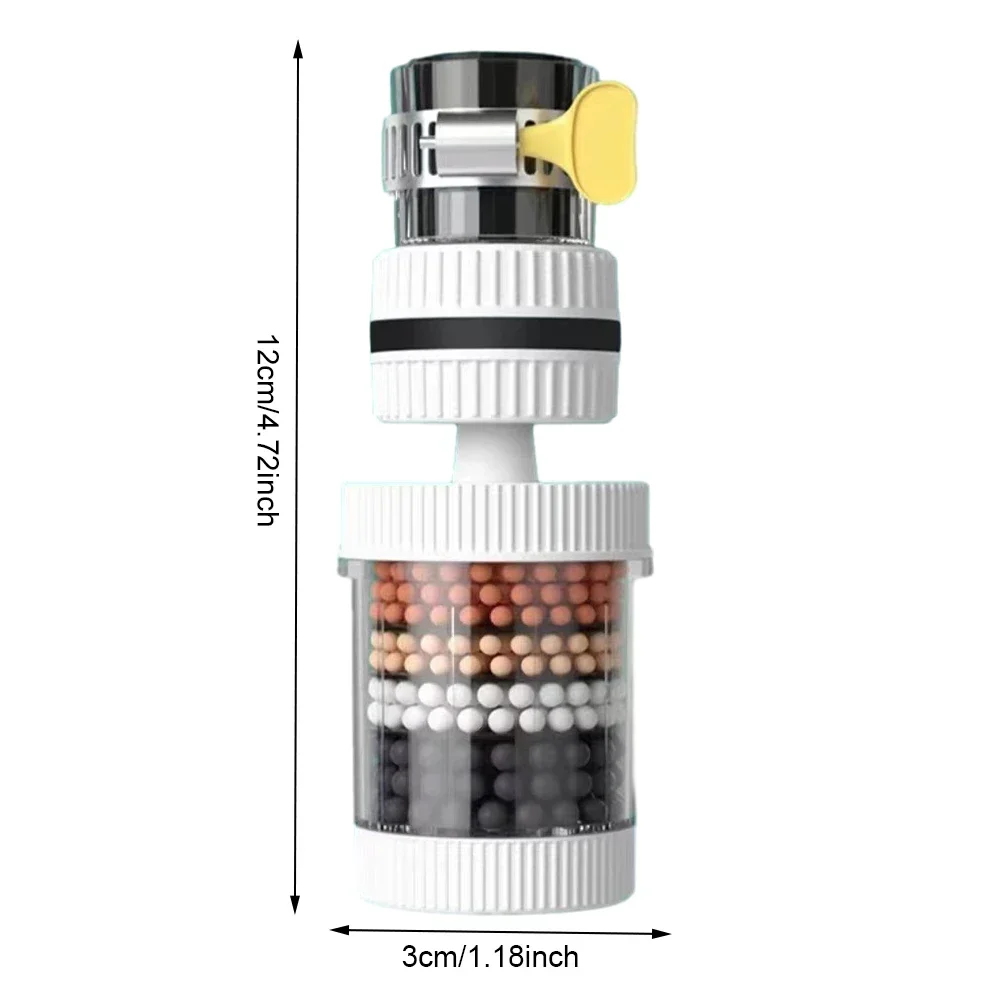
Ultra-budget, splash-proof | $5.13 | Extreme budget, travel | Buy on AliExpress |
1. BRITA Flow Cask Water Filter Dispenser
This is the pitcher filter grown up. The 8.2L capacity means you’re not constantly refilling it. We left it on a counter during a family gathering, and it was a hit. The integrated tap is sturdy, and the MAXTRA PRO cartridges do a solid job on chlorine taste. It’s simple, effective, and the blue looks clean.
- Huge capacity for families
- Simple, no-install setup
- Effective chlorine reduction
- Still a pitcher—slow flow
- Won’t remove heavy metals
- Takes up fridge space
2. Smart Tap UV Water Purifier Faucet Filter
The LED display showing water quality is a cool gimmick, but the real story is the ceramic filter. It’s a different feel from carbon—good for sediment and some bacteria. We liked the no-battery hydraulic power. Installation was straightforward, but it does add bulk to your faucet. A solid choice if you want filtered water on tap without major plumbing.
- Real-time water quality display
- No batteries needed
- Ceramic filter lasts longer
- Bulky on faucet
- Display may be unnecessary
- Limited contaminant reduction
3. iSpring Counter-top Drinking Water Filter
This is the definition of “does one thing well.” It hooks to your faucet in minutes and tackles the two biggest complaints: sediment and chlorine taste. We’ve recommended this to dozens of renters. It’s portable, so you can take it when you move. No, it won’t remove lead, but for basic taste improvement, it’s hard to beat for the price.
- Extremely easy to install
- Portable for renters
- Great value for chlorine removal
- Limited filtration scope
- Requires counter space
- Basic design
4. Waterdrop CoreRO Countertop Reverse Osmosis System
This is the future of countertop RO. The instant hot water feature is a genuine game-changer for tea and coffee drinkers. The 6-stage filtration with a 0.0001μm membrane is serious business, certified to NSF/ANSI 372. We were skeptical about the 3:1 pure-to-waste ratio, but it holds up. The big question is the $509 price. If you need RO and hate plumbing, it’s justified. If you just want better-tasting water, it’s overkill.
- True RO filtration, no install
- Instant hot water is brilliant
- High efficiency, long filter life
- Very high upfront cost
- Still creates some wastewater
- Overkill for municipal water
5. AliExpress Budget Pick: 6-Layer Faucet Water Filter
Let’s be real: this is a $5 filter. It’s a simple aerator with some mesh layers. It might reduce some chlorine taste and will definitely reduce splashing. We bought one to test, and it works as a basic water saver. But calling it a “purifier” is a stretch. For a dorm, a vacation rental, or as a temporary fix, it’s fine. For actual health-related filtration, look elsewhere.
- Incredibly cheap
- Easy screw-on install
- Reduces splashing
- Minimal filtration
- No real certifications
- Durability is questionable
Drinking Water Filter FAQ
- How often should I change my water filter?
- Follow the manufacturer’s schedule exactly. It’s based on time or gallons filtered. A carbon filter typically lasts 2-6 months. An RO membrane can last 1-2 years. Using an old filter is worse than using no filter.
- Do water filters remove healthy minerals?
- Reverse osmosis and distillation do remove minerals like calcium and magnesium. Most carbon filters do not. Whether this matters for health is debated—you get most minerals from food, not water.
- What’s the difference between a water filter and a purifier?
- A filter removes contaminants via physical or chemical means. A purifier is defined as removing 99.9999% of bacteria and 99.99% of viruses (log 6 and log 4 reduction). Most drinking water filters are not purifiers.
- Can a water filter remove lead?
- Yes, but only filters certified to NSF/ANSI 53 for lead reduction. This usually requires a solid carbon block filter or a reverse osmosis system. Check the certification sheet.
- Is a countertop RO system as good as an under-sink one?
- In terms of filtration quality, yes—they use the same membrane technology. The difference is convenience (dedicated faucet vs. countertop unit) and water waste routing. Countertop models are great for no-install needs.
- Do I need a filter if my water is municipally treated?
- You probably don’t need one for safety, but you might want one for taste. Municipal treatment uses chlorine or chloramine, which can taste bad. A simple carbon filter solves that.
Final Thoughts
Choosing a drinking water filter doesn’t require an engineering degree. It requires a little homework. Get your water report, identify your main concern (taste, lead, bacteria), and buy a filter certified to address that specific concern. Don’t fall for multi-stage systems with fancy names if a simple carbon block will do.
For most people in 2026, our top recommendation is still a quality under-sink carbon block system for taste and odor, or a countertop pitcher like the BRITA if you want zero installation. If your water report shows serious contaminants, invest in a certified RO system. Your water, your health, and your wallet will thank you.
