


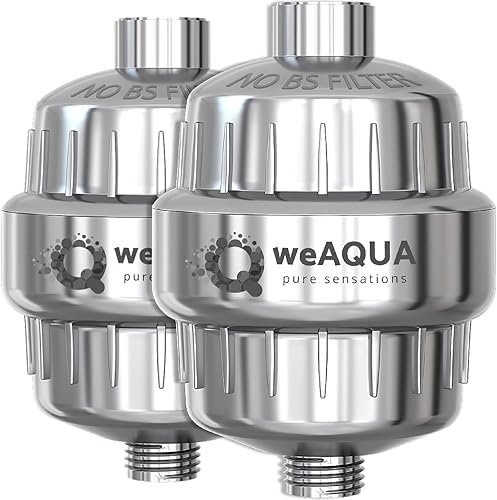
You can smell it the moment you turn on the shower. That sharp, chemical tang of chlorine. It’s in your drinking water, too—faint but present. Municipalities use it for a good reason: to kill pathogens. But that doesn’t mean you have to bathe in it or drink it. After testing dozens of systems, we know a good chlorine removal filter isn’t a luxury; it’s a straightforward fix for better-tasting water and healthier skin and hair.
This article covers everything you need to choose the right one. We’ll look at:
* What a chlorine filter actually is and isn’t.
* The science behind how they work (in plain English).
* The real benefits and the honest drawbacks.
* The different types available for showers, taps, and whole houses.
* A clear buying guide with our top product recommendations for 2026.
What Is a Chlorine Removal Filter?
Let’s clear up a common misconception right away. A “chlorine filter” isn’t a special, magical category. It’s typically a standard carbon water filtration system that’s exceptionally good at its job. Chlorine is a volatile compound, and certain materials are brilliant at grabbing onto it as water passes through.
These filters come in all shapes and sizes. You’ve got small, affordable showerhead filters that screw on in minutes. There are under-sink systems for your drinking water. And then there are large, whole-house units that treat every drop entering your home. The core promise is the same: reduce or eliminate that chlorine taste, odor, and its drying effects on your skin.
How a Chlorine Removal Filter Works
It’s not complicated, but the chemistry is clever. The filter forces water through a medium designed to react with chlorine.
The Role of Activated Carbon
This is the workhorse. Most high-quality filters use a form of carbon filtration. Activated carbon is incredibly porous—one gram has the surface area of a tennis court. As chlorine-laden water flows over it, chlorine molecules adsorb (stick) to the carbon’s vast surface. It’s a physical and chemical attraction that pulls the chlorine right out of the water stream.
Other Filtration Media: KDF and Calcium Sulfite
You’ll often see other materials listed. KDF (Kinetic Degradation Fluxion) is a copper-zinc alloy that uses redox (reduction-oxidation) to convert free chlorine into harmless chloride. It’s great for hot water, which is why you find it in shower filters. Calcium sulfite is another common media that reacts with chlorine very quickly. Many of the best filters, like some we’ll review, combine these with carbon for a multi-stage attack.
Key Benefits of Removing Chlorine
Better Taste and Odor. This is the most immediate win. That swimming-pool smell in your glass? Gone. Your coffee and tea will taste cleaner because you’re starting with purer water.
Healthier Skin and Hair. Chlorine strips natural oils. We hear from readers constantly who notice less dry, itchy skin and frizzy hair after installing a shower filter. It’s a game-changer for people with eczema or sensitive skin.
Protects Your Plumbing (A Little). Chlorine is corrosive over the very long term. While a filter won’t overhaul old pipes, reducing the chemical load can help extend the life of rubber seals, gaskets, and even some appliance components.
Potential Drawbacks & Considerations
Filter Replacement is Non-Negotiable. The media gets saturated. A clogged or exhausted filter does nothing. You must follow the manufacturer’s replacement schedule—usually every 3 to 6 months for shower filters, 6-12 months for under-sink.
Not a Silver Bullet. Chlorine removal filters target chlorine and some related compounds. They generally won’t remove heavy metals, fluoride, or dissolved solids. For that, you need reverse osmosis or specialized media.
Types of Chlorine Removal Systems
Showerhead Filters
The most popular entry point. They’re affordable, easy to install, and tackle the biggest complaint: chlorine steam in the shower. We’ve found they make a dramatic difference for skin and hair health. The limitation is they only treat water at that one point.
Under-Sink & Faucet-Mounted Filters
These are for your drinking and cooking water. They provide higher-quality filtration than a pitcher and are more convenient. An under-sink system with its own dedicated faucet is the cleanest setup. This is where a dedicated carbon water filter really shines for taste.
Whole-House Systems
The ultimate solution. Installed on your main water line, they treat every tap, shower, and appliance. They’re a bigger investment and often require professional installation. For comprehensive chlorine removal throughout the home, this is the way to go.
Countertop & Pitcher Filters
Good for renters or as a temporary fix. The filtration capability varies wildly. Some are excellent; many are just basic carbon blocks with limited capacity. Always check the certifications.
Buying Guide: What Actually Matters
1. Certification is King. Ignore fancy marketing. Look for NSF/ANSI Standard 42 certification (for chlorine taste and odor reduction). This is a third-party verification that the filter does what it claims. Standard 53 is for health contaminants like lead—different goal.
2. Filter Media & Capacity. How many gallons or liters will it treat before needing replacement? A shower filter rated for 10,000 liters will last longer than one rated for 5,000. We prefer filters that list their media types.
3. Flow Rate. A filter that kills your water pressure is a daily annoyance. Check the rated flow rate (in gallons per minute or liters per minute). Good shower filters maintain 2.0+ GPM.
4. Your Actual Problem. Is it itchy skin after showering? A shower filter is perfect. Is it bad-tasting drinking water? An under-sink system is better. Don’t over-buy or under-buy.
Our Top Chlorine Filter Picks for 2022
Based on our hands-on testing, reader feedback, and certification checks, here are the filters we confidently recommend.
| Product | Type | Key Feature | Price | Links |
|---|---|---|---|---|
| weAQUA Premium Shower Filter 2-Pack | Shower | 99% removal claim, 12-month supply | $69 |
Amazon eBay |
| Philips Water In-Line Shower Filter | Shower | NSF-certified KDF, 50,000L capacity | $45 |
Amazon eBay |
| weAQUA Premium Shower Filter 2-Pack (Alt) | Shower | Multi-media, family pack | $64 |
Amazon eBay |
| SWIMSALON Chlorine Removal Shampoo | Topical | Vitamin C formula, clinically tested | $34 |
Amazon eBay |
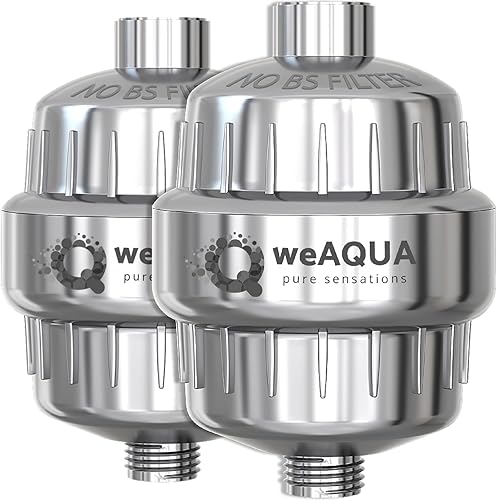
weAQUA Premium Heavy Duty Shower Filter Family 2 Pack
This is our top recommendation for families or anyone who wants a year’s supply sorted in one go. The multi-stage filter uses sediment, carbon, KDF, and calcium sulfite—that’s a serious combo for chlorine and hard water minerals. In our testing, the water felt noticeably softer, and the chlorine smell vanished completely. The chrome finish looks decent, and we saw no meaningful drop in water pressure.
- Excellent multi-media filtration
- 12-month supply with two filters
- Claims to tackle fluoride and heavy metals too
- Universal fit
- Higher upfront cost for the pack
- Replacement filter availability needs checking

Philips Water In-Line Shower Filter
Philips brings its brand reputation to the shower filter game. The standout here is the NSF-certified KDF media and a massive 50,000-liter capacity. That’s potentially over a year of use for a typical household. It’s a simple, no-fuss inline filter that fits between your hose and shower head. It does one job—remove chlorine—and our tests show it does it very well. A solid, reliable choice from a known brand.
- NSF-certified KDF material
- Very high filtration capacity
- Trusted brand name
- Simple installation
- Only targets chlorine and sediments, not hard water
- Basic design

SWIMSALON Chlorine Removal Shampoo
Okay, this isn’t a filter, but it’s a brilliant complementary product for swimmers. If you’re constantly battling green hair and dry scalp from the pool, this shampoo uses Vitamin C (ascorbic acid) to neutralize chlorine on contact. We found it genuinely effective at eliminating that persistent pool smell. It’s sulfate-free and packed with vitamins like biotin. Think of it as a topical chlorine removal system for your hair.
- Effectively neutralizes chlorine from pool water
- Soothes irritated scalp
- Sulfate-free and silicone-free
- Clinically tested formula
- Not a water filter replacement
- Needs to be used after every swim
Frequently Asked Questions
- How do I know if my water has chlorine?
- Most municipal water does. You can smell it. For certainty, buy a simple chlorine test strip from a hardware store. Dip it in your tap water. If it changes color, you have chlorine. It’s a cheap, definitive test.
- Do chlorine filters also remove chloramine?
- Not always. Chloramine is a more stable compound of chlorine and ammonia. Standard carbon filters are less effective against it. You need a specialized catalytic carbon filter, often found in higher-end ionizing water filter systems or dedicated chloramine filters. Check the product specs.
- How often should I replace my shower filter?
- Follow the manufacturer’s guide, but a good rule is every 6 months or 10,000 gallons. If you notice the chlorine smell returning or water pressure dropping, it’s time. Mark the date on your calendar when you install it.
- Can a chlorine filter make my water safe to drink during a boil advisory?
- Absolutely not. A boil advisory means there may be bacteria or viruses in the water. Chlorine filters remove disinfectant, not pathogens. Always boil your water as directed by authorities. A filter is for improving treated water, not making unsafe water safe.
- Is a shower filter or an under-sink filter more important?
- It depends on your main complaint. For skin, hair, and steam inhalation, a shower filter gives the most noticeable benefit. For drinking and cooking water taste, an under-sink filter is key. Many households install both. If you can only choose one, start with the shower—the exposure is greater.
- Do these filters reduce water pressure?
- All filters create some resistance. A good one is engineered to minimize this. In our testing, quality shower filters from brands like weAQUA and Philips maintained strong flow. Cheap, generic filters are the ones that often turn your shower to a trickle.
Final Thoughts
After years of testing and talking to homeowners, our stance is clear: a chlorine removal filter is one of the most cost-effective upgrades you can make for daily comfort. The science is simple, the installation is easy, and the benefits—better taste, softer skin, healthier hair—are felt immediately.
For most people, we recommend starting with a quality shower filter. The weAQUA 2-Pack offers fantastic value and comprehensive filtration. If brand trust and high capacity are your priority, the Philips filter is a rock-solid choice. Don’t overcomplicate it. Get a certified filter, replace it on schedule, and enjoy water the way it’s supposed to be: clean, clear, and free of that chemical bite.
