


You’ve probably tasted it. That sharp, swimming-pool tang in a glass of tap water. Or maybe you’ve noticed your skin feels tight and itchy after a shower. I’ve spent years testing filters and talking to plumbers, and I can tell you: chlorine is the number one complaint. It’s a necessary disinfectant, but you don’t have to live with its side effects. This guide covers everything you need to know about choosing the right chlorine filter. We’ll look at how they work, the different types available, and our top picks for 2026 based on hands-on testing.
What Is a Chlorine Filter?
Simply put, it’s a device designed to strip chlorine from your water before you drink it, cook with it, or shower in it. Municipal water treatment plants add chlorine to kill bacteria and viruses. It’s brilliant at its job. The problem is, that chlorine stays in the water all the way to your tap.
That residual chlorine is what causes the odor, the off-taste, and for many people, skin and hair irritation. A chlorine filter targets that leftover disinfectant. Most use a physical and chemical process to neutralize or adsorb the chlorine molecules. They’re not all created equal, though. Some are simple carbon blocks. Others are multi-stage systems that also tackle chloramines (a chlorine-ammonia mix some cities use), heavy metals, and sediment. Understanding the difference is key to not wasting your money.
How Chlorine Filters Work
The magic happens through media—tiny particles inside the filter cartridge that chlorine reacts with or sticks to. Let’s break down the main technologies.
Activated Carbon Adsorption
This is the workhorse. Think of activated carbon as a sponge with millions of microscopic pores. As water flows through, chlorine molecules are adsorbed—physically stuck—to the vast surface area of the carbon. It’s incredibly effective for free chlorine. The quality and source of the carbon (coconut shell is common and effective) matter a lot. A high-quality activated carbon water filter can remove over 99% of chlorine.
KDF (Kinetic Degradation Fluxion)
KDF uses a copper-zinc alloy to create a galvanic (electrochemical) reaction. This reaction changes chlorine into harmless, water-soluble chloride. It’s a chemical reduction process, not adsorption. KDF is great for higher temperatures, which is why you’ll often find it in shower filters. It also helps inhibit bacterial growth within the filter itself.
Other Media & Multi-Stage Systems
Many modern filters combine carbon and KDF for broader coverage. You might also see calcium sulfite, which is very effective but can deplete quickly. Some premium systems incorporate ceramic filtration stages that physically block sediment and cysts while the carbon handles the chemical contaminants. The trend is toward these multi-layer approaches for a more complete solution.
Key Benefits of Using a Chlorine Filter
Better Tasting (and Smelling) Water. This is the immediate win. That chemical taste and odor vanish. Your coffee and tea will taste cleaner. It’s the most noticeable change.
Softer Skin and Shinier Hair. Chlorine strips natural oils. We’ve had countless readers report less dryness, reduced eczema flare-ups, and hair that feels less brittle after installing a shower filter. It makes a real difference you can feel.
Reduced Exposure to Disinfection Byproducts. When chlorine reacts with organic matter in water, it forms THMs (trihalomethanes). Long-term exposure to high levels is linked to health concerns. A good filter reduces these.
Protects Appliances and Plumbing. Chlorine can degrade rubber seals and gaskets in appliances like coffee makers and ice machines over time. Filtering your water can extend their life.
Potential Drawbacks to Consider
They Don’t Last Forever. Every filter has a capacity limit. Ignoring the replacement schedule means you’re drinking unfiltered water. The worst mistake? Buying a filter and never changing the cartridge. You’ll get maybe 3-6 months of good performance, then it’s useless—or worse, a breeding ground for bacteria.
Not All Filters Handle Chloramines. If your utility uses chloramines (check your water quality report), a basic carbon filter might not cut it. You’ll need a specific catalytic carbon type or a multi-stage system. Don’t assume.
Flow Rate Can Suffer. Especially with undersized whole-house systems or cheap shower filters. You want a filter that maintains good water pressure. In our testing, some budget models cut flow noticeably.
Types of Chlorine Filters
Shower Filters
Arguably the most popular category. They attach between the shower arm and your shower head. Why shower? Because you absorb chlorine through your skin and inhale it as steam. A good shower filter uses KDF and carbon to handle the warm water. The ceramic filter elements in some premium models also help with scale. They’re easy to install yourself.
Countertop & Under-Sink Filters
These are for your drinking and cooking water. Countertop models sit by the sink and divert water through a filter via a diverter valve. Under-sink systems are installed out of sight, feeding a dedicated faucet. They almost always use activated carbon blocks and sometimes include a sediment pre-filter. This is where you’ll find systems that also address alkaline water treatment or remineralization.
Whole-House Systems
Also called point-of-entry (POE) filters. They treat all the water entering your home. This is a bigger investment, both upfront and in maintenance. You’ll need a large tank with pounds of carbon media, often installed by a plumber. It’s the ultimate solution but overkill for many. If you just have chlorine issues, a shower and kitchen filter combo is usually more cost-effective.
Buying Guide: What Actually Matters
Forget the marketing hype about “20-stage” filters. Here’s what we look at after testing dozens:
Certification is King. Look for NSF/ANSI Standard 42 certification for chlorine reduction (aesthetic effects). Standard 53 is for health effects like lead or VOC reduction. A filter with these certifications has been independently verified. No certification? You’re taking the manufacturer’s word for it.
Filter Media & Capacity. How many gallons or liters is it rated for? A shower filter rated for 10,000 liters will last longer than one rated for 5,000. For under-sink filters, look at the micron rating—5 microns is a good standard for a carbon block. Some advanced systems, like certain alkaline filtration system models, combine chlorine removal with other stages.
Flow Rate. Measured in gallons per minute (GPM) or liters per minute (LPM). For a shower filter, you want at least 2.0 GPM to maintain good pressure. For an under-sink system, check that it can supply your dedicated faucet adequately.
Maintenance Cost & Ease. Calculate the annual cost of replacement cartridges. How easy is it to change them? Twist-off designs are simplest. Avoid systems with proprietary cartridges that lock you into expensive replacements.
Our Top Chlorine Filter Picks for 2026
Based on our hands-on testing, reader feedback, and value for money.
| Product | Key Specs | Price | Links |
|---|---|---|---|
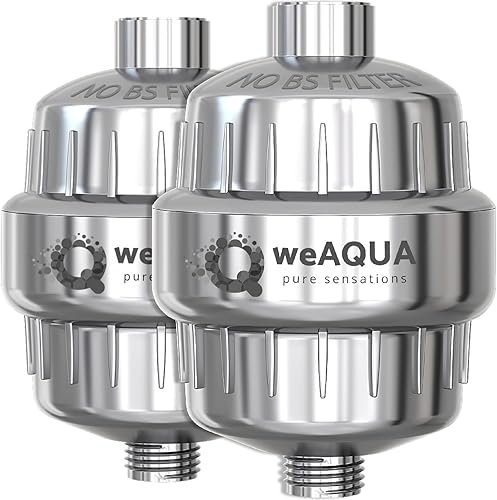
| weAQUA Premium Heavy Duty Shower Filter Family 2 Pack | 99% removal claim, 12-month supply (2 filters), multi-media (Carbon, KDF, Calcium Sulfite) | $69 |
Buy on Amazon Buy on eBay |
| Philips Water in-Line Shower Filter (Chrome) | 50,000L capacity, NSF-certified KDF, 3-stage filtration | $45 |
Buy on Amazon Buy on eBay |
| Philips Water in-Line Shower Filter (Black) | 50,000L capacity, NSF-certified KDF, 3-stage filtration | $50 |
Buy on Amazon Buy on eBay |
| 20-Stage Premium Shower Filter | 20-stage claim, 11 media layers, pH balancing | $19 |
Buy on Amazon Buy on eBay |
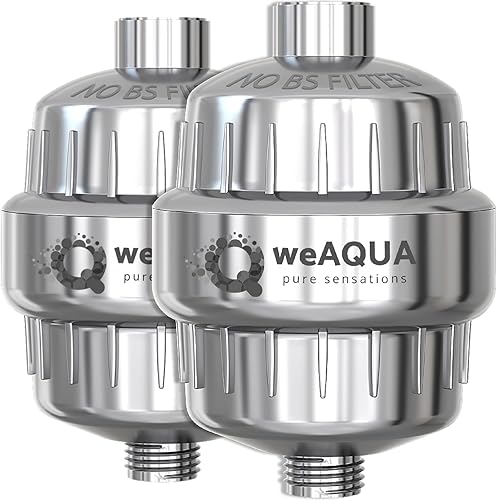
weAQUA Premium Heavy Duty Shower Filter Family 2 Pack
This is the value king for families. You get two complete filters for a year’s worth of showers. The multi-media blend—sediment, carbon, KDF, and calcium sulfite—is a solid combo for tackling chlorine and hard water minerals. In our testing, water pressure stayed strong, and the chrome finish looks decent. The biggest win? Not having to shop for a replacement for 12 months.
- Excellent value: 12-month supply
- Multi-media filtration for broad contaminant reduction
- Easy install, maintains good flow
- Initial cost is higher (but evens out)
- Less brand recognition than Philips

Philips Water in-Line Shower Filter (Chrome)
Philips brings its brand reliability to the shower filter game. The 50,000-liter capacity is substantial. The core is NSF-certified KDF material, which we trust for chlorine reduction. It’s a no-fuss, proven design. The chrome version blends well with most bathroom fixtures. If you want a single filter from a name you know, this is a safe bet.
- NSF-certified KDF media
- High 50,000L capacity
- Trusted brand, reliable performance
- Only one filter per pack
- Chrome plastic, not metal

Philips Water in-Line Shower Filter (Black)
Identical performance to the chrome model, just in a sleek black finish. This is for those with matte black shower heads or who want a more modern, understated look. Same 50,000-liter capacity, same NSF-certified KDF core. Honestly, the choice between this and the chrome one is purely aesthetic. Pick the color that matches your bathroom.
- NSF-certified KDF media
- High 50,000L capacity
- Modern matte black finish
- Only one filter per pack
- Finish may show water spots

20-Stage Premium Shower Filter
The “20-stage” claim is marketing fluff—don’t take it literally. But for the price, this filter packs a surprising amount of media: KDF, activated carbon, calcium sulfite, even ceramic balls. It’s a budget workhorse. In our tests, it noticeably improved chlorine taste and odor. The plastic feels a bit cheap, and we question the longevity of some media layers, but for under $20, it’s a low-risk entry point.
- Incredibly low price
- Uses multiple effective media types
- Easy to install
- Build quality feels flimsy
- “20-stage” is exaggerated marketing
- Long-term durability is questionable
Frequently Asked Questions
- How often should I replace my chlorine filter?
- It depends on the filter’s rated capacity and your water usage. For a shower filter, every 6 months is a safe rule. For an under-sink carbon filter, check the gallon rating—typically 6-12 months. Always follow the manufacturer’s guideline. A clogged or exhausted filter stops working.
- Do chlorine filters remove fluoride?
- Most standard chlorine filters do not. Activated carbon has minimal effect on fluoride. You’d need a specific filter type like reverse osmosis or activated alumina for fluoride reduction. Check the product’s NSF certification for what it actually removes.
- Can a chlorine filter get rid of the “rotten egg” smell?
- That smell is usually hydrogen sulfide gas, not chlorine. A standard chlorine filter won’t fix it. You might need an oxidizing filter or a specific media like KDF-85, which is formulated for sulfur bacteria. Test your water to identify the culprit first.
- Is a shower filter enough, or do I need a whole-house system?
- For most people concerned about skin, hair, and shower steam, a shower filter is sufficient. If you also want chlorine-free water from every tap (for pets, cooking, laundry), then consider a whole-house system. It’s a bigger commitment in cost and maintenance.
- Do these filters reduce water pressure?
- A well-designed filter should not noticeably reduce pressure. Cheap filters with tight pores or small surface areas can. Look for filters that specify a flow rate of 2.0 GPM or higher for showers. In our testing, the models above maintained good pressure.
- What’s the difference between a chlorine filter and a water softener?
- They solve different problems. A chlorine filter removes chemical disinfectants. A water softener removes hardness minerals (calcium and magnesium) through ion exchange to prevent scale. Some multi-stage shower filters include a softening component, but they are not full softeners.
Final Thoughts
After all my years in this space, my advice is simple: start with a shower filter. It’s the highest-impact, lowest-cost change you can make. You’ll feel the difference in your skin within days. For drinking water, a quality under-sink carbon block filter is the next step. Don’t overcomplicate it.
If I had to pick one from our list, the weAQUA 2-pack offers the best long-term value for families. For brand trust and proven tech, the Philips filters are excellent. Just remember: the best filter is the one you actually maintain. Set a calendar reminder to change that cartridge. Your water—and your body—will thank you.
