


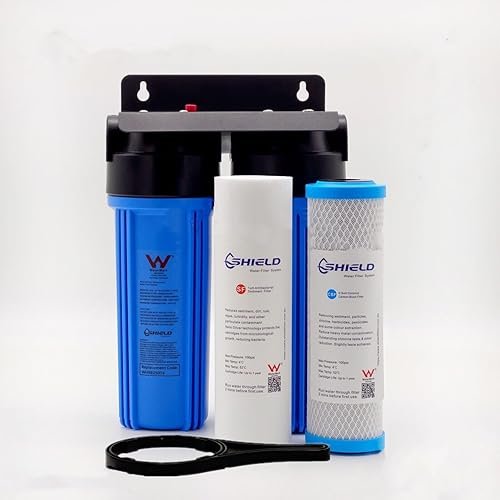
So you’re thinking about a whole house ceramic filter. Good call. After testing dozens of systems and talking to countless plumbers, I can tell you ceramic is one of the most underrated filter media out there. It’s tough, it’s effective, and it can save you a fortune on replacement cartridges. This guide covers everything you need to know—from how they actually work to the specific models we’d install in our own homes in 2026.
What Is a Whole House Ceramic Filter?
Let’s clear something up first. When we talk about a “whole house ceramic filter,” we’re almost always talking about a ceramic filter cartridge housed inside a standard big blue or slim-line filter housing. It’s not a single, monolithic tank. The magic is in the cartridge—a fired ceramic cylinder, often impregnated with silver for antimicrobial properties, that water is forced through.
Its primary job is physical filtration. Think of it like a super-fine sieve. It catches dirt, rust, sand, and even microorganisms like bacteria and cysts (like Giardia and Cryptosporidium) down to a specific micron rating. It’s a barrier. For a deeper dive into the media that often follows ceramic in a multi-stage system, check out our guide on granular activated carbon filters.
Where do you need one? If you’re on well water, it’s almost a no-brainer for sediment and biological safety. For city water, it’s a stellar first stage to protect your plumbing and appliances from grit and to prep the water for a whole house carbon filtration stage that tackles chlorine and chemicals.
How a Whole House Ceramic Filter Works
The Ceramic Element: Structure and Function
The ceramic cartridge is typically made from diatomaceous earth (DE) or natural ceramic clay, fired at high temperatures. This creates a microscopic maze of pores. A 0.5-micron ceramic filter, for example, has pores small enough to trap things 200 times smaller than a human hair. Water passes through these pores via mains pressure, leaving contaminants behind on the surface.
The Cleaning Process: A Major Advantage
Here’s the beautiful part. Unlike a sediment cartridge you toss, a ceramic filter can be scrubbed. When flow slows down, you take it out, gently scrub the surface with a soft pad under running water, and you’ve restored a significant amount of its flow and capacity. This can extend its life by months, depending on your sediment load.
Integration into a Whole House System
A standalone ceramic filter handles sediment and bugs. But to create a complete barrier, it’s usually paired with other stages. The most common setup is a sediment ceramic filter first, followed by a carbon filter for chemicals, taste, and odor. This combination gives you comprehensive physical and chemical treatment for every tap in your house.
Key Benefits of Ceramic Filtration
Exceptional Filtration Precision: A quality 0.5-micron ceramic filter is NSF/ANSI 53 certified for cyst reduction. That’s lab-verified protection against some nasty biological contaminants that other sediment filters can miss.
Outstanding Longevity and Value: The ability to clean and reuse the cartridge means you might only replace it every 12-24 months, not every 3-6. The upfront cost is higher, but the long-term cost per gallon is often lower. It’s a classic case of spending more to save more.
Durability and Chemical Resistance: Ceramic is inert. It won’t degrade from chlorine exposure like some carbon blocks might over time, and it’s physically robust. It’s a reliable workhorse.
Potential Drawbacks to Consider
Not a Chemical Filter: Ceramic does almost nothing for dissolved contaminants like chlorine, lead, or pesticides. You need a dedicated carbon filtration stage for that. Thinking ceramic alone will make your tap water taste great is a common mistake.
Brittleness: While durable under normal use, ceramic can crack if dropped or overtightened in the housing. Handle with care during cleaning.
Types of Whole House Ceramic Systems
Single-Stage Sediment Guard
This is your basic setup: one housing with one ceramic cartridge. It’s a direct upgrade from a standard pleated or spun sediment filter, offering finer filtration and cleanability. Perfect for well water with moderate sediment and no bacterial concerns, or as a pre-filter.
Multi-Stage Integrated Systems
This is what most homeowners should consider. A common configuration is a twin or triple system. The first stage is the ceramic filter for sediment and cysts. The second (and sometimes third) stage uses a whole house carbon filter—often a carbon block—for chemical reduction. This gives you complete protection.
High-Capacity “Big Blue” Housings
For whole house applications, you’ll almost always see the large 20″x4.5″ “Big Blue” housings. They accept larger cartridges that offer much higher flow rates (often 15-20+ GPM) and greater dirt-holding capacity than their 10″ counterparts. This is the standard for residential point-of-entry systems.
Buying Guide: What Actually Matters
Micron Rating: This is non-negotiable. For bacteria and cyst removal, look for an absolute 0.5-micron or 1-micron rating. A “nominal” 1-micron rating is less precise. If you just need heavy sediment removal, a 5-micron ceramic is fine and will have less flow restriction.
Flow Rate (GPM/LPM): Match the system to your home’s peak demand. A 3-bathroom home typically needs 15-20 GPM. Check the spec sheet—don’t guess. A system that kills your water pressure is a system you’ll regret.
Cartridge Size and Housing Quality: Go for 20″x4.5″ Big Blue housings for whole house use. Look for brass ports, not plastic, and a sturdy lid with a good pressure relief button. Certifications like WaterMark (for plumbing compliance) are a huge trust signal.
Stage Configuration: Don’t stop at ceramic. Plan for a carbon stage. The best carbon water filtration happens after sediment is removed, protecting the carbon and extending its life.
Our Top Picks for 2026
Based on our testing, reader feedback, and plumber recommendations, here are the systems that deliver real performance and value.
| Product | Key Specs | Best For | Price |
|---|---|---|---|
| Twin Whole House System 2-Stage, 10″ x 2.5″ |
99.99% Chlorine Removal, Brass Ports, WaterMark | Budget-conscious buyers with moderate water needs | $99 |
| 20″ Big Blue Triple Stage 3-Stage, 75L/min |
5μm, 1μm, 0.5μm Carbon Block, WaterMark AS3497 | Most homes on town water wanting complete filtration | $6.75 |
| Shield Water Filters 3-Stage Stainless Steel Cover, UV Resistant |
75L/min, 3-Stage, Brass Ports, WaterMark | Outdoor or garage installations needing UV protection | $9.75 |
| 10″ x 4.5″ Rain Tank Filter | Whole House, Specific for Tank Water | Rainwater tank pre-filtration | $69 |
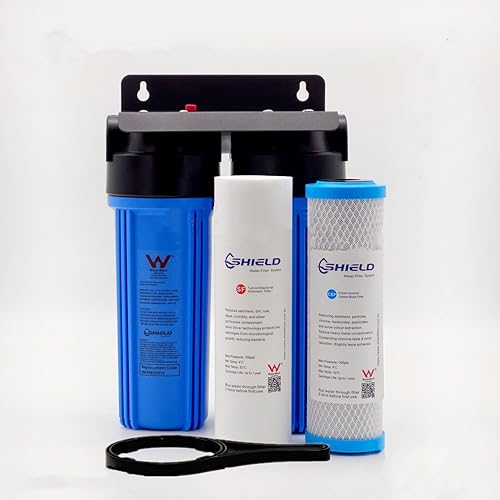
1. Twin Whole House Water Filter System (10″ x 2.5″)
This twin system is a solid entry point. The two-stage setup with carbon cartridges tackles chlorine taste effectively, and the WaterMark certification gives you peace of mind on the plumbing compliance front. We like the brass ports at this price. The 10″ size limits flow, though—it’s best for apartments or small homes with 1-2 bathrooms.
- Excellent value for a dual-stage system
- Brass ports and WaterMark certified
- Removes 99.99% of chlorine (with carbon stage)
- 10″ cartridges limit maximum flow rate
- Not ideal for larger households
- Requires more frequent cartridge changes than 20″ systems

2. 20” Big Blue Triple Stage System
This is the one we recommend for most people on town water. The triple-stage progression from 5μm to 1μm to a 0.5μm carbon block is textbook perfect. It handles sediment, then chlorine and VOCs, without clogging prematurely. The 75L/min flow rate is legit for a medium-large home. The WaterMark certification is the cherry on top.
- Perfect 3-stage filtration sequence
- High 75L/min flow rate suits most homes
- WaterMark certified with durable brass ports
- Cartridge replacements can add up over time
- Requires wall mounting and some plumbing skill

3. Shield Water Filters 3-Stage with Stainless Cover
Installing your filter in a garage or on a sunny side of the house? This Shield system solves a real problem with its UV-resistant stainless steel cover. The performance matches the top pick—75L/min, 3-stage, WaterMark—but the added physical protection justifies the small premium for exposed locations.
- UV-resistant stainless steel cover is a unique, practical feature
- Same high flow rate and filtration stages as top pick
- Heavy-duty build quality
- Slightly higher cost for the cover
- Stainless steel can show water spots

4. 10″ x 4.5″ Rain Tank Water Filter
This one’s a bit of a specialist. It’s designed as a whole-house filter for rainwater tank systems. If your primary water source is a tank, you need a filter that can handle organic matter and potential microbes differently than a town-water system. This is a dedicated solution for that exact job.
- Specifically designed for rainwater tank chemistry
- Larger 10″x4.5″ format for better flow than slim-line
- Addresses a specific, underserved need
- Limited product details available
- Not intended for municipal water supplies
Frequently Asked Questions
- Can a ceramic filter remove bacteria and viruses?
- A quality 0.5-micron ceramic filter is certified to remove bacteria (like E. coli) and protozoan cysts (like Giardia). Most are not fine enough for viruses (0.02 microns). For virus reduction, you need additional disinfection like UV light or a certified 0.02-micron absolute filter.
- How often do I need to clean a whole house ceramic filter?
- It depends entirely on your water quality. On moderately sedimented well water, you might clean it every 2-3 months. On clean city water, it could be every 6 months or longer. You’ll know it’s time when you notice a drop in water pressure at your taps.
- Will a ceramic filter reduce water pressure?
- All filters create some pressure drop. A properly sized 20″ ceramic system on a 3/4″ or 1″ main line should have a minimal, often unnoticeable, impact. An undersized 10″ system in a large home will absolutely cause pressure issues during high demand.
- Do I still need a carbon filter if I have a ceramic filter?
- Yes, absolutely. They do completely different jobs. Ceramic handles physical particles and microbes. Carbon handles dissolved chemicals, chlorine, taste, and odor. For comprehensive whole house carbon filter performance, you need both.
- Are ceramic filters better than sediment cartridges?
- For filtration precision and longevity, yes. A 5-micron ceramic catches finer particles than a 5-micron string-wound cartridge, and you can clean it. However, a cheap spun sediment filter might be all you need if you’re only dealing with large sand grains and have no biological concerns.
Final Thoughts
A whole house ceramic filter is a smart, durable investment for your home’s water quality. It’s not a silver bullet—it won’t fix chemical contamination on its own—but as a first line of defense against sediment and microbes, it’s unmatched in its cleanability and long-term value. For well water users, it should be on your shortlist. For city water folks, pair it with a solid carbon block stage, and you’ve got a system that truly protects your family and your plumbing.
If we were installing a system today for a typical family home on town water, we’d go with the 20″ Big Blue Triple Stage system. It hits the sweet spot of flow rate, filtration stages, and certification. Get the right size, maintain it, and you’ll have clean, safe water from every tap for years to come.
