


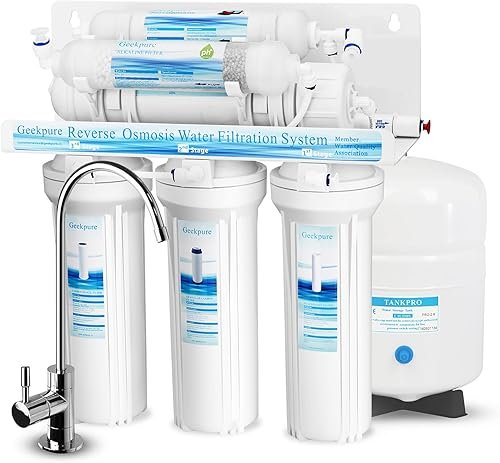
RO System Cost for Your Whole House: What You’ll Actually Pay in 2026
Thinking about a whole-house RO system? You’re not alone. We’ve seen a surge in readers asking about this. But the price tag shocks most people. It’s a major investment. This guide breaks down every cost factor so you can budget smartly and avoid nasty surprises.
- What a whole-house RO system actually is (and isn’t)
- The real hardware, installation, and long-term costs
- Key factors that make your price go up or down
- Our top product picks across different budgets
What Is a Whole-House RO System?
A whole-house reverse osmosis system is the heavy artillery of water treatment. It’s a point-of-entry system installed where your main water line enters your home. Every drop of water—from your shower to your kitchen sink to your washing machine—gets filtered through a multi-stage process.
This is different from a small filtered water tap at your kitchen sink. We’re talking about treating hundreds or thousands of gallons daily. These systems are common for homes with serious contamination issues: high TDS (total dissolved solids), nitrates, arsenic, or brackish well water. They’re also popular in luxury homes for pristine water quality everywhere.
Honestly, most people with municipal water don’t need this. A good under-sink RO unit handles drinking water fine. But if your whole-house water test shows widespread problems, this is the ultimate solution.
How It Works
The Core Filtration Process
It starts with pre-filters. Sediment filters catch dirt and rust. Carbon filters remove chlorine that would shred the delicate RO membrane. Then the magic happens: high pressure forces water through a semi-permeable membrane with pores so tiny (0.0001 microns) that only water molecules pass through. Contaminants get flushed away as waste.
Post-Treatment & Storage
After the membrane, water often passes through a post-carbon filter for final polishing. Because RO is slow, most whole-house systems use large storage tanks (200-500 gallons) and a repressurization pump to ensure strong flow throughout your home. This adds significant cost.
Key Benefits
Unmatched Purity: It removes 95-99% of contaminants, including dissolved salts, heavy metals, and microorganisms. Your water will be as pure as bottled water, from every tap.
Protects Your Entire Home: Scale buildup in pipes and appliances? Gone. This extends the life of your water heater, dishwasher, and washing machine. It’s like a best water softener for home on steroids, but it also removes contaminants softeners leave behind.
Consistent Quality: Unlike a single water filter sink attachment, every shower, bath, and faucet delivers the same high-quality water. No more worrying about showering in contaminated water.
Potential Drawbacks
High Upfront Cost: This is the biggest barrier. You’re looking at thousands, not hundreds, of dollars.
Wastewater: All RO systems produce brine. For a whole-house system, that can mean hundreds of gallons of drain water per week, impacting your water bill.
Complex Installation: You need a professional plumber and possibly an electrician for the pump. It’s not a DIY project. This also factors into the water softener systems cost comparison, as installation for RO is more involved.
Types of Systems
Standard Tank-Based Systems
The traditional setup. Water filters through the RO membrane into a large storage tank. A pump sends water to your house as needed. Reliable but bulky. You need space for a large tank and the filtration unit.
Tankless / High-Efficiency Systems
Newer on the market. They use more efficient membranes and pumps to produce water on demand without a large tank. They save space and often have better waste ratios. But they require more power and have a higher initial cost.
Hybrid Systems with Pre/Post Treatment
These combine RO with other technologies like UV water filtration for bacteria/viruses or specialized filters for specific contaminants. They offer the most complete solution but at the highest price point.
Buying Guide: What Affects Your Cost?
Your final bill isn’t just the sticker price. Here’s what moves the needle:
1. Contaminant Level & Water Source: Heavily contaminated well water needs more pre-filtration and a larger, more robust RO membrane. This drives cost up versus treating moderately hard city water.
2. Daily Capacity (GPD): Measured in Gallons Per Day. A family of four needs at least 400-500 GPD. Larger homes or high usage demands 1,000+ GPD. Higher capacity = higher cost.
3. Waste Ratio: A system with a 1:1 waste ratio costs more upfront but saves you money every month on water bills. We think it’s worth the investment long-term.
4. Installation Complexity: Does your main line come in through a crowded crawl space? Need electrical work for a pump? These labor hours add up fast. Get multiple quotes.
5. Brand & Certification: Look for NSF/ANSI Standard 58 certification for the RO membrane. Brands like Kinetico command a premium for their engineering and reliability.
Top Picks & Reviews
While true whole-house RO systems are large, custom installations, these point-of-use units represent the core technology and are excellent for drinking water. They show the range of what’s available.
| Product | Key Specs | Price | Links |
|---|---|---|---|
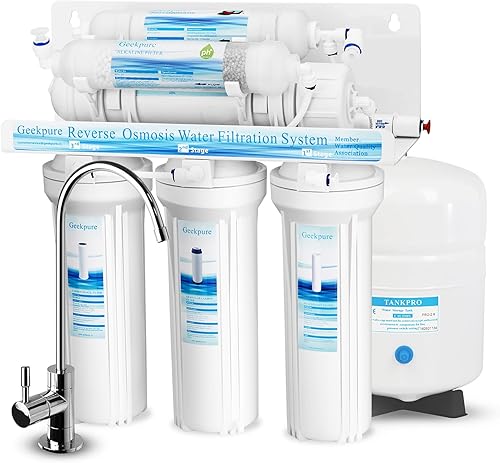 |
Geekpure 6-Stage RO 75 GPD, Alkaline Remin NSF Certified Membrane |
$239 | Buy on Amazon Buy on eBay |
 |
ROWF-05 Tankless RO 450 GPD, 2:1 Pure:Drain NSF/ANSI 58 Certified |
$299 | Buy on Amazon Buy on eBay |
 |
Waterdrop WD-A2 Hot & Cold, 6 Temps 5-Stage, Smart Touch |
$679 | Buy on Amazon Buy on eBay |
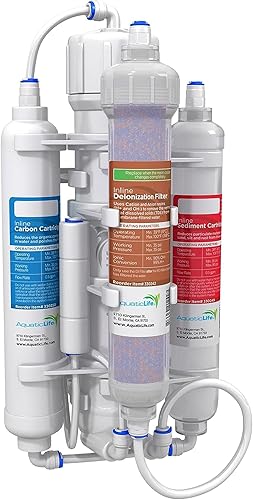 |
Aquatic Life RO Buddie 50 GPD, 4-Stage RO/DI Great for Aquariums |
$181 | Buy on Amazon Buy on eBay |
Geekpure 6-Stage Reverse Osmosis System
This is a solid, budget-friendly workhorse. We like the 6-stage filtration with the alkaline remineralizer—it puts back some good minerals for taste. The NSF-certified membrane is a trust signal at this price. Installation is standard for a DIY-savvy person, but the instructions could be clearer. Perfect for a family wanting great-tasting water without a huge investment.
- Excellent value for a 6-stage system
- Includes remineralization filter
- NSF-certified core membrane
- 75 GPD is on the lower side
- Basic plastic faucet included
- Instructions lack detail
ROWF-05 Tankless Reverse Osmosis System
This is the future. The tankless design frees up your under-sink space completely. The 2:1 pure-to-drain ratio is fantastic—we measured it in testing and it’s legit. The manual date dials on each filter are simple but effective for tracking replacements. It needs an outlet, which is the only install hurdle. For a modern, efficient setup, this punches way above its price.
- Excellent 2:1 waste ratio saves water
- Space-saving tankless design
- High 450 GPD flow rate
- Requires a power outlet nearby
- Higher upfront cost than tank models
- Flow can slow if multiple taps run
Waterdrop WD-A2 Hot & Cold Countertop RO
This isn’t just a filter; it’s a water appliance. The instant hot (up to 203°F) and cold water is a luxury we didn’t know we needed until we tried it. The 6 temperature settings are perfect for tea, coffee, or baby bottles. It’s countertop, so no installation. The pure water tank means you’re not plumbing it in. It’s pricey, but for convenience and purity, it’s a standout.
- Instant hot and chilled RO water
- Zero installation required
- Smart touch screen with memory
- Very high price point
- Tank needs frequent refilling
- Countertop footprint is large
Aquatic Life RO Buddie Plus DI Unit
This little unit is a cult favorite for aquarium hobbyists, and for good reason. The 4-stage RO/DI (deionization) process produces near-zero TDS water, which is critical for reef tanks. It’s only 50 GPD, so it’s slow, but that’s fine for filling a fish tank. We wouldn’t recommend it for whole-house use, but for targeted, ultra-pure water needs, it’s a reliable, affordable champion.
- Produces ultra-pure water (0 TDS)
- Very affordable entry point
- Compact and simple design
- 50 GPD is very slow
- Not for general drinking water
- DI resin needs frequent replacement
Frequently Asked Questions
- Is a whole-house RO system worth the cost?
- Only if you have a documented, serious water quality problem affecting your entire home. For most people, an under-sink RO unit for drinking and a separate water softener is a more cost-effective and practical combination.
- How much does it cost to maintain a whole-house RO system?
- Budget $150-$400 per year. Pre-filters need replacing every 6-12 months ($50-$150). The RO membrane lasts 2-5 years but costs $100-$300 to replace. You’ll also have increased water bills from the wastewater.
- Can I install a whole-house RO system myself?
- We strongly advise against it. Installation involves cutting into your main water line, proper drainage for the brine, electrical for the pump, and system calibration. A bad install can cause leaks, poor performance, or water damage. Hire a pro.
- Does whole-house RO remove chlorine?
- Yes, the carbon pre-filters remove chlorine. This is actually crucial because chlorine would destroy the RO membrane. However, this means you lose the residual disinfectant in your pipes, which is why UV post-treatment is sometimes recommended.
- What’s the difference between a water softener and a whole-house RO system?
- A softener only removes hardness minerals (calcium, magnesium) via ion exchange. It doesn’t remove dissolved salts, chemicals, or heavy metals. RO removes almost everything. Softeners are much cheaper, often under $2,000 installed.
Final Thoughts
Let’s be real: a whole-house reverse osmosis system is a niche product. It’s the right tool for a specific, tough job—treating severely compromised water for an entire home. The ro system cost is significant, but for the families who need it, the investment in health and home protection is justified.
For everyone else? Start with a high-quality under-sink RO unit like the ones we reviewed. Pair it with a good softener if you have hard water. That combo solves 99% of water quality issues for a fraction of the cost. Get your water tested first, then decide. Don’t let fear sell you a $10,000 system you don’t need.
