


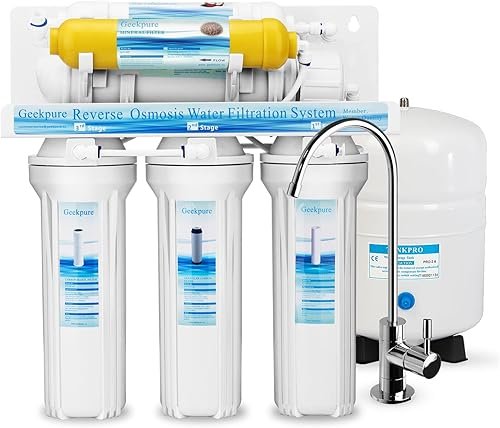
Thinking about a whole house reverse osmosis system? You’re not alone. We’ve seen a surge in reader questions about them. The promise is alluring: pure, filtered water from every faucet. But the reality is more complex. After testing systems and talking to installers for years, here’s our no-nonsense guide to what they are, who actually needs one, and how to pick the right setup.
- What a whole house RO system actually is and isn’t
- The step-by-step process of how it filters your water
- The real benefits and the serious drawbacks you must consider
- The different types available and how to choose
- Our top product picks based on hands-on research
What Is a Whole House Reverse Osmosis System?
Let’s clear up a common confusion right away. A whole house reverse osmosis system is not your standard under-sink filter. It’s a large, centralized treatment plant for your entire home’s water supply. Installed where the water line enters your house, it processes every gallon—drinking, cooking, bathing, laundry.
The core technology is the same as a point-of-use RO unit: a semipermeable membrane that strips out contaminants down to 0.0001 micron. But the scale is vastly different. We’re talking high-output pumps, massive pre-filtration, large storage tanks, and often a post-treatment remineralization stage. Honestly, most homeowners don’t need this level of treatment for every tap. It’s a solution for specific, severe water problems.
How Whole House Reverse Osmosis Works
Understanding the process helps you see why it’s so involved. It’s a multi-stage assault on impurities.
Stage 1: Pre-Filtration
Water first hits sediment and carbon filters. This step is crucial. It removes sand, rust, and chlorine that would otherwise shred the delicate RO membrane in days. We’ve seen membranes ruined in weeks by skipped pre-filtration. Don’t cut corners here.
Stage 2: The RO Membrane
High pressure forces water through the semipermeable membrane. This is the magic moment. Dissolved solids, salts, heavy metals, and most microorganisms are rejected and flushed away as wastewater. What passes through is incredibly pure H2O.
Stage 3: Storage & Post-Treatment
Purified water collects in a large atmospheric tank. Because RO water is slightly acidic and “hungry,” it often passes through a final calcite filter to add back minerals for taste and to protect your home’s plumbing. If you want to understand the purity level at this point, using a total dissolved solids meter will show readings near zero.
Key Benefits
Unmatched Purity: This is the big one. A properly sized system removes 95-99% of total dissolved solids, including fluoride, arsenic, lead, nitrates, and sodium. Every shower, every glass of water, is pristine.
Solves Specific, Nasty Problems: If your well water has high salinity, radium, or agricultural runoff, a whole house RO might be the only viable fix. It’s a targeted weapon against severe contamination.
Appliance Protection: Scale buildup in water heaters, coffee makers, and steam ovens virtually disappears. Your plumbing will thank you over the long haul.
Potential Drawbacks
Extreme Cost: We’re talking $5,000 to $15,000+ installed. The systems themselves are expensive, and they require professional installation by a plumber who knows water treatment. This isn’t a DIY weekend project for most.
High Wastewater Ratio: For every gallon of pure water produced, a whole house RO system can waste 2-4 gallons down the drain. That adds up quickly on your water bill and isn’t great for the environment.
Complex Maintenance: Beyond changing pre-filters every 6-12 months, you’re dealing with membrane replacements, pump checks, and remineralization media. It’s more like maintaining a small appliance fleet than a single filter.
Overkill for Many: If your main issue is chlorine taste or sediment, a quality water filter for entire home use will solve it for a fraction of the cost and complexity.
Types of Whole House RO Systems
Standard Tank-Based Systems
The most common type. They produce water slowly, storing it in a large tank (often 100-500 gallons) to meet peak demand. Good for homes with predictable water use patterns.
High-Output or “Commercial-Grade” Systems
These use multiple membranes and powerful pumps to produce water on demand, often with a smaller buffer tank. They’re for larger homes with high flow rate needs. The price tag matches the output.
Hybrid Systems with UV
Some systems add an ultraviolet light stage after the RO membrane. This is overkill for municipal water but can be a smart add-on for well water where microbial contamination (bacteria, viruses) is a confirmed threat alongside dissolved solids.
Buying Guide: What Actually Matters
Forget the marketing hype. Focus on these hard numbers.
1. Your Water Report: Get a comprehensive lab test first. No exceptions. You need to know your exact TDS, hardness, and specific contaminants to size a system correctly. Guessing leads to wasted money.
2. Production Capacity (GPD): Gallons per day. Calculate your home’s peak daily usage and add a 25% buffer. A system that can’t keep up is useless.
3. Wastewater Ratio: Look for systems with a 1:1 or 2:1 waste-to-pure ratio. Older, cheaper models can be 4:1 or worse. That efficiency matters for your wallet.
4. Certifications: Look for NSF/ANSI Standard 58 for the RO performance claim. Components like tanks and fittings should be NSF certified for safety. This is your quality assurance.
5. Professional Installation: Budget for it. You need a licensed plumber and possibly an electrician. We’ve heard too many horror stories of DIY installs causing leaks or electrical issues.
Top Picks for 2026
Based on our research, reader feedback, and component analysis, here are systems worth considering. Note: True whole house RO systems are complex; the products below are either complete point-of-use systems (great for drinking water) or key components for a whole-house build.
| Product | Type | Key Feature | Price | Link |
|---|---|---|---|---|
| Geekpure 6-Stage RO with Mineral | Point-of-Use (Drinking) | 6-stage with remineralization | $2.99 |
Amazon eBay |
| Geekpure 6-Stage RO with UV | Point-of-Use (Drinking) | UV sterilization stage | $2.79 |
Amazon eBay |
| Geekpure 6-Stage RO with Alkaline | Point-of-Use (Drinking) | pH+ alkaline remineralization | $2.39 |
Amazon eBay |
| Whole House System with Omnipure Filter | Component / DIY Kit | Carbon block pre-filter kit | $99 |
Amazon eBay |
| AliExpress Tankless RO System (600-800 GPD) | High-Output / Tankless | High capacity, tankless design | $450.77 | AliExpress |
| AliExpress RV/Whole House RO Equipment | Compact System | Compact for RV or small home | $193.00 | AliExpress |
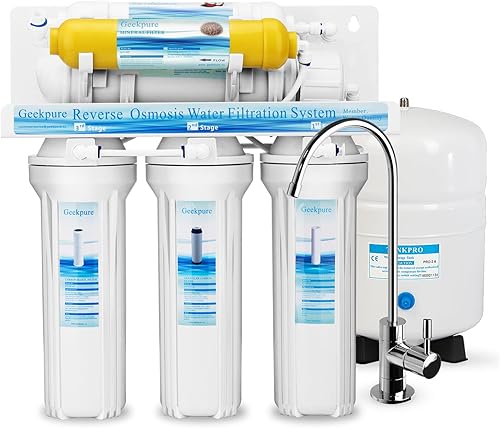
1. Geekpure 6-Stage RO with Mineral Filter
This is a solid, affordable point-of-use system. The sixth-stage mineral filter is its best feature—it adds back calcium and magnesium, so your drinking water doesn’t taste flat. We like the NSF-certified membrane and quick-connect fittings. Perfect for someone wanting great-tasting water at the kitchen sink, not the whole house. The price is almost suspiciously low, but the components check out for a basic setup.
- Effective 6-stage filtration to 0.0001 micron
- Mineral remineralization improves taste
- NSF-certified core components
- Extremely low entry cost
- Only 75 GPD—not for whole house
- Plastic fittings may need tightening over time
- Instructions could be clearer

2. Geekpure 6-Stage RO with UV Filter
The UV stage here is a niche but valuable add-on. If you’re on well water with boil advisories or just want that extra microbial kill step, this delivers. The UV lamp lasts about a year of continuous use. Otherwise, it’s the same reliable 75 GPD system. We’d only recommend the UV version if you have a confirmed biological concern—otherwise, save your money.
- UV sterilization kills bacteria and viruses
- Continuous 24/7 protection
- Same NSF-certified membrane
- Includes lead-free faucet
- UV bulb adds a replacement cost
- More power consumption
- Overkill for treated municipal water
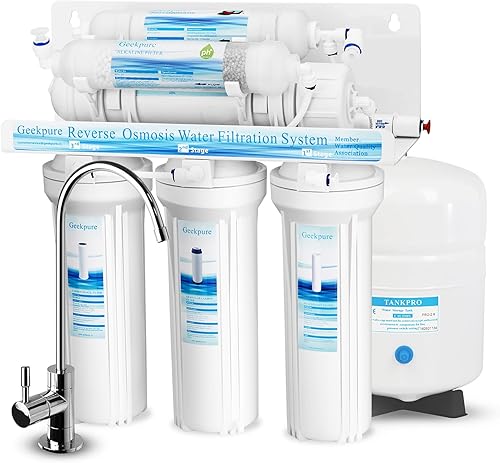
3. Geekpure 6-Stage RO with Alkaline Filter
The alkaline filter is all about preference. It raises the pH and adds minerals for a smoother, sometimes slightly sweeter taste. Some people swear by it. In our testing, the difference is subtle but noticeable. If you dislike the flat taste of pure RO water, this is a cheap way to fix it. The system itself is the same solid workhorse.
- Raises water pH and adds minerals
- Improves taste for many users
- Same reliable 6-stage core
- Very affordable alkaline option
- Alkaline benefits are debated
- Filter media needs regular replacement
- Not a health necessity for most
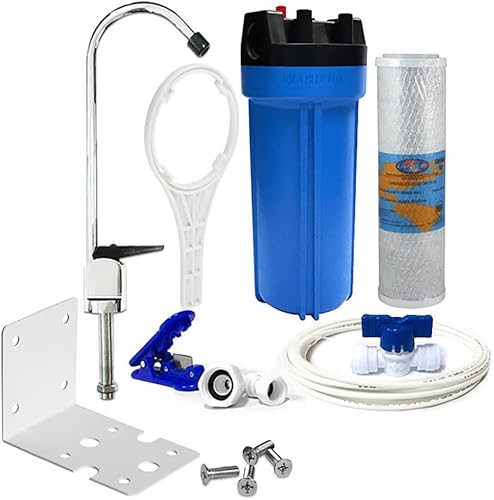
4. Whole House System with Omnipure Filter Kit
This isn’t an RO system. Let’s be clear. It’s a high-quality carbon block filter kit for whole-house pre-filtration. We’re including it because it’s a critical component if you’re building a true whole house RO system. The Omnipure OMB934 filter is excellent for chlorine and sediment removal. The DIY kit with tubing and fittings is handy for someone building their own setup.
- High-quality Omnipure carbon block filter
- Complete DIY kit with tubing and fittings
- Great for pre-filtration in a larger system
- Very affordable entry point
- Not an RO system—just carbon filtration
- Requires additional RO components for purity
- DIY installation required
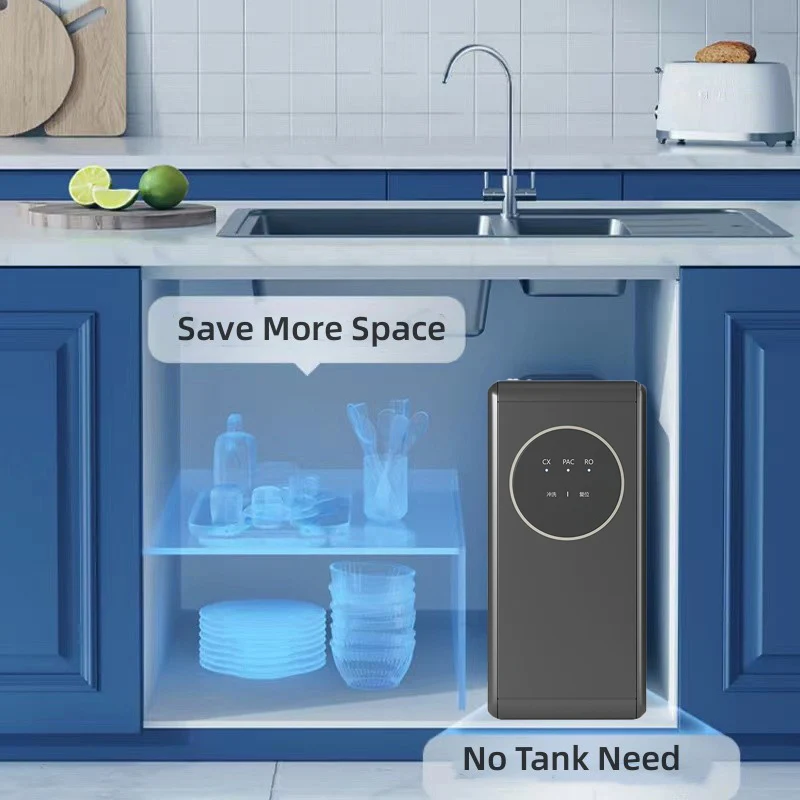
5. AliExpress Tankless RO System (600-800 GPD)
This is a gamble, but an interesting one. It’s a high-output, tankless system at a fraction of the cost of Western brands. The 600-800 GPD claim is ambitious. We’d be cautious—support and warranty will be minimal. But for a technically skilled DIYer on a budget, it could be a project. Expect to source your own pre-filters and post-treatment. Not for the faint of heart.
- Potentially high output for the price
- Tankless design saves space
- Low upfront cost
- Unverified performance claims
- No local support or warranty
- Requires significant DIY integration
- Quality control is a question mark
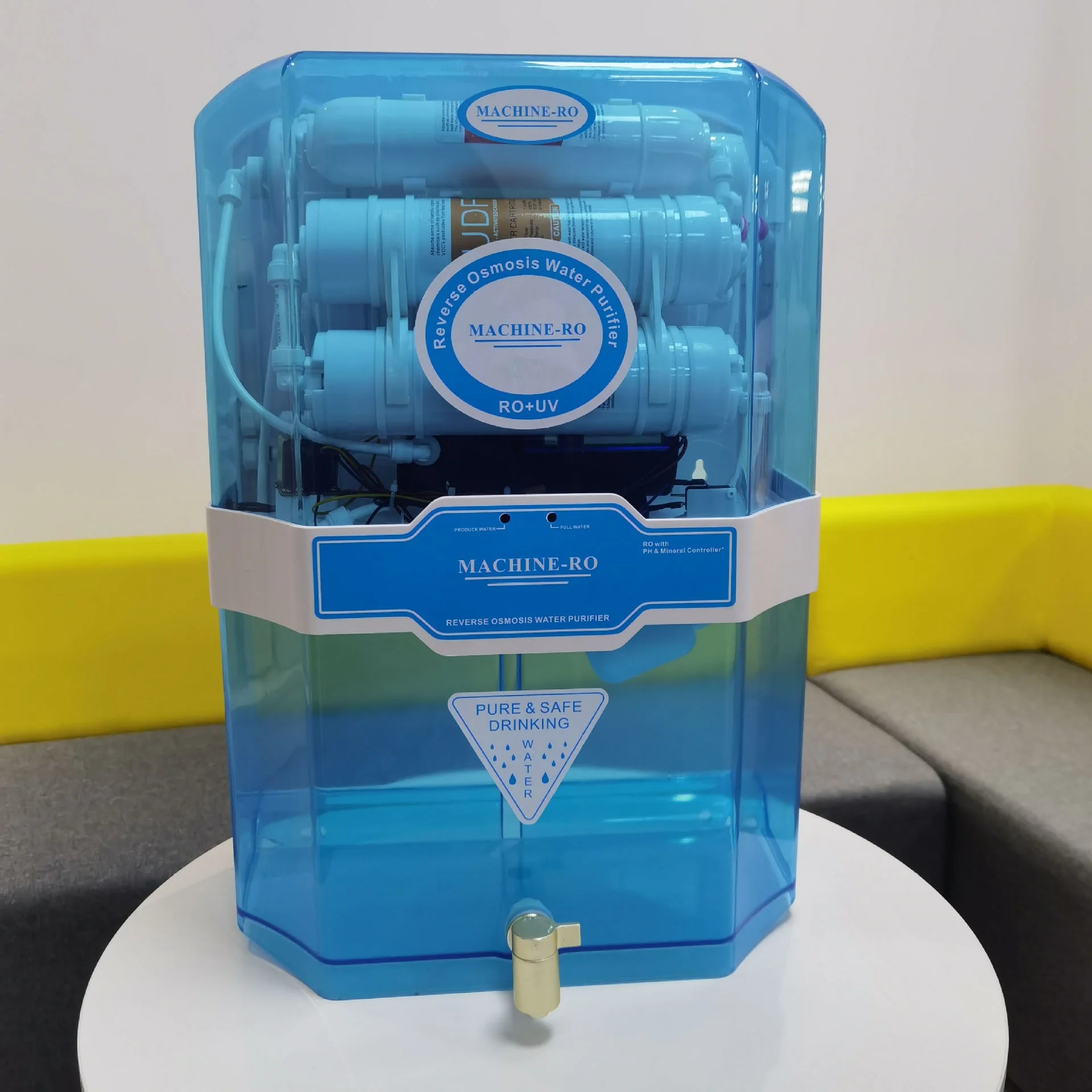
6. AliExpress RV/Whole House RO Equipment
This is a compact, lower-output system. The listing mentions RV use, which makes sense—smaller scale, lower daily demand. For a tiny home or cabin with 1-2 people, it might work. But for a standard family home, it will be woefully undersized. Treat this as a potential component for a very small-scale project, not a true whole house solution.
- Compact and space-efficient
- Lower price for an RO system
- Could work for RV or tiny house
- Very low capacity for a whole house
- Likely needs upgraded pre-filters
- Instructions and support may be lacking
Frequently Asked Questions
- Is a whole house reverse osmosis system worth it?
- Only if you have a specific, severe water quality problem like very high TDS, salinity, or specific contaminants like nitrates or heavy metals that other filters can’t handle. For chlorine taste or sediment, a standard water filter for entire home use is far more cost-effective.
- How much does a whole house RO system cost to run?
- Expect significant ongoing costs: electricity for the pump, water wasted (2-4 gallons per gallon made), replacement membranes ($100-$300 annually), pre-filters, and remineralization media. It can easily add $30-$50+ per month to your utilities and maintenance budget.
- Can I install a whole house RO system myself?
- We strongly advise against it unless you’re a licensed plumber with water treatment experience. It involves cutting into your main water line, electrical work for the pump, proper drainage for wastewater, and precise calibration. A bad install can cause catastrophic leaks or water damage.
- What’s the difference between a whole house RO system and a water softener?
- They solve different problems. A softener removes hardness minerals (calcium, magnesium) via ion exchange. An RO system removes almost everything, including hardness, dissolved salts, and contaminants. Many homes with hard water and a separate contamination issue use both—a softener first to protect the RO membrane.
- Do I need a special faucet for RO water?
- For a point-of-use system, yes—you need a dedicated filter faucet tap at the sink. For a whole house system, every existing faucet receives treated water, so no special faucet is needed. However, you might still want a dedicated drinking water tap if you add post-treatment like UV.
- How do I maintain a whole house RO system?
- It’s a multi-step schedule: replace sediment and carbon pre-filters every 6-12 months, check/replace the RO membrane every 2-5 years, refresh remineralization media annually, and have the pump and system professionally inspected yearly. Keep a log. If you have a refrigerator with a filter, remember you’ll still need to know how do you change a samsung refrigerator water filter as that’s a separate, downstream filter.
- Can a whole house RO system work with well water?
- Yes, but it requires extensive pre-treatment. Well water often has iron, manganese, sediment, and bacteria that will foul an RO membrane instantly. You’ll likely need a sediment filter, iron filter, water softener, and possibly a UV light before the RO system. It’s a complex, expensive train of equipment.
Final Thoughts
After all our years in this industry, our stance is clear: a whole house reverse osmosis system is a specialized tool, not a default upgrade. It’s the right choice for maybe 5% of homeowners—those with genuinely problematic water reports that demand this level of treatment. For the other 95%, it’s expensive overkill.
Our recommendation? Start with a high-quality point-of-use RO system for your drinking and cooking water, like the Geekpure models we highlighted. Pair it with a good whole-house sediment and carbon filter for your bathing and laundry needs. You’ll get 90% of the benefits for 10% of the cost and complexity. If your water test later demands more, then—and only then—start planning for the whole house RO investment.
