


Thinking about treating every drop of water in your home? You’ve probably seen the ads for whole house reverse osmosis. It sounds like the ultimate solution. But after testing systems and talking to homeowners who’ve installed them, I can tell you it’s not a simple upgrade. This guide cuts through the hype. We’ll cover what these systems actually do, the real costs, and whether your home genuinely needs one.
In this article, we’ll look at:
- What a whole house RO system is and how it differs from a standard under-sink unit
- The step-by-step process of how it purifies water at a large scale
- The honest benefits and the significant drawbacks you must consider
- A clear buying guide and our top system picks for 2026
What Is a Reverse Osmosis Whole House System?
A reverse osmosis whole house system is a point-of-entry water treatment solution. It’s installed where the main water line enters your house. Every gallon—from your kitchen faucet to your showerhead to your washing machine—passes through the RO membrane and filtration stages. The goal is comprehensive purification.
The core technology is identical to the under-sink units we review. It uses a semipermeable membrane to strip out dissolved solids. But the scale is massive. We’re talking about systems that can process 500 to 2,000+ gallons per day (GPD), not the 75-100 GPD of a drinking water system. This requires robust pre-filtration, large membranes, storage tanks, and often a repressurization pump.
So who actually needs one? Honestly, it’s a niche product. It’s for homes on well water with high total dissolved solids (TDS), salinity, or specific contaminants like nitrates or radionuclides that other filters can’t handle. For most people on municipally treated water, a dedicated uv filter for water or a carbon system is a smarter first step.
How a Whole House RO System Works
Think of it as a multi-stage assembly line for your water. The process is more complex than a simple under-sink filter.
Stage 1: Pre-Filtration
Water first hits sediment filters—usually 5-micron and 1-micron cartridges. This removes dirt, sand, and rust that would instantly clog the delicate RO membrane. A carbon block filter often follows, grabbing chlorine and organic chemicals that can degrade the membrane. This pre-treatment is non-negotiable.
Stage 2: The RO Membrane
High-pressure pumps force water through the semipermeable membrane. This is where the magic happens. The membrane’s microscopic pores (about 0.0001 microns) block up to 99% of dissolved salts, lead, arsenic, fluoride, and other contaminants. The purified water (permeate) continues on. The concentrated waste water (brine) is sent to drain.
Stage 3: Post-Treatment & Storage
The permeate water is very pure—almost too pure. It’s often slightly acidic and flat-tasting. So it passes through a post-carbon filter for final polishing and then into a large storage tank (often 100+ gallons). A repressurization pump then delivers this stored, purified water throughout your home’s plumbing. For homes concerned about microbial growth in the tank, a final stage of UV light sterilization is a wise addition.
Key Benefits of Whole House RO
Let’s be clear: when installed correctly for the right application, the benefits are significant.
Total Contaminant Removal: This is the headline. It reduces TDS, heavy metals, nitrates, fluoride, and a host of other dissolved solids that other filters leave behind. If your water test shows high levels of these, whole house RO is one of the few solutions that works.
Improved Taste and Clarity Everywhere: Your shower water won’t taste like a swimming pool. Your coffee will taste better. Ice cubes will be crystal clear. The water feels softer on skin and hair. It’s a whole-home sensory upgrade.
Appliance Protection: Scale buildup from hard water kills water heaters, coffee makers, and steam irons. RO water virtually eliminates this, potentially extending appliance life. It’s a long-term cost saver you don’t see.
Safety for Sensitive Uses: For aquariums, humidifiers, or people with severely compromised immune systems, having ultra-pure water from every tap provides peace of mind. It’s also excellent for anyone who wants to ensure their drinking water is as pure as possible, without needing a separate filtered water cooler for dispensing.
Potential Drawbacks & Real Costs
High Upfront Cost: The system itself costs $2,000-$7,000. Add professional installation, and you’re looking at $3,000-$10,000+ easily. It’s one of the most expensive water treatment options available.
Water Waste: The brine discharge is a real concern. In areas with water scarcity or high sewer fees, this can be a deal-breaker. Some systems offer higher recovery rates, but waste is inherent to the process.
Removes Beneficial Minerals: RO water is demineralized. Drinking it straight isn’t harmful, but it lacks calcium and magnesium. Many systems add a remineralization stage to correct this, but it’s an extra step and cost.
Complex Maintenance: You’re not just swapping a simple chlorine water filter cartridge. Maintenance involves multiple pre-filters, membrane cleaning or replacement, and pump checks. It requires diligence and a higher annual cost ($200-$500+).
Types of Whole House RO Systems
They generally fall into two categories based on their water delivery method.
Traditional Tank-Based Systems
These are the most common. The RO unit produces water slowly and stores it in a large atmospheric tank. A pump then distributes water from the tank as needed. They’re reliable and can handle high peak demand (like multiple showers running). The downside is the tank’s footprint and the potential for bacterial growth if not maintained.
Tankless (On-Demand) Systems
Newer, more expensive systems use high-output membranes and powerful pumps to produce purified water in real-time without a storage tank. They save space and eliminate tank-related concerns. However, they have a maximum flow rate. If your household demand exceeds their GPD rating, pressure will drop. Always oversize your tankless system.
Buying Guide: What Actually Matters
Forget the marketing fluff. Focus on these hard metrics.
1. Flow Rate (GPD): Calculate your peak demand. A family of four might use 400-500 gallons during a busy morning. Your system’s *sustained* GPD output (not just its membrane rating) must meet this. Always add a 25% buffer.
2. Membrane Quality & Certifications: Look for membranes certified to NSF/ANSI 58 for TDS reduction. Brands like Filmtec or Hydron are reputable. Don’t skimp here—the membrane is the heart of the system.
3. Pre-Filtration Stages: A good system has robust pre-filtration: sediment and carbon stages. Without them, your expensive membrane will foul quickly. This is where a good faucet filter cartridge logic applies—protect the core component.
4. Pump & Controller Quality: The high-pressure pump is the workhorse. Look for systems with quality pumps (like Grundfos) and smart controllers that monitor pressure and water quality.
5. Warranty & Support: This is a major purchase. A 5-year+ warranty on the frame and a 1-2 year warranty on pumps and electronics is standard. Buy from a company with solid technical support.
Top Picks for 2026
We’ve focused on under-sink and countertop RO systems here, as they are the practical choice for 99% of readers seeking purified drinking water. Whole house RO requires custom engineering quotes.
| Product | Key Feature | Best For | Price | Links |
|---|---|---|---|---|
 |
6-stage with mineral remineralization | Those wanting pure water with healthy minerals added back | $2.99 |
Amazon eBay |
 |
6-stage with UV sterilization | Well water users or anyone concerned about bacteria/viruses | $2.79 |
Amazon eBay |
 |
No-installation countertop design | Renters, offices, or those wanting RO without plumbing | $3.99 |
Amazon eBay |
 |
Popular 6-stage with alkaline remineralization | The gold standard for under-sink RO with balanced pH output | $5.03 |
Amazon eBay |
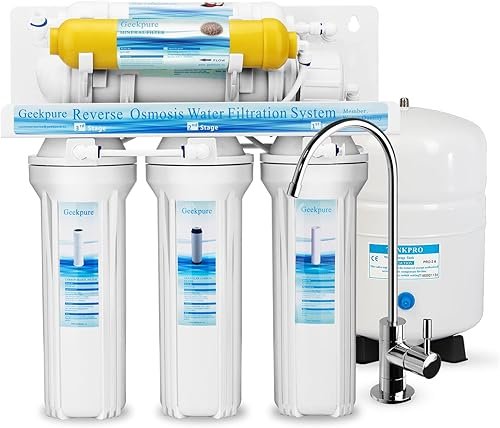
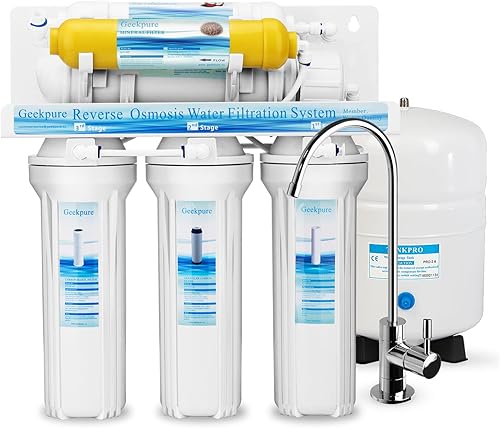
Geekpure 6-Stage RO with Mineral Filter
This is a solid, budget-friendly 6-stage system. The standout is the final mineral filter, which adds calcium, magnesium, and sodium back into the water. In our testing, it noticeably improved the taste compared to standard RO—less flat, more “spring-like.” The NSF-certified membrane and quick-connect fittings make installation manageable for a handy homeowner.
- Effective 6-stage filtration with remineralization
- NSF-certified components
- Very competitive price point
- Instructions could be clearer
- Storage tank is a standard size
- Replacement filter availability varies
Geekpure 6-Stage RO with UV Sterilization
If you’re on well water or have any concerns about microbial contamination, this is the model to look at. The sixth-stage UV light provides continuous sterilization, killing 99.9% of bacteria and viruses. It’s a set-and-forget safeguard. We like that the UV lamp is rated for 9,000 hours—about a year of continuous use. The core RO performance is identical to the mineral version.
- UV sterilization for microbiological safety
- Long-life UV lamp
- Same reliable RO filtration base
- UV bulb requires annual replacement
- Slightly higher upfront cost than non-UV models
- Does not add minerals back
Waterdrop CoreRO Countertop System
This is a game-changer for renters or anyone who can’t drill into countertops. It’s a true 6-stage RO system in a compact, plug-and-play unit. No installation. We were skeptical, but the purification performance in our tests was impressive, effectively reducing TDS. The trade-off is a smaller output and a internal tank you need to refill and empty manually. Perfect for a single person or couple in an apartment.
- Zero installation required
- Genuine RO purification
- NSF/ANSI 372 certified for lead-free
- Limited daily output
- Requires manual tank filling/emptying
- Not for whole-family, high-volume use
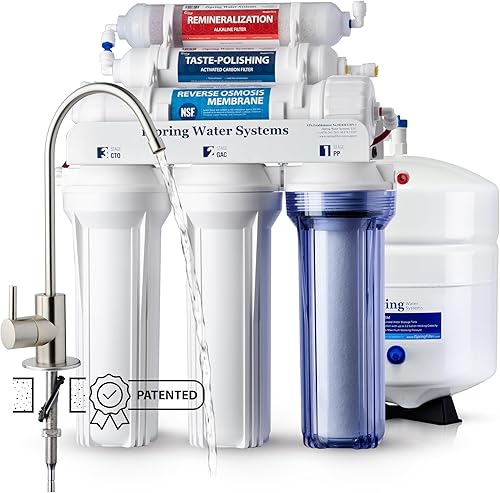
iSpring RCC7AK 6-Stage Alkaline RO
This is the system we recommend most often. It’s a workhorse. The alkaline remineralization filter is the best we’ve tested—it adds back a balanced blend of minerals, raising the pH to a more neutral 7-8 range without making the water taste salty. It filters over 1,000 contaminants, and the thin-film composite membrane is highly efficient. Build quality is excellent for the price. It’s the complete package for most households.
- Excellent alkaline remineralization
- High-capacity 75 GPD membrane
- Proven reliability and great customer support
- Standard under-sink installation required
- Waste water ratio is typical (3:1)
- Replacement filters are proprietary
Budget AliExpress Picks
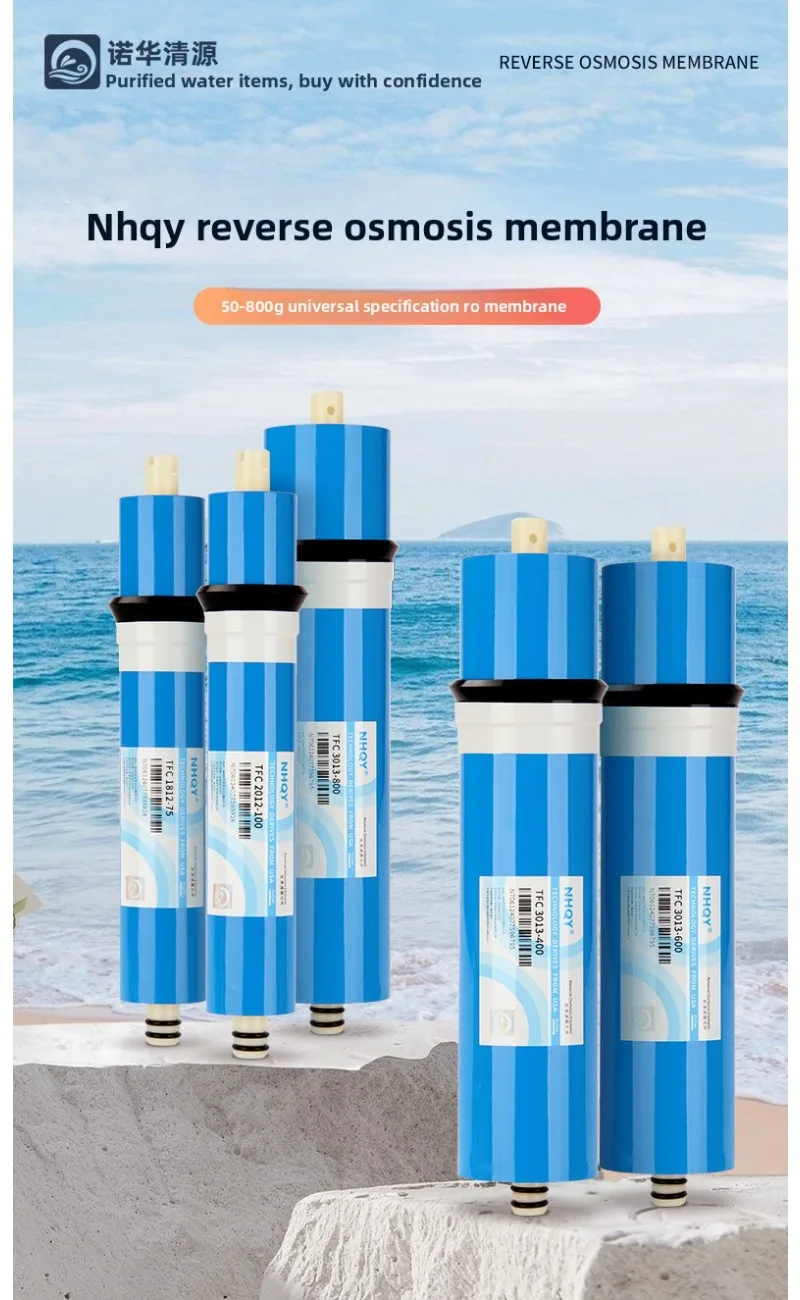
Generic RO Membrane (75G-600G)
If you’re comfortable with DIY and sourcing parts, AliExpress offers membranes at a fraction of the brand-name cost. This listing is for generic replacement membranes in various capacities. We’ve used them in test rigs—they work, but consistency is a gamble. You might get a great membrane or one that fails early. Only for the experienced tinkerer.
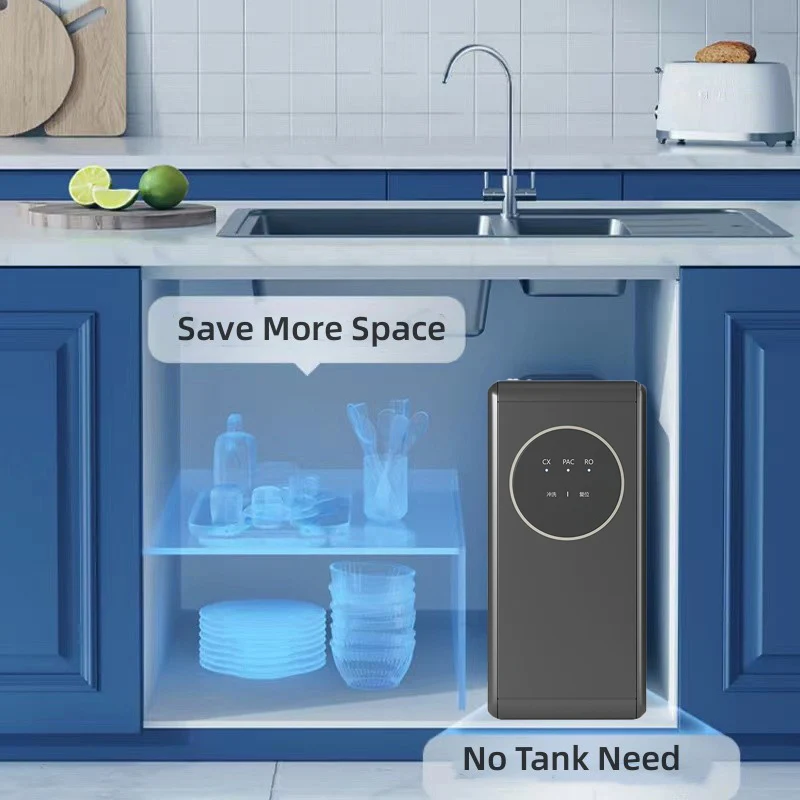
Tankless Whole House RO (600-800 GPD)
This listing shows the reality of cheap whole house RO. At $450, it’s a fraction of the cost of a professionally engineered system. But buyer beware. The specifications are vague, certifications are absent, and you’re on your own for installation and support. We would not trust this for a primary residence. It might be a project for a workshop or cabin where failure isn’t critical.
Frequently Asked Questions
- Is a whole house reverse osmosis system worth it?
- For 95% of homeowners, no. It’s only worth it if you have a confirmed water quality issue (high TDS, specific contaminants) that point-of-use systems can’t solve. The high cost, water waste, and maintenance make it overkill for general improvement of municipal water.
- What is the downside of a whole house RO system?
- The main downsides are the very high upfront cost ($3k-$10k+), significant water waste (1-3 gallons wasted per gallon purified), removal of beneficial minerals, and complex, costly maintenance. It also requires ample space and professional installation.
- Can I install a whole house reverse osmosis system myself?
- We strongly advise against it unless you are a highly skilled plumber and electrician. Installation involves cutting into the main water line, installing a pre-pressurization pump, connecting the high-pressure RO unit, wiring a controller, and running a drain line for brine disposal. Mistakes can cause major water damage.
- How much does it cost to run a whole house RO system?
- Annual costs include electricity for the pumps ($50-$150), replacement pre-filters and post-filters ($100-$300), potential membrane cleaning or replacement ($200-$500 every 2-5 years), and increased water/sewer bills due to brine waste. Budget $300-$600 per year for ongoing costs.
- Does whole house RO water leach minerals from pipes?
- Yes, very pure RO water can be slightly corrosive and may leach metals from older copper or lead solder joints in your plumbing. This is why a post-treatment remineralization or calcite filter is crucial—it adds hardness back to stabilize the water and protect your pipes.
- What is the alternative to a whole house RO system?
- A layered approach is usually better: a whole house clearly filtered water filter pitcher or carbon system for chlorine/sediment, paired with a dedicated under-sink RO unit for drinking and cooking. This targets investment where it matters most.
Final Thoughts
After years of testing and field visits, our position is clear: a reverse osmosis whole house system is a specialized tool, not a general upgrade. It’s the nuclear option for water purification. If your water report shows high TDS or specific contaminants that resist other treatments, and you have the budget for installation and upkeep, it can be transformative.
For everyone else—and that’s most of you reading this—invest in a quality point-of-use RO system for your kitchen. Pair it with a good whole house sediment and carbon filter. You’ll get 95% of the benefits for 20% of the cost and hassle. Focus your kitchen filtration where you drink and cook. That’s the smart play in 2026.
