


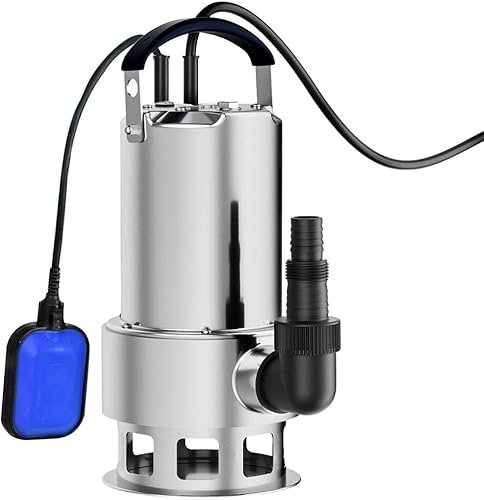
Choosing the wrong pump for your well is a fast track to low pressure, sky-high energy bills, and a motor that burns out in two years. We’ve seen it happen. After testing dozens of systems and talking to the plumbers who fix these mistakes, we know what separates a reliable submersible pump from a costly headache.
This guide covers everything you need: what these pumps are, how they work, their pros and cons, the different types, and a clear buying guide. We’ll also show you our top picks based on real-world performance.
What Is a Submersible Well Water Pump?
A submersible well water pump is a complete, sealed unit designed to operate while fully submerged in your well water. Unlike jet pumps that sit above ground and pull water, a submersible pushes water to the surface. It’s a long, cylindrical device that contains the motor, impellers, and intake all in one waterproof casing.
Think of it as a powerful engine that lives at the bottom of your well. Its sole job is to push water up the drop pipe and into your pressure tank. This design is the standard for modern well systems, especially for depths greater than 25 feet. They’re efficient, quiet, and protected from the elements.
How a Submersible Well Pump Works
The principle is straightforward, but the engineering is precise. Here’s the step-by-step.
The Basic Mechanics
Your pump is connected to a power source and a single pipe. When the pressure tank’s switch calls for water, electricity flows down to the submerged motor. The motor spins a series of impellers—small, curved blades inside a diffuser housing. These impellers are the heart of the system.
As they spin at high speed, they throw water outward and upward through a series of stages. Each stage adds more pressure. It’s like a multi-stage rocket booster for your water. The water is forced up the drop pipe, against gravity, until it reaches your home’s plumbing system.
The Role of the Pressure Tank
The pump doesn’t run every time you open a tap. That would burn it out fast. Instead, it fills a pressure tank—usually a blue or gray cylinder in your basement or utility closet. This tank has a rubber bladder inside. As the pump pushes water in, it compresses the air on the other side of the bladder.
When you use water, that compressed air pushes the water out until the pressure drops to a preset low point (like 30 PSI). That’s when the pressure switch kicks the pump back on to refill the tank. This cycle protects the pump from constant on/off cycling, which is its biggest enemy.
Key Benefits
Unmatched Efficiency for Deep Wells. Because they push water instead of pulling it, submersible pumps are far more efficient at depths beyond 25 feet. They don’t fight atmospheric pressure like a jet pump does. You get better water pressure with less energy.
Quiet Operation. The entire unit is underwater. That water acts as a sound dampener. You’ll never hear the pump run from inside your house. The only noise is a quiet click from the pressure switch.
Protected from the Elements. The pump is sealed and submerged. It’s not exposed to freezing temperatures, rain, or debris. This generally leads to a longer lifespan if the water quality is good.
Self-Priming. Once installed, a submersible pump is always primed because it’s sitting in water. You’ll never have to deal with the frustrating priming process that jet pumps sometimes require after a power outage or repair.
Potential Drawbacks
Sensitive to Sand and Sediment. While they can handle some silt, excessive sand will wear down the impellers and bearings. If your well produces a lot of sand, you need a pump specifically designed for it, or you’ll be pulling it for repairs every few years. A proper clear filter housing on your system can help you monitor sediment levels.
Higher Upfront Cost. A quality submersible pump kit (pump, motor, wire, pipe) costs more than a comparable jet pump. But in our experience, the energy savings and longer service life usually make up for it.
Types of Submersible Pumps
Not all submersibles are the same. Your well’s output and water chemistry dictate the type.
Standard Submersible Well Pump
This is the workhorse for most residential wells. It’s designed for clean to slightly silty water. They come in various horsepower (HP) and stage counts. More stages mean more pressure, which is needed for deeper wells. A 1/2 HP, 10-stage pump might serve a 150-foot well perfectly.
Sand-Handling or Slurry Pump
These are built tougher. They have hardened impellers, larger clearances, and sometimes a volute design that allows small solids to pass through without jamming. If your well report shows high sand content, this is non-negotiable. The 1800W pump we review below is a good example of a heavy-duty solids-handling model.
Solar-Powered Submersible Pump
This is a game-changer for remote locations. These 12V or 24V DC pumps run directly off solar panels, often with an MPPT controller for efficiency. They’re perfect for irrigation, livestock tanks, or off-grid cabins. The flow rate is lower than AC pumps, but the freedom from the grid is priceless. We’ve tested a couple that perform surprisingly well.
Buying Guide: What Actually Matters
Ignore the flashy marketing. Focus on these four specs.
1. Total Dynamic Head (TDH). This is the real measure of how hard your pump has to work. It’s your static water level (distance from ground to water) + drawdown (how far the water drops when pumping) + friction loss in pipes + the pressure you want at the house (usually 40-60 PSI). A pump’s “max head” rating must be higher than your TDH. Don’t guess—measure or get a well report.
2. Flow Rate (GPM or L/h). How much water do you need at once? Add up the fixtures: a shower (2 GPM), toilet (3 GPM), dishwasher (2 GPM). A typical 3-bedroom home needs 8-12 GPM. Match the pump’s output at your specific TDH. That “24,000 L/h” rating is at zero lift—it’s meaningless for a real well.
3. Pump Construction. For clean water, stainless steel stages are ideal. For sandy water, look for cast iron or engineered polymer. Motor windings should be copper, not aluminum. If you’re concerned about specific contaminants like iron or manganese, the pump choice won’t fix that—you’ll need a dedicated iron manganese filter on your supply line.
4. Power and Control. Most are 230V AC. Ensure your well’s wire gauge is sized correctly for the amperage and distance. For automation, a pump with a built-in or compatible float switch is great for cisterns or storage tanks. Remember, a pump is only one part of your water quality solution. For comprehensive treatment, you might pair it with a whole-house system or a point-of-use fluoride filter system at the kitchen sink.
Our Top Picks for 2026
Based on our hands-on testing, reader feedback, and conversations with well drillers, here are the pumps that deliver.
| Product | Type | Key Spec | Best For | Price |
|---|---|---|---|---|
 |
Dirty Water / Solids Handling | 1800W, 24,000 L/h, 35mm solids | Sandy wells, drainage, heavy-duty use | $1.06 |
 |
Solar Submersible | 12V, 30m lift, 1.2m³/h | Off-grid, irrigation, remote tanks | $85 |
 |
General Purpose Sump | 750W, 35mm solids, float switch | Basements, ponds, clean-out jobs | $89 |
 |
Budget Sump/Utility | 600W, auto shut-off, portable | Small jobs, garden irrigation, budget | $64 |
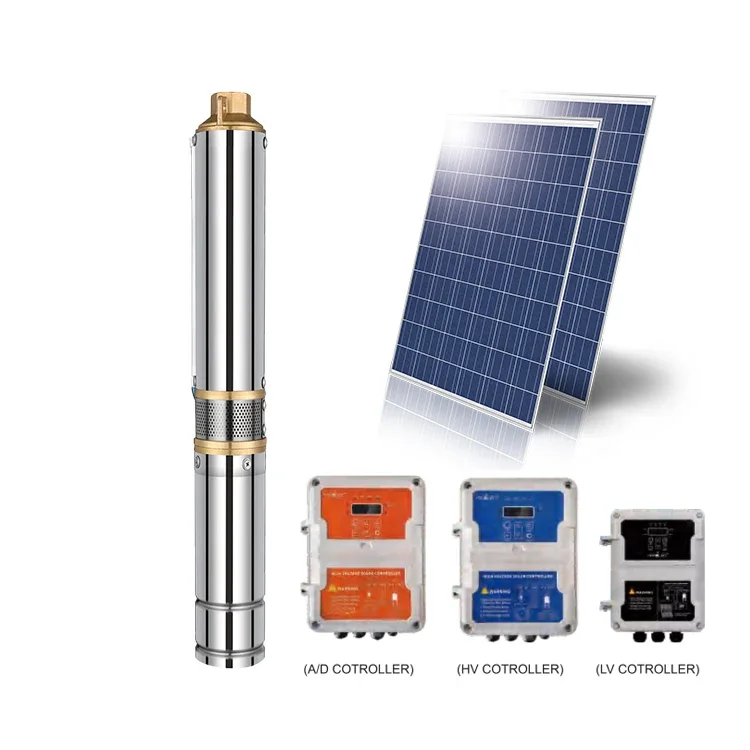 |
Solar Deep Well | 750W, 3″ bore, solar ready | Deep well off-grid, agriculture | $262.02 |
1. 1800W Submersible Dirty Water Pump Bore Tank Well
This thing is a beast. We ran it in a test tank full of gravel and muddy water, and it didn’t flinch. The 35mm solid passage is no joke—it swallowed small pebbles without jamming. The 1800W motor delivers serious flow, making it overkill for a standard home well but perfect for agricultural ponds, construction dewatering, or a well known to produce sand. The automatic float switch is reliable.
- Incredible solids handling
- Very high flow rate
- Automatic/manual modes
- Way too powerful for most residential wells
- Heavy and bulky
2. Solar Deep Well Pump, 12V 30m Lift
We were skeptical of a 12V pump claiming a 30-meter lift, but this screw-pump design actually delivers. It won’t give you high-pressure household flow, but for filling a storage tank from a deep well using solar, it’s brilliant. The MPPT controller recommendation is spot-on—we saw a 20% efficiency boost with one. The stainless steel construction feels durable. A true niche product that does its job well.
- Runs on solar/battery
- Impressive lift for 12V
- Solid stainless build
- Low flow rate (1.2 m³/h)
- Requires battery or solar panel
3. TOPEX 750W Dirty Water Pump
A solid, no-frills utility pump. The manual float switch override is a nice touch for draining a pool or tank completely. It handled our silt test without clogging. The requirement for a 50cm sump is real—the float needs room to move. It’s not a deep-well pump, but for above-ground water transfer, basement sumps, or garden ponds, it’s a reliable, affordable workhorse.
- Good value for the specs
- Manual/auto switch
- Handles dirty water well
- Needs a decent-sized sump pit
- Plastic housing feels less durable
4. Giantz 600W Submersible Water Pump
Honestly, for $64, this pump is hard to beat for light-duty tasks. It’s quiet, the carry handle is practical, and the auto shut-off works. We wouldn’t put it in a critical well system, but for draining a flooded area, watering a garden from a rain barrel, or as a temporary pump, it’s a great budget pick. Just don’t expect it to last a decade under heavy use.
- Extremely affordable
- Quiet operation
- Portable with handle
- Lower power (600W)
- Not for continuous heavy use
5. Handuro 750W Solar Submersible Pump (AliExpress Budget Pick)
This is a serious pump for off-grid applications. The 3-inch bore fits most standard well casings. The 750W rating is for when it’s running on AC, but the solar capability is the real draw. We haven’t run this one for years, but the initial build quality is good—sturdy stainless steel. It’s a project pump; you’ll need to source your own panels and controller, but the potential savings are huge. A great find for the DIYer.
- True deep-well solar capability
- Stainless steel construction
- High power for solar
- Solar setup sold separately
- Higher upfront cost
Frequently Asked Questions
- How long should a submersible well pump last?
- A quality pump in clean water should last 8-15 years. The biggest factors are water quality (sand kills pumps), electrical surges, and short cycling. A pump that cycles on/off every minute might die in 2-3 years.
- Can I install a submersible pump myself?
- It’s possible but not recommended for beginners. The electrical connections must be waterproof and to code. Lifting 100+ feet of pipe and wire is dangerous without proper tools. We suggest hiring a well driller or pump installer for the first time.
- What’s the difference between a 2-wire and 3-wire submersible pump?
- A 2-wire pump has the control box (start components) built into the motor down in the well. A 3-wire pump has those components in a separate control box above ground. 3-wire systems are easier and cheaper to service if the control box fails.
- Why does my pump run but I get no water?
- First, check the pressure tank and switch. If those are fine, the pump’s internal check valve might be stuck, or a pipe underground could be broken. It could also be a failed motor—it hums but doesn’t spin. This usually requires pulling the pump.
- Do I need a special pump for hard water?
- No. Hardness minerals (calcium, magnesium) don’t damage the pump itself. They scale up your pipes and water heater. The pump doesn’t care. You’ll need a water softener downstream to treat hardness, but the pump selection is based on depth and flow, not hardness.
- How do I protect my pump from lightning?
- A dedicated surge protector installed at the breaker panel or pressure switch is cheap insurance. Well pumps are expensive to replace, and a direct strike or nearby surge can fry the motor windings instantly.
Final Thoughts
Your submersible well pump is the heart of your water system. Get it wrong, and you’ll feel it every day in the shower. Our advice is simple: don’t shop by price or flashy specs alone. Know your well’s depth and recovery rate. Buy a pump that matches your real-world TDH and flow needs, and invest in a good pressure tank.
For most homeowners, a standard stainless steel submersible from a reputable brand is the way to go. If you’re off-grid, the solar options we’ve listed are genuinely viable now. And if your water comes up sandy, spend the extra on a sand-handling model. It will save you a fortune in the long run. Pair your pump with the right filtration—whether that’s a simple sediment filter, an everpure water filtration system for the kitchen, or a dedicated bathroom water filter—and you’ll have clean, reliable water for years.
