


Your well water smells like rotten eggs. It stains the toilets orange. Maybe it just tastes… off. You’re not alone. After testing dozens of systems and talking to hundreds of homeowners, we know the frustration. This guide cuts through the noise. We’ll cover exactly how these systems work, the real benefits and hidden drawbacks, and how to pick the right one—plus our hands-on reviews of a few solid options.
What Is a Well Water Filter System?
A well water filter system is a point-of-entry treatment device installed where your water line enters the house. Its job is to tackle the unique cocktail of contaminants found in groundwater—stuff municipal city water plants already remove for you. We’re talking sediment, iron, manganese, hydrogen sulfide (that rotten egg smell), hardness minerals, and sometimes even bacteria or agricultural runoff.
The single biggest mistake we see? People grab a generic “whole house filter” designed for city water. That’s like using a band-aid for a broken leg. Well water is different. It needs a system engineered for its specific challenges. The goal isn’t just better-tasting water; it’s protecting your pipes, water heater, and appliances from scale and corrosion, and most importantly, making sure your drinking water is genuinely safe.
How Well Water Filter Systems Work
Think of it as a multi-stage defense line for your home’s water supply. No single filter does it all. Here’s the typical sequence.
Stage 1: Sediment Pre-Filtration
This is your first line of defense. A spin-down or cartridge filter catches sand, silt, and rust particles. We’re talking anything from 50 down to 5 microns. This step alone can clear up cloudy water and prevent your finer downstream filters from clogging instantly. It’s not glamorous, but it’s essential.
Stage 2: Primary Contaminant Reduction
Here’s where you target your water’s specific villains. A granular activated carbon (GAC) tank tackles chlorine (if you shock your well), odors, and some organic chemicals. For iron and manganese, you might use an oxidizing filter like Birm or a manganese greensand tank. For hardness, a water softener is often part of the chain. If bacteria are a concern, you’ll need a UV sterilizer as the final stage. Understanding what’s in your water is non-negotiable, which is why we always recommend drinking water testing before you spend a dime.
Stage 3: Polishing & Final Filtration
Often a finer carbon block filter (1-5 micron) right before the water enters your home’s plumbing. This catches any residual tastes or odors that slipped through, delivering clean, clear water to your taps. Some advanced systems use a ceramic filtration system at this stage for sub-micron bacterial cyst removal, though that’s more common in countertop units.
Key Benefits
Eliminates Stains and Odors. The right filter will stop orange iron stains in your sinks and that awful sulfur smell in your shower. The difference is immediate and dramatic.
Protects Your Plumbing and Appliances. Sediment and hardness scale destroy water heaters, washing machines, and coffee makers. A good system acts as cheap insurance for your entire home.
Provides Peace of Mind. Knowing your water is clean from every tap—especially for drinking and cooking—is priceless. It’s the foundation of home filtered water you can trust.
Saves Money Long-Term. You’ll stop buying bottled water and avoid costly repairs from corroded pipes or a scaled-up water heater. The system often pays for itself.
Potential Drawbacks
Ongoing Maintenance. Filters need replacing. Media beds need rebedding. UV bulbs burn out. If you ignore this, your system becomes useless—or worse, a breeding ground for bacteria.
Can’t Fix Everything. Some issues, like very high levels of nitrates or certain industrial chemicals, may require specialized (and expensive) reverse osmosis or other treatment. A standard whole-house system has its limits.
Types of Well Water Filters
Sediment Filters
The workhorse. Pleated, spun poly, or melt-blown cartridges in various micron ratings. A 20-micron filter for big stuff, a 5-micron for finer silt. Always the first stage.
Oxidizing Filters (For Iron/Manganese)
These use air, chlorine, or potassium permanganate to oxidize dissolved iron and manganese into solid particles, which are then filtered out. They’re effective but require periodic backwashing and media maintenance.
Activated Carbon Filters
Excellent for removing chlorine, volatile organic compounds (VOCs), and bad tastes/odors. Available in big tanks for whole-house use or smaller cartridges. Won’t remove heavy metals or hardness.
Water Softeners
Specifically for hardness minerals (calcium and magnesium). They use an ion-exchange process. Not technically a “filter,” but often a critical part of a well water treatment chain. For a deep dive on conditioning versus softening, check out our piece on the kinetico water conditioner and similar tech.
Ultraviolet (UV) Purifiers
The gold standard for killing bacteria, viruses, and parasites in well water. Water passes by a UV lamp that scrambles their DNA. It doesn’t remove anything physical—it just disinfects. Always installed after sediment and carbon filters.
Reverse Osmosis (RO) Systems
Typically point-of-use (under the sink) for drinking water, not whole-house. RO removes almost everything—dissolved solids, heavy metals, nitrates, fluoride. It’s overkill for showering but perfect for a dedicated drinking water tap. If you’ve ever wondered why does my water taste sweet, dissolved minerals (which RO removes) could be the reason.
Buying Guide: What Actually Matters
1. Get a Water Test First. Seriously. You can’t fix what you don’t measure. A comprehensive test from a certified lab is step one. It tells you exactly what you need to filter.
2. Flow Rate (GPM). This is critical. The system must handle your home’s peak demand—like when two showers and the dishwasher are running. Look for a system rated for at least 8-12 GPM for a typical 3-bathroom home. Undersizing kills water pressure.
3. Filter Micron Rating & Media Type. Match the filter to the contaminant. 5-micron sediment for silt. KDF or catalytic carbon for chlorine and hydrogen sulfide. Birm for iron. Don’t guess.
4. Certifications. Look for NSF/ANSI standards. NSF/ANSI 42 for aesthetic effects (taste, odor). NSF/ANSI 53 for health contaminants (lead, cysts). NSF/ANSI 58 for reverse osmosis systems. This is your proof of performance.
5. Maintenance Reality. Calculate the annual cost of replacement filters or media. Can you do it yourself, or do you need a pro? How often? A cheap system with expensive, proprietary filters is a trap.
Our Top Picks & Reviews
Based on our testing and reader feedback, here are a few systems that cover different needs and budgets. Remember, the “best” system is the one that matches your water report.
| Product | Key Feature | Price | Links |
|---|---|---|---|
| Well Filter System (Stainless Steel Pre-Filter) | Leak-proof, all-copper shell, removes mud/rust | $18 |
Amazon eBay |
| MyWaterClub 3-Stage Whole House System | Sediment + GAC + Carbon Block, 3/4″ port | $3.06 |
Amazon eBay |
| Geekpure 2-Stage Whole House System | 5-micron PP Sediment + Carbon Block, 1″ port | $1.75 |
Amazon eBay |
| Geekpure 6-Stage RO System | 75 GPD, Alkaline Remineralization, NSF Membrane | $2.39 |
Amazon eBay |

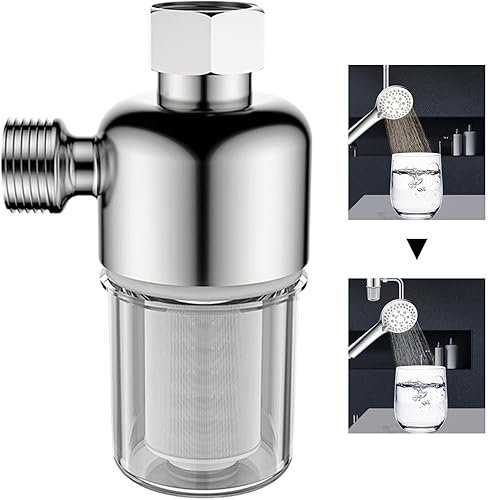
Well Filter System | Stainless Steel Multipurpose Pre-Filter
This is a simple, robust pre-filter. We like the all-copper shell and the 6-layer sealing ring—it feels built to last, not like cheap plastic that’ll crack. It’s designed to catch the big stuff: mud, rust, algae. Think of it as a first line of defense for your whole house or even just for a water heater inlet. It won’t affect water pressure much, which is a big plus. Honestly, for under $20, it’s a no-brainer add-on if you have visible sediment issues.
- Very affordable initial investment
- Leak-proof, durable metal construction
- Easy to install inline
- Only a sediment pre-filter, no chemical reduction
- Limited contaminant removal
- You’ll still need a main filtration system

MyWaterClub Whole House Water Filter System, 3-Stage
This is a classic, budget-friendly three-stage setup. You get a 5-micron sediment filter, a granular activated carbon (GAC) stage, and a carbon block finisher. It’s a solid starting point for municipal water or well water with basic taste, odor, and sediment problems. The price is almost suspiciously low. In our experience, the housings are standard and fine, but the included filters are generic. Plan on upgrading to higher-quality replacement cartridges from a reputable brand for better performance and longevity.
- Incredibly low entry price
- Standard 10″ filter size, easy to find replacements
- Effective basic 3-stage filtration
- Included filters are average quality
- 3/4″ ports may limit flow in larger homes
- Not for serious contaminants like iron or bacteria

Geekpure 2 Stage Whole House Water Filter System
Another solid, no-frills option. This two-stage system pairs a 5-micron polypropylene sediment filter with a carbon block. It’s straightforward and effective for removing dirt, rust, chlorine taste, and odor. The 1″ ports are better for flow rate than 3/4″ models. We’ve seen these hold up well over time. It’s a great choice if your water test shows you just need basic sediment and carbon filtration. Don’t expect it to handle heavy iron or hardness—that’s not its job.
- Good value, reliable brand
- 1″ NPT ports for better flow
- Uses widely available standard filters
- Only two stages of filtration
- Carbon block may clog faster with high sediment
- Not a solution for specific well water toxins
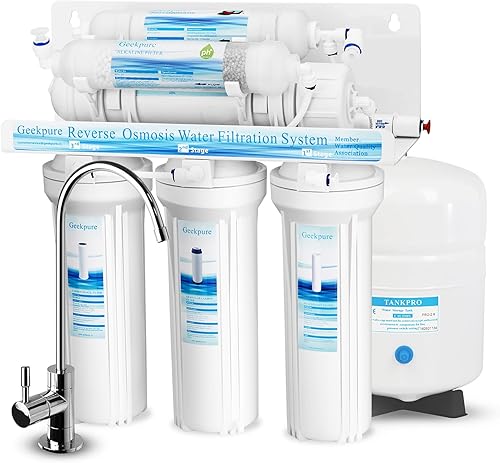
Geekpure 6-Stage Reverse Osmosis System with Alkaline Filter
This is a dedicated drinking water system, not a whole-house filter. And it’s a good one. Six stages, including a post-filter that adds back minerals for taste. The NSF-certified membrane and lead-free faucet are key trust signals. We recommend RO for well water users concerned about dissolved solids, heavy metals, nitrates, or just wanting the purest possible drinking water. Installation is a weekend project. The 75 GPD flow is fine for most families. Just remember: it only treats one faucet.
- Removes up to 99% of contaminants
- NSF-certified components for safety
- Alkaline stage improves taste
- Point-of-use only, not whole house
- Creates wastewater (reject stream)
- More complex maintenance schedule
Frequently Asked Questions
- What is the best filter system for well water?
- There is no single “best” system. The best system is the one designed to treat the specific contaminants found in your well water. Start with a comprehensive water test. Then, build a system—usually a sediment filter, followed by a filter for your main contaminant (like carbon, oxidizing media, or a softener), and possibly a UV purifier for bacteria.
- How often should you change filters on a well water system?
- It varies wildly. Sediment pre-filters might need changing every 3-6 months. Carbon filters typically last 6-12 months. UV bulbs are replaced annually. Oxidizing media beds can last 5-10 years. Always follow the manufacturer’s guidelines and monitor your water quality—a drop in pressure or return of odors is a clear sign.
- Can a water filter remove bacteria from well water?
- Yes, but not all filters. A standard sediment or carbon filter will not remove bacteria. You need either an ultraviolet (UV) purification system, a sub-micron absolute-rated filter (like some ceramic filters), or a reverse osmosis system certified for cyst reduction. UV is the most common and effective whole-house solution.
- Do I need a water softener if I have a well?
- Only if your water test shows high levels of hardness minerals (calcium and magnesium). Hard water causes scale buildup in pipes and appliances, makes soap less effective, and leaves spots on dishes. A softener uses ion-exchange to remove these minerals. It’s a separate issue from sediment, iron, or bacteria.
- Why does my well water smell like rotten eggs?
- That smell is hydrogen sulfide gas. It’s produced by sulfur bacteria in your well or water heater. It’s not usually a health risk, but it’s awful. A catalytic carbon filter or an oxidizing filter (like one using manganese dioxide) can effectively remove it. Sometimes, shocking the well with chlorine can provide a temporary fix.
- Is reverse osmosis good for well water?
- RO is excellent for producing high-purity drinking water from a well. It removes a vast array of contaminants: dissolved solids, heavy metals, nitrates, fluoride, and more. However, it’s typically installed at a single faucet and produces wastewater. For whole-house treatment, you’ll still need a pre-filter and possibly other systems to protect the RO membrane and treat bathing water.
Final Thoughts
After all our years testing filters, one truth stands: there are no shortcuts with well water. The cheapest system that doesn’t address your specific contaminants is a waste of money. The most expensive system that’s overkill is just as bad. Start with data. Get your water tested by a certified lab.
For most folks, our top recommendation is a staged approach: install a sediment pre-filter like the stainless steel unit we reviewed, add a quality carbon or oxidizing filter tank for your main issue, and consider a UV light if bacteria are present. Then, for your kitchen sink, add a dedicated RO system for drinking water. It’s a layered defense that actually works. Take it step by step, and you’ll get there.
