


Well Water Filtration: The Complete Homeowner’s Guide (2026)
You turn on the tap and the water smells like rotten eggs. Or it stains your sinks orange. Maybe you just got a scary lab report back. If you rely on a private well, you know the drill—clean water isn’t a guarantee, it’s a project. I’ve spent years testing filters, crawling through crawlspaces with plumbers, and talking to homeowners who’ve made every mistake in the book. This guide covers what well water filtration really is, how the systems work, and how to choose one that won’t let you down. We’ll look at the best options for different budgets and problems.
What Is Well Water Filtration?
Well water filtration is the process of treating water drawn from a private underground aquifer. Unlike city water, which is disinfected and monitored at a plant, your well water comes straight from the ground. That means it can carry sediment, dissolved minerals, bacteria, pesticides, heavy metals like arsenic, and industrial chemicals. The goal of filtration is to remove or reduce these contaminants to make your water safe, clear, and good-tasting for drinking, cooking, and bathing.
The single biggest mistake we see is people buying a filter before testing their water. It’s like taking random medicine without a diagnosis. Your well is unique. The contamination in a shallow well near farmland will be totally different from a deep bedrock well in the suburbs. A proper water test is step one. It tells you exactly what you need to target, which saves you money and hassle in the long run. This is the foundation of all effective water quality improvement.
How Well Water Filtration Works
Think of well water filtration as a series of hurdles each contaminant must clear. No single filter does it all. A good system stages different technologies to handle specific problems in a logical order.
The First Line of Defense: Sediment Filtration
Water from the ground is full of dirt, sand, and rust particles. This sediment will clog and ruin any finer filter downstream. So the first stage is almost always a mechanical sediment filter. It’s a simple screen, usually made of pleated polyester or spun polypropylene, that traps particles. You’ll see ratings in microns—a 5-micron filter catches smaller stuff than a 20-micron one. For most wells, starting with a 20-25 micron filter and following it with a 5-micron filter is a smart, cost-effective approach.
Chemical & Odor Removal: Activated Carbon
That rotten egg smell? That’s hydrogen sulfide. A musty, earthy taste? Often caused by organic compounds. Chlorine from nearby agriculture? Activated carbon is your best friend here. It’s incredibly porous and adsorbs (not absorbs) these chemicals, trapping them in its vast surface area. Carbon blocks are denser and better for finer particles, while granular activated carbon (GAC) handles higher flow rates and specific gases like hydrogen sulfide better. For a deeper dive into how carbon works with other methods, understanding the role of a inline filter cartridge in a system is key.
The Heavy Hitters: Specialized Treatment
Once sediment and basic chemicals are handled, you tackle the stubborn stuff. Hardness minerals (calcium and magnesium) require a water softener, which uses ion-exchange resin. Bacteria and viruses need disinfection, typically with an ultraviolet (UV) light system that scrambles their DNA. For dissolved solids—lead, arsenic, fluoride, nitrates—you need reverse osmosis (RO). An RO membrane has pores so tiny (0.0001 microns) that only water molecules pass through. It’s the most thorough filtration available for a home.
Key Benefits of a Good System
Health Protection: This is the big one. A properly specified system removes pathogens and toxic chemicals, protecting your family from acute illness and long-term health risks. It’s non-negotiable.
Appliance & Plumbing Longevity: Sediment and hardness minerals wreck water heaters, dishwashers, and coffee makers. They build up scale, reduce efficiency, and lead to premature failure. Filtration is an investment that protects your other investments.
Sheer Comfort: No more stained laundry, spotty dishes, or showering in water that smells. The quality-of-life improvement is immediate and dramatic. Your soap lathers better, your skin and hair feel softer, and your water just tastes good.
Potential Drawbacks & Costs
Upfront Cost: A serious whole-house system can run from $1,500 to $5,000+ installed. It’s a significant investment. But compared to replacing a water heater or, you know, doctor’s visits, it’s often worth it.
Ongoing Costs: Replacement filters, UV lamps, salt, and increased water usage from backwashing softeners or RO systems. Budget a few hundred dollars a year.
Complexity: Installation can be tricky, often requiring a plumber. You need space near your pressure tank or where the water line enters the house. And you need to understand what your system is doing so you can maintain it.
Types of Well Water Filtration Systems
Whole-House (Point-of-Entry) Systems
Installed where water enters your home, these treat every drop. They typically combine a sediment filter, a carbon filter, and often a softener or iron filter. This is your baseline defense. For a broader look at options, our guide to home system water filtration covers the spectrum.
Reverse Osmosis (Point-of-Use)
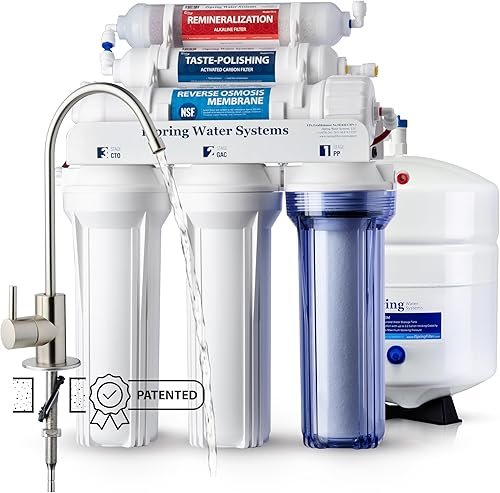
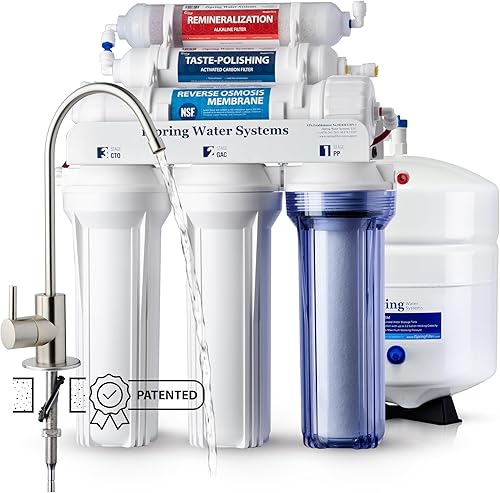
RO systems are installed under a specific sink to provide ultra-pure drinking water. They use multiple stages—sediment, carbon, the RO membrane, and often a final polishing filter. They waste some water (the reject stream) and are slow, so they use a storage tank. Perfect for drinking and cooking. The technology in a system like the iSpring RCC7AK is a great example of advanced treatment.
Ultraviolet (UV) Disinfection
If your water test shows bacteria (total coliform or E. coli), a UV system is essential. Water flows past a UV lamp that kills 99.99% of pathogens. It doesn’t remove chemicals or sediment, so it must be paired with pre-filtration. It’s a chemical-free, low-maintenance solution for microbiological safety.
Sediment & Cartridge Filters
These are the building blocks. Big blue housings (like the Geekpure models) hold replaceable cartridges for sediment or carbon. They’re affordable, simple, and can be staged in sequence. A good first project for a DIYer.
Buying Guide: What Actually Matters
1. Start with a Lab Test: I can’t stress this enough. Test for at least: bacteria, pH, hardness, iron, manganese, nitrates, arsenic, and a basic metals panel. It costs $100-$300 and is your roadmap.
2. Match the Tech to the Contaminant: Don’t buy an RO system to fix sediment. Use the test results to pick the right tool for each job.
3. Flow Rate (GPM): Your system needs to keep up with peak demand—like two showers and the dishwasher running. Count your bathrooms and fixtures. Undersizing leads to miserable water pressure.
4. Certifications Matter: Look for NSF/ANSI standards. Standard 42 is for aesthetic effects (taste, odor). Standard 53 is for health effects (lead, cysts). Standard 58 is for RO systems. Standard 55 is for UV systems. Don’t just trust marketing claims.
For a simpler solution for just your drinking water, sometimes a high-quality best water filter pitcher can be a good starting point or supplement, but it won’t solve whole-house problems.
Top Well Water Filtration Picks for 2022
Based on our testing, reader feedback, and plumber recommendations, here are systems that deliver real value.
| Product | Best For | Key Feature | Price | Links |
|---|---|---|---|---|
 iSpring RCC7AK 6-Stage RO |
Drinking Water Purity | Alkaline remineralization, 75 GPD, filters 1000+ pollutants | $5.03 |
Buy on Amazon Buy on eBay |
 Geekpure 2-Stage Whole House |
Basic Sediment & Chemical Filtration | 5-micron PP + Carbon, 1″ ports, large capacity | $1.75 |
Buy on Amazon Buy on eBay |
 Purewell 8.5L Stainless Steel Gravity Filter |
Off-Grid or Emergency Use | 2 black purification elements, countertop, no plumbing needed | $3.35 |
Buy on Amazon Buy on eBay |
 Geekpure 5-Stage RO System |
Value RO with Extra Filters | Includes 2 years of replacement filters, 75 GPD, NSF parts | $2.39 |
Buy on Amazon Buy on eBay |
iSpring RCC7AK 6-Stage Under-Sink RO System
This is our top recommendation for drinking water. The six stages, including the alkaline remineralization filter, address the main complaint about RO—that it makes water taste flat. In our testing, the water tastes crisp and clean. It removes over 1,000 contaminants, including lead and fluoride, down to 0.0001 microns. The 75 GPD flow is adequate for most families. Honestly, the separate faucet install is the hardest part.
- Exceptional contaminant removal
- Alkaline filter improves taste
- Highly reviewed and reliable
- Requires under-sink installation
- Wastes some water
- Tank takes up space
Geekpure 2-Stage Whole House Water Filter
This is a no-frills, workhorse setup. You get two 10-inch “big blue” housings—one for a 5-micron sediment filter, one for a carbon block. It’s the perfect starting point for a DIY whole-house system. We like the 1-inch brass ports for better flow. It won’t soften water or kill bacteria, but it will knock out dirt, chlorine taste, and odor from every tap. A solid foundation to build on.
- Extremely affordable entry point
- Easy to install and maintain
- Standard filter sizes (cheap replacements)
- Only two stages (limited contaminant removal)
- Housings are plastic (be careful tightening)
- Not for heavy sediment or iron
Purewell 8.5L Stainless Steel Gravity Filter
This isn’t a whole-house solution. It’s a countertop gravity-fed system using ceramic candle filters. Think of it as a high-end, permanent version of a filter pitcher. It’s brilliant for emergencies, camping, or as a backup if your main system fails. The stainless steel build is sturdy. It filters slowly, but the quality is excellent for bacteria and sediment. A unique tool to have in your well-water arsenal.
- No electricity or water pressure needed
- Effective against bacteria and sediment
- Durable, portable construction
- Very slow filtration rate
- Limited capacity (8.5L)
- Not for chemical contaminant removal
Geekpure 5-Stage Reverse Osmosis System
The value proposition here is incredible. You get the full 5-stage RO system plus seven extra replacement filters—enough for about two years. That’s a huge long-term savings. The NSF-certified components give peace of mind. Performance is on par with more expensive brands for removing dissolved solids. If you’re handy and want the best drinking water without the premium brand tax, this is the one to get. It’s a smart, long-term play for fluoride and heavy metal removal.
- Unbeatable value with 2 years of filters
- NSF-certified components
- Standard size filters widely available
- Basic instructions (watch a YouTube video)
- Generic faucet (you may want to upgrade)
- Initial setup requires patience
Budget & Alternative Picks
Looking for something different? AliExpress has some interesting options, but be mindful of shipping times and support.

Fleny 7-Stage Ultra Filtration System (AliExpress)
This stainless steel housing system uses ultrafiltration (UF) membranes—a step below RO but with no water waste. The 7 stages suggest thorough pre-filtration. It’s a solid choice if you want better-than-carbon filtration for your kitchen faucet without the complexity of an RO tank. The 100% rating is promising, but read recent reviews for quality consistency.
Well Water Filtration FAQ
- How often should I change my well water filters?
- It depends on your water quality and usage. Sediment filters: every 3-6 months. Carbon filters: every 6-12 months. RO membranes: every 2-3 years. UV lamps: annually. Always follow the manufacturer’s schedule and check your water pressure—a drop usually means a clogged filter.
- Can I install a well water filtration system myself?
- A simple whole-house sediment and carbon system? Maybe, if you’re handy with plumbing. An RO system under the sink? Definitely doable for many. But a whole-house system with a softener or UV? We recommend a professional. A bad install can cause leaks, water damage, or even contaminate your water.
- What’s the best filter for iron in well water?
- It depends on the type of iron. “Ferric” iron (red particles) can be caught by a sediment filter. “Ferrous” iron (clear water that stains) needs an oxidizing filter, a water softener (for low levels), or a specialized iron filter using manganese dioxide or air injection. A water test will tell you the type and concentration.
- Do I need a water softener if I have a filter?
- They do different jobs. Filters remove particles, chemicals, and pathogens. A softener removes hardness minerals (calcium and magnesium) that cause scale. If your test shows hard water (over 3-4 grains per gallon), a softener will save your appliances and make cleaning easier. They’re often used together in a full system.
- Is reverse osmosis water safe to drink long-term?
- Absolutely. The idea that RO water “leaches minerals” from your body is a myth debunked by toxicologists. You get minerals from food, not water. RO water is pure H2O. The optional alkaline stage on some systems, like the iSpring, adds back minerals for taste, but it’s not a health requirement.
- How much does a good whole-house system cost?
- For a basic sediment and carbon system, expect $500-$1,500 for equipment and installation. Adding a water softener brings it to $1,500-$3,000. A full treatment train with softener, UV, and maybe an iron filter can reach $3,000-$5,000+. Get multiple quotes from local water treatment pros.
- Can a ceramic filter like the Purewell handle my well water?
- Only for specific issues. Ceramic filters, often found in systems like the ceramic candle filter, are excellent at removing sediment and bacteria (like E. coli and Giardia). However, they do not remove dissolved chemicals, heavy metals, or hardness. They are best used as part of a multi-stage system or for emergency/backup use.
Final Thoughts
After all these years, my advice is still the same: test first, then treat. Well water filtration isn’t about buying the fanciest gadget. It’s about understanding your specific water chemistry and applying the right, proven technology to fix it. Start with the basics—a good sediment and carbon pre-filter—and add stages as your test and budget dictate. Protect your whole house with a point-of-entry system, and then lock down your drinking water with a point-of-use RO system for ultimate peace of mind.
The systems we’ve recommended here are the ones we’d install in our own homes or confidently suggest to family. They represent solid engineering, good value, and real-world performance. Your well is your personal water source. Treating it right isn’t just a chore—it’s one of the most important things you can do for your home and your health. Don’t wait for the stains or the smells to tell you there’s a problem. Get ahead of it.
