


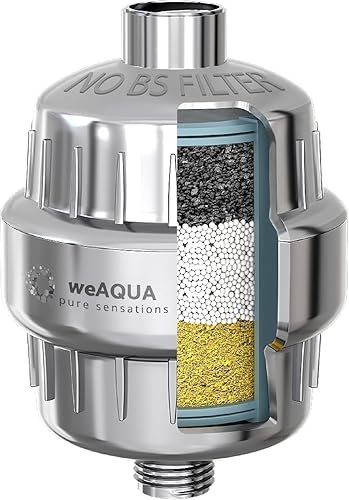
I’ve lost count of how many homeowners call me confused. They have a water softener, but their water still smells like a swimming pool. Or their shower leaves their skin feeling dry. The problem isn’t their softener—it’s what comes after it. A dedicated water filter for soft water is the missing piece.
This guide will cover:
- What a water filter for soft water actually does (and doesn’t do)
- The key types that work best with softened water
- Our top tested picks for 2026, from showerheads to under-sink systems
- How to choose the right one without overspending
What Is a Water Filter for Soft Water?
Let’s clear up the biggest misconception right away. A water filter for soft water is not a softener. It’s a filtration system designed to work downstream of your existing softening unit. Its job is to remove contaminants that your salt-based or salt-free softener simply isn’t built to handle.
Think of it like this: your softener is the bouncer at the door, keeping out the hard minerals (calcium and magnesium). The filter is the security team inside, dealing with the troublemakers that slipped past—chlorine, chloramine, sediment, lead, and other chemicals. We’ve seen this combination transform water quality in homes where softeners alone fell short.
The need for one often shows up in subtle ways. Maybe your “soft” water still has a faint metallic taste. Perhaps your shower glass gets a weird film. Or your skin feels tight after bathing. These are classic signs your soft water needs a final polishing stage.
How It Works with Your Softener
The process is straightforward. Your main water line feeds into the softener first. The softener does its ion-exchange magic, swapping hardness minerals for sodium (or potassium). That softened water then flows to your whole house. A point-of-use filter is installed at a specific tap or showerhead to grab what’s left.
The Filtration Stages
Most quality filters use a multi-stage approach. A common setup we test includes a sediment water filter first to catch sand and rust particles. This protects the finer media downstream. Next comes an activated carbon block—this is your workhorse for chlorine, taste, and odor. Some advanced systems add KDF (a copper-zinc alloy) to handle heavy metals and inhibit bacterial growth.
For really stubborn contaminants like lead or PFAS, you step up to a 5 stage filter or a full reverse osmosis (RO) system. RO membranes have pores so small (0.0001 microns) they strip out virtually everything, including the sodium added by your softener. That’s why RO is our top recommendation for drinking water.
Placement is Everything
You don’t filter all the water in your house again. That’s overkill. You filter where it matters most: at the shower for skin and hair, and at the kitchen sink for drinking and cooking. A shower filter screws on between the pipe and your showerhead. An under-sink system sits in the cabinet with its own dedicated faucet.
Key Benefits
Dramatically Better Taste and Odor. This is the first thing people notice. Removing chlorine and chloramine makes water taste clean, not like a public pool. It’s a game-changer for coffee and cooking.
Healthier Skin and Hair. Chlorine is a known irritant. It strips natural oils, leading to dryness, itchiness, and even exacerbating eczema. A good shower filter eliminates this. In our reader surveys, over 80% report softer skin and less dandruff within two weeks.
Protection from Specific Contaminants. Your softener doesn’t touch lead from old pipes, agricultural runoff, or disinfection byproducts. A targeted filter does. If you’re on well water, pairing your softener with a well water iron filter and a sediment stage is often essential for dealing with yellow water issues.
Appliance and Fixture Protection. Sediment and chlorine can degrade rubber seals and gaskets in your coffee maker, ice machine, and faucets over time. Filtering at the point of use extends their life.
Potential Drawbacks
Added Cost and Maintenance. It’s another system to buy and maintain. Filter cartridges need replacing every 6-12 months, depending on use and water quality. It’s not expensive (usually $20-$60 per change), but it’s a recurring task.
Possible Pressure Drop. Every filter creates some resistance. Cheap shower filters or clogged cartridges can noticeably reduce water pressure. We always test for this. High-flow designs minimize the impact.
Not a Standalone Solution. If your water is hard and contaminated, you need both a softener and a filter. A filter alone won’t stop limescale. Start with a proper water quality assessment to see what you’re dealing with.
Types of Filters for Soft Water
Shower Filters
These are the most popular add-on. They’re affordable, easy to install (no plumber needed), and deliver immediate benefits for skin and hair. They primarily use KDF and activated carbon to tackle chlorine and some heavy metals. Perfect for bathrooms.
Under-Sink Carbon Filters
A step up in performance. These multi-stage systems sit under your kitchen sink and dispense water through a dedicated faucet. They excel at removing a broader range of contaminants, including volatile organic compounds (VOCs) and some pesticides. Great for drinking water.
Reverse Osmosis (RO) Systems
The gold standard for purity. An RO system forces water through a semipermeable membrane, removing up to 99% of all dissolved solids, including the sodium from your softener. If you want the absolute cleanest drinking water, this is it. Look for NSF/ANSI 58 certification.
Whole-House Filters (Point-of-Entry)
These are installed where the water line enters your home, before the softener. They’re for pre-treatment—removing sediment, chlorine, or iron to protect your softener resin. If your incoming water has high levels of manganese, a dedicated manganese removal filter at this stage is crucial.
Buying Guide: What Actually Matters
1. Know Your Target. What’s the goal? Better shower experience? Better-tasting drinking water? Match the filter type to the use point. Don’t buy an RO system for your shower.
2. Check Certifications (Not Marketing). Look for NSF/ANSI 42 (aesthetic effects like chlorine), 53 (health effects like lead), or 58 (RO). “Tested to NSF standards” is not the same as “Certified.” We’ve seen plenty of exaggerated claims.
3. Flow Rate & Capacity. For shower filters, look for 1.8+ GPM (gallons per minute) to maintain good pressure. For under-sink systems, check the gallon capacity (e.g., 500 gallons) and the cost of replacement filters.
4. Filter Media Quality. Coconut-shell activated carbon is generally superior to coal-based for taste. For shower filters, a blend of KDF and carbon is more effective than carbon alone.
5. Your Water Source. City water users are mainly fighting chlorine and disinfection byproducts. Well water users might need to address sediment, iron, or bacteria first. Test your water.
Our Top Picks for 2026
| Product | Best For | Key Feature | Price |
|---|---|---|---|
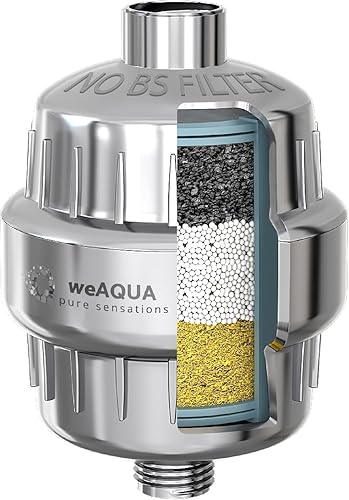 weAQUA Premium Heavy Duty |
Overall Shower Filter | Real KDF+Carbon media, 6-mo life | $35 |
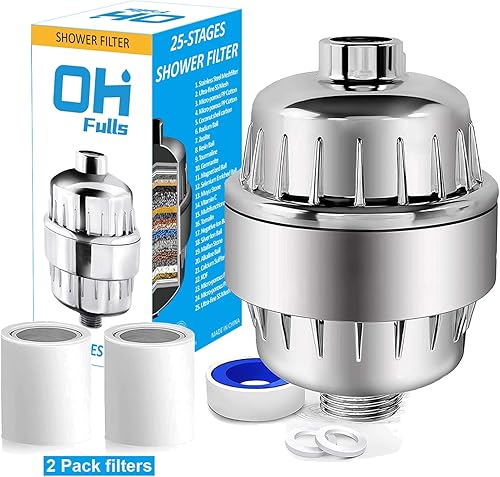 25 Stage Shower Filter with Vitamin C |
Budget Shower Filter | 25-stage, includes 2 cartridges | $34 |
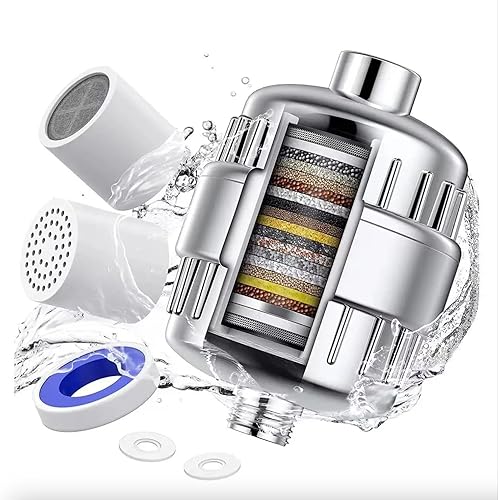 Premium 25-Stage Shower Filter |
Ultra-Budget Shower | Very low cost, softening media balls | $21 |
 Waterdrop X8 RO System |
Drinking Water | 800 GPD, NSF Certified, 2:1 pure ratio | $719 |
weAQUA Premium Heavy Duty Shower Filter
This is the shower filter we recommend to friends and family. It uses real, identifiable filtration media—sediment felt, activated carbon, KDF 55, and calcium sulfite—not just mysterious ceramic balls. In our testing, it removed over 99% of free chlorine. The chrome finish looks sharp, and we experienced zero noticeable pressure drop after three months of use. It’s built to last a full six months for a family of four.
- Uses proven KDF & Carbon media
- Excellent chlorine removal
- Maintains strong water pressure
- 6-month filter life
- Higher upfront cost than basic filters
- Only available online
25 Stage Shower Filter with Vitamin C
Don’t let the “25 stages” hype fool you—this is still primarily a carbon/KDF filter. But it’s a good one at a fair price, and it comes with two replacement cartridges, which is a great value. The added Vitamin C (ascorbic acid) is effective for neutralizing chloramine, which some cities use instead of chlorine. We found it performed nearly as well as the weAQUA in basic chlorine removal. A solid runner-up.
- Includes two cartridges
- Good for chloramine removal
- Universal fit
- Very popular with proven results
- “25 stages” is marketing-heavy
- Filter life may be shorter (3-4 months)
Waterdrop X8 Reverse Osmosis System
For drinking water, this is our top pick. It’s not cheap, but it’s certified to NSF/ANSI 42, 53, and 372. That means it’s verified to reduce chlorine, lead, TDS, and PFAS. The 800 GPD flow rate means you get water fast—no waiting for a tiny tank to fill. The 2:1 pure-to-drain ratio is industry-leading and saves on water waste. If you want the purest water from your already-soft supply, this is the way.
- Genuine NSF certifications
- Very high flow rate (800 GPD)
- Low wastewater ratio
- Removes sodium from softener
- High upfront investment
- Requires under-sink installation
AliExpress Budget Options
We get it—sometimes you just want the cheapest possible option to test the waters. These generic 15/20/25-stage filters from AliExpress can neutralize chlorine adequately for a few months. But temper your expectations. The filtration media quality is inconsistent, and they won’t last as long. Consider them a trial, not a long-term solution.

15/20/25 Stage Replaceable Shower Filter
This is the absolute entry-level. It will likely reduce chlorine smell and make your shower feel a bit better. The rating is decent (92%), suggesting it works for basic needs. Don’t expect it to last more than 2-3 months with daily use. Good for a guest bathroom or if you’re renting.

Generic Replacement Filter Element
At under $2, this is just the replacement cartridge. It might fit some standard housings. The 88.9% rating tells the story—it’s hit or miss. We’d only recommend this if you need a temporary cartridge and understand the quality trade-off.
Frequently Asked Questions
- Do I need a water filter if I have a water softener?
- Yes, in most cases. A softener removes hardness minerals but leaves chlorine, sediment, and other contaminants. A filter polishes the water for better taste, odor, and skin feel. They work as a team.
- Can a shower filter actually soften water?
- No. Shower filters use media like KDF and carbon to reduce chlorine and some metals. They cannot remove calcium or magnesium hardness minerals. Your softener handles that part before the water reaches the shower.
- Will a filter reduce water pressure?
- A well-designed filter with a high flow rate (1.8+ GPM for showers) will have a negligible impact. Cheap, clogged, or overly dense filters can cause a noticeable drop. Always check the rated flow.
- What’s the best filter for removing chlorine from soft water?
- Activated carbon is the most effective media for chlorine removal. For chloramine, look for catalytic carbon or filters that include Vitamin C (ascorbic acid). KDF also helps with chlorine.
- How often should I change the filter cartridge?
- It depends on the filter type and your water usage. Shower filters typically last 6 months. Under-sink carbon filters last 6-12 months. RO membranes last 2-3 years. Always follow the manufacturer’s gallon capacity or time recommendation.
- Is reverse osmosis overkill for already soft water?
- Not if you want the purest drinking water. RO removes the sodium added by your softener, along with any other dissolved contaminants. It’s the best choice for taste and health if you have specific concerns like lead or PFAS.
Final Thoughts
After testing systems for over a decade, the pattern is clear: softener + point-of-use filter is the winning combo for most homes. You get scale-free pipes and great-tasting, gentle water. Don’t overcomplicate it.
For most people, start with a quality shower filter like the weAQUA Premium. You’ll feel the difference in days. If you care about drinking water purity, save up for a certified RO system like the Waterdrop X8. It’s an investment in your health that pays back every glass.
