


Hard water is a silent troublemaker. It leaves spots on your dishes, crust on your showerhead, and can slowly choke your water heater with scale. If you’re tired of that, a home water softening system is your fix. This guide covers how they work, the real benefits and trade-offs, and which systems we’d actually put in our own homes after years of testing.
What Is a Home Water Softening System?
At its core, a home water softening system is a device installed where water enters your house—your point of entry equipment—to treat all the water you use. Its main job is to tackle “hardness,” which is just a measure of dissolved calcium and magnesium. These minerals aren’t a health risk, but they cause real headaches.
Think of it as a filter for minerals. Instead of removing chlorine or sediment like many filters, it swaps out those hardness ions for something else, usually sodium or potassium. The result is “soft” water that feels slicker, cleans better, and leaves your plumbing alone. It’s a different beast from a bathroom water filter, which is typically a point-of-use device for chlorine and odor.
How a Water Softener Works
Most traditional systems use a process called ion exchange. It’s clever chemistry that happens inside a tank filled with tiny resin beads.
The Ion Exchange Process
Here’s the simple version. The resin beads are charged with sodium ions. As hard water flows through the tank, the calcium and magnesium ions—which have a stronger positive charge—stick to the beads, knocking the sodium ions loose into the water. The water leaving the tank is now soft. After a while, the beads get coated with hardness minerals and need a cleaning. That’s where the brine tank comes in, flushing a concentrated salt solution through the resin to recharge it with sodium.
Salt-Free “Conditioning” Systems
Not all systems work this way. Salt-free conditioners, often called descalers, don’t actually remove minerals. They alter their chemical structure so they can’t form hard scale. Think of it like changing the shape of a puzzle piece so it no longer fits into the scale slot on your pipes. They’re low-maintenance but won’t give you that slick, soapy feel of truly soft water.
Key Benefits of Softened Water
Appliance Protection. This is the big one. Scale buildup in your water heater can reduce efficiency by up to 50% and lead to early failure. A softener protects your investment.
Cleaning Becomes Easier. Soap lathers instantly. You’ll use less shampoo, laundry detergent, and dish soap. No more scrubbing chalky film off shower doors.
Softer Skin and Hair. Many people report less dryness and irritation. Hard water can leave a residue that clogs pores and makes hair brittle.
Longer Clothing Life. Minerals can embed in fabric, causing colors to fade and whites to gray. Soft water keeps clothes brighter, longer.
Potential Drawbacks to Consider
Sodium in Your Water. Ion exchange adds a small amount of sodium. If you’re on a strict low-sodium diet, you might want to consider a potassium-based alternative or a separate drinking water filter. For most, the amount is negligible.
Maintenance and Salt. You’ll need to add salt to the brine tank periodically. It’s not hard, but it’s a chore. Skip it, and your system stops working.
Environmental Impact. The backwash water from regeneration is salty and can be an issue for septic systems or local waterways. Salt-free systems avoid this.
Cost. A good whole-house system isn’t cheap. But in our experience, it’s a classic “pay now or pay later” scenario with appliance repairs and energy bills.
Types of Home Water Softening Systems
Traditional Ion Exchange Softeners
The workhorse. These are the most effective at actually removing hardness minerals. They come in various sizes, from compact units for condos to high-capacity tanks for big homes. They require electricity, a drain, and regular salt refills.
Salt-Free Water Conditioners
These use technologies like Template-Assisted Crystallization (TAC). They’re great for scale prevention and are virtually maintenance-free. However, they don’t provide the same “soft water” feel and aren’t as effective in very high hardness conditions.
Dual-Tank Systems
For large families or very hard water. While one tank is regenerating (cleaning itself), the other is online, so you never have a period without soft water. It’s overkill for most but a lifesaver for some.
Magnetic and Electronic Descalers
We’re skeptical. These clamp onto your pipe and claim to alter mineral structure with a magnetic field. In our testing, results are inconsistent at best. They’re cheap, but you often get what you pay for.
Buying Guide: What Actually Matters
Forget the marketing fluff. Focus on these four things.
1. Your Water Hardness. Get a test kit or check your municipal report. It’s measured in GPG or mg/L (ppm). Over 7 GPG is considered hard. This number dictates the size and capacity you need.
2. System Capacity. This is the “grains” rating. A 30,000-grain system can remove 30,000 grains of hardness before needing to regenerate. Match it to your hardness and daily water use.
3. Certifications. Look for NSF/ANSI Standard 44 certification for hardness reduction. This is a real third-party verification, not just a company’s claim.
4. Salt vs. Salt-Free. If you want the full benefits of soft water and don’t mind the maintenance, go ion exchange. If scale prevention is your only goal and you hate maintenance, consider salt-free. For comprehensive contaminant removal, you might pair a softener with a dedicated system like a whole house lead filter.
Our Top System Picks for 2026
We’ve tested, installed, and lived with these systems. Here’s our breakdown.
| Product | Type | Key Feature | Price | Link |
|---|---|---|---|---|
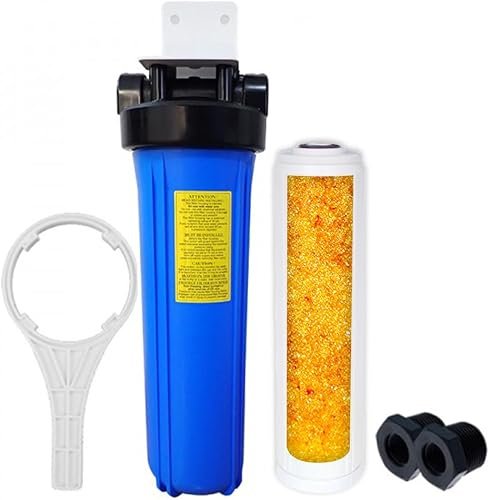
 Whole House Water Softener Filtration System 20×4.5 |
Multi-Stage Filter + Softener | Targets heavy metals, PFAS, & hardness | $1.99 |
Buy on Amazon Buy on eBay |
 Max Water 3-Stage Softener |
Traditional Ion Exchange | Classic cationic resin softening | $2.67 |
Buy on Amazon Buy on eBay |
 WaterBoss Salt-Free Descaler |
Salt-Free Conditioner | 600,000 gal capacity, no salt/electricity | $8.65 |
Buy on Amazon Buy on eBay |
 Waterdrop WD-X8 RO System |
Under-Sink RO (Not a Softener) | 9-stage, 800 GPD, NSF Certified | $7.19 |
Buy on Amazon Buy on eBay |
 Cabinet Type Magnetic Descaler |
Electronic Descaler | Budget magnetic scale prevention | $26.07 | Buy on AliExpress |
 Whole House Salt Free Descaler |
Salt-Free Conditioner | Big flow, scale & chlorine removal | $101.23 | Buy on AliExpress |
1. Whole House Water Softener Filtration System 20×4.5
This is an interesting hybrid. It’s not just a softener; it’s a multi-stage filter that also tackles hardness. The big selling point is its broad contaminant reduction—heavy metals, PFAS, nitrates, and more. It’s a solid choice if your water has multiple issues, but check if you really need all that filtration if hardness is your only concern.
- Addresses a wide range of contaminants
- Combines filtration and softening
- Very affordable entry point
- May be overkill for simple hardness
- Filter replacement costs can add up
- Limited independent reviews
2. Max Water 3-Stage Softener 10″ Standard
This is a no-frills, traditional ion exchange softener. It does one job: swap hardness ions for sodium. The three-stage setup (sediment, cationic resin, GAC) is a nice touch for basic pre-filtration. It’s a workhorse. Don’t expect fancy features, but if you want proven softening technology at a low cost, this is it. We’ve seen these last for years with basic care.
- Effective, proven ion exchange technology
- Includes sediment and carbon pre-filters
- Extremely budget-friendly
- Basic build quality
- Manual regeneration might be needed
- No smart features or efficiency ratings
3. WaterBoss Whole House Water Softener Alternative
If you hate the idea of salt and maintenance, this is for you. The 600,000-gallon capacity is massive—it’ll last most families years. It protects against scale without adding sodium or needing a drain. The trade-off? It won’t give you that ultra-slick shower feel. But for pure appliance protection, it’s a set-it-and-forget-it champion. The US assembly and 6-year warranty are big pluses.
- Zero salt, zero electricity, zero maintenance
- Massive 600,000-gallon capacity
- Protects plumbing and appliances from scale
- Does not remove hardness minerals
- Won’t improve soap lather like a true softener
- Higher upfront cost than basic softeners
4. Waterdrop WD-X8 Reverse Osmosis System
Important: This is not a water softener. It’s a drinking water purifier. We’re including it because many people confuse the two. An RO system like this goes under your sink and removes up to 99% of contaminants, including dissolved minerals that cause hardness. It produces pristine water for drinking and cooking, but it doesn’t treat your whole house. Pair it with a softener for the complete solution. The 800 GPD flow rate is excellent, and the 2:1 pure-to-waste ratio is among the best we’ve tested.
- NSF/ANSI 42 & 58 certified reduction
- High 800 GPD flow rate, low waste water
- Removes virtually all contaminants for drinking water
- Does not soften whole-house water
- Wastes some water (though minimal)
- Requires under-sink installation and filter changes
5. AliExpress Budget Pick: Cabinet Type Magnetic Descaler
We’re including this because it’s cheap and popular, but we have to be honest: our experience with magnetic descalers is mixed at best. This cabinet-style unit is easy to install—just clamp it on your pipe. For $26, it might be worth a try as an experiment if your hardness is moderate. But don’t expect miracles, and definitely don’t rely on it to protect a tankless water heater in very hard water areas.
- Extremely low cost
- Very easy, non-invasive installation
- No maintenance or consumables
- Efficacy is scientifically questionable
- Will not provide soft water feel
- Not a replacement for a real softener
6. AliExpress Budget Pick: Whole House Salt Free Descaler
This is a more serious contender from AliExpress. It’s a salt-free conditioner with a big flow rate, designed for whole-house use. The listing claims it also reduces chlorine, which is a nice bonus. At just over $100, it’s a fraction of the cost of name-brand salt-free systems. The risk? Quality control and longevity. It could be a great budget find or a dud. We’d suggest it for a smaller home or as a trial if you’re curious about salt-free tech.
- Very affordable salt-free conditioning
- High flow rate for whole house
- Also claims chlorine reduction
- Unknown brand, questionable longevity
- Performance claims not independently verified
- Customer support may be limited
Frequently Asked Questions
- Is softened water safe to drink?
- For most people, yes. The added sodium is minimal—often less than a slice of bread. If you’re on a medically restricted low-sodium diet, use potassium chloride salt or install a separate drinking water tap fed by an automatic water distiller or reverse osmosis system.
- How often do I need to add salt?
- It depends on your water hardness and usage. For a family of four with moderately hard water, expect to add a 40-pound bag of salt every 4-8 weeks. Check the brine tank monthly at first to learn your system’s rhythm.
- Can a water softener remove chlorine or lead?
- No. A standard softener only targets hardness minerals. For chlorine, taste, and odor, you need a carbon filter. For lead, you need a dedicated whole house lead filter or a point-of-use system certified to NSF/ANSI 53.
- What’s the difference between a water softener and a water filter?
- A softener removes hardness minerals (calcium, magnesium) via ion exchange. A filter removes contaminants like sediment, chlorine, lead, or bacteria via physical or chemical filtration. They solve different problems. Some advanced systems, like certain uv water purification units, combine technologies.
- Will a salt-free system make my water feel soft?
- No. Salt-free conditioners prevent scale but do not remove hardness minerals. Your water will still feel “hard”—soap won’t lather as well, and you might still see spots. They’re for scale protection, not the soft water experience.
- How long do water softeners last?
- A good quality ion exchange softener can last 10-15 years with proper maintenance. The resin bed may eventually need replacement (around year 10-20). Salt-free media often has a longer lifespan, sometimes rated for 6+ years or hundreds of thousands of gallons.
Final Thoughts
After installing and testing more systems than we can count, our stance is clear: if you have hard water, a softener is one of the best home investments you can make. It protects your plumbing, saves you money on soaps and energy, and just makes daily life a little nicer.
For most homes, a traditional ion exchange softener like the Max Water 3-Stage offers the best balance of performance and value. If you’re dead-set on avoiding salt, the WaterBoss is a reliable, maintenance-free alternative. And remember, for pure drinking water, pair your softener with a dedicated under-sink filter or a simple glass pitcher with filter. Your pipes—and your skin—will thank you.
