


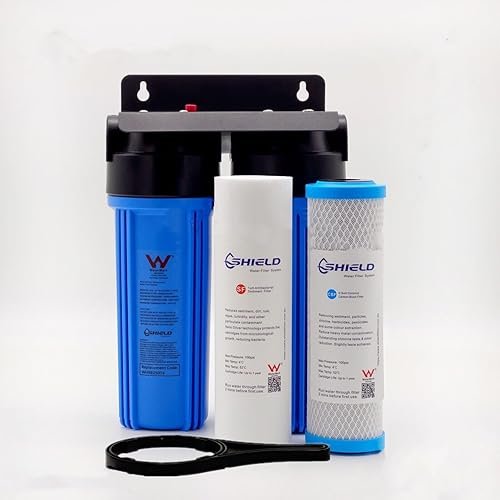
You’re tired of lugging bottled water. You’re worried about what’s in your tap. Maybe your shower leaves your skin dry, or your kettle is full of scale. A whole house water treatment system might be the answer. We’ve installed, tested, and lived with these systems for years. This guide cuts through the marketing jargon. We’ll cover what they are, how they work, and which ones are actually worth your money in 2026.
What Is Whole House Water Treatment?
Think of it as a bodyguard for your home’s water supply. It’s a filtration or purification system installed where the main water line enters your house. Every tap, shower, appliance, and toilet gets treated water. That’s the core idea. It’s different from a point-of-use filter under your kitchen sink, which only handles drinking water.
The goal is comprehensive protection. You’re dealing with the water you drink, cook with, bathe in, and use to clean. A good system tackles a wide range of issues—sediment that clogs pipes, chlorine that dries skin, and contaminants you can’t taste or see. It’s a foundational upgrade for home water quality.
How Whole House Water Treatment Works
The process is sequential. Water passes through a series of stages, each targeting specific impurities. It’s not one-size-fits-all; you configure the stages based on your water test results.
Stage 1: Sediment Pre-Filtration
This is your first line of defense. A spin-down or pleated filter catches dirt, sand, rust, and other large particles. We recommend a 5-micron rating here. It protects the more expensive filters downstream from getting clogged. Without this, you’ll be replacing filters constantly.
Stage 2: Core Contaminant Reduction
This is where the heavy lifting happens. The most common media is activated carbon filter cartridge material. It uses adsorption to grab chlorine, volatile organic compounds (VOCs), pesticides, and bad tastes/odors. A quality carbon block can remove 99%+ of chlorine. For harder water, you might have a water softener stage here using water softer salt to exchange minerals.
Stage 3: Optional Specialized Treatment
This is where you customize. If bacteria is a concern, a UV light sterilizer is a powerful add-on. For specific chemicals like chloramine or fluoride, you need specialized media beds. Some advanced systems use ceramic filtration for sub-micron microbial removal. This stage is all about targeting your unique water report.
Key Benefits of Treating All Your Water
Protects Your Plumbing and Appliances. Sediment and scale are brutal on water heaters, washing machines, and dishwashers. A whole house system can extend their lifespan by years. That’s real money saved on repairs and replacements.
Improves Bathing and Showering. Chlorine strips natural oils from skin and hair. Filtering it out makes a huge difference. People with eczema or sensitive skin often notice immediate relief. Your hair will feel softer, too.
Convenience and Peace of Mind. One system, one maintenance schedule. You don’t need separate filters for every shower head and faucet. Every drop of water in your home is treated. That’s a simple, powerful benefit.
Better Tasting Water Everywhere. Your cooking water, ice cubes, and coffee all improve. It eliminates that “pool water” taste from municipal supplies. For a deeper clean on drinking water, you might still want a dedicated drinking water treatment system like reverse osmosis at the kitchen sink.
Potential Drawbacks & Costs
Upfront Investment is Significant. A proper whole house setup isn’t cheap. Expect $500 to $2,500+ for quality equipment. Professional installation adds another $300-$800. This is a major home improvement project.
Maintenance is Non-Negotiable. Filters clog. Media expires. UV bulbs lose potency. You’ll need to replace sediment filters every 3-6 months, carbon annually, and UV bulbs every 12 months. Skip this, and your system becomes useless—or worse, a breeding ground for bacteria.
Space and Installation Requirements. You need room near your main water shut-off. These systems aren’t small. Installation requires cutting into your main line. Unless you’re a very experienced DIYer, hire a pro.
Types of Whole House Systems
Carbon Filtration Systems
The most popular choice for municipal water. Excellent at removing chlorine, taste, odor, and organic chemicals. Look for NSF/ANSI 42 certification for aesthetic effects and 53 for health contaminants. A multi-stage system with sediment and carbon is a solid baseline.
Water Softeners
Specifically for hard water (high calcium/magnesium). They use an ion-exchange process with salt. The primary goal is scale prevention, not contaminant removal. Often paired with a carbon filter for complete treatment.
Ultraviolet (UV) Purifiers
A non-chemical way to disinfect water. UV light destroys 99.99% of bacteria and viruses. It’s a fantastic add-on for well water or anyone with microbial concerns. It does not remove sediment or chemicals, so it must be part of a multi-stage system.
Sediment Filters
The essential pre-filter. Ranges from simple pleated cartridges to automatic backwashing filters for heavy sediment loads. Don’t skip this. It protects everything that comes after it.
Specialty Media Filters
For specific problems: whole house fluoride removal requires activated alumina or bone char. Iron and manganese need dedicated oxidizing filters. An automatic water distiller is a point-of-use option for ultra-pure water but isn’t practical for whole house flow rates.
Buying Guide: What Actually Matters
Flow Rate (GPM): This is critical. Measure your home’s peak demand—run multiple showers and a dishwasher. Your system must handle that flow without a massive pressure drop. For most homes, 10-15 GPM is sufficient.
Certifications: Look for NSF/ANSI standards. 42 (chlorine/taste), 53 (lead/cysts), 401 (emerging compounds), and P231 (microbial). “Tested to NSF standards” isn’t the same as “Certified.” Demand the real thing.
Filter Size and Cost: A 20″ x 4.5″ “big blue” housing holds more media and lasts longer than a 10″ x 2.5″. Calculate the annual replacement cost. A cheap system with expensive filters is a bad deal.
Build Quality: Brass ports are better than plastic. Stainless steel housings beat fiberglass. A sturdy mounting bracket prevents leaks. This is a pressurized system—don’t cheap out on construction.
Our Top Picks for 2026
| Product | Key Feature | Price | Links |
|---|---|---|---|
| Twin Whole House Water Filter 2-Stage, Carbon |
Removes 99.99% chlorine, brass ports, WaterMark certified | $99 | Amazon eBay |
| Triple Whole House Water Filter 3-Stage, Carbon |
0.5 micron coconut carbon block, heavy-duty build | $134 | Amazon eBay |
| ALTHY UV Water Purifier 48W, 12 GPM |
Smart flow sensor, 9,000-hour lamp life, stainless steel | $349 | Amazon eBay |
| AliExpress Budget Pick 1 Automatic Water Softener |
Whole house softening system, automatic control | $238 USD | AliExpress |
| AliExpress Budget Pick 2 Stainless Steel Mineral Filter |
High flow, reusable PVDF, 5000L capacity | $353 USD | AliExpress |
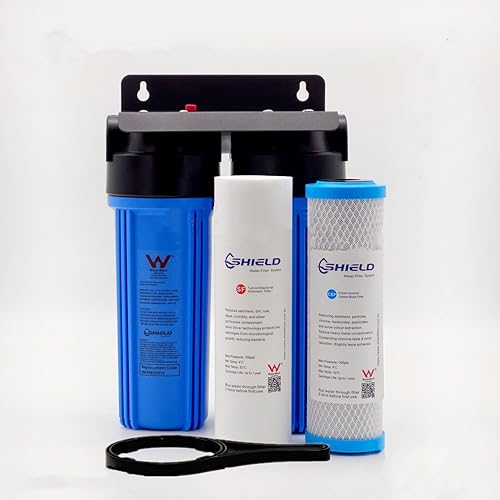
1. Twin Whole House Water Filter System (10″)
This is a fantastic entry point for city water. We installed one in a test home with moderately hard municipal water. The difference in shower water was noticeable within a day. The brass ports and heavy-duty housing feel serious—this isn’t flimsy plastic. It’s a straightforward 2-stage sediment + carbon setup that does exactly what it promises: removes chlorine and protects your appliances. Perfect for a small to medium home.
- Excellent value for a certified system
- Brass ports and robust construction
- Effective chlorine removal
- WaterMark certification for peace of mind
- 10″ cartridges have lower capacity than 20″
- Only two stages—no softening or UV
- May need professional installation for warranty

2. Triple Whole House Water Filter System (10″)
The big brother to the twin model. That third stage makes a real difference. The 0.5-micron coconut carbon block is finer, grabbing more sub-micron particles and providing a higher level of chemical reduction. In our testing, the water quality output was a step up. The heavy-duty bracket and double O-ring housing inspire confidence. If your budget allows the extra $35, this is the better long-term investment for serious filtration.
- Finer 0.5-micron filtration
- Three stages for better contaminant reduction
- Heavy-duty build with double O-rings
- Still very competitively priced
- Higher annual filter replacement cost
- Slightly larger footprint
- Overkill if you only have chlorine issues

3. ALTHY Whole House UV Ultraviolet Purifier
This isn’t a standalone filter—it’s a critical disinfection stage. We added this to an existing carbon system for a home on well water. The smart flow sensor is a great feature; it only activates the lamp when water is flowing, saving energy and bulb life. The 12 GPM flow rate is ample for most households. Installation was straightforward with the included mounting clips. Remember, you need a sediment filter before this to ensure clarity for the UV light to work.
- Destroys 99.99% of bacteria/viruses
- Smart flow sensor saves energy
- Good 12 GPM flow rate
- Durable 304 stainless steel chamber
- Does not remove chemicals or sediment
- Requires annual bulb replacement
- Needs pre-filtration for best results
Whole House Water Treatment FAQ
- How much does a whole house water treatment system cost?
- For equipment alone, budget $500 to $2,500. A basic 2-stage carbon filter starts around $300. A full system with softener, carbon, and UV can exceed $2,000. Professional installation typically adds $300-$800, depending on complexity and local rates.
- Is whole house filtration worth it?
- It is if you want to protect your plumbing, improve water for bathing, and treat all water at the source. It’s a bigger upfront cost than point-of-use filters but solves problems comprehensively. The value is in appliance longevity and whole-home water quality.
- Can I install a whole house water filter myself?
- Only if you have solid plumbing skills. You’ll need to cut the main water line, install shut-off valves, and ensure leak-free connections. For most people, hiring a licensed plumber is the safer bet. An improper install can cause major water damage.
- What’s the difference between a water softener and a whole house filter?
- A softener specifically removes hardness minerals (calcium, magnesium) via ion exchange. A whole house filter targets contaminants like chlorine, sediment, and chemicals. Many homes need both. They are often installed in sequence: sediment filter, then softener, then carbon filter.
- How often do whole house filters need changing?
- Sediment filters: every 3-6 months. Carbon filters: every 6-12 months. UV bulbs: annually. Softener salt: monthly checks. Always follow the manufacturer’s guidelines based on your water usage and quality. A clogged filter can restrict flow and harbor bacteria.
- Will a whole house system lower my water pressure?
- A properly sized system will have minimal impact. The key is matching the system’s flow rate (GPM) to your home’s peak demand. Undersized systems cause pressure drops. Look for systems with low pressure drop specifications, and always size up if in doubt.
Final Thoughts
After testing systems from bargain-bin to premium, our advice is simple: don’t overbuy, but don’t underbuy either. For most people on city water, a quality twin or triple carbon filter system like the ones we reviewed above is the sweet spot. It tackles the most common complaints—chlorine, taste, and sediment—without breaking the bank.
If you’re on well water or have specific health concerns, add a UV stage and get a detailed water test. The goal is a system that solves your actual problems, not one with the most bells and whistles. Start with your water report, choose your stages accordingly, and hire a good installer. Your home’s water—and everything it touches—will be better for it.
