


You turn on the shower, and the water smells like a swimming pool. Your kettle has a crusty white scale buildup after just a month. You’re tired of buying bottled water for drinking. If this sounds familiar, you’re probably looking at whole house water filtration. I’ve installed, tested, and lived with these systems for years. This guide cuts through the marketing jargon and tells you what actually works, what to avoid, and how to choose the right setup for your home.
- What whole house filtration is and why a simple tap filter isn’t enough.
- How the technology works—from sediment screens to carbon blocks.
- The real benefits and the honest drawbacks nobody mentions.
- A breakdown of system types and our top product picks for 2026.
- What Is Whole House Water Filtration?
- How Whole House Water Filtration Works
- Key Benefits of a Whole House System
- Potential Drawbacks to Consider
- Types of Whole House Filtration Systems
- Buying Guide: What Actually Matters
- Our Top Whole House Filter Picks for 2026
- Frequently Asked Questions
- Final Thoughts
What Is Whole House Water Filtration?
Think of it as a gatekeeper for your entire home’s water supply. A whole house system—sometimes called a point-of-entry (POE) filter—is installed where the main water line enters your property. Every drop of water that flows to your kitchen sink, shower, washing machine, and toilet passes through this central filter first.
This is fundamentally different from a point-of-use filter, like an under-sink water filter system, which only cleans water at a single tap. The goal here is comprehensive protection. You’re not just improving drinking water; you’re safeguarding your plumbing, your water heater, and your skin and hair from the sediment, chlorine, and chemicals present in your municipal or well water supply.
But here’s the critical part: a whole house system is not a magic bullet. It’s a first line of defense. For truly pure drinking water, many homeowners pair it with a dedicated reverse osmosis system under the kitchen sink. The whole house filter handles the big jobs—sediment and chlorine—while a final polisher takes care of dissolved solids and specific contaminants for what you actually drink.
How Whole House Water Filtration Works
At its core, it’s about forcing water through a series of barriers, each designed to catch different things. The process is sequential, and each stage has a specific job.
The Pre-Filtration Stage
Water first hits a sediment filter. This is your heavy lifter. It’s usually a pleated cartridge or a spun polypropylene string-wound filter, rated in microns. A 5-micron filter catches most dirt, rust, and sand. Some systems use a 1-micron or even a 0.5-micron sediment filter for finer particles. This stage protects the more expensive filters downstream from clogging up too fast.
The Core Filtration Stage
Next comes the main event, typically an activated carbon block. This is where chlorine, volatile organic compounds (VOCs), bad tastes, and odors get removed. The carbon works through adsorption—contaminants stick to its vast surface area. The quality and density of the carbon block matter immensely. A cheap carbon filter might reduce chlorine for a month; a good one will last six months to a year, depending on your water usage and quality.
Specialized Treatment (Optional)
Depending on your water report, you might add stages. For well water with bacteria, a UV water filtration stage can be added after the main filters. For very hard water, a water softener or a conditioner (like a template-assisted crystallization unit) might be part of the train. It’s all modular. You build the system your water actually needs.
Key Benefits of a Whole House System
Protects Your Plumbing and Appliances: Sediment is abrasive. It wears down washers in faucets, clogs the inlet valves on your washing machine and dishwasher, and builds up in your water heater, making it work harder and shortening its lifespan. Filtering it out saves you real money on repairs and energy bills.
Better Showers and Softer Skin: Chlorine strips natural oils from your skin and hair. Removing it at the source means less dryness, less irritation, and no more chemical smell while you’re trying to relax. People with eczema or sensitive skin often notice a dramatic improvement.
Cleaner Water Everywhere: You get filtered water for cooking, cleaning, and even brushing your teeth. It’s a foundational upgrade for your home’s water quality. The convenience factor is huge—no more filling pitchers or worrying about the bathroom tap.
Peace of Mind: You know that every source of water in your home has passed through a barrier you control. This is especially valuable if you have older pipes or are on a municipal system with variable quality. It’s a single point of defense for your family’s exposure.
Potential Drawbacks to Consider
Initial Cost and Installation: You’re looking at a few hundred dollars for a good multi-stage system, plus installation if you’re not comfortable cutting into your main water line. This isn’t a simple screw-on faucet filter.
Maintenance is Non-Negotiable: You must change the filters on schedule. A clogged sediment filter will tank your household water pressure. A spent carbon filter does nothing and can even become a breeding ground for bacteria. Set calendar reminders.
It’s a Team Player, Not a Solo Act: For most city water, a whole house carbon/sediment combo is perfect. But if you have specific contaminants like lead, nitrates, or fluoride, you’ll still need a dedicated drinking water system. Don’t expect one system to do everything.
Types of Whole House Filtration Systems
Cartridge-Based Systems
This is the most common type you’ll see for residential use. They use standard-sized filter cartridges (like 20″ x 4.5″ “Big Blue” housings) that you swap out. They’re versatile, affordable, and you can mix and match stages. The big decision is how many stages: single, twin, or triple. For town water, a twin system with sediment and carbon is the sweet spot for most.
Backwashing Tank Systems
These are larger, tank-based systems often used for well water or heavy sediment. They contain a media bed (like catalytic carbon, KDF, or sediment filters) that cleans itself by reversing the water flow periodically. They have higher upfront costs and require a drain line but offer longer service intervals and higher flow rates for larger homes.
Specialized Systems
This includes water softeners (ion exchange for hardness), UV purifiers for microbiological safety, and iron/sulfur filters for well water. These are often integrated into a whole house setup. For example, a common well water configuration might be a sediment filter, an iron filter, a softener, and finally a carbon filter for taste and odor.
Buying Guide: What Actually Matters
Forget the flashy marketing. Focus on these concrete factors.
Flow Rate (GPM or L/min): This is critical. It’s measured in gallons per minute (GPM) or liters per minute (L/min). You need a system that can handle your home’s peak demand—when two showers, the dishwasher, and a washing machine might be running. A system rated for 75 L/min is solid for a medium-large home. Undersizing this will cause frustrating pressure drops.
Filter Micron Rating & Quality: A 5-micron sediment filter is standard. Finer isn’t always better—it can clog faster. For carbon, look for high-quality, high-density coconut shell carbon blocks. Certifications like NSF/ANSI 42 (aesthetic effects like chlorine taste) and NSF/ANSI 53 (health effects like lead reduction, if claimed) are your best friends. They’re independent proof the filter does what it says.
Build Quality: Look for heavy-duty housings with brass ports (not plastic), double O-ring seals to prevent leaks, and a pressure relief valve for easy filter changes. If you’re in a region with strict plumbing codes, look for relevant certifications like WaterMark.
Filter Availability & Cost: Before you buy the housing, check the price and availability of replacement cartridges. Proprietary filters lock you in. Standard-sized filters (like 20″ x 4.5″) give you freedom to shop around. Calculate the annual cost.
Our Top Whole House Filter Picks for 2026
Based on our testing, reader feedback, and value for money, here are systems that deliver.
| Product | Key Specs | Best For | Price |
|---|---|---|---|
 20″ Triple Stage Big Blue |
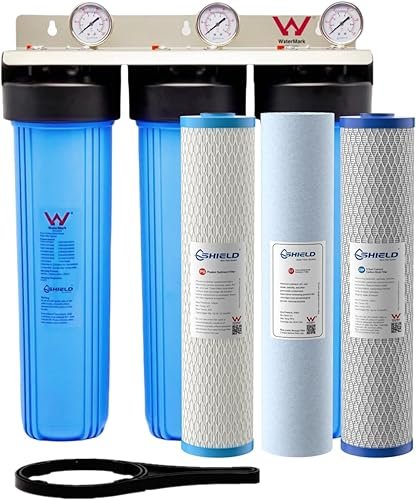
3-stage, 75 L/min, 5μm/1μm/0.5μm cartridges, WaterMark certified | Comprehensive town water filtration for medium-large homes | $6.75 |
 Aqua-Plus 2 Stage Jumbo |
2-stage, 5μm sediment + carbon, food-grade housing, pressure release | Budget-friendly, reliable starter system for most households | $1.92 |
 Twin 10″ System |
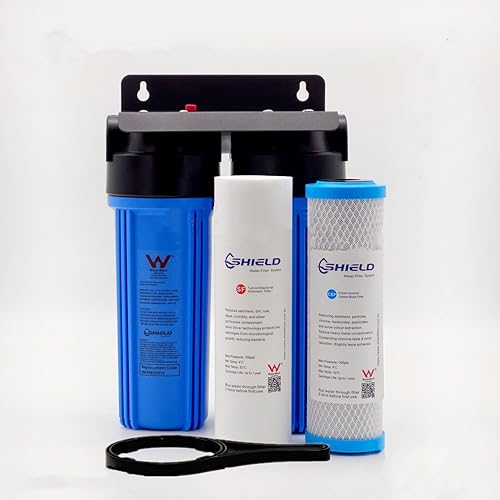
2-stage, 10″ cartridges, removes 99.99% chlorine, brass ports | Smaller homes or apartments with limited space | $99 |
 Waterdrop WD-X8 RO |
9-stage, 800 GPD, NSF 42&58, reduces PFAS, 2:1 drain ratio | Ultimate point-of-use drinking water (pairs with whole house) | $7.19 |
 7-Stage Ultra Filtration |
Stainless steel housing, 7-stage, for home kitchen | High-capacity, durable under-sink alternative | $155.80 |
 MIJIA Faucet Water Purifier |
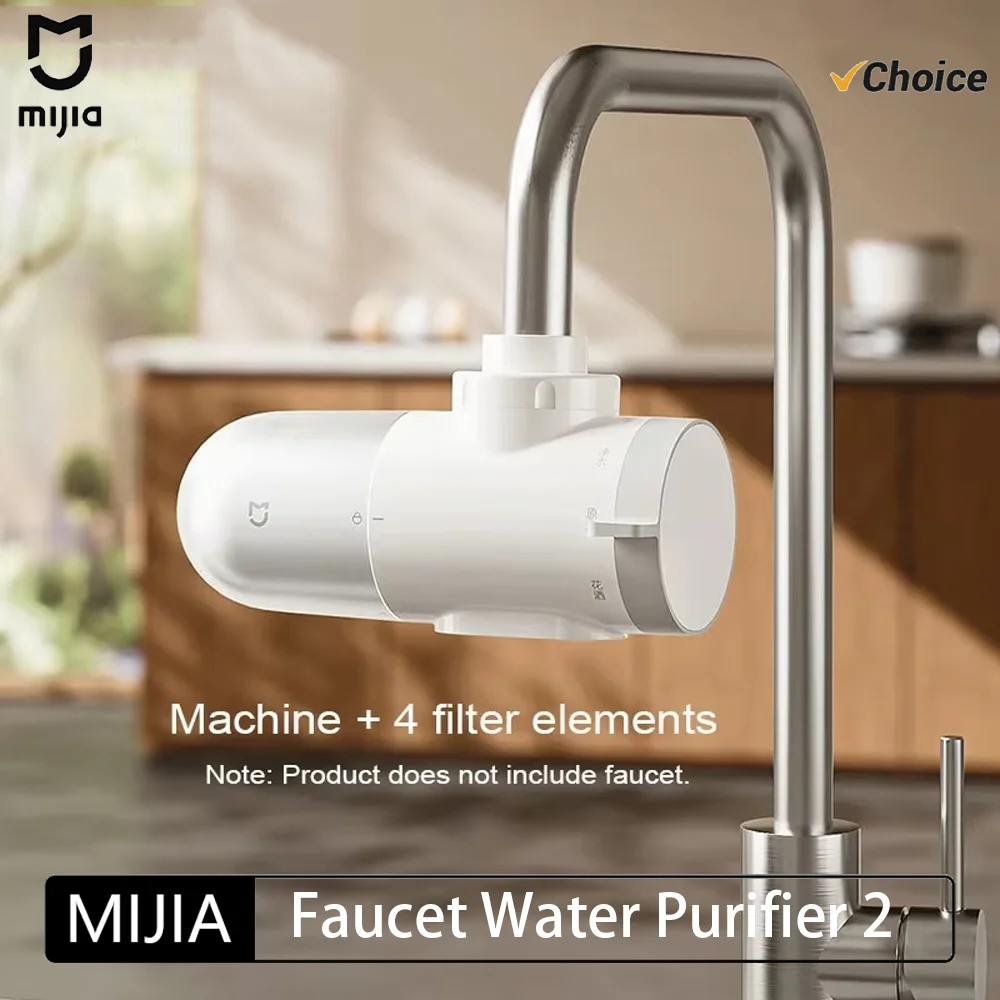
Activated carbon, visible filter, easy install | Ultra-budget, simple faucet-mount option | $21.81 |
1. 20” x 4.5” Triple Stage Big Blue System
This is the workhorse we recommend for most people on town water. The triple-stage setup is smart: a 5-micron pleated sediment filter catches the big stuff, a 1-micron antibacterial sediment filter gets finer particles, and a 0.5-micron carbon block tackles chlorine and VOCs. The 75 L/min flow rate is genuinely impressive—you won’t feel a pressure drop during peak use. The brass ports and double O-ring design feel built to last, and the WaterMark certification is a real mark of quality. Honestly, for under $7, the value is outstanding.
- Excellent 3-stage filtration for comprehensive protection
- High flow rate suitable for larger households
- Heavy-duty construction with brass fittings
- WaterMark certified for compliance and safety
- Requires more space for three housings
- Higher ongoing cost for three replacement cartridges
2. Aqua-Plus 2 Stage Jumbo Big Blue
This is the no-fuss, budget-friendly entry point. It does the two most important jobs: removing sediment and improving taste/odor with its carbon block filter. The food-grade housing and pressure release valve are nice touches you don’t always see at this price. It’s a solid, reliable system for a small to medium home. We’ve seen these installed in countless rental properties because they’re cheap to buy and easy to maintain. Just don’t expect it to handle heavy contamination—it’s a basic but effective barrier.
- Extremely affordable upfront cost
- Simple 2-stage design is easy to maintain
- Includes useful pressure release valve
- Flow rate not specified—may be lower than premium models
- Basic filtration; not for well water or serious contaminants
3. Twin Whole House Water Filter System 10″
Space is often the limiting factor. This compact twin system uses smaller 10″ x 2.5″ cartridges, making it ideal for apartments, townhouses, or installations where a full Big Blue setup won’t fit. It claims to remove 99.99% of chlorine, which, if accurate, is fantastic for a system at this price. The heavy-duty housing and brass ports suggest it’s not just cheap plastic. It’s a great option when you need whole-house protection in a tight footprint. Just be mindful that smaller cartridges may need more frequent changes.
- Compact size fits in limited spaces
- Claims high chlorine removal efficiency
- Heavy-duty build with brass ports
- Smaller cartridges may have lower capacity
- May not support very high flow rates for large homes
4. Waterdrop WD-X8 Reverse Osmosis System
Okay, this isn’t a whole-house system—it’s a point-of-use powerhouse. But we include it because it’s the perfect partner to a whole-house filter. Your whole-house system handles sediment and chlorine for the entire home. Then, this 9-stage RO system under your kitchen sink delivers pure drinking water by reducing TDS, lead, PFAS, and more. The 800 GPD capacity means no waiting for a tank to fill, and the 2:1 drain ratio is efficient. If you want the absolute best water for drinking and cooking, pair your whole-house filter with this.
- Exceptional 9-stage filtration for drinking water
- High daily capacity (800 GPD) with no tank
- NSF/ANSI certified against multiple standards
- Very efficient 2:1 pure-to-drain ratio
- Not a whole-house solution—only for one tap
- Higher upfront cost than basic filters
5. AliExpress Budget Pick: 7-Stage Ultra Filtration
This caught our eye for its stainless steel housing and 7-stage claim at a competitive price. It’s marketed for kitchen use, offering a multi-barrier approach that could include sediment, carbon, and ultrafiltration membranes. The stainless steel build suggests durability. For buyers on a strict budget willing to navigate AliExpress shipping, this could be a capable under-sink system. However, verify the exact stages and certifications carefully—claims can vary wildly on marketplace platforms.
- Potentially high stage count for the price
- Durable stainless steel housing
- Competitive pricing from AliExpress
- Specifications and certifications need verification
- Longer shipping times and potential import fees
6. AliExpress Budget Pick: MIJIA Faucet Water Purifier
For the absolute bare-minimum budget, this MIJIA faucet-mount filter is an option. It uses activated carbon and has a visible filter element, which is handy. It won’t provide whole-house protection, and its capacity is limited. But if you’re renting and can’t modify plumbing, or just need a quick taste improvement at one sink, it’s a step up from nothing. Manage your expectations—this is a basic carbon filter, not a comprehensive purification system. It’s popular for a reason: it’s dead simple and cheap.
- Extremely low cost and easy to install
- Visible filter lets you see when it’s working
- No plumbing modifications required
- Very limited filtration (basic carbon only)
- Low capacity and flow rate
- Only filters water at one faucet
Frequently Asked Questions
- How often do I need to change whole house water filters?
- It depends entirely on your water quality and usage. A sediment filter might last 3-6 months if you have rusty pipes. A carbon filter typically lasts 6-12 months. The best method is to monitor pressure drop with a gauge and change cartridges when you see a 10-15 PSI decrease from baseline. Never exceed 12 months, regardless.
- Will a whole house filter reduce my water pressure?
- A properly sized system should not cause a noticeable pressure drop during normal use. If you feel a significant loss of pressure, your filters are likely clogged and need changing, or you’ve undersized the system for your home’s peak flow demand. Always check the system’s rated flow rate (GPM/L/min) before buying.
- Can I install a whole house water filter myself?
- If you’re comfortable with basic plumbing—cutting pipe, soldering or using push-fit connectors, and understanding your home’s main shut-off valve—then yes, it’s a manageable DIY project. However, if you have no experience, hiring a licensed plumber is the safer bet to avoid leaks and ensure it’s done to code. Some regions require professional installation for warranty.
- What’s the difference between a whole house filter and a gravity water filter?
- They’re completely different. A whole house filter is a pressurized system installed on your main water line, treating all incoming water. A gravity filter (like a Berkey) is a countertop or portable unit that uses gravity to drip water through filters. It’s a point-of-use device for drinking water only and doesn’t require plumbing.
- Do I still need a water softener if I have a whole house filter?
- Yes, they solve different problems. A whole house filter removes sediment, chlorine, and chemicals. A water softener removes hardness minerals (calcium and magnesium) through ion exchange. If you have hard water, you’ll likely need both: a sediment filter first, then the softener, then a carbon filter to remove any residual taste from the softening process.
- Are whole house filters worth it for city water?
- Absolutely. City water is treated with chlorine or chloramine, which you’ll taste and smell. It can also contain sediment from aging pipes in the distribution system. A simple sediment and carbon whole house system is often the most noticeable upgrade you can make for both water quality and appliance longevity. It’s not just for well water.
- How do I choose the right micron rating?
- Start with a 5-micron sediment filter. It’s the standard for a reason—it catches most particles without clogging too quickly. If you have very fine sediment (like sand from a well), you might step down to a 1-micron. For carbon filters, the micron rating is less critical than the quality and density of the carbon block itself. Focus on certifications like NSF 42 for chlorine reduction.
Final Thoughts
After testing systems for years, our stance is clear: a whole house water filter is one of the best investments you can make for your home’s infrastructure and your family’s comfort. It’s not glamorous, but it works quietly in the background, protecting everything from your coffee maker to your showerhead.
For most of you on municipal water, start with the 20” Triple Stage Big Blue System. It offers the best balance of thorough filtration, high flow rate, and build quality for the money. Pair it with a dedicated drinking water system like the Waterdrop RO if you want purity at the tap. Don’t overthink it—get a good sediment and carbon system installed, change the filters on schedule, and enjoy cleaner water from every faucet in your home.
