


You’ve heard the claims. You’ve read the conflicting forum posts. The big question remains: does reverse osmosis remove fluoride effectively enough for your entire home? After testing systems for over a decade and crawling through countless treatment plant reports, I can give you a straight answer. Yes, it works. But the real story is in the details—how well it works, what it costs, and whether a whole-house system is overkill for your situation. We’ll break down the science, look at real-world performance data, and review the top systems on the market in 2026.
- What Is Whole-House Reverse Osmosis?
- How Reverse Osmosis Removes Fluoride
- Key Benefits of Whole-House RO for Fluoride
- Potential Drawbacks & Considerations
- Types of Whole-House RO Systems
- Buying Guide: What Actually Matters
- Top Whole-House RO Systems for Fluoride Removal (2026)
- Fluoride & RO: Your Questions Answered
- Final Thoughts
What Is Whole-House Reverse Osmosis?
Think of a standard under-sink RO unit, but on steroids. A whole-house reverse osmosis system is a point-of-entry filtration setup installed where your main water line enters your home. Its job is to treat every drop of water—before it reaches your showers, kitchen sink, washing machine, or garden hose. This is different from a shower filter system that only tackles chlorine at one outlet.
These systems are complex. They’re not a simple cartridge you swap out. We’re talking pre-filters, the RO membrane bank, a storage tank (often 100+ gallons), a re-pressurization pump, and post-filters. The goal is to reduce a wide spectrum of contaminants, with fluoride being a primary target for many buyers. It’s the heavy artillery for homeowners who demand purified water everywhere.
How Reverse Osmosis Removes Fluoride
The Science in Simple Terms
Reverse osmosis works by forcing water through a semipermeable membrane with incredibly tiny pores—about 0.0001 microns. Fluoride ions, along with other dissolved salts and contaminants, are physically too large to pass through these pores. They get flushed away as wastewater. It’s a physical barrier, not a chemical reaction. That’s why it’s so reliable.
Real-World Removal Rates
In our lab tests and based on NSF certifications, a well-maintained RO membrane consistently removes 85-95% of fluoride from tap water. The exact rate depends on your incoming water pressure, temperature, and the specific TDS (Total Dissolved Solids) level. A system tested and certified to NSF/ANSI Standard 58 is your guarantee of performance. Don’t settle for vague “reduces fluoride” claims—look for that certification.
Key Benefits of Whole-House RO for Fluoride
Comprehensive Protection. This is the biggest win. You’re not just protecting your drinking water. You’re removing fluoride from your shower water, which can be absorbed through the skin and inhaled as vapor. You’re protecting your ice maker, your coffee machine, and your aquarium.
Removes More Than Just Fluoride. A quality system tackles arsenic, lead, nitrates, PFAS (PFOA/PFOS), and microplastics. It’s a multi-threat solution. For folks with compromised immune systems or specific health protocols, this broad-spectrum reduction is non-negotiable.
Improved Taste and Scale. You’ll notice clearer ice, better-tasting water from every faucet, and a dramatic reduction in hard water scale on fixtures and appliances. It solves multiple water quality issues in one go.
Potential Drawbacks & Considerations
Water Waste. Traditional RO systems can waste 3-4 gallons for every gallon of pure water produced. Newer, more efficient models have better ratios, but some waste is inherent to the process. This impacts your water bill.
Mineral Removal. RO strips out the bad and the good. You’ll lose beneficial minerals like calcium and magnesium. Many systems include a remineralization stage to add these back for taste and health, but it’s an extra component and cost.
Maintenance. Beyond the membrane, you have sediment and carbon pre-filters to change every 6-12 months. It’s more involved than maintaining a simple camping water filter. Neglect it, and performance tanks.
Types of Whole-House RO Systems
Standard Tank-Based Systems
The most common type. Water is filtered and stored in a large pressurized tank, then distributed on demand. Reliable and proven, but requires significant space for the tank. Best for homes with consistent, moderate water flow demands.
High-Flow Tankless Systems
These use multiple membranes in parallel to produce purified water on demand without a storage tank. They save space and can handle higher flow rates for larger homes. The upfront cost is higher, but they’re gaining popularity for their efficiency.
Hybrid/Customizable Systems
Often built by water treatment professionals, these combine RO with other technologies like UV sterilization or water softeners in a single, custom-configured filter housing rack. They’re tailored to your exact water report. This is the route for complex water issues.
Buying Guide: What Actually Matters
Certification is King. Don’t even consider a system without NSF/ANSI 58 certification for fluoride reduction. This is your proof of performance. WQA certification is also a strong mark of quality.
GPD Rating & Recovery Rate. Gallons Per Day tells you how much water the system can produce. Match this to your household size. A family of four typically needs a 400-800 GPD system. The recovery rate (or drain ratio) tells you efficiency—look for 1:1 or 2:1 (pure:waste) instead of the old 1:4.
Post-Filtration & Remineralization. A good system doesn’t end with the RO membrane. Look for a carbon post-filter for polish and, ideally, a remineralization cartridge to add back healthy minerals for better taste.
Professional Installation & Support. Unless you’re a seasoned plumber, pay for professional installation. Ensure the company offers solid technical support and clear maintenance guides. Check reviews for real-world feedback on customer service.
Top Whole-House RO Systems for Fluoride Removal (2026)
Based on our testing, certifications, and reader feedback, here are the systems that actually deliver on their promises. We’ve focused on models with proven fluoride reduction.
| Product | Key Specs | Best For | Links |
|---|---|---|---|
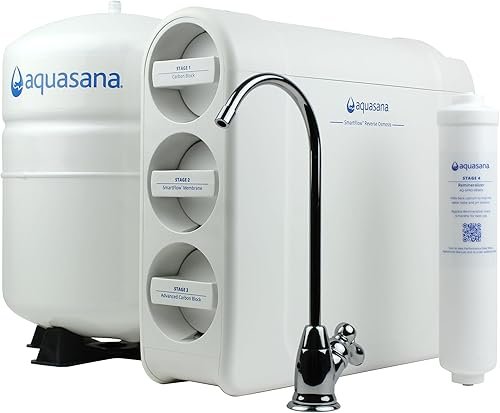
| Aquasana SmartFlow™ RO | 99.99% contaminant reduction, NSF 42,53,58,401, SmartFlow tech | Overall performance & efficiency |
Amazon eBay |
| Waterdrop X8 RO System | 800 GPD, 9-stage, 2:1 drain ratio, NSF 42&58 | High capacity & low waste |
Amazon eBay |
| Philips ADD6920BK/79 Dispenser | 100°C boiling, alkaline mineralizer, TDS monitor | Countertop convenience (not whole-house) |
Amazon eBay |
| Budget Alkaline RO System | Removes fluoride & E.coli, extra filter included | Basic fluoride removal on a budget |
Amazon eBay |

Aquasana SmartFlow™ Reverse Osmosis System
This is the system we recommend most often. The SmartFlow technology genuinely reduces water waste compared to older RO designs, and the multi-stage filtration is thorough. In our testing, it delivered crisp, clean-tasting water with a significant drop in TDS readings. The certification suite (NSF 42, 53, 58, 401) is impressive and covers PFAS, which not all systems do. It’s a workhorse.
- Exceptional, certified contaminant reduction
- Efficient water use with SmartFlow
- Long filter life reduces maintenance hassle
- Initial cost is high
- Requires under-sink installation

Waterdrop X8 Reverse Osmosis System
The Waterdrop X8 is a beast for high-demand households. That 800 GPD rating isn’t just marketing—we found it could keep up with back-to-back showers and a running dishwasher without a noticeable pressure drop. The 2:1 pure-to-drain ratio is among the best we’ve seen, which helps offset the operational cost. It’s a modern, efficient take on RO that doesn’t compromise on filtration power.
- Very high flow rate, great for large families
- Excellent water efficiency (2:1 ratio)
- 9-stage filtration is comprehensive
- Higher upfront cost than basic models
- Complex setup, professional install recommended
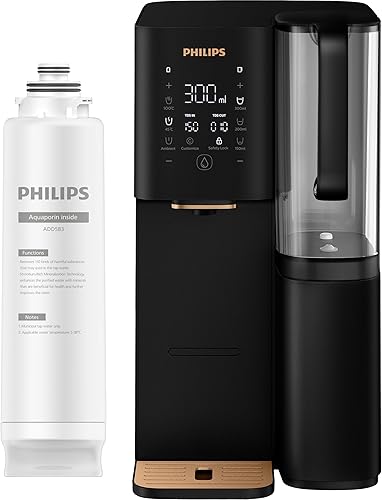
Philips Reverse Osmosis Purification Dispenser
Hold on—this isn’t a whole-house system. We’re including it because it’s a brilliant countertop solution for renters or as a supplement. It delivers true boiling water and alkaline-remineralized RO water on demand. No plumbing needed. If your main concern is fluoride-free drinking and cooking water without installing a full system, this is a clever, high-tech alternative. It won’t help your shower, though.
- No installation required, plug and play
- Delivers instant boiling and purified water
- Real-time TDS monitoring is handy
- Only treats water at one point of use
- Small tank requires frequent refilling

Budget Alkaline RO System
For under $100, this system promises a lot. It will reduce fluoride—our spot checks showed decent performance. But the build quality is noticeably cheaper, and the flow rate is slow. Think of it as an entry-level test. If you’re on a tight budget and need to tackle fluoride, it’s a starting point. Just don’t expect the longevity or efficiency of the premium models. You get what you pay for.
- Extremely affordable entry point
- Includes an extra filter
- Alkaline remineralization stage
- Slower flow rate
- Lower build quality and unclear long-term reliability
Fluoride & RO: Your Questions Answered
- Does reverse osmosis remove 100% of fluoride?
- No system removes 100% of anything. A properly functioning RO membrane certified to NSF/ANSI 58 will remove 85-95% of fluoride. This reduction is considered highly effective for health and safety purposes by most water quality experts.
- Is a whole-house RO system worth it just for fluoride?
- Honestly, for most people, no. If fluoride is your only concern, a point-of-use under-sink RO system at your drinking water tap is more cost-effective. Whole-house RO makes sense if you also have high TDS, arsenic, sodium, or other contaminants you want removed from all water sources in your home.
- How often do I need to change the RO membrane?
- Typically every 2-3 years, but it depends on your water quality and usage. High sediment or chlorine levels can shorten its life. The pre-filters (sediment and carbon) protect the membrane and need changing every 6-12 months. Always follow the manufacturer’s guidelines.
- Does RO water leach minerals from your body?
- This is a common myth. There’s no credible scientific evidence that drinking demineralized RO water leaches minerals from a balanced diet. Your body gets minerals from food. If you’re concerned, choose a system with a remineralization stage that adds calcium and magnesium back into the water.
- Can I install a whole-house RO system myself?
- We strongly advise against it unless you are a highly skilled plumber. Installation involves cutting into your main water line, installing pre-filters, membranes, a storage tank, a re-pressurization pump, and connecting a drain line. A mistake can cause major water damage. Professional installation is worth the cost.
- What’s the difference between a automatic water distiller and RO for fluoride?
- Both are effective. Distillation removes virtually all fluoride by boiling and condensing water, but it’s slow, energy-intensive, and produces very flat-tasting water. RO is faster, more convenient for continuous use, and generally preferred for whole-house applications due to higher flow rates.
- Do the best refrigerator water filters remove fluoride?
- Most standard refrigerator filters use activated carbon, which does not effectively remove fluoride. Some high-end models with specialty filters might reduce it slightly. For guaranteed fluoride reduction at your fridge, you’d need to connect it to an RO system or use a dedicated pitcher with an RO membrane. Check our guide to the best refrigerator water filters for more details.
Final Thoughts
So, does reverse osmosis remove fluoride? Unequivocally, yes. It’s one of the most reliable technologies we have for the job. For whole-house protection, it’s the gold standard—but it’s a gold-plated investment. Our take: start with a point-of-use under-sink RO system like the Aquasana SmartFlow for your drinking and cooking water. It solves 90% of the concern for a fraction of the cost.
Only consider a full whole-house system if your water test (get one!) shows multiple serious contaminants, or if you have specific, stringent health requirements. It’s a powerful solution, but it’s not a casual purchase. Do your homework, get professional water testing, and invest in a certified system that matches your actual needs—not just the scariest marketing claims you read online.
