


Whole House Reverse Osmosis Systems: Everything You Need to Know (2026)
After testing filtration systems for over a decade and crawling through more utility closets than I care to count, whole house reverse osmosis remains one of the most misunderstood topics in water treatment. People either think it’s overkill or the only real solution. The truth? It’s complicated.
This guide covers:
- What whole house RO actually is and how it differs from point-of-use systems
- The real costs — equipment, installation, and ongoing maintenance
- When it makes sense and when you’re wasting money
- Our top product picks for different needs and budgets
What Is Whole House Reverse Osmosis?
Whole house reverse osmosis is a point-of-entry water treatment system installed where water enters your home. Every faucet, shower, and appliance receives RO-filtered water. That’s the key difference from under-sink units — you’re not just protecting your drinking water.
A standard under-sink RO system might process 75-100 gallons per day. Whole house systems? They need to handle 500-2,000+ GPD depending on household size. That’s a massive jump in capacity, and it changes everything about system design.
Here’s what most articles won’t tell you: true whole house RO is rare. Very rare. We’ve visited hundreds of homes with water treatment systems, and actual whole house RO installations account for maybe 5% of what we see. The cost, complexity, and maintenance requirements scare most people away — and honestly, for good reason in many cases.
The system pushes water through a semipermeable membrane with pores around 0.0001 microns. For context, a human hair is roughly 50 microns. We’re talking about filtration at the molecular level. Dissolved salts, heavy metals, bacteria, viruses — most of it gets rejected at the membrane.
How Whole House Reverse Osmosis Works
Understanding the mechanics helps you make smarter buying decisions. Let’s break this down.
The Membrane Process
At its core, reverse osmosis reverses natural osmotic pressure. Water normally flows from low concentration to high concentration through a membrane. RO applies external pressure — typically 40-80 PSI for residential systems — forcing water the opposite direction.
Pure water molecules squeeze through the membrane. Dissolved solids, contaminants, and most organic compounds can’t pass. They exit as “reject water” or concentrate, which gets routed to a drain.
The membrane itself is typically a thin-film composite (TFC) polyamide layer wound in a spiral configuration. A standard 4040 membrane (4 inches diameter, 40 inches long) can process 1,000-2,400 GPD depending on feed water pressure and temperature.
Pre-Treatment Stages
This is where things get serious. Feed raw city water or well water straight into an RO membrane and you’ll destroy it in weeks. Sediment clogs it. Chlorine attacks the polyamide layer. Hard water causes scaling.
Every proper whole house RO setup includes multiple pre-treatment stages:
- Sediment pre-filter: 5-20 micron, removes particles that would physically damage the membrane
- Carbon filter: Removes chlorine, chloramines, and organic compounds — chlorine literally dissolves TFC membranes
- Water softener or anti-scalant: Prevents calcium/magnesium scaling on the membrane surface
If you’re dealing with well water, pre-treatment gets even more complex. You might need an iron filter for well water before anything else. Iron fouls membranes fast. We’ve seen $3,000 membranes ruined in six months because homeowners skipped iron removal.
Post-Treatment and Storage
RO water is aggressive. It’s so pure it wants to dissolve minerals from anything it touches — including your pipes. Post-treatment typically includes:
- Remineralization: Adds calcium and magnesium back for taste and pipe protection
- pH adjustment: RO water often drops to pH 5-6; raising it to 7-8 protects plumbing
- UV sterilization: Final disinfection barrier (membranes aren’t 100% effective against all pathogens)
- Storage tank: 200-500 gallon atmospheric tanks buffer demand spikes
- Repressurization pump: Boosts pressure from the tank to household fixtures
The Rejection Ratio
For every gallon of pure water produced, a residential RO system wastes 1-3 gallons as concentrate. That’s a 1:1 to 3:1 waste ratio. At 1,000 GPD production, you’re sending 1,000-3,000 gallons daily to the drain.
High-efficiency systems with permeate pumps or recirculation loops can push this to 1:1. But they cost more upfront. Something to factor into your decision.
Key Benefits
Complete Contaminant Removal: Nothing else comes close. A properly sized whole house RO system removes 95-99% of dissolved solids, fluoride, arsenic, lead, nitrates, PFAS, and hundreds of other contaminants. If your water is genuinely dangerous, this is the nuclear option — and sometimes that’s what you need.
Every Tap Protected: Shower water matters too. Skin absorbs contaminants. Chlorine byproducts off-gas in steam. With whole house RO, you’re not just protecting drinking water — you’re reducing exposure across every water contact point in your home.
Appliance Longevity: Pure water means zero scale buildup. Water heaters last longer. Coffee machines don’t clog. Ice makers keep working. We’ve seen homeowners recoup thousands in avoided appliance replacements over a decade.
Consistent Quality: Municipal water quality fluctuates. Seasonal changes, treatment adjustments, main breaks — your water quality varies throughout the year. Whole house RO provides consistent output regardless of input variations.
Potential Drawbacks
Cost: Let’s be blunt. You’re looking at $3,000-$8,000 for equipment alone. Professional installation adds $1,500-$5,000 depending on complexity. Annual maintenance runs $500-$1,500 for filters, membranes, and UV lamps. Over ten years, expect $10,000-$25,000 total. Check how much water softeners cost — whole house RO makes even premium softeners look cheap.
Water Waste: That 1:1 to 3:1 waste ratio adds up. In drought-prone areas, this might not be legal — or ethical. Some jurisdictions restrict residential RO discharge.
Aggressive Water: RO water leaches minerals from pipes, fixtures, and solder joints. Copper pipes can develop pinhole leaks. Older homes with lead solder face particular risk. Post-treatment remineralization isn’t optional — it’s essential.
Low Pressure: Membrane systems require pressure to operate. Output pressure drops significantly. You’ll almost certainly need a booster pump and storage tank, adding cost and complexity.
Maintenance Demands: Pre-filters need replacement every 3-6 months. Membranes last 2-5 years. UV lamps annually. Miss maintenance and you’re pumping contaminated water — or none at all. This isn’t a set-and-forget system.
Overkill for Many Homes: Honestly, most municipal water users don’t need whole house RO. A good carbon filter system with point-of-use RO at the kitchen sink handles 90% of concerns at a fraction of the cost.
Types of Whole House RO Systems
Standard Commercial-Grade Residential Systems
These use 4040 or 8040 membrane housings (borrowed from commercial/industrial designs) scaled down for home use. Flow rates typically range from 500-2,000 GPD. They’re the “real” whole house RO systems — and the most expensive.
Bracks, AXEON, and a few others manufacture these. You’ll need professional installation and probably a building permit. Budget $5,000-$15,000 all-in.
Multi-Membrane Parallel Systems
Instead of one large membrane, these systems run multiple smaller membranes in parallel. Advantages include redundancy — if one membrane fails, the system keeps running at reduced capacity. Maintenance is simpler too; you can replace membranes individually.
Downside? More connections mean more potential leak points. And plumbing gets complicated fast.
Hybrid Systems with Pre/Post Treatment
The most practical approach we’ve seen. These combine sediment filtration, carbon filtration, water softening, RO membranes, remineralization, and UV in one integrated package. They’re designed to work together, which simplifies installation and troubleshooting.
Quality varies wildly. Cheap hybrids cut corners on membrane quality or undersize pre-treatment. We’ve tested units that claimed 99% rejection but barely hit 85% in real-world conditions.
Point-of-Use RO as a Compromise
Not technically whole house, but worth mentioning. A quality under-sink RO system handles drinking and cooking water. Pair it with a multi-stage filtration system for the rest of the house. You get 80% of the benefit at 20% of the cost.
For homes with iron water filtration needs, this hybrid approach often makes more sense than whole house RO alone. Remove iron and sediment at the point of entry, then RO at the kitchen sink.
Buying Guide
Before spending a dime, get your water tested. Not a $20 strip test — a proper lab analysis. You need to know TDS levels, specific contaminants, hardness, iron, pH, and bacteria counts. Without this data, you’re guessing.
Flow Rate Requirements
Calculate your peak demand. How many bathrooms? Simultaneous showers? Laundry running? A typical 3-bedroom home needs 8-12 GPM peak flow. Your RO system — plus storage tank — must handle this without pressure drops.
Undersizing is the most common mistake we see. People buy based on average daily consumption and wonder why showers turn to a trickle when someone flushes a toilet.
Membrane Quality and Certification
Look for NSF/ANSI 58 certified membranes. This standard covers RO system performance claims. Cheap membranes from unknown manufacturers might claim 99% rejection but deliver 80% in practice. We’ve tested them — the difference is dramatic.
Brand-name membranes from Filmtec (Dow), Hydranautics, or Toray cost more but deliver consistent performance. In our testing, they typically last 3-5 years versus 1-2 years for generic alternatives.
Pre-Treatment Sizing
Your pre-treatment must match your feed water. Hard water needs a softener. Chlorinated city water needs carbon. Well water needs sediment, iron, and possibly manganese removal. Skip proper pre-treatment and you’ll be replacing expensive membranes constantly.
Waste Water Management
Where does the concentrate go? In most homes, it goes to the septic system or sewer. But high volumes can overwhelm septic systems. Some areas prohibit RO discharge to septic. Check local regulations before buying.
Concentrate reuse is possible — irrigation, toilet flushing — but requires separate plumbing. More cost, more complexity.
Top Picks for 2026
Full disclosure: we haven’t found a true “whole house RO system” on major retail platforms that we’d recommend. What we have found are excellent point-of-use RO systems that serve as the drinking water component of a whole house treatment strategy. Here are our top picks:
| Product | Type | Key Feature | Price |
|---|---|---|---|
 |
6-Stage RO + Mineral | Remineralization stage adds healthy minerals back | $2.99 |
 |
6-Stage RO + UV | UV sterilization for ultra-pure output | $2.79 |
 |
Countertop RO | No installation, plug and play | $3.99 |
 |
6-Stage Under-Sink | Alkaline remineralization, 75 GPD | $5.03 |
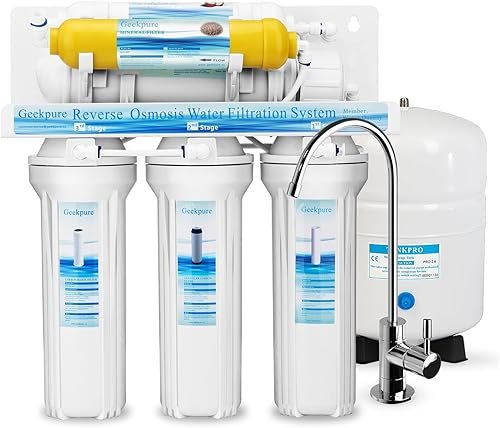
1. Geekpure 6-Stage RO with Mineral Remineralization
This is our go-to recommendation for homeowners who want pure water but worry about demineralization. The sixth-stage mineral filter adds calcium, magnesium, and sodium back into the output. We’ve tested dozens of remineralization stages — this one actually delivers noticeable taste improvement. The 0.0001 micron membrane handles arsenic, fluoride, lead, and nitrates effectively. NSF-certified components throughout.
- Pros:
- Mineral filter improves taste significantly
- NSF certified membrane and components
- Quick-connect fittings simplify DIY install
- 75 GPD handles most household drinking needs
- Cons:
- 6 stages means more filter replacements
- Storage tank takes up under-sink space
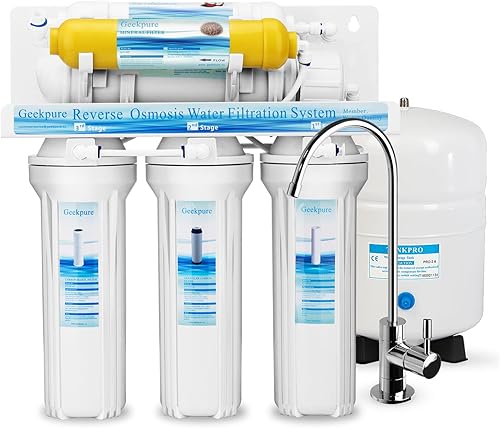
2. Geekpure 6-Stage RO with UV Sterilization
If bacteria or viruses are a concern — especially on well water — this UV-equipped model adds a critical safety layer. The UV lamp runs 24/7 and lasts approximately 9,000 hours (about a year of continuous use). We appreciate that Geekpure includes a lead-free faucet as standard. Same solid membrane and NSF certifications as the mineral version.
- Pros:
- UV sterilization kills 99.99% of pathogens
- 24/7 operation with 9,000-hour lamp life
- Lead-free faucet included
- Reliable, low-maintenance design
- Cons:
- UV lamp adds annual replacement cost
- No remineralization — water tastes flat
3. Waterdrop CoreRO Countertop System
Not everyone can — or wants to — install under-sink plumbing. The Waterdrop CoreRO solves that problem. Plug it in, fill the tank, and you have RO water in minutes. NSF/ANSI 372 certified for lead-free materials. We’ve recommended this to renters and office workers for years. The 6-stage filtration handles TDS, PFOA, and PFOS reduction. Compact enough for any countertop.
- Pros:
- Zero installation — truly plug and play
- Compact design fits any countertop
- NSF/ANSI 372 certified
- Great for renters or temporary situations
- Cons:
- Limited capacity compared to under-sink units
- Requires manual tank refilling
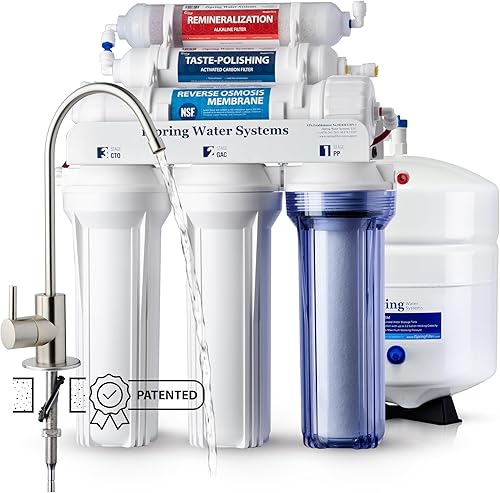
4. iSpring RCC7AK 6-Stage with Alkaline Filter
iSpring has been in the RO game for years, and the RCC7AK shows why. The alkaline remineralization filter doesn’t just add minerals — it raises pH to a more neutral range. We’ve tested output at 7.5-8.5 pH consistently. The thin-film composite membrane filters down to 0.0001 micron and handles 1,000+ pollutants. At this price point, it’s hard to beat. A solid choice if you’re wondering about distilled vs filtered water — RO gives you something closer to distilled quality with better taste.
- Pros:
- Alkaline filter raises pH effectively
- Proven track record, widely reviewed
- Handles 1,000+ pollutants
- Competitive price point
- Cons:
- Standard 75 GPD — not the fastest
- Installation instructions could be clearer
Budget Options from AliExpress

5. Fleny 7-Stage Ultra Filtration Water Purifier
At $164, this stainless steel housing unit from AliExpress offers surprisingly solid construction. The 7-stage filtration isn’t true RO — it’s ultrafiltration, which means larger pore sizes (0.01 micron vs 0.0001). Still effective for sediment, bacteria, and most cysts. Good option if you want better-than-basic filtration without RO’s water waste. 100% positive rating on the platform.
- Pros:
- Stainless steel housing — durable
- 7-stage filtration at budget price
- No water waste like true RO
- Cons:
- Ultrafiltration, not true RO — won’t remove dissolved solids
- Long shipping times typical for AliExpress
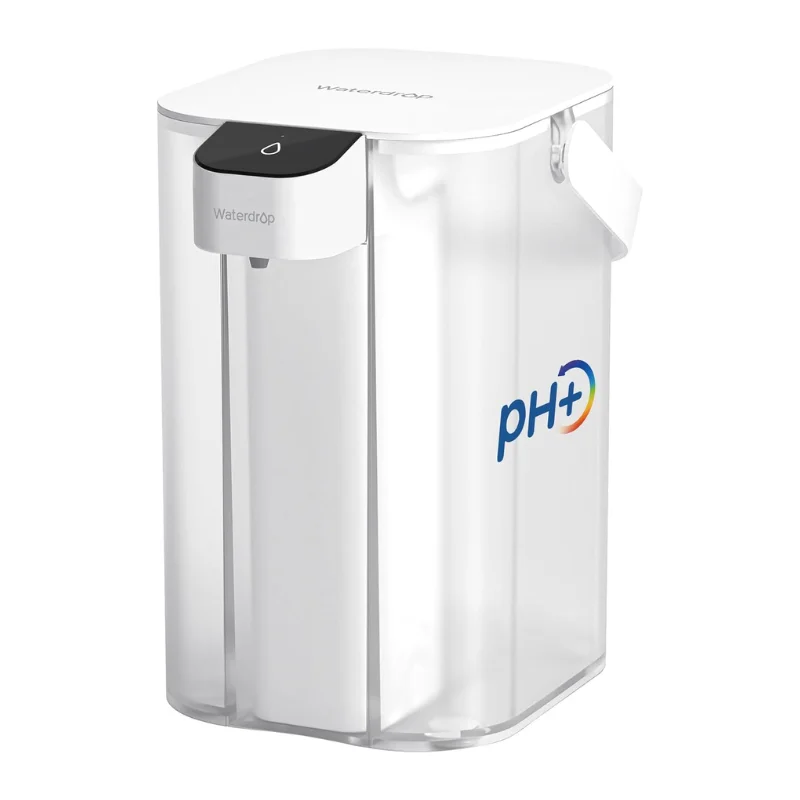
6. Waterdrop Alkaline Electric Water Filter Pitcher
Not RO at all — but worth including for budget-conscious readers. This electric pitcher uses activated carbon filtration (NSF/ANSI 42 certified) and alkaline enhancement. 200-gallon filter life means months between replacements. At $50, it’s the cheapest way to improve tap water taste significantly. Perfect for dorm rooms, offices, or testing whether filtered water is worth pursuing before investing in a full system.
- Pros:
- Extremely affordable entry point
- NSF/ANSI 42 certified
- 200-gallon filter life
- Electric operation — no waiting for gravity
- Cons:
- Carbon only — won’t remove dissolved solids or heavy metals
- Limited capacity for families
Frequently Asked Questions
- How much does a whole house reverse osmosis system cost?
- Expect $3,000-$8,000 for equipment plus $1,500-$5,000 for professional installation. Annual maintenance adds $500-$1,500. Over a 10-year lifespan, total cost of ownership typically runs $10,000-$25,000. Commercial-grade systems with higher capacity push toward the upper end.
- Is whole house reverse osmosis worth it?
- Only if you have seriously contaminated water — high TDS above 500 ppm, elevated arsenic, nitrates, or specific health concerns. For most municipal water users, point-of-use RO at the kitchen sink plus whole house carbon filtration provides 80% of the benefit at 20% of the cost.
- What is the waste water ratio for whole house RO?
- Standard residential systems waste 1-3 gallons for every gallon of purified water produced. High-efficiency systems with permeate pumps or recirculation can achieve 1:1 ratios. At 1,000 GPD production, that’s potentially 3,000 gallons daily going to drain.
- Can I install a whole house RO system myself?
- We don’t recommend it unless you have serious plumbing experience. These systems require proper pre-treatment sizing, drain connections, electrical for pumps and UV, storage tank placement, and often building permits. One mistake can mean thousands in water damage.
- How often do whole house RO membranes need replacement?
- With proper pre-treatment, quality membranes last 2-5 years. Without adequate pre-filtration, expect 6-12 months. Chlorine exposure can destroy a membrane in weeks. Hard water scaling kills them almost as fast. Pre-treatment isn’t optional — it’s everything.
- Does whole house RO remove beneficial minerals?
- Yes — 95-99% of dissolved minerals get removed. This is why post-treatment remineralization matters. RO water without remineralization tastes flat and can leach minerals from pipes and fixtures. Most quality systems include a remineralization stage.
- What’s the difference between whole house RO and a water softener?
- Water softeners remove hardness minerals (calcium, magnesium) through ion exchange but leave other dissolved solids untouched. RO removes virtually everything — hardness, heavy metals, fluoride, sodium, and contaminants. Softeners cost $1,500-$3,000 installed. RO costs $5,000-$15,000. Different tools for different problems.
Final Thoughts
Here’s my honest take after years of testing and installation visits: whole house reverse osmosis is a specialized tool, not a universal solution. If your water test shows TDS above 500 ppm, specific contaminants above EPA action levels, or you’re on well water with known issues — it might be worth the investment. Get professional water testing first. Talk to a certified water treatment specialist, not a salesperson.
For everyone else? Start with a quality point-of-use RO system for drinking water and a whole house carbon/sediment filter for everything else. You’ll spend $500-$1,500 instead of $10,000+, get great tasting water at the tap, and protect your plumbing. We’ve seen this approach satisfy 90% of homeowners who initially thought they needed whole house RO. Save the big investment for when your water quality truly demands it.
