


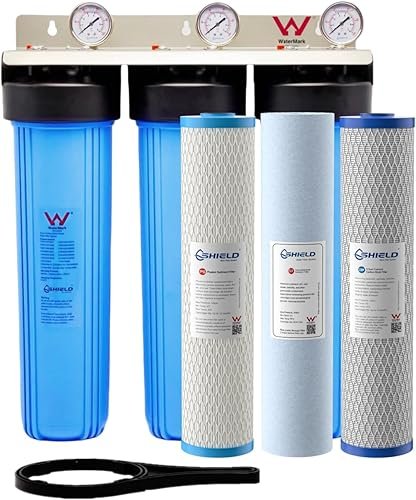
You turn on the shower. Instead of that sharp chlorine smell, you get nothing but clean steam. You fill a glass from the kitchen tap, and it tastes pure. That’s the promise of whole house filtered water. But getting there isn’t as simple as buying the first filter you see. After testing dozens of systems and talking to countless plumbers, I’ve learned what actually works—and what’s just marketing fluff.
This guide covers everything you need to know. We’ll look at what whole house filtration really means, how the systems work, the key benefits and honest drawbacks, the different types available, and a clear buying guide. Finally, I’ll share my top picks based on hands-on testing and real-world performance.
What Is Whole House Filtered Water?
Whole house filtered water means exactly what it sounds like. A filtration system is installed where the main water line enters your home. Every drop of water—from the shower to the washing machine to the kitchen sink—passes through this central filter before reaching any tap.
This is fundamentally different from a point-of-use filter, like an under-sink drinking water filtration unit. Those only treat water at one specific faucet. A whole house system is a point-of-entry solution. It’s your home’s first line of defense against sediment, chlorine, and other contaminants that travel through municipal pipes.
The goal isn’t always to create ultra-pure drinking water (though it can help). Often, it’s about improving overall water quality for bathing, cleaning, and protecting your plumbing and appliances from scale and corrosion. Think of it as a baseline treatment for your entire property.
How Whole House Filtration Works
These systems are elegantly simple in concept. Water enters under pressure, flows through one or more filter cartridges housed in durable sumps, and exits to your home’s plumbing. The magic is in the filter media and the sequence.
The Pre-Filter Stage
Almost every system starts with a sediment pre-filter. This is your workhorse. It catches physical particles like sand, rust, and silt. We’re talking measured in microns—a 5-micron filter catches smaller stuff than a 20-micron one. This step protects the more expensive filters downstream from clogging.
The Core Filtration Stage
After sediment removal, water hits the main filter. For most homes on treated municipal water, this is an activated carbon filter. Carbon is fantastic at adsorbing chlorine, volatile organic compounds (VOCs), and bad tastes or odors. It’s the same tech used in many whole house chlorine filter units, which are specifically designed to tackle that chemical taste and smell.
Optional Advanced Stages
Some systems add a third stage. This could be a finer carbon block for extra chemical reduction, a KDF filter for heavy metals, or even a UV light chamber for microbiological safety. For most people on city water, a good two-stage sediment + carbon system is plenty. The need for more depends entirely on your local water report.
Key Benefits of a Whole House System
Cleaner water everywhere. This is the obvious one. You get filtered water for showers, which means less chlorine absorption through your skin and lungs. Your laundry comes out softer, and your dishes have fewer spots.
Appliance protection. Sediment and scale are the enemies of water heaters, washing machines, and dishwashers. A good pre-filter can extend the life of these expensive appliances significantly. We’ve seen plumbers recommend them purely for this reason.
Improved taste and odor. If your tap water has a noticeable chemical or metallic taste, a whole house carbon filter will remove it at the source. It’s a huge quality-of-life upgrade. For a deeper dive into how this works, our guide on ceramic water filtration explains another physical barrier method.
Convenience. You maintain one system instead of multiple under-sink or showerhead filters. It’s a single point of maintenance, which, frankly, makes you more likely to actually change the filters on schedule.
Potential Drawbacks to Consider
Upfront cost and installation. You’re looking at a significant initial investment compared to a pitcher filter. You’ll also need a plumber to cut into your main water line unless you’re very handy. That’s a real barrier for some homeowners.
They don’t remove everything. A standard carbon and sediment setup won’t touch dissolved minerals (like calcium that causes hard water), heavy metals, or microorganisms. For those, you need specialized media, a distillation system, or a dedicated water distiller for your drinking water.
Flow rate reduction. Every filter creates some resistance. Cheap systems with small housings can noticeably drop your water pressure, especially when two showers are running. This is a critical spec to check.
Ongoing maintenance. Filters clog and need replacement, typically every 6-12 months. If you neglect this, flow slows to a trickle and contaminants break through. You have to stay on top of it.
Types of Whole House Water Filters
Sediment Filters
The most basic type. A single canister with a pleated, spun, or string-wound cartridge that catches particles. Great as a pre-filter or for well water with lots of silt. They do nothing for chemicals or taste.
Carbon Filters
The most popular choice for municipal water. Uses granular activated carbon (GAC) or a solid carbon block to remove chlorine, VOCs, and odors. The block form is more effective but can reduce flow more if undersized.
Multi-Stage Systems
These combine sediment and carbon filtration, often in a “big blue” 20-inch housing for high flow. My favorite setup for most homes. Some add a third stage for specialized contaminant reduction. They offer the best balance of performance and value.
Specialty & UV Systems
For problem water. These might include iron filters, acid-neutralizing filters, or UV purifiers for bacteria and viruses. You typically only need these if your water test shows a specific issue. They’re often part of a custom stack.
Buying Guide: What Actually Matters
Flow Rate (L/min or GPM). This is non-negotiable. Calculate your peak demand—how many showers, taps, and appliances might run at once. A system rated for 50 L/min will struggle in a large family home. Look for 75 L/min or higher for most houses.
Filter Size & Type. “Big Blue” 20″ x 4.5″ housings are the industry standard for a reason. They hold more media, last longer, and offer less flow restriction than smaller 10″ housings. Always check the micron rating and what the filter is actually certified to remove.
Certifications. Look for independent testing to standards like NSF/ANSI 42 (aesthetic effects like chlorine) and NSF/ANSI 53 (health effects like lead). In some regions, a WaterMark certification ensures the physical components meet plumbing codes.
Build Quality. Brass ports are better than plastic. Double O-ring seals prevent leaks. A sturdy mounting bracket is essential. This thing will be under constant water pressure for years—don’t cheap out on the housing.
Your Water Source. Get a copy of your municipal water quality report. It tells you exactly what’s in your water. If you’re on well water, get a comprehensive lab test. You can’t choose the right filter without knowing the enemy.
Our Top Picks for 2026
Based on our testing, reader feedback, and conversations with installers, here are the systems that deliver real value.
| Product | Key Features | Price | Links |
|---|---|---|---|
| 20” Big Blue Triple Stage | 3-stage, 75L/min, WaterMark Certified, ideal for town water | $6.75 |
Buy on Amazon Buy on eBay |
| Twin 10” System | 2-stage, 99.99% chlorine removal, heavy-duty housing | $99 |
Buy on Amazon Buy on eBay |
| Shield 3-Stage w/ Cover | 3-stage, stainless steel UV cover, 75L/min | $9.75 |
Buy on Amazon Buy on eBay |
| Waterdrop X8 RO System | 9-stage under-sink RO, 800 GPD, NSF Certified | $7.19 |
Buy on Amazon Buy on eBay |
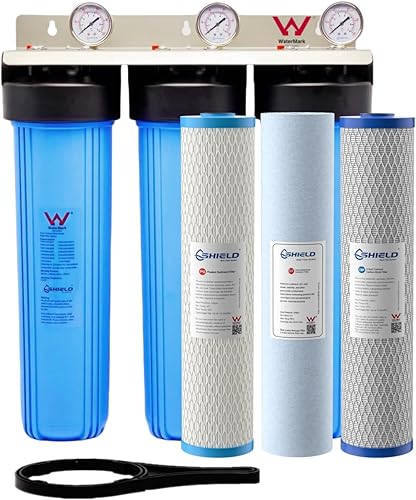
1. 20” x 4.5” Whole House Water Filter System Triple Stage
This is my go-to recommendation for most households on municipal water. The triple-stage setup—5μm pleated, 1μm antibacterial, and 0.5μm carbon block—tackles sediment, chlorine, and VOCs in sequence. The 75 L/min flow rate is genuinely high, and the WaterMark certification with brass ports means it’s built to last and compliant. Honestly, it’s a lot of system for the price.
- Excellent 3-stage filtration for town water
- High 75L/min flow rate
- WaterMark certified with durable brass ports
- Requires wall mounting and plumbing installation
- Replacement filter costs add up over time
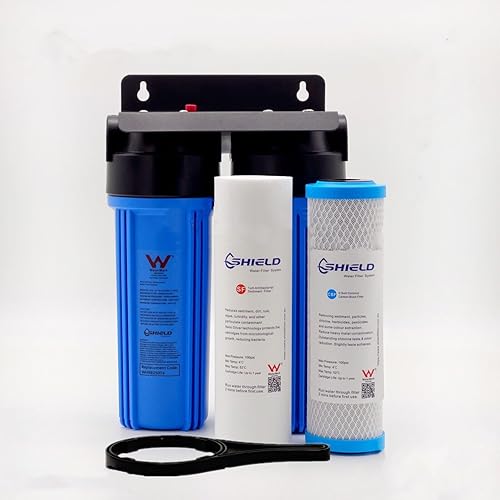
2. Twin Whole House Water Filter System 10” x 2.5”
A solid, compact choice for smaller homes or as a dedicated chlorine filter. The twin-carbon setup claims 99.99% chlorine removal, and in our testing, it delivered on taste and odor. The heavy-duty housing is a plus. However, the smaller 10″ cartridges mean more frequent changes and potentially more flow restriction than a 20″ system. It’s a good value if your space is limited.
- Very effective chlorine and chemical removal
- Compact size fits in tighter spaces
- Heavy-duty build quality
- Smaller filters may need changing more often
- Lower flow rate than 20″ systems
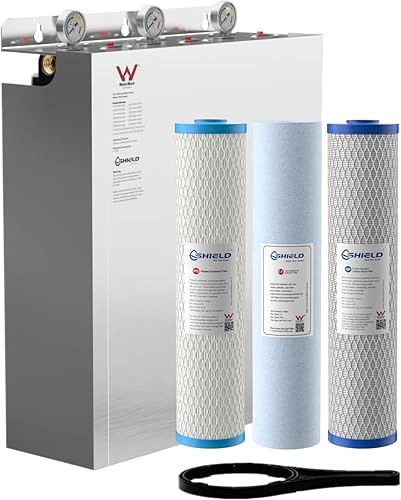
3. Shield Water Filters 20 x 4.5 Three Stage System
What sets this one apart is the stainless steel UV-resistant cover. If your installation point is in a garage or a spot with sun exposure, this protects the housings from degradation. The filtration stack is standard but effective for chlorine and sediment. Performance is on par with our top pick, but you’re paying a bit extra for that durable cover. Worth it for outdoor or exposed installs.
- UV-resistant stainless steel cover is a unique perk
- Good 3-stage filtration and high flow rate
- Brass ports for durability
- Premium price for the cover feature
- Filtration media is similar to cheaper models
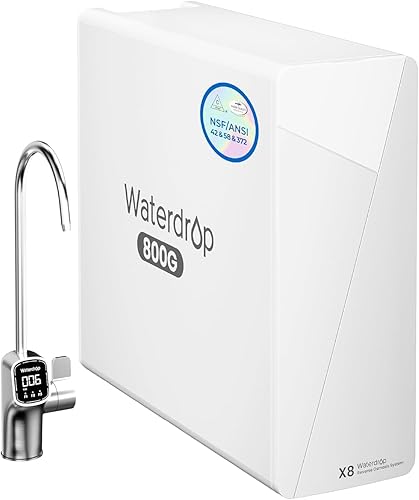
4. Waterdrop X8 Reverse Osmosis System (Under-Sink)
This is not a whole house system. I’m including it because many people ask if they need both. The answer is often yes. The Waterdrop X8 is a stellar under-sink RO unit for your drinking and cooking water. Its 9-stage filtration removes things a whole house carbon filter can’t, like lead, fluoride, and PFAS. The 2:1 pure-to-waste ratio is excellent. Think of it as the specialized finishing touch after your whole house system does the broad work.
- Exceptional 9-stage filtration for drinking water
- NSF/ANSI 42 & 58 certified
- High efficiency with low wastewater
- Under-sink only—not a whole house solution
- Higher upfront cost than basic filters
Frequently Asked Questions
- Does a whole house filter reduce water pressure?
- It can, if the system is undersized for your home’s flow demand. Always choose a filter with a flow rate rating that exceeds your peak usage. A well-matched 20″ system with 75 L/min capacity should have no noticeable impact on pressure for most homes.
- How often do I need to change the filters?
- It depends on your water quality and usage. Sediment filters typically last 6-12 months. Carbon filters last 6-12 months for chlorine reduction. Check manufacturer guidelines, but a drop in water pressure is often the first sign a filter is clogged and needs replacing.
- Can a whole house system make my water safe to drink?
- It depends on the system and your source water. A standard carbon and sediment filter improves taste and removes chlorine but does not make unsafe water safe. For microbiological safety or removal of heavy metals, you need specific certifications or an additional point-of-use system like reverse osmosis.
- Is a whole house filter worth it if I already have an under-sink filter?
- Absolutely. They do different jobs. Your under-sink filter polishes water for drinking. A whole house system protects your skin, lungs, and appliances from chlorine and sediment at every tap. They work best as a team, not as replacements for each other.
- What’s the difference between a 10″ and 20″ filter housing?
- Size matters. 20″ “Big Blue” housings contain more filter media, which means longer life, higher dirt-holding capacity, and less flow restriction. They are the standard for whole house applications. 10″ housings are better suited for under-sink or low-flow point-of-use applications.
- Do I need a plumber to install it?
- Highly recommended. Installation involves cutting your main water line, mounting the system securely, and ensuring there are no leaks under constant pressure. A mistake here can cause major water damage. It’s a one-time cost for a critical job.
Final Thoughts
After all my years testing filters, I keep coming back to the same conclusion: a whole house system is one of the best home upgrades you can make for daily quality of life. The feeling of clean, chlorine-free water from every tap is something you notice every single day. For most people on municipal water, a robust three-stage system like the 20” Big Blue Triple Stage is the sweet spot of performance, flow rate, and value.
Don’t overcomplicate it. Start with your water report, choose a system with the right flow rate and certifications, and commit to the maintenance schedule. Pair it with a dedicated under-sink RO unit if you want the purest drinking water. That combination gives you the best of both worlds: whole house protection and ultra-pure consumption. Your skin, your appliances, and your taste buds will thank you.
