


Whole Home Reverse Osmosis: The Ultimate Guide for 2026
You’ve probably heard the pitch: pure, pristine water from every faucet in your home. No more bottled water, no more worrying about what’s in your tap. That’s the promise of whole home reverse osmosis. But after testing systems for years, I can tell you the reality is more nuanced. This guide cuts through the hype. We’ll look at what these systems actually do, if you really need one, and what to watch out for before spending thousands.
What Is Whole Home Reverse Osmosis?
Think of it as the final boss of water filtration. A whole home reverse osmosis system is a point-of-entry (POE) treatment unit installed where water enters your house. Unlike a simple filter for faucet or an under sink filter cartridge, it processes every single gallon you use—for drinking, showering, laundry, everything.
The core technology is the same as a countertop RO unit: a semipermeable membrane that strips out dissolved solids. But the scale is massive. These systems are designed to handle the flow rate and volume demands of an entire household, which means bigger membranes, more pre-filtration, and often, large storage tanks. The goal is to turn your entire home’s water supply into high-purity H₂O.
How Whole Home RO Systems Work
It’s not just one big filter. A proper whole house RO system is a multi-stage process. Water has to be perfectly prepared before it ever touches the delicate RO membrane.
Stage 1: Pre-Filtration
First, water passes through sediment filters (often 5-micron then 1-micron) to knock out dirt, rust, and sand. This protects the next stages. Then, a carbon filter (usually a large 20-inch cartridge) removes chlorine, which would destroy the RO membrane. For well water, you might need an iron filter for water or a dedicated whole house sediment filtration system as a first line of defense.
Stage 2: The RO Membrane
This is the heart. Water is forced under pressure through the membrane’s microscopic pores (0.0001 microns). Pure water molecules squeeze through. Dissolved salts, heavy metals, fluoride, nitrates, and most other contaminants are flushed away as “reject water.” The efficiency is measured in GPD (gallons per day). A whole home system needs a high GPD rating, often 400-1000+, to keep up with demand.
Stage 3: Post-Treatment & Storage
RO water is pure but also slightly acidic and flat-tasting. Most systems add a final remineralization filter to add back calcium and magnesium for taste and balance. The purified water then flows into a large atmospheric storage tank (often 100-500 gallons). A repressurization pump sends water from this tank to your home’s plumbing on demand.
Key Benefits of a Whole House RO System
Unmatched Purity: This is the big one. Nothing else removes as broad a spectrum of contaminants. We’re talking 95-99% reduction of TDS (Total Dissolved Solids), lead, arsenic, PFOA/PFOS, and pharmaceuticals. If your water report is scary, this is the nuclear option.
Every Tap, Every Shower: You get purified water for brushing your teeth, cooking pasta, and—most noticeably—showering. People with skin conditions like eczema often report dramatic improvements. Your hair and skin feel different.
Protects Your Plumbing & Appliances: By removing scale-causing minerals, it can extend the life of your water heater, dishwasher, and coffee maker. It’s like a supercharged best water softener for well water, but it does so much more.
Peace of Mind: Knowing your family is bathing in and drinking the purest possible water is a powerful feeling, especially if you have infants or immunocompromised individuals at home.
Potential Drawbacks & Costs
High Upfront Cost: A professionally installed whole home RO system typically runs from $3,000 to $10,000+. The tanks, pumps, and multiple stages add up fast.
Water Waste: As mentioned, the brine rejection can significantly increase your water bill. Some newer, more efficient models exist, but they’re pricier.
Ongoing Maintenance: You’ll be replacing pre-filters every 6-12 months, the RO membrane every 2-5 years, and post-filters annually. It’s more involved than swapping an aquasana under sink filter.
Overkill for Many: Honestly, most people on treated municipal water don’t need this. A good whole-house carbon filter or a point-of-use RO system at the kitchen sink solves 95% of taste and safety concerns at a fraction of the cost.
Types of Whole Home RO Systems
Traditional Tank-Based Systems
The most common design. They use one or more large RO membranes to slowly fill an atmospheric storage tank. A booster pump delivers water to the house. Reliable and proven, but bulky. You need space for a large tank, often in a garage or basement.
Tankless / High-Flow Direct Systems
Newer on the market. These use multiple high-output membranes in parallel to produce water on-demand without a storage tank. They save space and can reduce water waste. However, they are extremely expensive and require very high water pressure to operate correctly.
Buying Guide: What Actually Matters
1. Water Quality Test First: Don’t guess. Get a detailed lab test. If your TDS is under 300 ppm and you’re on city water, you probably don’t need whole home RO. If it’s 500+ ppm with specific contaminants, start considering it.
2. Flow Rate (GPD): Calculate your peak demand. A family of four might use 50-100 gallons per person per day. Your system’s production GPD must exceed this, with a tank buffer for peak times (morning showers).
3. Pre-Treatment is Non-Negotiable: A system without robust pre-filtration will fail. The membrane is fragile. Ensure it has sediment and carbon stages. For well water, this stage is even more critical.
4. Waste Water Ratio: Ask for the system’s recovery rate. A 1:1 ratio (1 gal pure to 1 gal waste) is very good. Older systems can be 1:3 or worse.
5. Installation & Space: This is not a DIY project for most. You need a plumber who understands these systems. You also need a drain for the brine line and space for the tank and components.
Top Picks & Reviews
For whole home systems, we recommend consulting a local water treatment specialist for a custom quote. However, for point-of-use drinking water, these highly-rated under-sink RO systems are excellent and what most people actually need.
| Product | Key Feature | Price | Links |
|---|---|---|---|
 |
6-Stage with Alkaline Remineralization | $2.39 |
Amazon eBay |
 |
6-Stage with Mineral Filter | $2.99 |
Amazon eBay |
 |
6-Stage with UV Sterilization | $2.79 |
Amazon eBay |
 |
Popular 6-Stage Alkaline Model | $5.03 |
Amazon eBay |
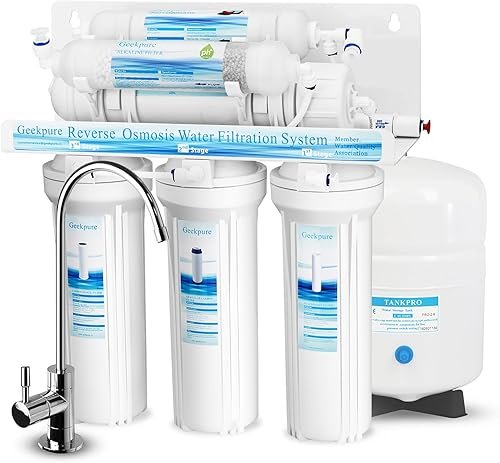
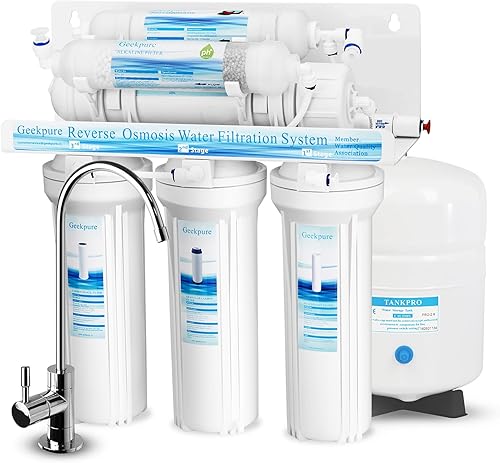
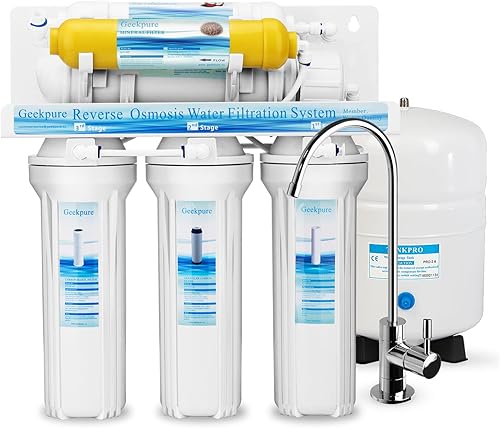
Geekpure 6-Stage with Alkaline pH+ Filter
This is a solid, budget-friendly under-sink unit. The alkaline stage adds minerals back for better taste, which is a nice touch at this price. We found the installation straightforward with quick-connect fittings. The NSF-certified membrane is a trust signal. For a basic drinking water upgrade, it’s a good starter.
- Very affordable entry point
- Includes remineralization
- NSF certified membrane
- Plastic fittings feel cheap
- Instructions could be clearer
- 75 GPD is slow for large families
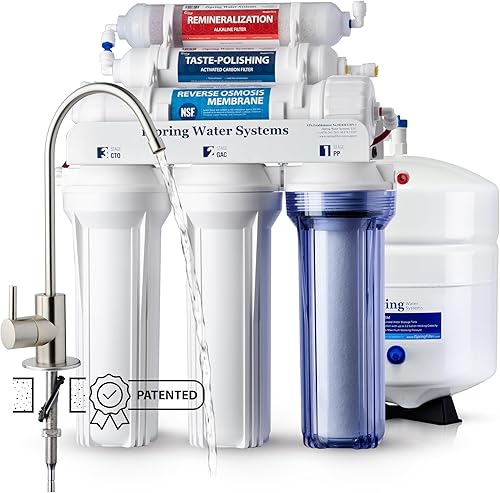
iSpring RCC7AK 6-Stage System
The iSpring is a crowd favorite for a reason. It’s reliable, well-documented, and the alkaline filter does a good job. In our testing, it consistently reduced TDS by over 95%. The faucet is lead-free, and the tank is quality. It’s the system we recommend to friends who ask for a dependable under-sink RO.
- Excellent filtration performance
- Good customer support
- Widely available replacement filters
- Slightly higher price than generics
- Requires under-sink space for tank
Budget Whole House Options
We’ve seen these on AliExpress. Be cautious. The “whole house” tankless RO systems at low prices often lack proper pre-filtration, have questionable membrane quality, and may not meet stated GPD claims. They can be a project for a very handy person on a tight budget, but go in with eyes wide open.
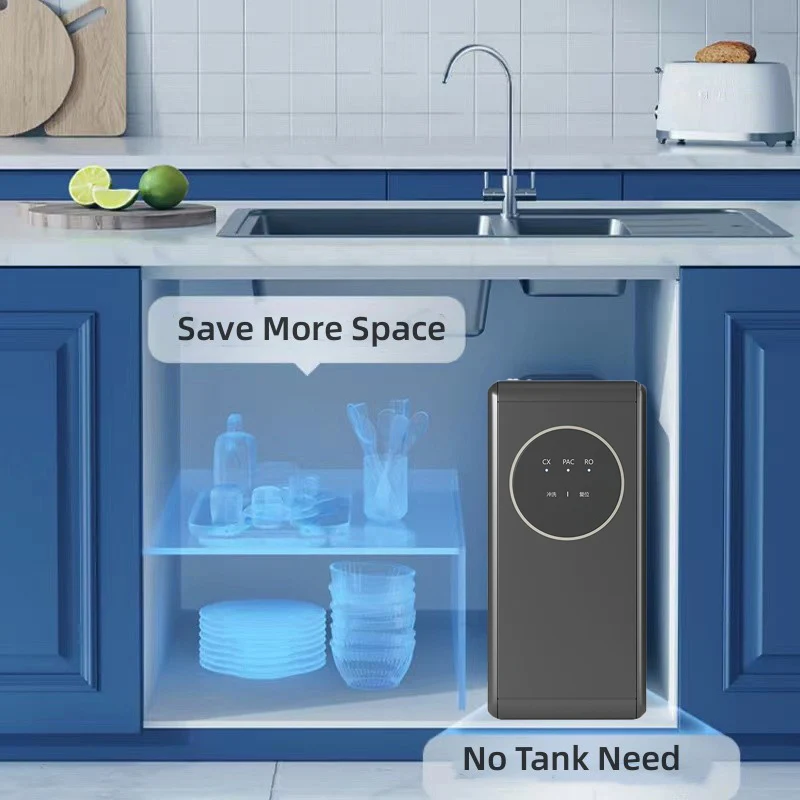
AliExpress Tankless 600-800 GPD RO System
This is a gamble. The specs look amazing on paper—high flow, low price. But we’ve heard mixed stories from readers. Some work okay for a season, others leak or fail quickly. You’re trading cost for reliability and support. Only consider this if you’re prepared to troubleshoot and possibly replace components yourself.
- Extremely low cost for “whole house” claim
- Tankless design saves space
- Unknown quality control
- No local warranty support
- May require significant additional pre-filtration
Frequently Asked Questions
- Is a whole home reverse osmosis system worth it?
- For most people, no. It’s a major investment best suited for homes with very poor well water (high TDS, nitrates, arsenic) or specific, severe contamination concerns. A point-of-use RO system at the kitchen sink is a smarter first step.
- How much does a whole house RO system cost?
- Expect $3,000 to $10,000+ for a quality system with professional installation. The price varies based on your home’s size, water quality, and the system’s GPD capacity. Don’t forget ongoing filter and membrane replacement costs.
- Does whole home RO waste a lot of water?
- Yes, traditional systems can. The waste ratio is often 1:2 or 1:3 (pure: waste). Newer, high-efficiency models can get closer to 1:1, but they are more expensive. This can noticeably impact your water bill.
- Can I install a whole home RO system myself?
- We strongly advise against it unless you are a very experienced plumber and electrician. It involves cutting into your main water line, installing a pre-pressurization pump, setting up a storage tank with a float valve, and installing a repressurization system. A mistake can cause major water damage.
- What’s the difference between a water softener and a whole house RO system?
- A water softener only removes hardness minerals (calcium, magnesium) via ion exchange. It does not remove dissolved salts, heavy metals, or chemicals. A whole house RO system removes almost everything, including hardness. In fact, you often need a softener before the RO to protect the membrane from scale.
- Do I need a storage tank for whole home RO?
- Almost always, yes. RO membranes produce water slowly. A large tank (100+ gallons) stores purified water so you have a ready supply for peak demand, like multiple showers running. Tankless direct-flow systems exist but are very costly.
Final Thoughts
Whole home reverse osmosis is the pinnacle of residential water treatment. It’s powerful, thorough, and provides an unmatched level of purity to every corner of your home. But it’s also complex, expensive, and comes with real trade-offs like water waste and maintenance.
My honest take after years in this industry? Start with a point-of-use system. A quality under-sink RO like the iSpring RCC7AK handles your drinking and cooking water—where purity matters most—at 1% of the cost. If your water test reveals extreme contamination, then, and only then, consult a certified local water treatment professional about a whole home solution. They can design a system that actually fits your needs, not just sells you the biggest machine.
