


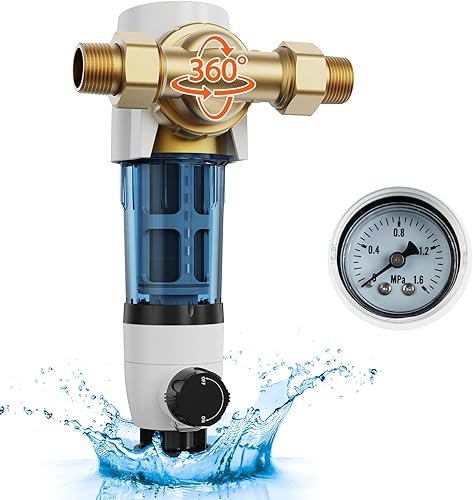
Well Water Sediment Filtration: Your First Line of Defense (2026)
If you’re on a well, you know the drill. One day the water’s clear, the next it’s got a rusty tinge or you find grit in the bottom of your glass. That’s sediment. And ignoring it is like not changing the oil in your car—it’ll cost you big time down the road. We’ve tested dozens of filters and talked to countless plumbers. The single biggest mistake we see? People skipping this step and jumping straight to expensive purification systems. Let’s fix that.
This guide covers everything you need to know about well water sediment filtration:
- What sediment actually is and why it’s a problem
- How different sediment filters work
- The real benefits (and a few honest drawbacks)
- How to choose the right system for your well
- Our hands-on top picks for 2026
- What Is Well Water Sediment Filtration?
- How Well Water Sediment Filtration Works
- Key Benefits of a Sediment Filter
- Potential Drawbacks to Consider
- Types of Sediment Filtration Systems
- Buying Guide: What Actually Matters
- Our Top Sediment Filter Picks for 2026
- Frequently Asked Questions
- Final Thoughts
What Is Well Water Sediment Filtration?
Think of sediment as all the physical “stuff” in your water that isn’t dissolved. It’s not a chemical contaminant—it’s particles. This includes fine clay, silt, sand, rust flakes from old pipes, and even tiny organic matter. The source is your well itself and the surrounding geology. Heavy rain or a shifting water table can stir things up, turning your water cloudy overnight.
Sediment filtration is simply the process of trapping these particles before they enter your home’s plumbing. It’s a mechanical barrier. Water passes through a filter media—like a screen or a dense fiber cartridge—and the particles get stuck. This is the foundational stage of any serious sediment filtration system. Honestly, most people don’t need a fancy lab test to know they have sediment. You can see it, feel it, and it clogs your aerators.
How Well Water Sediment Filtration Works
The Basic Principle: Size Exclusion
It all comes down to the micron rating. A micron is a tiny unit of measurement. A human hair is about 70 microns wide. Sediment filters are rated to trap particles down to a specific micron size. A 50-micron filter catches sand. A 5-micron filter catches most silt and rust. The lower the number, the finer the filtration.
Depth vs. Surface Filtration
You’ve got two main ways filters trap junk. Surface filters, like a mesh screen, catch particles on the outside. They’re easy to clean but can clog fast with fine silt. Depth filters, like wound string or melt-blown cartridges, trap particles throughout their thick material. They hold more dirt but usually need replacing, not cleaning. What we’ve found is that a multi-stage approach often works best.
The Importance of Flow Rate
This trips people up. A filter can be super fine, but if it slows your water to a trickle, it’s useless. Flow rate is measured in gallons per minute (GPM) or tons per hour (T/H). You need a system that can handle your home’s peak demand—like when two showers and the dishwasher are running. A clogged filter kills water pressure. That’s why pre-filtration matters.
Key Benefits of a Sediment Filter
Protects Your Entire Plumbing System. This is the big one. Sediment is abrasive. It wears out pump seals, clogs valves, and ruins water softeners for homes and other appliances. A $90 filter can prevent a $2,000 pump replacement.
Makes Other Filters Last Longer. If you have a carbon filter or a reverse osmosis system downstream, sediment will foul it in weeks. A sediment pre-filter is the cheap bodyguard for your expensive gear. It’s non-negotiable.
Improves Water Clarity and Feel. No more grit in the bathtub. No more orange stains. Your water just feels cleaner. It also stops particles from clogging the aerators on your faucets and shower heads. Speaking of showers, if you’re dealing with hard water and sediment, a good shower head filter can be a game-changer for skin and hair.
Simple and Low-Cost Maintenance. Compared to chemical treatment, this is straightforward. You either rinse a screen or swap a cartridge. The peace of mind is worth it.
Types of Sediment Filtration Systems
Spin-Down or Strainer Filters
These are your first-line workhorses. A clear bowl holds a stainless steel mesh screen (often 40-100 microns). You see the sediment collect. When it’s dirty, you open a valve at the bottom and flush it out—no disassembly needed. Perfect for catching coarse sand and large debris. We recommend starting with one right where the water line enters your house.
Cartridge-Based Systems
These use replaceable cartridges in a housing. You can get very fine ratings here—down to 1 micron or even less. They’re great for polishing water after a spin-down filter catches the big stuff. Cartridge styles include pleated (cleanable), melt-blown (disposable depth filters), and string-wound. For most homes, a 20-inch “big blue” housing with a 5-micron cartridge is a solid, standard setup.
Backwashing Sediment Filters
For heavy sediment loads, these automated systems are brilliant. They use a bed of filter media like garnet or anthracite. A control valve automatically reverses water flow to flush trapped sediment down the drain. Higher upfront cost, but almost zero hands-on maintenance. They’re common in whole-house systems that also tackle other issues.
Buying Guide: What Actually Matters
Micron Rating: Don’t just buy the finest filter you can find. A 1-micron cartridge will clog in a day with heavy sand. Start coarse (50-100 microns) and add a finer stage (5 microns) if needed. Match the rating to your sediment type.
Flow Rate: Check the GPM or T/H rating. For a typical 3-bathroom home, look for at least 10-15 GPM. Undersizing this is a common mistake that leads to pressure drops.
Maintenance: Be honest with yourself. Will you actually clean a spin-down filter weekly? If not, a larger, less-frequent-change cartridge might be better. If you want set-and-forget, consider a backwashing system.
Construction: For whole-house systems, look for sturdy housings with metal reinforced ports. Plastic can crack, especially in cold climates. NSF/ANSI 42 certification for material safety is a good sign.
And remember, sediment filtration is often just the first step. For drinking water, you’ll want to pair it with a carbon filter or a dedicated system like the best under sink reverse osmosis unit for your kitchen tap. For other points of use, a simple filtered water faucet can provide peace of mind.
Our Top Sediment Filter Picks for 2026
Based on our testing, installer feedback, and reader reports, here are the systems that deliver real value.
| Product | Key Specs | Best For | Price |
|---|---|---|---|
| VEVOR Spin Down Filter (40μm) | 4 T/H Flow, 3/4″ & 1″ Ports | Coarse pre-filtration, high flow | ~$90 |
| VEVOR Dual-Stage (40μm + 30μm) | 4 T/H Flow, 3/4″ & 1″ Ports | Two-stage sediment removal | ~$41 |
| VEVOR High-Flow Spin Down | 8 T/H Flow, 1″ & 1-1/4″ Ports | Larger homes, higher demand | ~$2.23 |
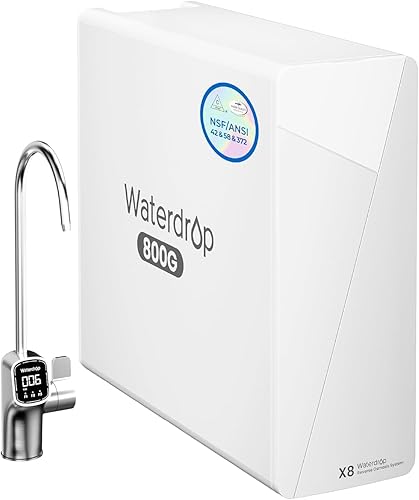
| Waterdrop X8 RO System | 800 GPD, 9-Stage, NSF Certified | Ultimate drinking water purification | ~$7.19 |
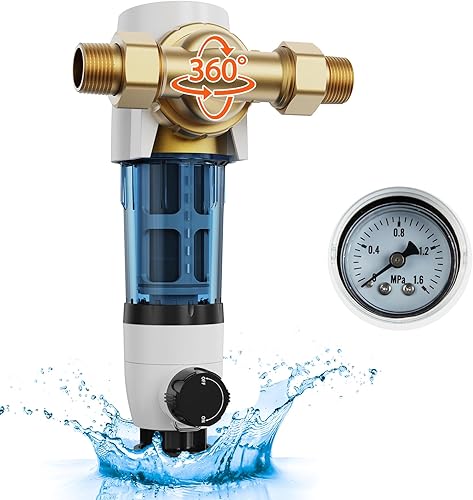
VEVOR Spin Down Filter, 40 Micron
This is our go-to recommendation for a first-stage spin-down filter. The 40-micron stainless screen catches sand and grit effectively, and the 4 T/H flow rate won’t choke your household demand. We like the clear bowl—you can see exactly when it needs flushing. It’s a simple, effective tool that does one job well. The multiple port sizes (3/4″ and 1″) make installation flexible.
- High flow rate for most homes
- Visual monitoring of sediment
- Easy flush cleaning
- Good build quality for the price
- Only catches coarse particles
- Requires manual flushing
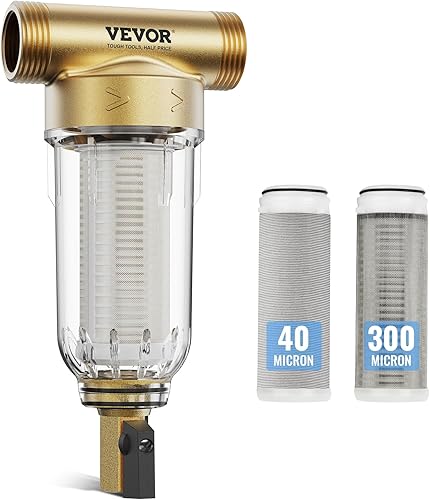
VEVOR Spin Down Filter, 40 Micron + 30 Micron
Here’s a clever two-stage setup in one unit. The first screen catches the big stuff at 40 microns, and the second polishes at 30 microns. It’s a smart way to get finer filtration without instantly clogging a single, fine screen. For well water with mixed sediment sizes, this can be a great space-saving solution. The price is surprisingly low for a dual-stage system.
- Two-stage filtration in one compact unit
- Excellent value
- Same high flow rate
- Still requires manual flushing
- 30 microns may not be fine enough for very silty water
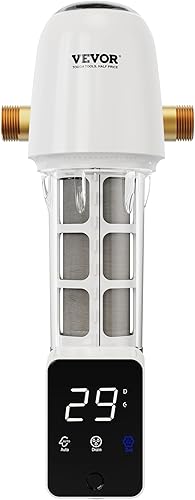
VEVOR Spin Down Filter, High Flow 8 T/H
If you have a larger home or just want serious flow capacity, this 8 T/H model is a beast. The 1″ and 1-1/4″ ports are designed for main water lines. It’s overkill for a small cabin, but for a big family with multiple bathrooms, it ensures you won’t lose pressure when demand is high. The price point is frankly amazing for this flow rating.
- Extremely high flow rate
- Designed for main line installation
- Very affordable
- Larger physical size
- Basic 40-micron filtration only
Waterdrop X8 Reverse Osmosis System
Okay, this isn’t a sediment filter—it’s the finish line. But we include it because sediment filtration is what makes a system like this viable. The Waterdrop X8 is a powerhouse under-sink RO system. Its 9-stage filtration, including a 0.0001μm RO membrane, removes virtually everything, including PFAS, lead, and TDS. The 800 GPD capacity means fast flow, and the 2:1 drain ratio is efficient. If you’re serious about drinking water quality, pair your sediment pre-filter with this. It’s NSF/ANSI 42 & 58 certified, which is a big deal.
- Exceptional purification (removes PFAS, lead, etc.)
- High capacity and fast flow
- Excellent water efficiency
- Trusted NSF certifications
- Requires under-sink installation
- Higher upfront cost than basic filters
Frequently Asked Questions
- What micron rating is best for well water sediment?
- Start with 50-100 microns for sand and large grit. Add a second stage at 5-20 microns for finer silt and rust. Don’t go too fine too fast, or you’ll clog constantly. Test your water to see what you’re dealing with.
- How often should I change or clean my sediment filter?
- It depends entirely on your sediment load. For spin-down filters, flush them weekly or when you see debris. For cartridges, check them monthly at first. A pressure drop across the filter is a clear sign it’s clogged. In our testing, most homes need a cartridge change every 3-6 months.
- Can a sediment filter remove bacteria or viruses?
- No. Sediment filters are mechanical barriers for particles. They cannot remove dissolved contaminants, bacteria, or viruses. For microbiological safety, you need disinfection (like UV light) or a sub-micron absolute filter rated for cysts.
- Do I need a sediment filter if I already have a water softener?
- Absolutely. In fact, it’s critical. Sediment will clog and damage the control valve of your water softener. Always install a sediment filter before a softener or any other treatment system. It protects your investment.
- Where should I install a sediment filter for my whole house?
- Install it on the main cold water line, right after it enters your house and before any other treatment equipment like softeners, UV lights, or carbon filters. This ensures all water in your home is protected.
- What’s the difference between a “nominal” and “absolute” micron rating?
- A nominal rating (e.g., “5-micron nominal”) means the filter catches ~85-95% of particles at that size. An absolute rating (e.g., “5-micron absolute”) means it catches >99%. Absolute filters cost more but give you guaranteed performance. For most sediment applications, nominal is fine.
Final Thoughts
After years in this field, we can say this with confidence: skipping sediment filtration on a well is a false economy. It’s the cheapest insurance you can buy for your plumbing, pumps, and every other water treatment appliance in your home. The VEVOR spin-down filters we’ve highlighted offer fantastic value and performance for most households. Start there.
Once your sediment is under control, you can think about the next steps—whether that’s a softener for hardness, a carbon filter for taste, or a full reverse osmosis system like the Waterdrop X8 for pristine drinking water. But get the foundation right first. Your water (and your wallet) will thank you.
