


Well Water Purification: Your Complete Guide for 2026
That musty, rotten-egg smell when you turn on the tap. The orange stains in your toilet bowl. The nagging worry about what’s really in the water your family drinks. If you rely on a private well, these are familiar headaches. After testing filtration systems for over a decade and talking to hundreds of homeowners, I can tell you this: clean well water isn’t a mystery. It’s a solvable engineering problem. This guide cuts through the noise. We’ll cover what’s likely in your water, how to get it out, which systems actually work, and the common mistakes that waste money.
What Is Well Water Purification?
Simply put, it’s the process of making your privately sourced groundwater safe and pleasant to use. Unlike city water, which is treated at a plant to meet federal standards, your well water is your responsibility. It can pick up contaminants from the soil, rock, and human activity surrounding your aquifer. This isn’t just about taste—it’s about safety.
The goal isn’t to create sterile, empty water. It’s to reduce specific contaminants to safe levels while preserving beneficial minerals. What you need depends entirely on what’s in your water. A system perfect for iron and sulfur won’t help with bacteria, and a UV light won’t touch hard water minerals. This is why a one-size-fits-all approach fails.
Think of it as a custom prescription for your home’s water. The process starts with a detailed water test, then moves to selecting technologies that target your specific issues. It’s the difference between buying a generic multivitamin and getting a tailored treatment plan from a doctor.
How Well Water Purification Works
Most effective setups are a multi stage system. You wouldn’t use a single tool to build a whole house; you use the right tool for each job. Here’s the typical sequence.
Stage 1: Sediment Pre-Filtration
This is your first line of defense. A spin-down or cartridge filter catches sand, silt, and rust particles down to a specific micron rating. We usually start with a 20-50 micron filter to catch the big stuff, then step down to 5 microns for finer sediment. This step protects all your downstream equipment from clogging and fouling.
Stage 2: Targeted Contaminant Removal
This is the core treatment, and it varies wildly. For bacteria and viruses, ultraviolet (UV) sterilization is incredibly effective. For dissolved iron and manganese, an air-injection oxidizing filter or a chemical feed pump is common. For hardness (calcium and magnesium), a water softener using ion exchange is the standard. If you have hydrogen sulfide (the rotten egg smell), a specialized oxidizing filter or chemical treatment like chlorine is needed.
Stage 3: Polishing & Taste Improvement
The final stage almost always involves activated carbon. This adsorbs residual chemicals, pesticides, and organic compounds that cause bad taste and odor. A good carbon filter is the difference between water that’s merely safe and water that’s a pleasure to drink. For the absolute highest purity, a reverse osmosis system can be installed at the kitchen sink for clean drinking water, removing virtually all dissolved solids.
Key Benefits of a Good System
Health & Safety: The primary benefit. A properly designed system removes pathogens, heavy metals, and chemical contaminants, protecting your family from acute illness and long-term health risks. This is non-negotiable.
Appliance Protection: Sediment and hard water scale destroy appliances. They clog pipes, ruin water heaters, and leave scale on everything. A good system pays for itself by extending the life of your dishwasher, washing machine, and plumbing.
Real Cost Savings: You’ll stop buying bottled water. You’ll use less soap and detergent because soft water lathers better. Your energy bills may drop because a scale-free water heater operates more efficiently. The water softener salt costco sells in bulk is a minor ongoing expense compared to the repair bills you’ll avoid.
Quality of Life: No more stains, odors, or metallic tastes. You can drink confidently from any tap. Your laundry comes out brighter, your skin feels less dry, and your coffee tastes better. It’s a daily upgrade you’ll notice constantly.
Potential Drawbacks & Costs
Upfront Cost: A whole-house system tailored for serious contamination (iron, sulfur, bacteria, hardness) can easily run $2,000 – $5,000+ installed. Simpler systems are cheaper, but don’t under-buy.
Maintenance is Mandatory: Filters need replacing. UV bulbs need annual replacement. Softener salt or potassium chloride needs refilling. Ignoring maintenance makes your system useless and can even make water quality worse. Factor this into your budget.
Complexity: You need to understand your water test and your system. It’s not overly complex, but it requires more attention than just paying a water bill. You become your own water plant operator.
Space Requirements: These systems take up space—often in a basement or utility closet. You need room for tanks, filters, and access for servicing.
Types of Well Water Treatment Systems
Sediment Filters
The simplest and most universal. Ranging from simple string-wound cartridges to advanced pleated filters, they physically block particles. Essential as a first stage for any system.
Oxidizing Filters (For Iron, Sulfur, Manganese)
These use air, chlorine, or potassium permanganate to oxidize dissolved metals, turning them into solids that can be filtered out. The workhorse for the most common well water complaints.
Water Softeners
Use ion-exchange resin to swap hardness minerals (calcium/magnesium) for sodium or potassium ions. They don’t “filter” in the traditional sense but are crucial for preventing scale. An electric water distiller can also remove hardness, but it’s more suited for a single point of use like a kitchen.
Ultraviolet (UV) Purifiers
The gold standard for disinfection. UV light scrambles the DNA of bacteria, viruses, and parasites, rendering them harmless. It adds no chemicals and changes no water chemistry. Must be paired with sediment filtration to work effectively.
Reverse Osmosis (RO) Systems
The ultimate polishing filter. Using a semipermeable membrane, RO removes 95-99% of total dissolved solids, including heavy metals, fluoride, and nitrates. Typically installed at the kitchen sink for drinking and cooking water due to slower production rates and wastewater byproduct.
Chlorinators & Chemical Feed Pumps
For severe bacterial contamination or high levels of sulfur/manganese, a controlled injection of chlorine or other oxidants can be the most reliable solution. Requires a contact tank and often a final carbon filter to remove residual chlorine.
Buying Guide: What Actually Matters
1. Get a Lab Test First. This is the single biggest piece of advice I can give. Do not guess. Do not use a cheap strip test from the hardware store. Send a sample to a certified lab. Test for at least: bacteria (total coliform, E. coli), pH, hardness, iron, manganese, sulfur, nitrates, and TDS. This report is your blueprint.
2. Match the Tech to the Contaminant. Use your test results as a shopping list. Bacteria? You need UV. Iron? An oxidizing filter. Hardness? A softener. Don’t let a salesperson upsell you a fancy carbon filter for a bacterial problem.
3. Flow Rate is Critical. Systems are rated in Gallons Per Minute (GPM). You need enough flow to handle peak demand—like two showers running while the dishwasher is on. Undersizing leads to terrible water pressure. Calculate your home’s peak demand and buy a system rated for at least 20% above that.
4. Certifications Matter. Look for NSF/ANSI certifications. NSF/ANSI 42 covers aesthetic effects (taste, odor). NSF/ANSI 53 covers health effects (lead, cysts). NSF/ANSI 58 is for reverse osmosis. NSF/ANSI 55 is for UV systems. These aren’t just stickers; they mean independent verification of performance claims. Your drinking water quality depends on verified performance.
5. Plan for Maintenance. Before you buy, know the cost and frequency of replacement filters, bulbs, and salt. Can you do it yourself, or do you need a plumber? Choose a system with readily available consumables.
Our Top Picks for 2026
Based on our testing, reader feedback, and conversations with installers, here are systems and products that solve real problems. Remember, the “best” system is the one that matches your water test.
| Product | Best For | Key Feature | Price | Link |
|---|---|---|---|---|
 |
Emergency & Travel | Compact NaDCC chlorine tablets, treats 1-2L each | $14 |
Buy on Amazon Buy on eBay |
 |
Sulfur & Odor Shock Treatment | Targets rotten egg smell, iron buildup, sewer odors | $64 |
Buy on Amazon Buy on eBay |
 |
Reliable Emergency Backup | Two-step (purifier + neutralizer) for no iodine taste | $38 |
Buy on Amazon Buy on eBay |
 |
High-Performance Drinking Water | 9-stage, 800 GPD, NSF certified, 2:1 drain ratio | $719 |
Buy on Amazon Buy on eBay |
 |
Budget Multi-Stage Option | Stainless steel housing, 7-stage UF, for faucet | $163.99 | Buy on AliExpress |
 |
Ultra-Budget Taste Improvement | Faucet-mount, 5-layer activated carbon | $5.77 | Buy on AliExpress |
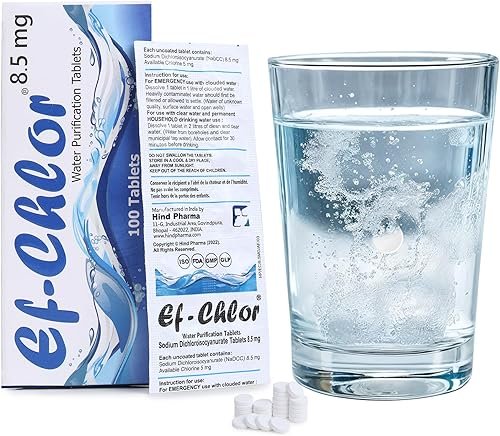
Ef-Chlor Water Purification Tablets
I keep a pack of these in my camping bag and my emergency kit. They use NaDCC, a stable chlorine compound that’s more reliable than old-school iodine tablets. Each tablet treats 1-2 litres, making them perfect for hiking, travel, or when your well pump fails and you need to treat stored water. They’re not a home solution, but for portable, backup purification, they’re hard to beat for the price.
- Extremely compact and lightweight
- Long shelf life, stable formula
- Effective against bacteria and viruses
- Very affordable
- Not for heavy sediment or chemical contaminants
- Requires 30-minute wait time
- Can leave a slight chlorine taste
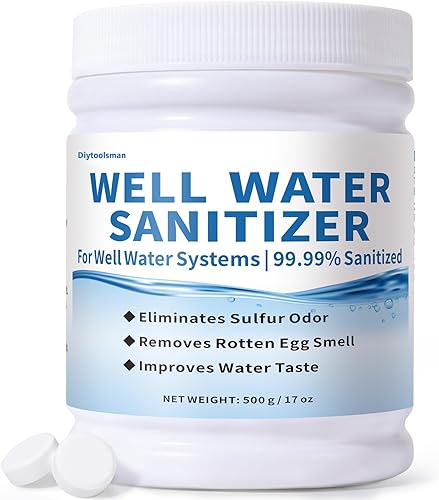
Well Water Purification Tablets (Sulfur & Odor)
This is a specialized shock treatment, not a daily filter. If you’ve got that awful sulfur smell permeating your lines, this kit is designed to clear it out by treating the entire system. Think of it as a deep clean for your plumbing. It’s a targeted fix for a specific, nasty problem. Follow the instructions to the letter.
- Specifically formulated for well water odors
- Can treat the whole plumbing system
- Food-grade formula
- High upfront cost for a treatment product
- Temporary fix if the source contamination isn’t addressed
- Requires system flush and downtime
Potable Aqua with PA Plus
The classic emergency water treatment. The two-step process—purification tablet followed by a neutralizer tablet—is what sets it apart. The neutralizer removes the iodine taste and color, making the water much more palatable. I’ve used these on river trips for years. They’re proven, reliable, and should be in every emergency preparedness kit alongside your flashlight and batteries.
- Proven, trusted brand for decades
- Two-step process improves taste
- Effective against bacteria, viruses, and Giardia
- Still leaves some taste compared to filtered water
- Does not remove chemicals, heavy metals, or sediment
- Bottles can be bulky for ultralight packing
Waterdrop X8 Reverse Osmosis System
If your well water has high TDS, nitrates, or you just want the purest possible drinking water at the tap, this is a top-tier under-sink RO. The 800 GPD flow rate is exceptional—you’ll fill a glass in seconds, not minutes. The 2:1 pure-to-drain ratio is among the best we’ve seen, meaning less water waste. NSF/ANSI 42, 58, and 372 certification gives real confidence. This is for serious drinking water purification.
- Extremely high flow rate (800 GPD)
- Excellent water efficiency (2:1 ratio)
- Multi-certified for performance and safety
- 9-stage filtration for comprehensive reduction
- High upfront cost
- Requires under-sink installation and a dedicated faucet
- Does not treat whole-house issues like hardness or iron
7-Stage Ultra Filtration Purifier (AliExpress)
This is an interesting budget option for point-of-use filtration. The stainless steel housing is durable, and the 7-stage process, including ultrafiltration, claims to reduce sediment, chlorine, and some contaminants. It’s a far cry from a certified whole-house system, but for someone on a tight budget wanting to improve taste and reduce basic impurities at one faucet, it’s worth considering. Manage your expectations.
- Very affordable multi-stage filtration
- Durable stainless steel construction
- Claims multiple filtration stages
- No third-party certifications (NSF, etc.) listed
- Performance claims are unverified
- Replacement filter availability and quality are uncertain
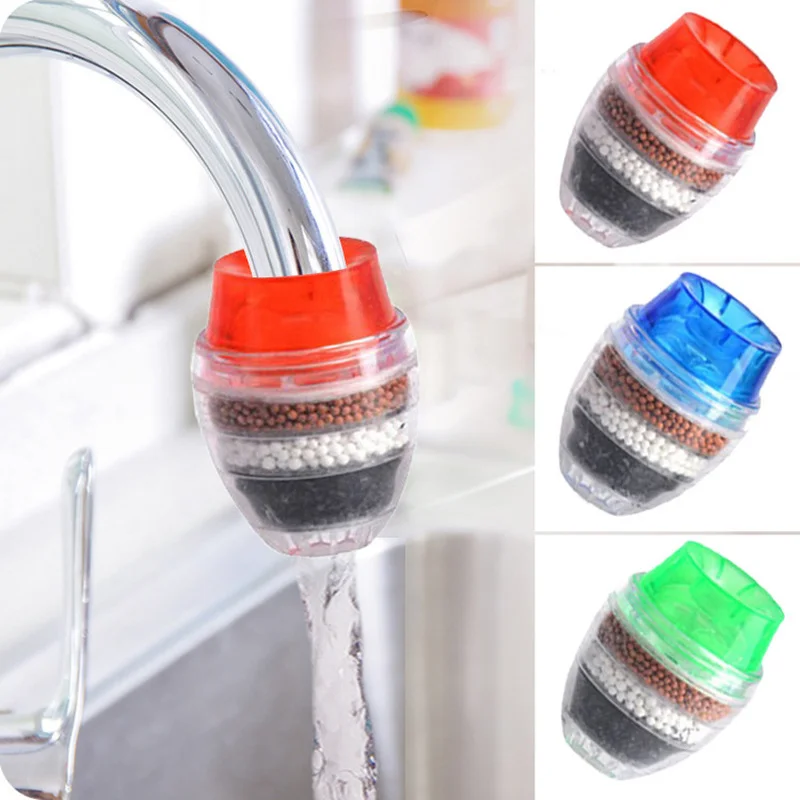
5-Layer Activated Carbon Faucet Filter (AliExpress)
Let’s be real: this is the absolute bare minimum. For under $6, it will attach to your faucet and use activated carbon to reduce chlorine taste and odor. That’s it. It will not remove bacteria, heavy metals, hardness, or iron. If your only complaint is a slight municipal chlorine taste, it’s a cheap fix. For well water with real problems, it’s a band-aid on a broken arm.
- Extremely low cost
- Tool-free installation
- Improves taste and odor from chlorine
- Minimal contaminant reduction
- No performance data or certifications
- Will clog quickly with sediment-heavy well water
Well Water Purification FAQ
- How often should I test my well water?
- Test annually for bacteria and nitrates at a minimum. Test more frequently (every 6 months) if you have pregnant women or infants in the home, notice changes in taste, odor, or color, or live near agricultural or industrial activity. Always test after flooding or any well repairs.
- Can I install a well water system myself?
- It depends on the system. Simple cartridge filters and faucet-mount units are very DIY-friendly. Installing a whole-house softener or oxidizing filter requires moderate plumbing skills. UV systems and complex chemical feed pumps are best left to professionals to ensure correct sizing, installation, and electrical safety.
- What’s the difference between a water softener and a filter?
- A softener uses ion exchange to remove hardness minerals (calcium, magnesium) and replaces them with sodium. It doesn’t remove particles, bacteria, or chemicals. A filter physically blocks or adsorbs contaminants like sediment, chlorine, or lead. They solve different problems and are often used together in a sequence.
- Is reverse osmosis water safe to drink long-term?
- Yes. While RO removes beneficial minerals like calcium and magnesium, these are not a primary source of these nutrients in a balanced diet. The health risks from contaminants like lead, arsenic, or nitrates far outweigh the minor loss of minerals. The water is perfectly safe and healthy to drink.
- Why does my water still smell after installing a filter?
- You likely have the wrong type of filter. A standard carbon filter won’t remove hydrogen sulfide (rotten egg smell). That requires an oxidizing filter, a specialized carbon blend, or a chemical injection system. Re-check your water test and ensure your system is designed for sulfur reduction.
- Do I need a whole-house system or just an under-sink filter?
- It depends on the contaminant. For health-related contaminants like bacteria, lead, or nitrates, you only need to treat water at the point of use (kitchen sink) with an RO or UV system. For aesthetic or plumbing-damaging issues like hardness, iron, or sediment, you need a whole-house system to protect appliances and all water outlets.
Final Thoughts
After all these years, the core advice hasn’t changed: test, then treat. The technology has gotten better, more efficient, and more affordable, but the principle remains. Don’t fall for a “miracle” filter that claims to fix everything. Your well water is unique, and your solution should be too.
Start with the lab test. Identify your top 2-3 issues. Invest in a quality, certified system that targets those issues. Maintain it religiously. Do this, and you’ll transform your well from a source of worry into a source of clean, safe, great-tasting water for decades. It’s one of the best investments you can make for your home and your health.
