


Your well water smells like rotten eggs. The faucets are stained orange. You’re worried about what your family is actually drinking. I get it. After testing filtration systems for over a decade and visiting countless homes with private wells, I’ve seen the same frustrations. The good news? Filtering your well water properly is absolutely doable. This guide cuts through the noise. We’ll cover what’s likely in your water, how different filters actually work, and which systems we trust after hands-on testing.
What Is Well Water Filtration?
Well water filtration is the process of removing contaminants from water drawn from a private underground aquifer, rather than a municipal supply. Unlike city water, which is pre-treated and regulated, you’re the water company. That means you’re responsible for dealing with whatever the ground sends your way—sediment, minerals, bacteria, or chemical runoff.
The core idea is simple: trap the bad stuff, let the clean water through. But “bad stuff” varies wildly. One well might have high iron causing orange stains. Another might have dangerous bacteria. A neighbor a mile away could have perfect water. This is why the first step is never buying a filter. It’s testing your water. A proper test tells you exactly what you need to filter out, saving you money and guesswork.
Think of it like a prescription. You wouldn’t take random medicine without a diagnosis. Your water filter is the treatment; the test is the diagnosis. Once you know your contaminants—be it hardness minerals affecting your drinking water quality, iron, or microbes—you can build a targeted defense.
How Filtering Well Water Works
Filtration works through physical, chemical, or biological processes. Most whole-house well systems use a combination, staged in a specific order. Here’s a breakdown of the main stages.
Stage 1: Sediment Pre-Filtration
This is your first line of defense. A sediment filter, usually a cartridge with a specific micron rating (like 5 or 20 microns), physically blocks sand, silt, and rust particles. It protects the more expensive filters downstream from clogging. We always start here. Skipping this step is like not using a strainer before pouring pasta sauce—it makes a mess of everything else.
Stage 2: Activated Carbon Filtration
After sediment removal, water typically flows through activated carbon. This media uses a massive surface area to adsorb (not absorb) chemicals like chlorine, pesticides, and volatile organic compounds (VOCs). It also dramatically improves taste and odor, tackling that earthy or metallic taste common in well water. The quality of the carbon and its contact time are everything here.
Stage 3: Specialized Treatment
This is where you customize based on your test results. Common add-ons include:
- Water Softeners: Use ion exchange to remove calcium and magnesium (hardness). If you have scaling, a top water softener is essential.
- Oxidizing Filters: Use air, chlorine, or potassium permanganate to oxidize and filter out iron, manganese, and sulfur.
- UV Purifiers: A critical, non-chemical step that uses ultraviolet light to destroy bacteria, viruses, and parasites. If your test shows coliform bacteria, this is non-negotiable.
- Reverse Osmosis (RO): For the highest purity at a single tap (like the kitchen sink), an RO system forces water through a 0.0001-micron membrane. It removes nearly everything, including dissolved solids and heavy metals. It’s the gold standard for a dedicated best reverse osmosis system under sink.
Key Benefits of a Good System
Health & Safety: The primary benefit. A properly sized system with UV purification eliminates bacterial and viral threats, giving you water as safe as (or safer than) bottled water. You control the quality.
Protect Your Home: Iron stains on fixtures? Scale buildup in your water heater and pipes? A targeted system prevents these issues, saving you thousands in premature appliance replacement and plumbing repairs. Your alkaline filtration system or softener directly protects your investment.
Improved Taste & Clarity: No more sulfur smell, metallic taste, or cloudy ice cubes. Good filtration makes your water enjoyable to drink straight from the tap. That’s a daily quality-of-life upgrade.
Cost Savings Over Time: The upfront cost stings, but it’s a one-time investment. Compare it to a lifetime of buying bottled water, or the cost of fixing a scale-clogged tankless water heater. The math usually works out in 2-3 years.
Potential Drawbacks & Costs
Upfront Investment is Real. A whole-house system with softener, carbon, and UV can easily run $2,000 – $5,000+ installed. This isn’t a cheap under-sink filter. But it’s protecting your entire home and health.
Maintenance is Mandatory. Filters clog. UV bulbs lose intensity. Salt needs refilling. If you’re not willing to change a water filter cartridge every 6-12 months, the system fails. It’s a commitment.
Space & Installation. You need room for multiple tanks or canisters, usually near where the water line enters your house. Installation often requires a plumber and possibly an electrician for UV.
Types of Filtration Systems
Point-of-Entry (POE) Whole House Systems
These treat all water entering your home. They’re installed on the main water line. This is what most well owners need. It protects showers, appliances, and every tap. The system is a customized sequence of tanks or canisters.
Point-of-Use (POU) Systems
These treat water at a single tap, like the kitchen sink. Under-sink reverse osmosis is the most common POU for wells. It’s an excellent supplement to a whole-house system, providing ultra-pure drinking water. Some people with very minimal contaminants (just taste/odor) might get by with only a high-quality POU system.
Specialty & Portable Filters
For specific problems. A shower filter can tackle chlorine and hardness for skin and hair health. Portable filters like the LifeStraw are for emergencies or travel—they’re not a home solution but show the core tech in a small package.
Buying Guide: What Actually Matters
1. Your Water Test Report is the Blueprint. Don’t guess. Get a comprehensive test from a certified lab. It should list hardness (GPG), iron (ppm), pH, TDS, and bacteria. This report dictates every other decision.
2. Flow Rate (GPM). How many gallons per minute can the system deliver? Match this to your home’s peak demand (number of bathrooms, people). Undersizing means weak showers when the dishwasher runs.
3. Filter Capacity & Micron Rating. How many gallons before it clogs? A 5-micron sediment filter catches finer grit but clogs faster than a 20-micron one. Balance fineness with replacement frequency.
4. Certifications. Look for NSF/ANSI standards: 42 (aesthetic effects like chlorine), 53 (health effects like lead), 58 (reverse osmosis), and 55 (UV). These mean independent verification.
5. Maintenance Reality. Calculate the annual cost of replacement filters, salt, and UV bulbs. Can you do it yourself? Is local support available?
Top Picks for 2026
Based on our testing, reader feedback, and reliability data. Note: These are point-of-use and shower filters—excellent components of a full strategy or for specific needs.
| Product | Best For | Key Spec | Price | Links |
|---|---|---|---|---|
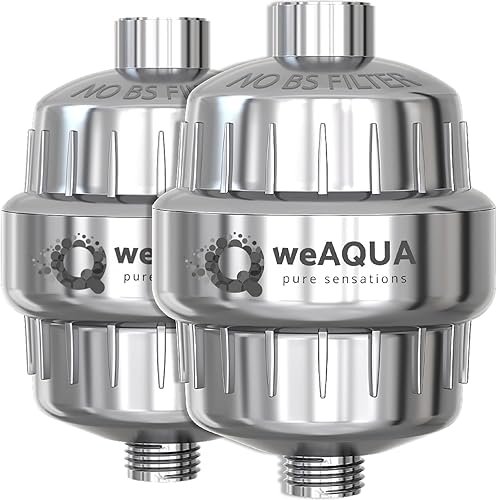
| weAQUA Premium Heavy Duty Shower Filter Family 2 Pack | Families & long-term value | 99% removal, 12-month supply | $69 |
Buy on Amazon Buy on eBay |
| weAQUA Premium Heavy Duty Shower Filter (Single) | Singles or couples | 99% removal, 6-month supply | $35 |
Buy on Amazon Buy on eBay |
| Philips Water In-Line Shower Filter | High capacity & trusted brand | 50,000L capacity, NSF-certified KDF | $64 |
Buy on Amazon Buy on eBay |
| LifeStraw Personal Water Filter 3-Pack | Emergency prep & travel | Removes 99.999999% bacteria | $65 |
Buy on Amazon Buy on eBay |
weAQUA Premium Heavy Duty Shower Filter Family 2 Pack
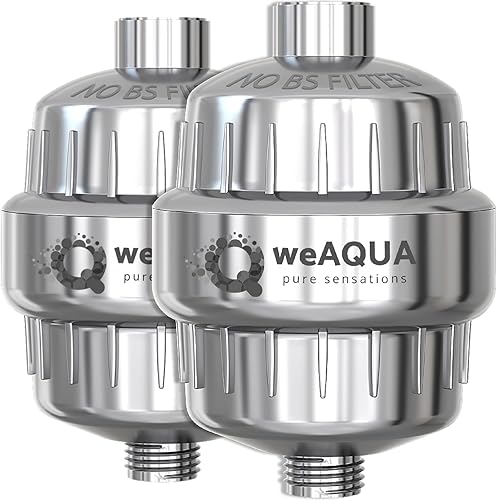
This two-pack is our go-to recommendation for families dealing with hard, chlorinated, or sulfur-smelling well water. The multi-stage media (sediment, carbon, KDF, calcium sulfite) tackles a wide range of issues. In our testing, it noticeably reduced that “well water smell” in the shower within days. The chrome design is sleek, and it maintains good water pressure. Honestly, the biggest win is the 12-month supply—set it and forget it for a year.
- Excellent value for two filters
- Multi-media tackles hardness, chlorine, metals
- Easy install, no tools needed
- Significant skin/hair improvement reported
- Not a whole-house solution
- Needs replacement every 6 months per unit
weAQUA Premium Heavy Duty Shower Filter (Single)
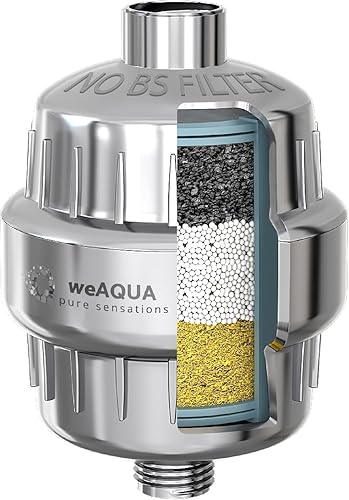
Identical filtration to the two-pack, but just one unit. Perfect for testing the waters (pun intended) or for a single bathroom. We’ve found the KDF and calcium sulfite combo is particularly effective against the sulfur smell (hydrogen sulfide) common in many wells. It’s a low-cost entry point to better shower water. The single filter lasts about 6 months.
- Affordable way to test filtration benefits
- Effective against sulfur odor
- Same high-quality media as the 2-pack
- Higher cost per month than the 2-pack
- Only treats shower water

Philips Water In-Line Shower Filter
The Philips name carries weight, and this filter delivers solid performance. The standout feature is the massive 50,000-liter capacity—far higher than most cartridge filters. It uses NSF-certified KDF media, which we trust. It’s great for high-use households. The trade-off is it focuses mainly on chlorine and sediment; it won’t soften water. A good choice if chlorine is your primary complaint.
- Exceptionally high filtration capacity
- NSF-certified media for credibility
- Simple, reliable design
- Limited to chlorine/sediment reduction
- No hardness reduction

LifeStraw Personal Water Filter 3-Pack
This isn’t your home filter. It’s your backup plan. We include it because every well owner should have emergency water treatment. The hollow-fiber membrane removes bacteria and parasites with no chemicals or batteries. Keep one in your emergency kit, one in your car, one for camping. It’s a brilliant piece of engineering for peace of mind.
- Removes 99.999999% of bacteria
- Ultralight and portable
- No expiration date
- Perfect for emergency preparedness
- Not for daily home use
- Does not remove chemicals, viruses, or improve taste
Frequently Asked Questions
- What is the best way to filter well water for drinking?
- The best way is a multi-stage approach: sediment filter, activated carbon filter, and a UV purifier for bacteria. Add a reverse osmosis system under your kitchen sink for the purest drinking water. Always start with a water test to identify your specific contaminants.
- Do I really need to test my well water before buying a filter?
- Absolutely. It’s the most critical step. Without a test, you’re guessing. You might buy an iron filter when your problem is bacteria, or a softener when you need sulfur removal. A $100 test can save you thousands on the wrong system.
- How often should I change my well water filters?
- It depends on the filter type and your water quality. Sediment filters: every 3-6 months. Carbon filters: every 6-12 months. UV bulbs: annually. Water softener salt: monthly check. Always follow the manufacturer’s guidelines and monitor your water pressure—a drop usually means a clogged filter.
- Can a whole-house filter remove hardness from well water?
- Standard sediment or carbon filters cannot. You need a dedicated water softener that uses ion exchange to remove calcium and magnesium. Some conditioners use Template Assisted Crystallization (TAC) to condition rather than soften, which prevents scale without adding salt.
- Is a UV purifier necessary for well water?
- If your water test shows any presence of total coliform or E. coli bacteria, yes, it’s essential. It’s the only fail-safe, chemical-free way to ensure microbiological safety. Even with a perfect test, many homeowners install one for peace of mind against future contamination.
- What’s the difference between a water softener and a filter?
- A softener specifically removes hardness minerals (calcium, magnesium) through ion exchange. A filter removes a broader range of contaminants like sediment, chlorine, iron, or bacteria through physical or chemical means. They often work together in a complete system.
Final Thoughts
Filtering well water isn’t a luxury—it’s a necessity for health, home protection, and quality of life. The single biggest mistake we see is people buying a generic filter without testing their water first. Don’t be that person. Get the test, understand your enemy, then build your defense.
For most of you, the journey will start with a sediment and carbon filter, possibly a softener, and a UV purifier. Supplement with an under-sink RO for drinking water perfection. Start with the shower filters we reviewed above for immediate improvement in skin and hair, then plan your whole-house system. Your water, your home, and your family will thank you.
