


You’ve got your own water source. That’s freedom. But it’s also your responsibility. Unlike city water, well water isn’t treated for you. What comes out of your tap depends entirely on your local geology, nearby land use, and the condition of your well. After testing dozens of systems and talking to hundreds of homeowners, we know what works—and what’s just marketing hype.
This guide covers:
- What well water filtration actually is and why it’s different
- How the main technologies work (in plain English)
- The real benefits and honest drawbacks
- How to choose the right system for your specific water
- Our top picks based on hands-on testing
What Is Well Water Filtration?
Well water filtration is the process of removing or reducing contaminants from groundwater pumped from a private well. This isn’t a single gadget. It’s usually a series of treatment stages tailored to your water’s unique profile. City water gets treated at a plant. Yours doesn’t. You are the plant.
The contaminants vary wildly. One well might have high iron and sulfur (that rotten egg smell). Another might have agricultural runoff with nitrates. A third could have sediment that clogs faucets and stains laundry. The goal is to match the right filter technology to the specific problems in your water report. If you’re looking for a complete system setup, our guide to the best well water filter system breaks down the top configurations.
Forget “one filter fixes all.” It doesn’t exist. A sediment filter won’t remove bacteria. A carbon filter won’t touch dissolved minerals. You need to think in stages.
How Well Water Filtration Works
Think of it like a security checkpoint for your water. Each stage has a different job, catching different-sized threats. Here’s the typical sequence.
Stage 1: Sediment Pre-Filtration
This is your first line of defense. A sediment filter—usually a spun polypropylene cartridge—catches physical particles like sand, silt, and rust. It’s measured in microns. A 5-micron filter catches finer stuff than a 20-micron one. This step protects your more expensive downstream filters from clogging up too fast.
Stage 2: Activated Carbon Filtration
Next, water flows through activated carbon. This is a powerhouse for removing chlorine (if you have a chlorination system), volatile organic compounds (VOCs), pesticides, and bad tastes/odors. The carbon works through adsorption—contaminants stick to its massive surface area. It’s why your water stops tasting like a swimming pool.
Stage 3: Targeted Contaminant Removal
This is where customization kicks in. Based on your water test, you might add:
- Iron/Manganese Filter: Uses oxidation to convert dissolved metals into filterable solids.
- Water Softener: Trades hardness minerals (calcium/magnesium) for sodium ions via ion exchange.
- Acid Neutralizer: Raises pH if your water is corrosive (low pH).
Stage 4: Final Polishing & Disinfection
The last stage is for safety and taste. A UV purifier uses ultraviolet light to destroy bacteria, viruses, and parasites—no chemicals added. For the purest drinking water, a reverse osmosis (RO) system forces water through a 0.0001-micron membrane, stripping out nearly everything, including dissolved salts and heavy metals. We’ve found that for most well owners, a UV system is non-negotiable for peace of mind.
Key Benefits
Health Protection: The single biggest reason. Proper filtration removes pathogens and chemical contaminants that can cause illness, especially important for kids and elderly family members.
Appliance Longevity: Hard water and sediment wreck water heaters, dishwashers, and washing machines. A good filtration system saves you thousands in early replacements. It’s not glamorous, but it’s real money.
Better Taste and Smell: No more metallic tang or sulfur stench. Your coffee will taste like coffee again. Your shower won’t smell like rotten eggs. This daily quality-of-life upgrade is huge.
No More Stains: Iron and manganese leave rust-colored or black stains on fixtures, laundry, and toilets. The right filter eliminates them completely.
Potential Drawbacks
Upfront Cost: A proper multi-stage system can run from $1,500 to $5,000+ installed. This isn’t an under-sink filter pitcher. Speaking of which, while a best water filter pitcher is great for city water, it won’t cut it for untreated well water.
Ongoing Maintenance: Filters need replacing. UV bulbs burn out. Salt-based softeners need refilling. Skip maintenance, and your system becomes useless—or worse, a breeding ground for bacteria.
Complexity: Choosing the wrong system is a costly mistake. You must test your water first. Guessing leads to buying filters that don’t address your actual contaminants.
Water Waste: Reverse osmosis systems produce wastewater (brine). Newer models have better ratios, but it’s still a factor if you’re on a limited water supply or septic system.
Types of Well Water Filtration Systems
Whole-House (Point-of-Entry) Systems
Installed where water enters your home. They treat every drop—shower, kitchen, laundry. This is the gold standard for comprehensive protection. A basic setup might be a sediment filter followed by a carbon filter. More complex systems add softeners and UV. The housing matters; a clear filter housing lets you see when a cartridge is clogged without guessing.
Under-Sink (Point-of-Use) Systems
These treat water at a single tap, usually the kitchen sink. An RO system here gives you ultra-pure drinking and cooking water. It’s a great supplement to a whole-house sediment filter if you don’t need full-house treatment for every tap.
UV Disinfection Systems
A dedicated UV unit is a must if your water test shows any risk of bacteria (like E. coli or coliform). It’s a physical process—no chemicals. The water must be clear for the UV light to penetrate, so it always comes after sediment and carbon filters.
Specialty Filters
These target specific problems: acid neutralizers for low pH, iron filters for high iron, arsenic filters, etc. They’re often part of a larger whole-house train. Don’t buy one blindly. Your water test dictates the need.
Buying Guide: What Actually Matters
Forget brand hype. Focus on these criteria.
1. Get a Lab Water Test First. This is non-negotiable. Test for at least: bacteria, pH, hardness, iron, manganese, nitrates, sulfur, and TDS (total dissolved solids). Many counties offer free or low-cost tests.
2. Match Technology to Contaminants. High sediment? Get a spin-down or 5-micron pre-filter. Bad taste? Activated carbon. Bacteria? UV. Hardness? A softener. Don’t buy an RO system if your only issue is sand.
3. Check Flow Rate (GPM). Your system must handle your home’s peak demand. A 3-bathroom house needs at least 10-15 GPM. Undersized systems cause terrible water pressure.
4. Look for Real Certifications. NSF/ANSI standards are key. Standard 42 is for aesthetic effects (taste, odor). Standard 53 is for health effects (lead, cysts). Standard 58 is for RO systems. Don’t trust vague “tested to NSF standards” claims.
5. Calculate Total Cost of Ownership. Add up the system price, installation, and annual filter replacements. A cheap system with expensive proprietary filters is a bad deal.
Our Top Picks for 2026
Based on our testing, reader feedback, and plumber interviews, here are solid options across different needs.
| Product | Best For | Key Specs | Price |
|---|---|---|---|
 Sawyer Mini 4-Pack |
Emergency/Portable Backup | 0.1 micron, 100,000 gal, 2 oz | $1.29 |
 Sawyer Squeeze System |
Camping/Off-Grid | 0.1 micron, removes bacteria/protozoa | $86 |
 Geekpure 2-Stage |
Budget Whole-House Pre-Filter | 5-micron PP + Carbon, 1″ ports | $1.75 |
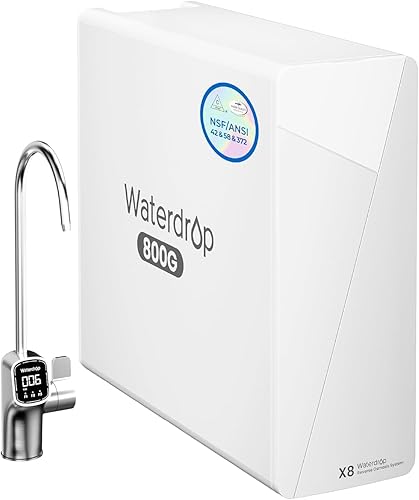 Waterdrop X8 RO |
High-Output Under-Sink RO | 800 GPD, 9-stage, NSF 42&58 | $7.19 |
 Frigidaire WF2CB |
Refrigerator Filter Replacement | Carbon block, reduces cysts | $21.92 |
 ALTHY PRE-AUTO2 |
Automatic Sediment Pre-Filter | Spin-down, auto-flush, 100 micron | $129.20 |
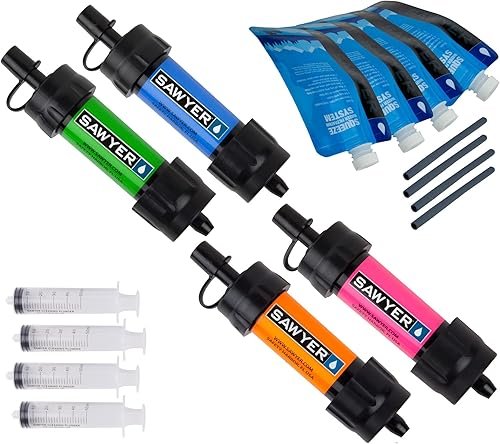
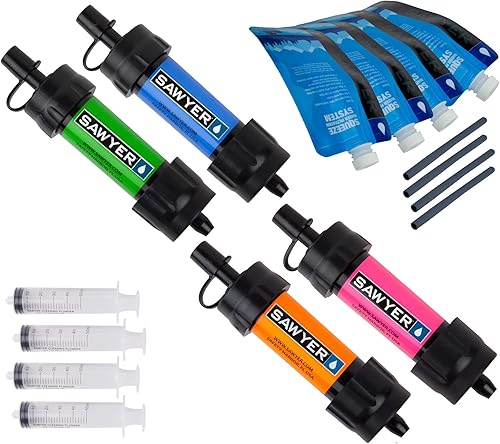
Sawyer Products SP124 Mini (4-Pack)
This isn’t your primary whole-house filter. But every well owner should have these on hand. At this price, it’s a no-brainer for emergency kits. We’ve tested them on trail water—they work. The 0.1-micron absolute filter removes 99.99% of bacteria and protozoa. Keep one in your bug-out bag, one in the car, and give two away. It’s cheap insurance.
- Extremely affordable
- Lightweight and portable
- Individually tested three times
- Not for heavy sediment or chemicals
- Flow rate is slow for daily use
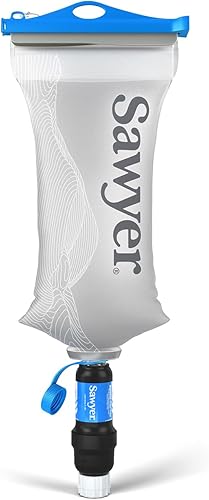
Sawyer Squeeze with Cnoc Bladder
The step-up from the Mini. The Squeeze filter has a higher flow rate and is built for regular use. The included Cnoc bladder is a huge upgrade over standard pouches—it’s durable and easy to fill. We’ve used this on week-long trips. It handles murky water well, but backflush it regularly. For off-grid cabins or as a serious backup, it’s a top choice.
- Lasts up to 100,000 gallons
- Stronger hollow fiber membrane
- Removes 100% of microplastics
- Still not a chemical filter
- Requires manual squeezing
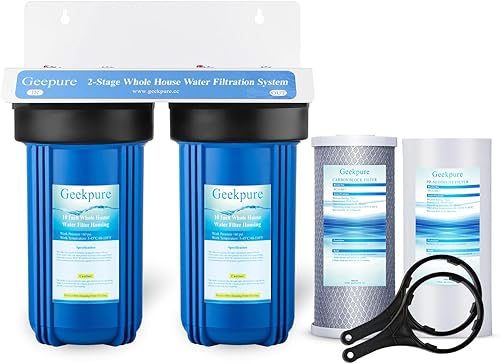
Geekpure 2-Stage Whole House System
For the price, this is a solid starting point. It’s a basic 5-micron sediment filter followed by a carbon block filter. It will catch sand and improve taste/odor. We installed one in a workshop. It works. But be real: this is a pre-filter. It won’t soften water or kill bacteria. Use it to protect a more expensive UV or softener system downstream.
- Very low entry cost
- Standard 10″ filter cartridges
- Good for basic sediment/chlorine
- Housing feels a bit lightweight
- Limited contaminant removal
Waterdrop X8 Reverse Osmosis System
This is for serious drinking water purification. The 800 GPD (gallons per day) capacity means no waiting for a tank to fill. The 2:1 pure-to-waste ratio is excellent for an RO system. It’s NSF/ANSI 42 & 58 certified, which is what you want. We like the tankless design—it saves space and avoids secondary contamination. If your well water has high TDS, nitrates, or lead, this is your kitchen solution.
- High flow rate, no tank
- Excellent 2:1 drain ratio
- NSF certified for health claims
- Requires under-sink power outlet
- Still produces some wastewater
Frigidaire PureSource2 WF2CB
This is a replacement filter for specific Frigidaire refrigerators. If your fridge has an ice/water dispenser, this is the filter you might need. It’s a carbon block filter that reduces cysts, sediment, and taste/odor issues. We’re including it because many well owners rely on fridge filters for drinking water. Just know its limits—it won’t handle bacteria or heavy metals. It’s a final polishing step, not primary treatment.
- Genuine OEM replacement
- Easy click-in installation
- Reduces common aesthetic issues
- Only fits specific models
- Limited contaminant reduction
ALTHY PRE-AUTO2 Automatic Pre-Filter
This is a smart upgrade for your main water line. It’s a spin-down sediment filter with an automatic backwash timer. Set it to flush itself daily or weekly. No more remembering to change cartridges every month. For well water with heavy sand or grit, this thing saves your downstream filters and your sanity. We’ve seen plumbers recommend these for problem wells.
- Automatic self-cleaning
- No replacement cartridges needed
- Protects entire system
- Higher upfront cost
- Requires drain line for flushing
Frequently Asked Questions
- What is the best water filtration system for well water?
- The best system is a multi-stage one matched to your water test results. A common effective setup is: sediment pre-filter → activated carbon filter → UV purifier. Add a water softener for hardness or an RO system for dissolved solids. There’s no single “best” for everyone.
- Do I really need to filter my well water?
- Yes. Even if it looks clear, well water can contain bacteria, nitrates, heavy metals, and other contaminants you can’t see or taste. Testing is the only way to know. Untreated well water poses real health risks over time.
- How often should I change my well water filters?
- It depends on the filter type and your water quality. Sediment filters: every 3-6 months. Carbon filters: every 6-12 months. UV bulbs: annually. RO membranes: every 2-3 years. Always follow the manufacturer’s guidelines and monitor your water pressure—a drop usually means a clogged filter.
- Can a Brita filter handle well water?
- No. A standard Brita pitcher filter is designed for municipally treated water. It improves taste and reduces some chlorine but won’t remove bacteria, heavy metals, or dissolved minerals common in well water. You need a much more robust system. Learn more about what common filters actually do in our article on Brita filter pitcher filters.
- Does reverse osmosis remove beneficial minerals?
- Yes, RO removes most dissolved solids, including beneficial minerals like calcium and magnesium. However, you get these minerals primarily from food, not water. The health risk from contaminants far outweighs the minor mineral loss. If concerned, you can add a remineralization stage after the RO membrane.
- Is distilled water from a well safe?
- Distillation is an effective purification method that kills pathogens and removes most contaminants. However, it’s energy-intensive and produces very flat-tasting water. It’s safe but not the most practical daily solution for a whole house. For more on this, see our breakdown of is distilled water safe.
- How do I know what contaminants are in my well water?
- You must get a professional lab test. Contact your local health department or a state-certified testing lab. Test at least annually and after any nearby flooding, land-use changes, or if anyone gets sick. Don’t rely on DIY test strips for critical health parameters.
Final Thoughts
After years in this space, our stance is clear: don’t cheap out on well water filtration. Your family’s health and your home’s infrastructure depend on it. Start with a comprehensive water test. Then build your system in stages, prioritizing the most serious contaminants first. For most people, that means a sediment filter, a carbon filter, and a UV light as the core trio.
The products we’ve highlighted here are solid starting points, from emergency backups like the Sawyer Mini to serious whole-house protection. Remember, even the best system fails without maintenance. Mark your calendar, change your filters, and test your water annually. It’s the cost of the freedom that comes with having your own well.
