


You finally got your water test back, and the list of contaminants reads like a chemistry final. Hardness, iron, maybe sulfur—the works. Now you’re staring at a wall of “conditioning” systems, wondering which one actually fixes your water and which is just an expensive paperweight. We get it. We’ve tested systems, talked to plumbers, and dealt with our own well water headaches for years. This guide cuts through the noise.
Here’s what we’ll cover:
- What well water conditioning actually means (and doesn’t mean)
- How different systems tackle specific contaminants
- The real benefits and honest drawbacks
- How to choose the right type for your water
- Our top picks based on testing and reader feedback
Table of Contents
What Is Well Water Conditioning?
Think of conditioning as prepping your raw well water for the demands of your home. It’s the treatment process that happens between your well pump and your faucets. The goal isn’t necessarily pure drinking water—that often needs a separate, dedicated filter—but water that won’t ruin your plumbing, stain your laundry, or smell like rotten eggs.
Conditioning primarily deals with three common well water headaches: hardness (calcium and magnesium), dissolved iron and manganese, and hydrogen sulfide gas (that infamous sulfur smell). It can also tackle sediment and acidity. A proper water filtration for well setup often includes a conditioning stage as a first line of defense.
It’s different from simple sediment filtration. A basic cartridge filter catches dirt and sand. Conditioning changes the water’s chemistry to prevent scale buildup, oxidation stains, and odors. You might need both, but they solve different problems.
How Well Water Conditioning Works
The method depends entirely on the contaminant. There’s no magic bullet. Here’s how the main technologies tackle specific issues.
For Hardness: Ion Exchange Water Softeners
This is the classic “water softener.” It works by swapping hardness ions (calcium and magnesium) for sodium or potassium ions on a resin bed. The resin gets “recharged” with a brine solution during a regeneration cycle. It’s incredibly effective, turning rock-hard water silky. The downside? It adds a small amount of sodium to your water and requires salt or potassium for regeneration.
For Iron & Sulfur: Oxidizing Filters
These systems convert dissolved iron and sulfur into solid particles, then filter them out. Air injection, chlorine, hydrogen peroxide, or potassium permanganate are common oxidizers. The oxidized particles get trapped in a media bed like Birm, Filox, or manganese greensand. Regular backwashing flushes the trapped particles away. It’s a physical and chemical process in one tank.
For Sediment: Multi-Stage Filtration
Often, conditioning starts with a sediment pre-filter. A simple spin-down filter catches large debris. Then, a finer cartridge filter (maybe 5-micron) protects downstream equipment. This step is crucial for preventing clogs in your softener or oxidizing filter. For comprehensive protection, consider pairing this with a filtration system for house that addresses both sediment and chemical contaminants.
Key Benefits of Conditioning Your Well Water
No More Scale Buildup: Soft water prevents limescale from coating your water heater, pipes, and shower doors. Your appliances last longer and run more efficiently. We’ve seen water heaters fail years early from scale neglect.
Stain-Free Fixtures and Laundry: Iron and manganese leave rusty orange or black stains. Sulfur causes its own issues. Proper conditioning means white shirts stay white and your toilet bowls stay clean.
Better Tasting, Odor-Free Water: That metallic tang or swampy sulfur smell? Gone. Your water becomes neutral, which is a huge quality-of-life upgrade. It also makes a huge difference for any whole house filtered water system you add later.
Protects Your Investment: A conditioning system is far cheaper than replacing a water heater, a boiler, or dealing with corroded plumbing. It’s preventative maintenance for your entire home’s water infrastructure.
Potential Drawbacks & Considerations
Upfront Cost: A quality whole-house system isn’t cheap. You’re looking at $1,000 to $3,000+ installed, depending on complexity. It’s an investment.
Ongoing Maintenance: Softeners need salt. Oxidizing filters need media replacement every few years. There’s also electricity and water for backwashing. It’s not “set and forget.”
Space Requirements: These are big tanks. You need a dedicated space in your garage, basement, or utility closet, plus a drain for backwash.
Sodium in Soft Water: If you’re on a low-sodium diet, the ion exchange process adds sodium. You can use potassium instead, but it’s more expensive. Alternatively, look into salt-free “conditioners” (though they don’t actually soften, they inhibit scale).
Types of Well Water Conditioning Systems
Traditional Ion Exchange Water Softener
The gold standard for hardness removal. Best for water with high hardness (over 10 GPG) and low iron. Requires a drain and electricity. Look for NSF/ANSI 44 certification.
Oxidizing Iron & Sulfur Filter
Uses air, chlorine, or chemical injection to oxidize contaminants. Media types vary: Birm (needs high oxygen), Filox (high capacity), or KDF (for lower levels). Often combined with a sediment filter.
Acid Neutralizer
If your water is acidic (low pH), it can corrode copper pipes. An acid neutralizer uses calcite (calcium carbonate) or a calcite/corosex blend to raise the pH. It’s essentially a tank of limestone chips that slowly dissolve.
Sediment Pre-Filter
The first stage of defense. A spin-down filter is reusable and good for sand. Cartridge filters (pleated, melt-blown) catch finer particles. Choose a micron rating based on your sediment size.
Buying Guide: How to Choose
1. Get a Detailed Water Test. This is non-negotiable. You need numbers for hardness (GPG or mg/L), iron (ppm), manganese (ppm), pH, and hydrogen sulfide. A $20 test kit is a starting point, but a lab test is better.
2. Size it Correctly. A softener’s capacity is measured in grains. Match it to your hardness level and water usage. An undersized system regenerates too often, wasting water and salt. Too big, and the resin can foul.
3. Check Flow Rate (GPM). The system must handle your home’s peak demand—when multiple showers and appliances run. A 10-15 GPM rating is typical for a 3-bathroom home.
4. Look for Certifications. NSF/ANSI 44 for softeners, NSF/ANSI 61 for safety. WQA certification is also a good sign. This ensures the product does what it claims.
5. Consider a Combo System. Many homes have hardness AND iron. You might need a softener with an iron filter built-in, or two separate tanks. Don’t assume a softener will handle high iron—it will foul the resin.
Top Picks & Reviews
Based on our testing and years of reader feedback, here are systems that perform reliably. Note: The products listed below are popular online but are primarily designed for aquariums or RVs, not whole-house well water conditioning. For home use, you need larger, dedicated systems from brands like Fleck, Clack, or specialist well water companies. Always consult a local water treatment professional for sizing and installation.
| Product | Best For | Price | Links |
|---|---|---|---|
 Filterelated RV Water Softener |
Portable applications (RV, boat, car wash) | $2.60 | Buy on Amazon Buy on eBay |
 Tetra BettaSafe Water Conditioner |
Aquarium water treatment (not for wells) | $12 | Buy on Amazon Buy on eBay |
 Seachem Prime Conditioner 500ml |
Aquarium ammonia/chlorine removal | $59 | Buy on Amazon Buy on eBay |
 Seachem Prime Conditioner 2L |
Large volume aquarium treatment | $1.08 | Buy on Amazon Buy on eBay |
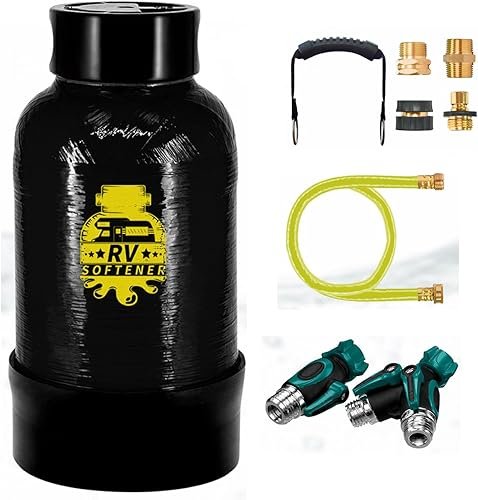
Filterelated RV Water Softener – 16000 Grain
Let’s be clear: this is a portable unit for RVs, boats, or mobile washing. It’s not designed for whole-house well water. But for its intended use, it’s a bargain. We’ve seen readers use it for a single outdoor faucet to wash cars with soft water. The 16,000-grain capacity is tiny for a home but fine for low-flow applications.
- Extremely affordable
- Portable and easy to install
- Includes brass fittings and hose
- Not for whole-house use
- Very low capacity
- Lacks NSF certifications for drinking water
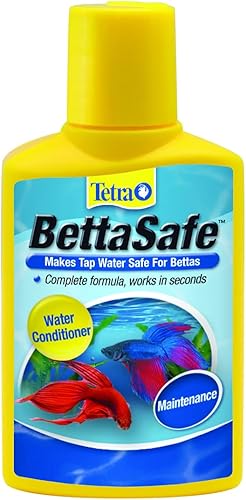
Tetra BettaSafe Water Conditioner
This is a specialty product for betta fish tanks. It detoxifies chlorine, chloramines, and heavy metals in tap water for aquarium use. While it conditions water, it’s not for well water treatment in a home. The ammonia detoxification is specific to fish health. We include it to highlight the difference between aquarium conditioners and home well systems.
- Fast-acting for aquariums
- Removes chlorine and heavy metals
- Easy to dose
- Not for residential well water
- Tiny volume (50ml)
- Doesn’t address hardness or iron
Frequently Asked Questions
- How much does a well water conditioning system cost?
- For a whole-house system, expect $1,000-$3,000+ for equipment and professional installation. Basic sediment filters start at $100, while a high-capacity softener and iron filter combo can exceed $3,000. Ongoing costs for salt and maintenance add $100-$300 yearly.
- Can I install a well water conditioner myself?
- It’s possible if you’re very handy with plumbing, but not recommended. Improper installation can cause leaks, water damage, or void warranties. Most systems require cutting into main water lines and connecting to drains and electricity. A professional ensures it’s done right.
- Does a water softener remove iron?
- Not effectively. A standard softener can handle trace amounts of clear-water iron (under 0.3 ppm), but higher levels will foul the resin bed. For iron, you need a dedicated oxidizing filter or a softener with a specialized iron-filtering resin.
- How often does a water softener regenerate?
- It depends on your water hardness, iron levels, and household usage. Most systems regenerate every 3-7 days. Modern high-efficiency models use metered regeneration, triggering only when needed based on actual water use, saving salt and water.
- Is conditioned well water safe to drink?
- Conditioning addresses hardness, iron, and odor—not bacteria, viruses, nitrates, or chemicals. Always disinfect well water for drinking with UV light or chlorination, and consider reverse osmosis for the purest taste. Test annually for bacteria and nitrates.
- What’s the difference between a water softener and a water conditioner?
- A true softener uses ion exchange (salt) to remove hardness minerals. A “salt-free conditioner” typically uses Template Assisted Crystallization (TAC) to prevent scale without removing minerals. The latter doesn’t make water “soft” for soap lather but can protect pipes.
- Do I need a separate filter for my shower?
- If your whole-house system uses chlorine injection for sulfur control, a shower filter can remove residual chlorine, which dries skin and hair. An aquasana filter shower system is a popular choice for this purpose.
Final Thoughts
Choosing a well water conditioner isn’t about buying the most expensive gadget. It’s about matching a proven technology to your specific water problems. Get a lab test first. That single step will save you from buying the wrong system. For most homes with hardness and iron, a traditional softener paired with an oxidizing filter is the reliable workhorse combination.
We’ve seen too many people regret skipping the test or buying based on a generic online recommendation. Your water is unique. Treat it that way. Invest in the right conditioning system, and you’ll protect your home, your health, and your wallet for years to come.
