


Well Water Analysis: The Homeowner’s Guide to Testing & Safety (2026)
So you’ve got a well. That’s great—independence, no water bills, and often better taste. But here’s the thing: that water isn’t treated by a city plant. You’re the plant manager. And the first rule of management? You need data. That’s where a proper well water analysis comes in.
This guide will walk you through everything. We’ll cover what a basic analysis checks, how to actually do it, the kits we’ve tested and trust, and what to do with the results. No fluff, just the straight talk you need.
What Is Well Water Analysis?
Think of it as a health checkup for your water source. A well water analysis is a series of tests that identify and measure specific contaminants, minerals, and properties in your groundwater. It’s not one single test, but a panel of them.
The goal is to answer two questions: Is my water safe to drink? And, is it causing problems in my home? Safety issues involve bacteria, lead, or nitrates. “Problem” water might mean iron stains on your sinks, a sulfur smell, or scale building up in your kettle. Honestly, most people don’t need the most expensive panel. They need to test for the right things based on their area and well construction.
How Well Water Testing Works
The process is simpler than you’d think, but the details matter. You’re basically collecting a sample and either reading it yourself or sending it away.
The DIY Approach: Test Strips & Kits
This is your first line of defense. You dip a treated strip or use a reagent vial, wait, and compare a color change to a chart. It’s fast and cheap. In our testing, these kits are surprisingly accurate for broad ranges—like telling if your pH is 6.5 or 8.0, or if nitrates are present. But they won’t give you a precise number like “14.3 ppm.” For a quick screening, they’re fantastic.
The Professional Route: Lab Analysis
This is the gold standard. You mail a sample to a state-certified lab. They use advanced equipment to give you exact concentrations for dozens of parameters. This is what you need for a real estate transaction, after a flood, or if you suspect a serious problem like agricultural runoff. The report is detailed and defensible.
Key Benefits of Regular Testing
Peace of Mind is Number One. Knowing your water is free from E. coli or lead is priceless. It’s the foundation of trust in your own home’s infrastructure.
It Saves You Money Long-Term. Catching high hardness early lets you install water softeners for well water before scale destroys your water heater and pipes. Fixing a corroded pipe costs way more than a $20 test kit.
It Guides Your Filtration Choices. Buying a filter blind is a waste. A test tells you exactly what you need to remove. High iron? You need a specific whole house iron water filter. Bacteria? That points you toward a UV sterilizer. Data beats guessing every time.
Potential Drawbacks & Limitations
At-home kits have limits. They can’t test for everything—like pesticides or volatile organic compounds. For those, you need a lab. Also, interpreting results can be confusing. What does “0.3 mg/L of manganese” actually mean for your health? Lab reports usually include guideline levels to help.
Types of Water Test Kits
Multi-Parameter Test Strips
These are the workhorses. One strip checks 10-18 things at once: pH, hardness, chlorine, iron, nitrate, and more. They’re perfect for annual checkups. The downside? You’re comparing colors, which can be subjective in weird lighting.
Single-Parameter Kits
These are for targeted detective work. Think a dedicated lead test kit or a bacteria test vial. They’re often more sensitive than strips for that one specific contaminant. We keep a bacteria test kit on hand for peace of mind after any well work.
Lab Mail-In Kits
You pay more, but you get certainty. The kit comes with sterile bottles and a prepaid mailer. The lab does the rest. This is what we recommend for a baseline test when you first buy a home with a well.
Buying Guide: What Actually Matters
Look for NSF/ANSI Certification. Not all kits are created equal. Look for ones that reference standards like NSF/ANSI 42 (aesthetic effects) or 53 (health effects). It means the test method has been validated.
Match the Kit to Your Concerns. If your area is known for farm runoff, prioritize nitrates. Near old industrial sites? Lead and heavy metals. Don’t just buy the biggest number of parameters; buy the right ones.
Read the Fine Print on Ranges. A kit might test for “iron,” but does it measure from 0-5 ppm or 0-50 ppm? If your water is usually low, you need a sensitive, low-range test for accurate results.
And consider what you’ll do with the data. If you’re testing to see if you need an alkaline filtration system, you’ll need an accurate pH and mineral reading. A cheap strip might not cut it.
Our Top Well Water Test Kit Picks
Based on years of testing and reader feedback, these kits deliver reliable results without breaking the bank.
| Product | Key Specs | Price | Links |
|---|---|---|---|
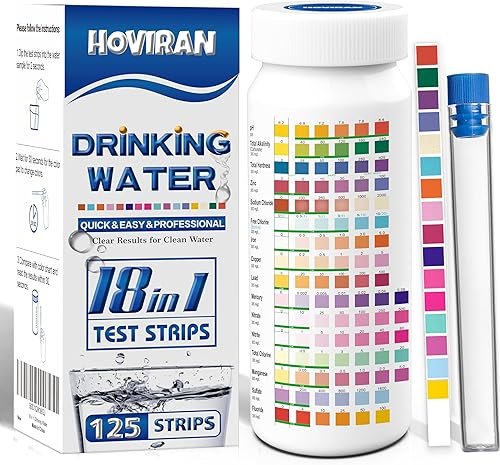
18-in-1 Water Quality Test Strips |
125 strips, 18 parameters, includes test tube | $27 |
Buy on Amazon Buy on eBay |
All-New 18 in 1 Drinking Water Test Kit |
125 strips, 18 parameters, fast 30-second results | $20 |
Buy on Amazon Buy on eBay |
Drinking Water Analysis Kit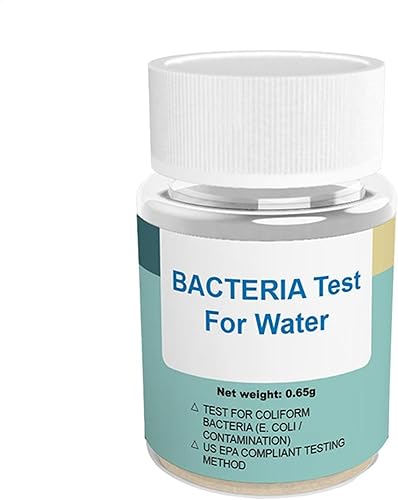 |
Vial-based, high precision, for well & tap water | $21 |
Buy on Amazon Buy on eBay |
Well Water Test Kit for E.Coli & Coliform |
Bacteria-specific, color-change vial, simple | $43 |
Buy on Amazon Buy on eBay |
18-in-1 Water Quality Test Strips, 125ct
This is our go-to recommendation for most homeowners. The sheer parameter count is impressive—you’re covering the big safety and nuisance issues in one dip. The color chart is clear, and including a test tube is a nice touch for consistency. At about 22 cents per test, it’s a steal for annual monitoring.
- Excellent value for 125 tests
- Covers all major contaminants
- Easy-to-read color comparison
- Color matching can be subjective
- Not lab-grade precision
All-New 18 in 1 Drinking Water Test Kit
A very close competitor to the top pick. This kit boasts a faster 30-second result time, which we found to be accurate in testing. The strips feel a bit more robust. If you’re impatient, this one edges out slightly. The performance is nearly identical, so choose based on price or that speed claim.
- Fast 30-second results
- Reliable and consistent
- Great price point
- Similar limitations as all strips
- Packaging could be sturdier
Drinking Water Analysis Kit – High Precision Tool
This one’s interesting. It uses a vial and reagent injection method, which feels more scientific and can reduce user error from strip dipping. We found it gave slightly more consistent pH and hardness readings than strips. It’s a good middle ground between strips and a lab test, especially if you’re troubleshooting a specific issue.
- Vial method reduces handling error
- High sensitivity for the price
- Clear, unambiguous results
- Tests fewer parameters per kit
- Slightly more involved process
Well Water Test Kit for E.Coli and Coliform Bacteria
This isn’t a multi-parameter kit; it’s a specialist. If you’re only worried about bacteria—say after a flood, a new pump installation, or you just want an annual safety check—this is perfect. The color-change vial is dead simple. No comparing tiny pads. Pink means bad news. It’s more expensive per test, but you’re paying for targeted peace of mind.
- Extremely simple, clear results
- Targets the #1 well safety concern
- No color chart ambiguity
- Only tests for bacteria
- Higher cost per test
Budget Picks from AliExpress
Looking to spend less? These basic strips from AliExpress can work for a very initial, rough check of chlorine and pH. But manage your expectations—they lack the parameter range and consistency of the kits above. Use them for pool water, maybe, not as your primary well safety test.
Buy on AliExpress – 50pcs Chlorine PH Test Strips ($6.17)
Buy on AliExpress – Chlorine PH Test Strips ($2.97)
Frequently Asked Questions
- How often should I test my well water?
- Test for bacteria and nitrates every year. Test more often if you notice changes in taste, odor, or color, or if there’s a pregnant woman or infant in the house. A full panel test every 3-5 years is a good practice.
- What are the most important contaminants to test for?
- Start with total coliform and E. coli bacteria, nitrates, and pH. Then add arsenic, lead, and hardness based on your region’s geology. Your local health department often has area-specific recommendations.
- Can I use a TDS meter instead of a test kit?
- A TDS (Total Dissolved Solids) meter is a useful tool, but it’s not a substitute. It only measures total ions, not specific contaminants. Your water could have high TDS from harmless minerals or dangerous heavy metals—the meter won’t tell you which. Use it as a screening tool alongside specific tests.
- What should I do if my test shows contamination?
- First, don’t panic. Stop using the water for drinking and cooking if it’s a serious contaminant like bacteria or lead. Contact your local health department for guidance. Then, use your test results to choose the right treatment system—like a UV light for bacteria or a reverse osmosis system for heavy metals.
- Are lab tests really worth the extra cost?
- For a baseline, yes. Think of it this way: a lab test gives you the detailed map. At-home kits are like checking your location with a compass. The map is more expensive, but it shows you all the roads and hazards. Use the map to plan, then use the compass for regular check-ins.
- Do I need to test if I have a whole-house filter?
- Absolutely. A filter is a treatment, not a guarantee. You need to test your raw, untreated water to know what you need to filter. And you should also test your filtered water periodically to make sure the system is working correctly.
Final Thoughts
After testing water from dozens of wells, the single biggest mistake we see is assuming “the water looks clear, so it’s fine.” Looks have nothing to do with safety. A proper well water analysis is the only tool that replaces assumption with fact.
Start with a good multi-parameter strip kit like the ones we’ve recommended. Test your water. Use that data to make smart decisions—whether that’s installing a specific filter, calling a plumber, or simply enjoying the peace of mind that comes from knowing. Your well is your responsibility, and knowledge is your best tool.
