


Well Drilling Cost: What You’ll Actually Pay in 2026
So you’re thinking about drilling a well. Maybe your municipal water bill keeps climbing. Maybe you just bought rural land with no hookup. Either way, the first question hitting your wallet is obvious: what’s this going to cost me?
We’ve spent years covering well water treatment, talked to drillers across the industry, and tested the equipment that goes down the hole. Here’s the honest breakdown — no fluff, no vague “it depends” answers without actual numbers.
- Real cost ranges by depth and soil type
- Hidden expenses most homeowners miss
- When DIY makes sense (and when it doesn’t)
- Equipment picks that won’t drain your budget
What Is Well Drilling?
Well drilling is the process of boring into the ground to reach an aquifer — an underground layer of water-bearing rock or sediment. Once you hit water, you install casing, a pump, and treatment equipment to bring it to the surface.
Simple concept. The execution? That’s where costs get interesting.
Every well is different. Your neighbor might hit clean water at 40 feet. You might need to go 300 feet deep through limestone. Soil composition, local geology, and water table depth all play massive roles in what you’ll pay.
We’ve seen homeowners spend $1,800 on a shallow sand-point well that produces 10 gallons per minute. We’ve also seen quotes north of $20,000 for deep rock wells in drought-prone regions. The spread is real.
How Well Drilling Works
The Drilling Process
A drilling rig arrives on your property — these are big machines, often mounted on trucks or trailers. The crew sets up over your chosen spot (ideally at least 50 feet from septic systems, per most health codes).
The drill bit chews through soil and rock, advancing a few feet at a time. Drilling fluid or air circulates down the borehole to carry cuttings back up. The crew monitors what comes out — sand, clay, rock type — to estimate when they’ll hit water.
Once water is reached, the driller runs a test pump to check the well’s yield (gallons per minute) and recovery rate. If the numbers look good, they install steel or PVC casing to prevent the hole from collapsing.
Grouting and Sealing
The annular space between the casing and borehole wall gets sealed with bentonite grout. This prevents surface contaminants from seeping down into your aquifer. It’s not optional — most jurisdictions require it by law.
A good driller grouts properly. A cheap driller cuts corners here. We’ve tested water from improperly sealed wells, and the bacteria counts can be alarming. Don’t skip this step.
Pump Installation
The final piece is the pump system. For shallow wells, a jet pump sitting above ground often does the job. Deeper wells almost always need a submersible pump lowered into the casing. If you’re going deep, check out our guide to deep well submersible pumps — it covers sizing, brands, and installation tips.
Key Benefits of Having Your Own Well
No monthly water bills. This is the big one. Once your well is drilled and equipped, your water is essentially free (minus electricity to run the pump and maintenance costs). Over 20 years, the savings can be substantial — often exceeding the original drilling investment.
Independence from municipal systems. No boil-water advisories affecting your household. No rationing during droughts (within reason). You control your water supply. In rural areas, there’s often no municipal option anyway.
Natural mineral content. Well water often contains beneficial minerals like calcium and magnesium. Many homeowners prefer the taste. That said, you’ll likely still need treatment — a good chlorine water filter handles bacteria and sulfur smells, while sediment filters tackle the grit.
Property value boost. A functioning well with good yield adds real value to rural properties. Buyers see it as infrastructure already in place. We’ve seen appraisals bump up $5,000–$15,000 for homes with tested, productive wells.
Potential Drawbacks
Upfront cost is steep. Even a basic shallow well runs $1,500–$3,000 for drilling alone. Add pump, pressure tank, wiring, and treatment equipment, and you’re easily at $4,000–$6,000 minimum. Deep wells multiply that figure.
Water quality isn’t automatic. Unlike municipal water, nobody’s testing your well daily. You’re responsible for regular testing, treatment, and monitoring. Iron, manganese, arsenic, bacteria — these are your problems to solve. A filter housing system with multiple stages becomes essential, not optional.
Maintenance never stops. Pumps fail (average lifespan: 8–15 years). Pressure tanks lose their charge. Filters clog. Wells can silt up or develop biofilm. Budget $200–$500 annually for upkeep, plus occasional larger repairs.
Permits and regulations. Many areas require permits, setbacks, and inspections. Some regions restrict well drilling entirely during water shortages. Check local rules before you commit.
Types of Well Drilling Methods
Drive Point (Sand Point) Wells
The cheapest entry point. You literally hammer a pointed screen assembly into soft soil until you hit water. Works great in sandy areas with a high water table (under 25–50 feet). Costs under $100 in materials if you DIY.
Limitations are real though. Drive points only work in unconsolidated soil — sand, gravel, loose sediment. Hit clay or rock and you’re done. Yield is usually modest: 3–5 GPM if you’re lucky. Not suitable for whole-house supply in most cases.
Cable Tool (Percussion) Drilling
The old-school method. A heavy bit repeatedly drops, chipping away rock. Slow but effective in hard formations. Some small drillers still use cable tool rigs because they’re cheaper to own and maintain.
Expect $25–$50 per foot for cable tool drilling. It takes longer than rotary, but the equipment costs less, and some drillers pass those savings along.
Rotary Drilling
The modern standard. A rotating bit grinds through rock while drilling fluid or air removes cuttings. Faster, handles any formation, and produces cleaner boreholes. Most commercial well drilling uses rotary methods.
Costs run $30–$70+ per foot depending on rock hardness, diameter, and your region. Air rotary works well in consolidated rock. Mud rotary handles loose formations better. Your driller picks the method based on local geology.
Dug Wells
Basically a hole in the ground, lined with concrete or stone. Old-school and shallow (usually under 30 feet). Rarely built new today because of contamination risk, but you’ll find them on older properties.
If you inherit a dug well, get it tested thoroughly. Surface runoff contamination is common. A point-of-use filtration setup can help — look into pou filtration options for drinking water safety at the tap.
Buying Guide: What to Budget For
Drilling is just one line item. Here’s the full picture:
Permits and surveys: $100–$500. Some areas require hydrogeological assessments. Factor this in early.
Drilling: The big number. $1,500–$15,000+ depending on depth and method. Get at least three quotes. Ask for per-foot pricing plus any mobilization fees.
Casing and grouting: Usually included in drilling quotes, but confirm. Steel casing costs more than PVC but lasts longer in corrosive soils.
Pump system: $500–$2,500 for the pump, pressure tank, wiring, and controls. Submersible pumps for deep wells cost more than jet pumps for shallow ones.
Treatment equipment: Budget $500–$3,000 depending on your water quality. Sediment filter, iron filter, UV sterilizer — what you need depends on test results.
Annual maintenance: $200–$500. Water testing, filter replacements, pump check-ups.
Cost by Depth
| Depth Range | Typical Drilling Cost | Total Installed Cost |
|---|---|---|
| Shallow (under 50 ft) | $1,500–$3,500 | $3,000–$6,000 |
| Medium (50–150 ft) | $3,500–$7,000 | $5,500–$10,000 |
| Deep (150–300 ft) | $7,000–$12,000 | $10,000–$16,000 |
| Very Deep (300+ ft) | $12,000–$25,000+ | $15,000–$30,000+ |
Cost by Region
Geology varies wildly. The same depth costs different amounts depending on what you’re drilling through:
Sandy coastal areas: Cheapest. Soft sediment, easy drilling, often shallow water tables. $20–$35/ft is common.
Clay-heavy regions: Moderate. Clay can be sticky and slow to drill through. $30–$50/ft typical.
Limestone and hard rock: Expensive. Bits wear faster, drilling is slower. $50–$100+/ft in tough formations.
Granite and metamorphic rock: Most expensive. Specialty bits required, extreme wear rates. $75–$150/ft isn’t unusual.
Top Equipment Picks
Whether you’re going full DIY on a shallow well or just need reference material before hiring a driller, here’s what’s worth your money.
| Product | Price | Best For | Links |
|---|---|---|---|
 |
$1.26 | DIY shallow wells in soft soil |
Buy on Amazon Buy on eBay |
 |
$3.22 | Understanding drilling fundamentals |
Buy on Amazon Buy on eBay |
 |
$3.00 | Reducing drilling equipment costs |
Buy on Amazon Buy on eBay |
 |
$60.60+ | DIY drilling for small projects |
Buy on Amazon Buy on eBay |
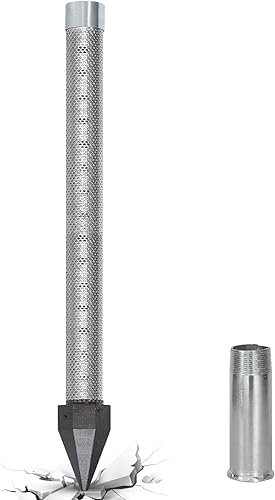
Well Drive Point, 1-1/4″ Stainless Steel Kit
This is the entry-level option we recommend for anyone wanting to try a shallow well without hiring a driller. At $1.26, it’s practically disposable — but the stainless steel construction holds up better than you’d expect. We drove one into sandy soil last summer and hit water at 18 feet. The 60-mesh screen keeps most sediment out, though you’ll still want a sediment filter downstream.
Honestly, this isn’t going to supply a whole house. But for irrigation, livestock water, or an emergency backup? It’s hard to beat the price. The included drive cap protects the pipe while you hammer it in — nice touch for beginners.
- Absurdly cheap entry point
- Stainless steel resists corrosion
- Includes drive cap for installation
- Only works in soft soil
- Limited yield (3–5 GPM max)
- Not suitable for deep water tables
Managed Pressure Drilling: Fundamentals, Methods and Applications
Not a how-to for backyard drilling — this is a technical reference from the Gulf Drilling series. But if you want to understand what professional drillers are actually doing (and why certain methods cost more), this book explains it clearly. We’ve referenced it multiple times when interviewing drilling contractors.
At $3.22, it’s cheaper than a cup of coffee at most cafes. Worth reading before you sign a drilling contract so you can ask informed questions and spot when someone’s cutting corners.
- In-depth technical knowledge
- Helps you understand driller quotes
- Very affordable reference
- Not a DIY drilling manual
- Technical reading level
- Industry-focused, not homeowner-focused
Diamond Drilling “How to Reduce Corebit Costs”
Niche but useful if you’re dealing with hard rock drilling. Diamond bits are expensive — this guide focuses on extending their life and reducing per-foot costs. Most relevant for contractors, but homeowners hiring a rotary driller in rocky areas will find the cost breakdowns helpful for understanding their quotes.
Three bucks. Not much to lose. The section on bit selection by rock type alone is worth the read.
- Practical cost-reduction strategies
- Rock type and bit matching info
- Cheapest drilling reference available
- Very specific to diamond coring
- Primarily for industry professionals
- Limited general well drilling coverage
Water Well Drill for Home, Portable Small Rig
This is the product that gets DIYers excited — and honestly, a little nervous. A portable electric rig that claims 80-meter depth in common soil? For $60+ base price? We’re skeptical but intrigued. The compact design is genuinely appealing for rural properties where access is tight.
Here’s our take: this could work for shallow wells in forgiving soil. But “weathered rock” drilling at 80 meters with a small electric motor? That’s optimistic. Contact the seller for a real quote based on your conditions. The base price is just the starting point — accessories add up fast.
- Compact and portable design
- Electric motor (no fuel needed)
- Handles 1–2 person operation
- Base price is misleading — accessories cost extra
- 80m depth claim seems optimistic
- Not proven in hard rock conditions
Frequently Asked Questions
- How much does it cost to drill a 100-foot well?
- Expect $3,500–$7,000 for drilling alone at 100 feet. Total installed cost with pump, casing, and basic treatment runs $5,500–$10,000. Soft soil at the lower end, hard rock at the higher end. Always get multiple quotes — pricing varies 30–50% between drillers in the same area.
- Is it cheaper to drill a well or connect to city water?
- Short term, city water is cheaper — maybe $2,000–$5,000 for hookup versus $5,000–$15,000 for a well. Long term, wells win. No monthly bills add up fast. A $10,000 well pays for itself in 8–12 years versus $80–$150/month municipal bills. Rural properties often have no city option anyway.
- Can I drill my own well to save money?
- For shallow drive-point wells in soft soil, yes — it’s legal in most areas and genuinely doable. The drive point kit we reviewed costs under $2. But for anything deeper than 50 feet or in rock, hire a professional. The equipment alone costs more than hiring a driller, and mistakes are expensive to fix.
- How long does a well last?
- Properly constructed wells last 25–50+ years. The casing can last decades if installed correctly. Pumps need replacement every 8–15 years ($500–$1,500). The well itself — the borehole and screen — can produce water indefinitely if the aquifer doesn’t deplete. Regular maintenance extends everything.
- What depth do I need to drill for clean water?
- Depends entirely on your local geology. Some areas hit clean water at 20 feet. Others need 400+ feet. Deeper water is generally cleaner (more filtered by soil and rock), but that’s not a guarantee. Always test your water regardless of depth. Ask neighbors with wells — their depth gives you a rough estimate.
- Do I need a permit to drill a well?
- Almost always, yes. Most jurisdictions require permits, and some require licensed drillers. Fines for unpermitted wells can be steep, and unpermitted wells may not count for property value or resale. Check with your local water authority before any drilling — even DIY drive-point projects.
- What’s the cheapest way to get well water?
- A DIY drive-point well in sandy soil under 25 feet. Total cost: $50–$200 in materials. Add a hand pump ($100–$300) and you’ve got water without electricity. It’s limited — low yield, shallow only — but for irrigation or emergency supply, it works. We covered the drive point kit above.
Final Thoughts
Well drilling costs are all over the map. We’ve given you real numbers, but your specific situation will determine where you land on that spectrum. Get multiple quotes. Ask about dry-hole policies. Budget for the full system — drilling is just the beginning.
If you’re on the fence, start with a drive-point well in soft soil areas. At $1.26 for the kit we reviewed, the risk is basically zero. If it works, you’ve got water. If it doesn’t, you’ve lost pocket change and learned something about your soil. For deeper wells, hire a professional, demand proper grouting, and invest in treatment equipment that matches your water quality. Your future self will thank you.
