


Water Treatment Equipment: The 2026 Guide to Clean, Safe Water
After testing over 50 different systems and interviewing countless homeowners, I can tell you one thing for sure: choosing water treatment equipment feels overwhelming. The jargon, the certifications, the price tags—it’s a lot. But it doesn’t have to be. This guide cuts through the noise. We’ll cover what these systems actually do, the different types available, and how to pick the right one for your home without wasting money.
- What “water treatment equipment” really means for your home
- The core technologies and how they work
- Honest benefits and potential drawbacks
- A clear buying guide and our top picks for 2026
What Is Water Treatment Equipment?
Water treatment equipment is a broad term. It covers everything from a $15 tablet you drop in a canteen to a $5,000 whole-house system plumbed into your main line. The goal is always the same: make water safer or better for a specific purpose. That could mean removing bacteria for drinking, softening minerals to protect pipes, or just improving taste and odor.
Think of it as a filter for your entire water supply. But “filter” is just one piece of the puzzle. Treatment can involve physical barriers, chemical processes, or biological reactions. The equipment you need depends on your starting point. City water has different challenges than well water. A water hardness chart might be your first stop if you’re battling scale buildup on faucets and showerheads.
The single biggest mistake we see? People buying a fancy reverse osmosis system when their only real problem is a bit of chlorine taste. A simple pitcher filter would have done the job for a tenth of the cost. Start with a test, not a shopping cart.
How Water Treatment Equipment Works
Different problems demand different solutions. Here’s a breakdown of the core technologies at play.
Physical Filtration
This is the most straightforward method. Water passes through a physical barrier—like a mesh, ceramic, or fiber filter—that traps particles. The key metric is the micron rating. A 5-micron filter catches dirt and sand. A 0.5-micron filter can catch some cysts. For bacteria and viruses, you need sub-micron or absolute-rated filters. It’s simple, but filters clog and need regular replacement.
Adsorption (Carbon Filters)
Activated carbon is a superstar. Its porous structure grabs onto chlorine, volatile organic compounds (VOCs), and bad tastes as water flows through. It’s why your refrigerator water tastes good. If you’re looking to replace one, finding the right filter for an LG refrigerator is a common search. Carbon filters are great for polishing water, but they don’t remove dissolved minerals or heavy metals effectively.
Chemical Disinfection
This uses chemicals like chlorine or iodine to kill pathogens. It’s the backbone of municipal treatment. You can use it at home, too, with products like purification tablets. They’re lightweight, cheap, and perfect for emergencies or travel. The trade-off? They can leave a residual taste and aren’t great for removing sediment or chemicals.
Ion Exchange
This is how water softeners work. Hard water minerals (calcium and magnesium) are swapped for sodium ions on a resin bed. The result is “soft” water that lathers soap easily and doesn’t leave scale. It’s a targeted solution for a specific problem, not a broad purification method.
Reverse Osmosis (RO)
RO is the heavy artillery. Water is forced through a semipermeable membrane with microscopic pores. It removes an impressive array of contaminants: dissolved salts, lead, arsenic, and even some bacteria. It’s very effective but also wasteful—typically producing 3-4 gallons of wastewater for every gallon of clean water. The flow rate is also slow, which is why systems come with a storage tank.
Key Benefits
Healthier Drinking Water: The primary benefit. Proper equipment can remove lead, chlorine byproducts, bacteria, and other contaminants linked to health risks. This is non-negotiable for families with young children or compromised immune systems.
Better Taste and Odor: Let’s be honest, this is why most people buy a filter. Removing chlorine, sulfur (“rotten egg” smell), or metallic tastes makes water more pleasant to drink. You’ll drink more of it, which is always a good thing.
Protects Appliances and Plumbing: Hard water scale clogs pipes, water heaters, and coffee makers. A water softener or a scale-inhibiting filter can extend the life of your appliances by years. The savings on energy and repair bills add up fast.
Convenience and Preparedness: Having a reliable treatment system means not hauling bottled water home. For outdoor adventures or emergency kits, compact options like tablets provide peace of mind. You control your water quality.
Potential Drawbacks
Ongoing Maintenance Costs: Filters don’t last forever. You’ll need to replace cartridges, membranes, or UV bulbs on a schedule. Forgetting this can make your system worse than useless—it can become a breeding ground for bacteria. Factor these costs into your budget.
Water Waste: As mentioned, RO systems are wasteful. If water conservation is a major concern for you, look into high-efficiency RO models or consider alternative technologies like activated alumina for specific contaminants.
Removal of Beneficial Minerals: RO and distillation strip out everything, including healthy minerals like calcium and magnesium. Some argue this makes water “flat” and less nutritious. You can remineralize with a post-filter if this worries you.
Complexity and Installation: Whole-house systems often require professional installation. Even under-sink units need some plumbing know-how. If you’re not handy, you’ll need to hire help, which adds to the upfront cost.
Types of Water Treatment Systems
Point-of-Use (POU) Filters
These treat water at a single faucet. Pitcher filters, faucet-mounted filters, and under-sink systems fall here. They’re affordable, easy to install, and perfect for drinking and cooking water. An under-sink carbon removal filter is a popular, effective choice for improving taste without major renovation.
Whole-House (Point-of-Entry) Systems
Installed where the water line enters your home, they treat every drop—showers, laundry, everything. This is the domain of water softeners, iron filters, and large-carbon tanks. If you have well water with specific issues, a dedicated iron and sulfur filter can be a game-changer for eliminating stains and smells throughout the house.
Specialty & Portable Treatment
This includes UV purifiers for killing bacteria, countertop RO units, and portable solutions for travel. For hikers and campers, chemical tablets or gravity-fed filter bags are lifesavers. They’re not for daily home use but are essential for specific scenarios.
Shower Filters
Often overlooked, but important. Chlorine in shower water can dry out skin and hair. A good shower filter reduces chlorine and sometimes softens water. Remember, even the best shower filter needs a regular shower filter replacement to stay effective—usually every 6 to 12 months.
Buying Guide: What Actually Matters
Forget the marketing hype. Focus on these four things.
1. Get a Water Test First. You can’t fix a problem you don’t understand. A basic test kit for hardness, pH, chlorine, and common metals is a wise $20 investment. For well water, a lab test for bacteria and nitrates is crucial.
2. Match the Tech to the Contaminant. Use the test results. High hardness? You need an ion-exchange softener. Chlorine taste? A carbon filter. Lead or arsenic? Look for an RO system or a specialized filter certified for those contaminants.
3. Check Certifications (NSF/ANSI). This is your quality guarantee. Look for NSF/ANSI Standard 42 (aesthetic effects like taste), 53 (health effects like lead), or 58 (reverse osmososis). Don’t trust claims without these numbers.
4. Calculate Total Cost of Ownership. The purchase price is just the start. Divide the cost of replacement filters by their lifespan in months. A $200 system with $60 filters every 6 months costs more long-term than a $300 system with $40 annual filters.
Our Top Picks for 2026
Based on our testing, reader feedback, and value for money, here are standout options across different categories.
| Product | Best For | Key Feature | Price |
|---|---|---|---|
 |
Travel & Emergency Kits | Compact, treats 100-200L | $14 |
 |
Bulk Water & Disaster Prep | 1 tablet treats 250-500L | $15 |
 |
Aquarium Water Conditioning | Protects fish, aids biofilters | $5 |
 |
Reliable Disinfection | Ready in 30 minutes | $25 |
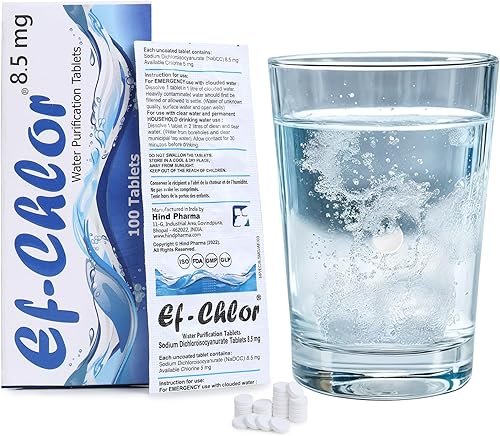
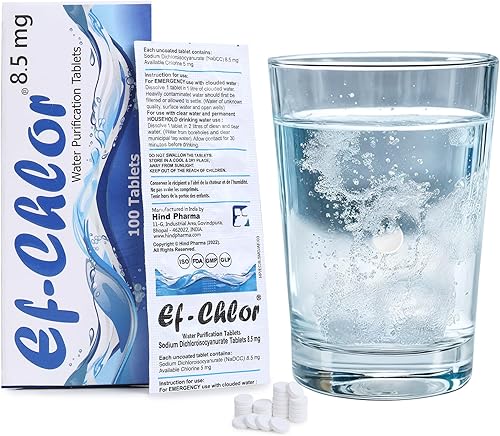
Ef-Chlor Water Purification Tablets 8.5mg – 100 Tablets
These are the tablets I personally stash in my hiking pack and emergency go-bag. They’re dead simple: drop one in a liter of clear water, wait 30 minutes, and you’ve got safe drinking water. The NaDCC formula is a stable, effective chlorine source used globally. Don’t expect them to fix murky water—they need pre-filtered or clear water to work best.
- Ultra-lightweight and packable
- Long shelf life
- Effective against bacteria and viruses
- Leaves a slight chlorine taste
- Not for heavy sediment
- Requires wait time
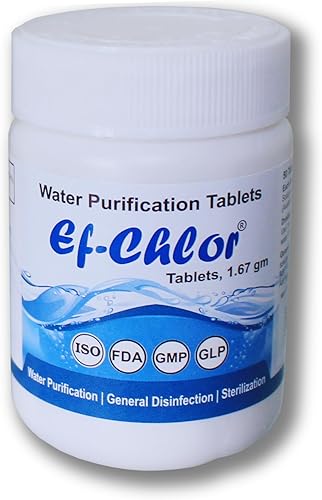
Ef-Chlor 1.67gm Water Purification Tablets – Pack of 50
This is the big brother. One of these hefty tablets treats a massive 250 to 500 litres of water. It’s overkill for a water bottle but perfect for disinfecting an entire rainwater tank, a stock trough, or a large container at a relief camp. The “drop-and-forget” simplicity is its biggest selling point during a crisis.
- Incredible treatment capacity per tablet
- Ideal for rural and disaster scenarios
- Simple, no-equipment-needed process
- Not for precise, small-volume dosing
- Must be used with clear water
- Chlorine residual taste
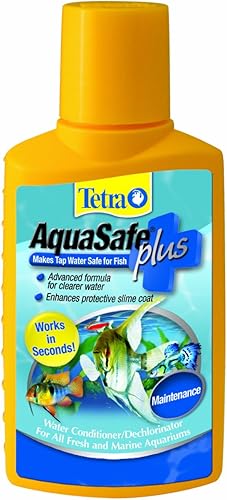
Tetra AquaSafe Plus, Aquarium Water Conditioner
Okay, this isn’t for your drinking glass. But if you have an aquarium, this is essential water treatment equipment. It instantly neutralizes chlorine and chloramine in tap water, which can kill fish. The added colloids help protect fish slime coats—a nice bonus. We’ve used it for years in our test tanks with great results.
- Works in seconds
- Supports beneficial filter bacteria
- Affordable and concentrated
- Only for aquarium use
- Doesn’t treat all water problems
- Easy to overdose if not careful
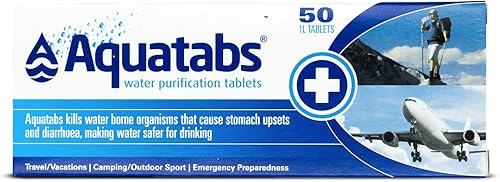
Aquatabs Water Purification 50 Tablets
Aquatabs are a trusted name in global water safety. These tablets are straightforward: kills waterborne pathogens in 30 minutes. They’re a bit more expensive per tablet than some competitors, but the reliability is what you’re paying for. A solid choice for a bug-out bag or international travel to areas with questionable water sources.
- Fast 30-minute treatment time
- Well-established, trusted brand
- Compact and lightweight
- Higher cost per litre treated
- Chlorine taste may be present
- Requires clear water to be effective
Frequently Asked Questions
- What is the most effective water treatment for home use?
- It depends on your water. For city water with chlorine, a carbon filter is most effective. For well water with hardness and iron, a softener and oxidizing filter combo is best. For maximum contaminant removal, reverse osmosis is the top performer. Always start with a water test.
- How often should water treatment equipment be serviced?
- It varies wildly. Pitcher filters: every 2 months. Under-sink carbon filters: 6-12 months. RO membranes: 2-4 years. UV bulbs: annually. Whole-house sediment filters: when pressure drops. Check your manual and set calendar reminders. Neglecting maintenance is the #1 cause of failure.
- Can water treatment equipment remove all contaminants?
- No single technology removes everything. RO gets close but misses some volatile organics. Carbon excels at chemicals but not minerals. That’s why multi-stage systems exist. Be wary of any product claiming to remove 100% of everything—it’s not honest.
- Is boiled water the same as filtered water?
- No. Boiling is great disinfection—it kills bacteria, viruses, and parasites. But it does nothing to remove heavy metals, salts, or chemical contaminants. In fact, it can concentrate them as steam evaporates. Boiling and filtering are complementary, not interchangeable.
- Do I need a whole-house system or just an under-sink filter?
- Ask yourself: do you want treated water just for drinking, or for showering and laundry too? If you have hard water that’s scaling up your water heater, a whole-house softener saves money long-term. If your only complaint is taste at the tap, an under-sink filter is plenty.
Final Thoughts
Water treatment isn’t about buying the fanciest gadget. It’s about solving a specific problem with the right tool. We’ve seen people spend thousands on systems they didn’t need, and others suffer with bad water because they were too intimidated to start. Don’t be in either camp.
Start simple. Test your water. Identify your top one or two issues. Then, choose the equipment that directly addresses those issues with proven technology. Whether it’s a pack of tablets for your camping trip or a whole-house system for your family’s health, the right choice is the informed one. Your water—and your wallet—will thank you.
