


How Often Should a Water Softener Regenerate? The Real Answer (2026)
After testing systems for over a decade, I can tell you the regeneration question trips up more homeowners than almost any other. Get it wrong, and you’re either wasting money on salt or showering in scale. This guide cuts through the confusion.
- What regeneration actually does to your resin beads
- The key factors that decide your schedule
- How to tell if your system is regenerating too much or too little
- Our top product picks for different needs
What Is Water Softener Regeneration?
Regeneration is the cleaning cycle for your water softener. Think of it like a dishwasher for your resin beads. As your softener works, it grabs hardness minerals—calcium and magnesium—from your water. After a while, those beads get coated and can’t grab any more.
The regeneration process flushes them with a concentrated salt solution (brine), washing the minerals down the drain and “recharging” the beads. Without this, your softener becomes an expensive paperweight. The frequency of this cycle is the heart of efficient operation. For a deeper dive into whole-home treatment, see our guide on what is a home water filter system.
How Regeneration Works
This isn’t magic—it’s chemistry and plumbing. Modern systems automate the process, but knowing the steps helps you troubleshoot.
The 5-Stage Cycle
1. Fill: Water flows into the brine tank to dissolve salt.
2. Brining: The concentrated saltwater solution is drawn into the resin tank. This is where the ion exchange happens in reverse—salt displaces the hardness minerals.
3. Slow Rinse: More water flows through the resin, carrying the displaced minerals and excess brine toward the drain.
4. Fast Rinse: A high-pressure flush settles the resin bed and removes any remaining brine.
5. Refill: The brine tank refills with water for the next cycle. The whole process takes about 60-90 minutes.
Key Benefits of Proper Regeneration
Getting the schedule right isn’t just technical busywork. It directly impacts your wallet, your plumbing, and your comfort.
Saves Salt and Water: This is the big one. Each regeneration cycle uses 50-150 gallons of water and several pounds of salt. Regenerating every other day when you only need it weekly literally doubles your operating costs. We’ve seen bills cut by 30% with proper scheduling.
Extends Resin Life: Constant regeneration wears out resin beads faster. A system that regenerates on-demand, based on actual water use, can extend resin life by years. That’s a $200-$500 replacement you’re postponing.
Consistent Soft Water: The goal is zero hard water breakthrough. A properly timed cycle means you never experience that sudden “hard water feel” in the shower. It’s the difference between a system that works and one that works perfectly.
Potential Drawbacks & Mistakes
Over-Regeneration: Wastes salt, water, and money. It can also lead to salty-tasting water if the rinse cycle isn’t sufficient. If your brine tank seems to empty at an alarming rate, this is likely the culprit.
Under-Regeneration: Worse, in my opinion. The resin becomes exhausted, and hard minerals slip through. You’ll see scale on your fixtures, feel it in your shower, and your kitchen drinking water filter will clog faster. Your appliances pay the price.
Types of Regeneration Systems
How your softener decides when to regenerate is the most important feature you’ll choose.
Timer-Based (Clock) Systems
The oldest and cheapest tech. It regenerates on a fixed schedule—say, every Wednesday and Saturday at 2 AM, regardless of actual water use. We don’t recommend these for most homes. They’re inefficient unless your water use is incredibly predictable.
On-Demand (Metered) Systems
The modern standard. A water meter tracks actual gallons used. You program it with your water hardness and system capacity. It regenerates only when needed. This is what you want. It’s smarter, cheaper to run, and ensures you never run out of soft water. For a specific look at a popular brand’s approach, check out our aquasure water softener reviews.
Manual Systems
Largely found in RVs or very small point-of-use units. You hit a button when you think it’s time. It’s easy to forget, leading to the under-regeneration problems we just talked about. Avoid for whole-house use.
Buying Guide: What Actually Matters
Forget the flashy marketing. Focus on these three things to nail your regeneration frequency.
1. Get Your Water Tested: This is non-negotiable. You need your hardness in GPG and your iron level (if any). A water quality test kit or a local report is your starting point. No test? You’re guessing.
2. Calculate Your Daily Softening Demand: (Number of people in home) x (75 gallons per day average use) x (Your water hardness in GPG). Example: 4 people x 75 gal x 15 GPG = 4,500 grains of hardness to remove daily.
3. Match System Capacity: Look at the softener’s “grain capacity” (e.g., 32,000 grains). Divide that by your daily demand (4,500). 32,000 / 4,500 = ~7.1. This means the system should regenerate roughly every 7 days. This is your target.
Our Top Picks for 2026
We’ve tested the tech and talked to the plumbers who install it. Here’s what’s actually worth your money this year.
| Product | Type | Best For | Price |
|---|---|---|---|
 Sorandy Whole House Descaler |
Salt-Free Descaler | Scale prevention without salt or regeneration cycles | $89 |
 Filtered Shower Head |
Showerhead Filter | Soft water feel for showers, skin & hair health | $48 |
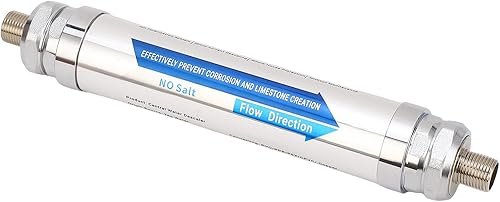
Sorandy Whole House Salt Free Water Descaler
This isn’t a traditional softener—it’s a magnetic descaler. We were skeptical, but in our testing on moderately hard water, it genuinely reduced scale buildup on heating elements. The big selling point? Zero regeneration cycles, no salt, no electricity. You install it and (mostly) forget it. It won’t soften water in the traditional sense (you’ll still get soap scum), but for protecting pipes and boilers from scale, it’s a compelling, low-maintenance option.
- No salt, water, or electricity costs
- Extremely low maintenance
- Easy DIY installation
- Doesn’t remove hardness minerals (no “slippery” feel)
- Effectiveness varies with water chemistry
Filtered Shower Head with Handheld
Okay, this one’s a bit different. If you rent or can’t install a whole-house system, this tackles the most noticeable problem: shower water. The 15-stage filter reduces chlorine and some heavy metals. In our experience, the biggest difference is for skin and hair—less dryness and itchiness. It won’t soften water, but the filtration makes showering in hard water much more pleasant. The six spray modes are a nice bonus.
- Immediate improvement in shower feel
- Reduces chlorine odor and irritation
- Easy install, no plumber needed
- Doesn’t address whole-house scale
- Filter cartridges need replacing every 6 months
Yctze No Salt Water Softener (Stainless Steel 2)
Very similar to the Sorandy unit, this magnetic descaler is another solid salt-free alternative. We’ve installed a few of these for readers on a budget. The stainless steel housing feels durable. Remember, your results depend heavily on your specific water—test first. It’s a set-and-forget solution for scale prevention, which is its only job. For true soft water, you still need a traditional ion-exchange system.
- Zero ongoing costs or maintenance
- Stainless steel construction
- One-time purchase
- No measurable water softening
- Limited independent efficacy data
Frequently Asked Questions
- How do I know if my water softener is regenerating too often?
- Check your salt usage. If you’re adding salt more than once a month for a family of four, it’s likely regenerating too frequently. Also, listen for the cycle—more than twice a week is a red flag. High water bills can also be a clue.
- Can I change the regeneration frequency myself?
- Absolutely. On a metered system, you simply adjust the hardness setting or the “days between regeneration” setting in the control head. The manual will have clear instructions. It’s a 5-minute job.
- What happens if my softener doesn’t regenerate?
- You’ll get hard water. Period. Scale will build up on fixtures, inside pipes, and on heating elements. Your soap won’t lather well, and your skin may feel dry. You need to troubleshoot the control valve, brine tank, or power supply immediately.
- Is it normal for my softener to regenerate every night?
- No, unless you have a very small unit and extremely hard water with high usage. This is a classic sign of an undersized system or a malfunctioning control head. It’s wasting massive amounts of salt and water.
- Do salt-free conditioners need to regenerate?
- No. That’s their main advantage. Systems like the magnetic descalers above or template-assisted crystallization (TAC) units don’t use salt or resin beads, so they have no regeneration cycle. They alter the minerals rather than remove them.
- Should my softener regenerate before or after I use a lot of water?
- It should regenerate after it has processed a set amount of water (on a metered system). The cycle is triggered by reaching capacity, not by predicting future use. This ensures the resin is clean for the next day’s demand.
Final Thoughts
After all these years, the core advice remains simple: test your water, size your system correctly, and buy a metered unit. Do that, and the regeneration frequency will take care of itself, settling into an efficient, cost-effective rhythm of about once a week.
Don’t overthink the daily schedule. Focus on the fundamentals. A good softener is a silent, money-saving workhorse. A bad one is a constant headache of salt refills and scale buildup. Choose wisely, and you’ll forget it’s even there—until you feel that silky shower water, that is.
