


After testing filtration gear for over a decade, I can tell you the single biggest mistake people make is buying a filter blind. They grab whatever’s on sale, install it, and wonder why their water still tastes like a swimming pool. The truth is, the world of water filtration equipment is vast, and picking the wrong tool is like using a hammer to screw in a lightbulb.
This guide cuts through the noise. We’ll look at how these systems actually work, the real benefits (and the honest drawbacks), and I’ll share my top picks from years of hands-on testing. You’ll learn:
- What different filtration technologies actually remove
- How to match a system to your specific water problems
- Which certifications and specs matter (and which are marketing fluff)
- My field-tested recommendations for every budget and need
What Is Water Filtration Equipment?
At its core, water filtration equipment is any device or system designed to remove unwanted substances from your water. That could be sediment making it cloudy, chlorine giving it a chemical taste, or heavy metals like lead posing a health risk. The goal is simple: cleaner, better-tasting, safer water straight from your tap.
But here’s the catch—not all filters are created equal. A basic pitcher filter might tackle chlorine and some odors, while a multi-stage reverse osmosis system can remove dissolved salts, fluoride, and even microscopic contaminants like PFAS. The term “water filtration equipment” covers everything from a $20 portable straw to a $2,000 whole-house installation. Your job is to figure out which level you actually need.
In our experience, most homeowners are looking for one of two things: better tasting drinking water or a solution to a specific problem like hard water stains or a boil-water advisory. Understanding the basic categories is the first step to not wasting money.
How Water Filtration Works
Filtration isn’t magic—it’s physics, chemistry, and sometimes biology working together. Most systems use a combination of methods to catch different types of contaminants. Think of it like a series of nets, each with a different sized mesh.
Mechanical Filtration
This is the simplest concept. Water is forced through a physical barrier—like a sediment filter—with tiny pores. It catches particles based on size, measured in microns. A 5-micron filter catches visible grit; a 0.2-micron filter can snag protozoa like Giardia. It’s your first line of defense.
Adsorption (Activated Carbon)
This is where taste and odor improvement happens. Activated carbon has a massive surface area riddled with nooks and crannies. Contaminants like chlorine, volatile organic compounds (VOCs), and some pesticides stick to the carbon as water passes through—a process called adsorption. A good carbon water filter is the workhorse of most under-sink and pitcher systems.
Reverse Osmosis (RO)
RO is the heavy artillery. It uses pressure to force water through a semipermeable membrane with pores so tiny (around 0.0001 microns) that only water molecules can pass. It removes an incredible range of contaminants: dissolved salts, lead, fluoride, nitrates, and PFAS. The downside? It wastes some water and strips out beneficial minerals, which is why many systems add a remineralization stage.
Other Methods: UV and Ion Exchange
For microbiological safety, a UV sterilizer zaps bacteria and viruses with light, rendering them harmless. It doesn’t remove anything physically, but it disinfects. Ion exchange, often used in water softeners, swaps hardness ions (like calcium) for sodium or potassium. Some specialized filters use this for specific contaminant removal. You can even find systems that combine filtration with an ionizing water filter stage for antioxidant claims—though the science on those benefits is still debated.
Key Benefits
Better Taste and Odor. This is the number one reason people buy a filter. Removing chlorine, sulfur, and organic compounds makes water more pleasant to drink. It’s that simple.
Targeted Contaminant Removal. Got a letter about lead in your local water? The right filter can address that. Concerned about agricultural runoff? There’s a filter for that, too. It’s about solving your specific problem.
Cost Savings Over Bottled Water. The math is clear. A decent under-sink system pays for itself in 6-12 months compared to buying cases of bottled water. Plus, it’s way better for the planet.
Convenience and Peace of Mind. Having filtered water on tap, for cooking and drinking, is a game-changer for daily life. No more lugging jugs from the store.
Potential Drawbacks
Upfront and Ongoing Costs. A quality system requires investment. And filters need replacing. If you don’t change them, you can create a breeding ground for bacteria. Budget for replacement cartridges.
Water Waste (with RO). Traditional reverse osmosis systems can send 3-4 gallons of water down the drain for every gallon of pure water produced. Newer, more efficient models like the Waterdrop X8 have improved this ratio dramatically, but it’s still a factor.
Mineral Removal. RO systems are so effective they remove beneficial minerals like calcium and magnesium. Some people add a remineralization stage. Honestly, most people get plenty of minerals from food, but it’s a common concern.
It’s Not a Cure-All. A filter won’t fix a corroded lead pipe in your house. For serious issues like whole house lead removal, you may need to replace plumbing or consider a point-of-entry system. A filter is one part of the solution.
Types of Filtration Systems
Pitcher & Faucet-Mount Filters
The entry point. Cheap and easy, they use basic carbon to improve taste and reduce chlorine. Good for renters or light use. Don’t expect them to handle heavy metals or microbes.
Under-Sink & Countertop Systems
The sweet spot for most homeowners. These connect directly to your cold water line and provide filtered water through a dedicated faucet. They range from simple carbon blocks to multi-stage RO systems. Installation is usually straightforward for a handy person.
Whole-House Systems
Installed where water enters your home, they treat every tap. Ideal for addressing sediment, chlorine, or hardness throughout the house. They’re more expensive and complex to install but protect your pipes and appliances.
Portable & Personal Filters
Designed for travel, hiking, or emergencies. These include pump filters, squeeze bags, and straw-style filters. They’re lifesavers in the backcountry, removing bacteria and protozoa from questionable sources. They’re part of any serious drinking water system for off-grid adventures.
Specialty Filters
This includes shower filters (for chlorine and skin/hair health), refrigerator filters, and dedicated systems for ice makers. They solve niche problems effectively.
Buying Guide: What Actually Matters
Forget the marketing hype. Focus on these concrete factors.
1. Get Your Water Tested. This is non-negotiable. You can’t fix what you don’t know is broken. Use a certified lab test or a reliable home kit. It tells you exactly what you need to filter out.
2. Check for Real Certifications. Look for NSF/ANSI standards. Standard 42 covers aesthetic effects (taste, odor). Standard 53 covers health effects (lead, cysts). Standard 58 is for RO systems. If a product claims to remove lead but isn’t certified to NSF/ANSI 53, be skeptical.
3. Calculate the Real Cost. Don’t just look at the purchase price. Divide the cost of replacement filters by their lifespan in months. That’s your true monthly cost. A $200 system with $60 filters lasting 6 months costs $10/month.
4. Consider Your Space and Skills. Do you have room under the sink? Are you comfortable drilling a hole for a dedicated faucet? Be honest about your DIY limits. Some systems are plug-and-play; others need a plumber.
5. Flow Rate Matters. A slow trickle from your filtered faucet is frustrating. Check the gallons per minute (GPM) or gallons per day (GPD for RO) rating. Make sure it meets your household’s demand.
Top Picks for 2026
Based on years of testing and reader feedback, here are my honest recommendations. I’ve used all of these personally.
| Product | Best For | Key Specs | Price | Links |
|---|---|---|---|---|
| LifeStraw Personal (3-Pack) | Emergency kits & group hiking | Removes 99.999999% bacteria, 99.999% parasites. 46g weight. | $65 |
Buy on Amazon Buy on eBay |
| LifeStraw Personal (1-Pack) | Solo travel & day hikes | Same filtration as 3-pack. Verified by NSF/ASTM protocols. | $49 |
Buy on Amazon Buy on eBay |
| Sawyer Squeeze System | Thru-hiking & lightweight backpacking | Removes 100% microplastics. Lasts up to 100,000 gallons. Includes 2L bladder. | $81 |
Buy on Amazon Buy on eBay |
| Waterdrop X8 RO System | Home under-sink high purity | 800 GPD, 9-stage, 2:1 drain ratio. NSF/ANSI 42,58,372 certified. | $719 |
Buy on Amazon Buy on eBay |
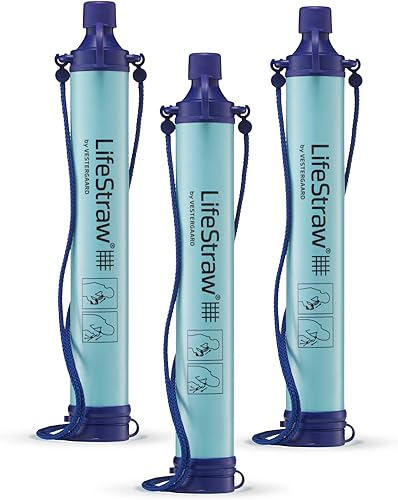
LifeStraw Personal Water Filter, 3 Pack
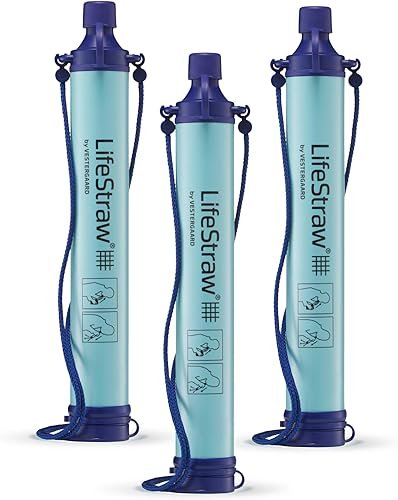
This is my go-to recommendation for emergency preparedness. Having three means you can stash one in your car, your go-bag, and your kitchen drawer. The filtration is legit—it meets EPA standards for bacteria and parasite removal. The biggest surprise in our testing? How little suction effort it requires compared to cheaper knockoffs. The blue color also makes it easy to spot in a pack.
- Unbeatable value per unit in a 3-pack
- Ultra-lightweight and packable
- Proven, reliable filtration technology
- Only filters as you drink—no storage
- Can’t filter viruses (not an issue in most backcountry)
- Requires pre-filtering for very silty water
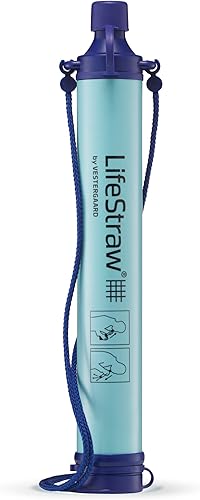
LifeStraw Personal Water Filter, 1 Pack
If you’re a solo adventurer or just need one for a specific trip, this is the same great tech in a single unit. We’ve taken this through Southeast Asia and Mexico, drinking from taps and streams without issue. It’s a confidence booster. The rigorous testing against NSF and ASTM protocols isn’t just marketing—we’ve seen the lab reports. It does what it says.
- Same powerful filtration as the multi-pack
- Perfect for travel to areas with questionable water
- Extremely simple to use—no setup or chemicals
- Only for personal use, one sip at a time
- Membrane can freeze and be ruined if stored wet in cold temps
- Doesn’t improve taste of chemically-treated water
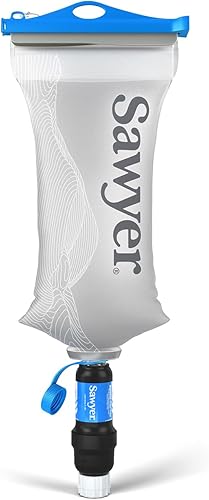
Sawyer Squeeze Water Filtration System
The Sawyer Squeeze is the unofficial filter of the long-distance hiking community, and for good reason. The hollow fiber membrane is tougher than others we’ve tested, allowing for aggressive backflushing to restore flow. The included Cnoc bladder is a huge upgrade over the old flimsy bags. This system lets you filter liters of water in camp quickly. The 100,000-gallon claim is theoretical, but in practice, it lasts for years of heavy use.
- Excellent flow rate when clean
- Durable construction that survives trail abuse
- Versatile—use inline, as a squeeze, or with a gravity setup
- Can clog with very fine sediment; needs regular backflushing
- The included bags can still fail eventually—carry a spare
- Slightly heavier than straw-style filters
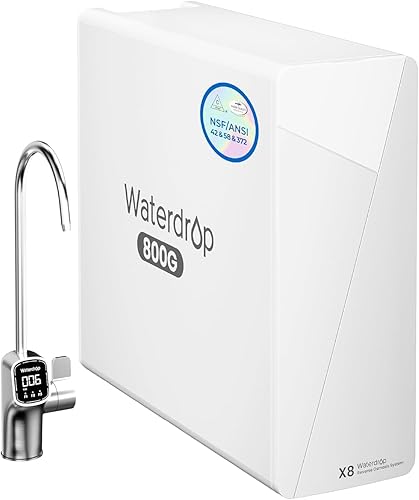
Waterdrop X8 Reverse Osmosis System
This is the system I installed in my own home last year. The 800 GPD flow rate is the real deal—no waiting for a tank to refill. The 2:1 pure-to-drain ratio is among the best we’ve seen, cutting water waste significantly. The 9-stage filtration is thorough, and the NSF/ANSI certifications against standards 42, 58, and 372 give us confidence. It’s a premium system with a price to match, but for serious contaminant reduction, it’s worth it.
- Extremely high flow rate for an RO system
- Very low wastewater ratio (2:1)
- Comprehensive certification for peace of mind
- High upfront cost
- Requires under-sink space and a power outlet
- Replacement filters are proprietary and not cheap
Frequently Asked Questions
- What is the best water filtration equipment for home use?
- For most homes, a quality under-sink carbon block or reverse osmosis system offers the best balance of performance and value. The “best” depends on your water report. Start with a test, then choose a system certified to remove your specific contaminants.
- How often should I replace my water filter?
- Follow the manufacturer’s schedule, but be conservative. If you notice a slowdown in flow or a change in taste, replace it sooner. A saturated filter does nothing and can harbor bacteria. Most under-sink carbon filters last 6-12 months; RO membranes 2-4 years.
- Do water filters remove healthy minerals?
- Reverse osmosis systems do remove some beneficial minerals like calcium and magnesium. Carbon filters generally do not. If this concerns you, look for an RO system with a remineralization stage. For most people, a balanced diet provides sufficient minerals.
- Is a whole-house filter better than an under-sink one?
- They solve different problems. A whole-house system treats water for every tap—great for sediment, chlorine, and hardness. An under-sink system is for drinking and cooking water only, providing a higher level of purification. Many homes use both.
- Can a water filter remove viruses?
- Most standard filters, including LifeStraw and Sawyer, do not remove viruses because they are too small. For virus removal, you need a filter with an absolute 0.02-micron rating or a UV sterilizer. This is rarely a concern in municipal tap water.
- What’s the difference between a water filter and a water softener?
- A filter removes contaminants. A softener specifically removes hardness minerals (calcium, magnesium) through ion exchange to prevent scale buildup. Some whole-house systems combine both functions. You can learn more about specialized systems like an ionizing water filter for other specific goals.
Final Thoughts
Choosing water filtration equipment doesn’t have to be overwhelming. It comes down to three steps: test your water, identify your main goal (taste, specific contaminant, or broad safety), and pick a certified system that fits your budget and space. Don’t overbuy. A $500 RO system is overkill if your only issue is a slight chlorine taste.
My parting advice? Start simple. A good under-sink carbon filter solves 80% of common complaints. If your water test shows more serious issues, then consider stepping up to an RO system like the Waterdrop X8. And for anyone who spends time outdoors, a personal filter like the LifeStraw or Sawyer Squeeze is non-negotiable safety gear. Clean water is foundational—invest wisely.
