


After testing filtration systems for over a decade, I’ve seen technologies come and go. But UV disinfection remains one of the most reliable ways to kill waterborne pathogens. It’s not magic, and it’s not for every situation. Let’s cut through the hype.
This guide covers what UV disinfection actually does, how it works, its real pros and cons, the different system types, and what to look for when buying. We’ll also review some specific products on the market.
What Is UV Water Disinfection?
UV water disinfection is a physical process that uses ultraviolet-C (UV-C) light, typically at a wavelength of 254 nanometers, to inactivate microorganisms. Think of it as a powerful, focused light that scrambles the DNA of bacteria, viruses, and protozoa like Giardia and Cryptosporidium. They can’t reproduce or cause infection afterward.
It’s a chemical-free method. Unlike chlorine, it doesn’t add anything to your water and doesn’t create disinfection byproducts. Municipal treatment plants have used it for years, and now it’s common for homes, especially on well water. It’s also popular for aquariums and ponds to control algae and pathogens. For a broader look at purification on the go, you might also check out a portable purifier.
Important: UV disinfection is a disinfection step, not a filtration step. It kills living things but does not remove dead cells, sediment, chemicals, or heavy metals. It’s almost always part of a multi-stage system.
How UV Water Disinfection Works
The Science in Simple Terms
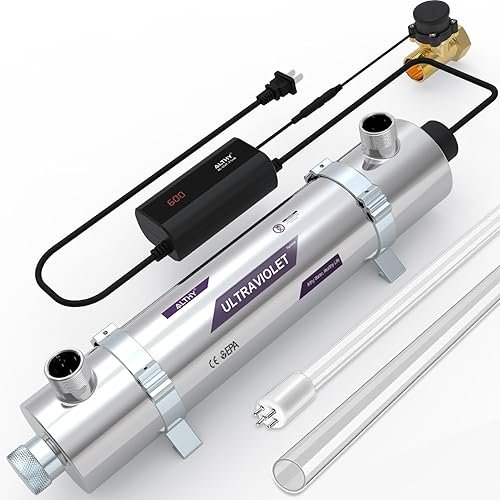
A UV lamp housed in a protective quartz sleeve sits inside a stainless steel chamber. Water flows past the lamp. The UV-C light penetrates the cells of microorganisms and damages their genetic material (nucleic acids). This damage prevents them from replicating. No reproduction means no infection.
The Critical Role of Pre-Filtration
Here’s the single biggest mistake we see: installing a UV system on unfiltered water. UV light can’t penetrate particles. If your water is cloudy (has high turbidity), shadowing occurs. Particles shield microbes from the light. You absolutely need a sediment removal filter before the UV unit—usually a 5-micron cartridge. This isn’t optional; it’s mandatory for the system to work.
Dosage: The Measure of Effectiveness
Effectiveness is measured in millijoules per square centimeter (mJ/cm²). Most standards, like NSF/ANSI 55, require a minimum dose of 40 mJ/cm² for Class A systems (for untreated water). The lamp’s intensity, water exposure time (based on flow rate), and clarity all affect the actual dose your water gets. A properly sized system will deliver at least this dose at its rated flow.
Key Benefits of UV Treatment
Chemical-Free Disinfection. No chlorine taste, no handling hazardous chemicals, no toxic byproducts. It’s just light. This is a huge advantage if you’re on a chlorine shower filter and want to remove chemicals from your drinking water too.
Extremely Effective Against Pathogens. When properly sized and maintained, UV inactivates 99.99% of bacteria, 99.99% of viruses, and 99.9% of protozoa. It’s one of the few methods that handles Cryptosporidium, which is resistant to chlorine.
Low Energy & Maintenance. A typical home system uses about as much energy as a 60-watt light bulb. Maintenance is mostly annual lamp replacement and occasional quartz sleeve cleaning.
No Water Waste. Unlike reverse osmosis, every drop of water that enters the chamber comes out as treated water. There’s no reject stream.
Potential Drawbacks & Limitations
Electricity Required. No power, no protection. If your power goes out, your water isn’t being disinfected during that time. Some systems have battery backups, but most don’t.
Lamp & Sleeve Maintenance. The UV lamp loses intensity over time, even if it still lights up. It must be replaced annually (or per manufacturer’s schedule). The quartz sleeve can get coated with mineral deposits and needs periodic cleaning.
Not for Heavily Contaminated Sediment. If your water has high levels of silt, clay, or organic matter, it will block UV transmission. This isn’t just a pre-filter issue; sometimes a sediment filter alone isn’t enough, and you need more aggressive pre-treatment.
Types of UV Water Systems
Whole-House UV Systems
These are installed on your main water line to treat all water entering your home. They’re sized for flow rates (e.g., 10-12 GPM for a typical house) and require a dedicated power outlet. This is the solution for well water or any supply with known microbiological issues.
Point-of-Use (POU) UV Systems
Smaller units installed under a specific sink or at a single faucet. They treat water for drinking and cooking only. Flow rates are lower (0.5-1 GPM). Good for city water where you want an extra safety layer or for an apartment.
Submersible UV Sterilizers
These are designed for aquariums, ponds, and small water features. The lamp is submersed directly in the water, often in a sealed quartz tube. They control algae blooms and waterborne fish pathogens. They are not for potable water.
UV System Buying Guide
1. Flow Rate (GPM/LPM). Match the system’s rated flow to your peak water demand. For a whole-house system, count your bathrooms and fixtures. Undersizing means inadequate disinfection during high use.
2. Certification. Look for NSF/ANSI 55 certification (Class A for untreated water, Class B for treated water). This validates the system’s dose claims. Also check for NSF/ANSI 42 (materials safety).
3. Lamp Power & Quality. Wattage (e.g., 12W, 40W) relates to intensity. Higher wattage can handle higher flow rates. Look for lamps with a rated life of 9,000-12,000 hours.
4. Pre-Filtration Needs. Does the system include a pre-filter housing? If not, you’ll need to add one. Never skip this.
5. Monitoring Features. A UV intensity monitor is a great feature. It measures the actual UV light reaching the sensor and alerts you if the dose drops below a safe level, rather than relying solely on a timer.
6. Ease of Maintenance. How easy is it to change the lamp and clean the sleeve? Look for models with easy-access ports.
Top UV Disinfection Products (2026)
| Product | Image | Key Specs | Price | Links |
|---|---|---|---|---|
| ALTHY Whole House UV Filter | 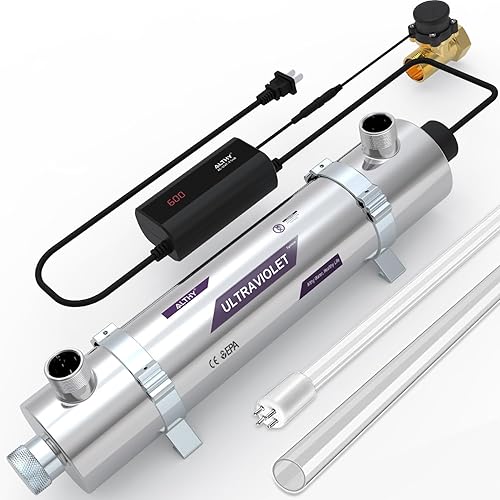 |
48W, 12 GPM, Smart Flow Sensor, 9,000-hr lamp life | $3.49 |
Buy on Amazon Buy on eBay |
| SaZaK 13W Submersible UV Sterilizer | 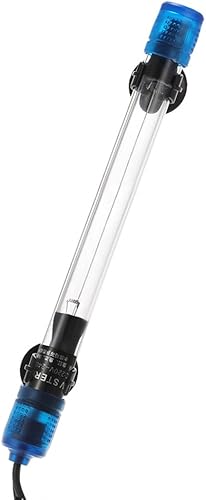 |
13W, Quartz Glass, Suction Cups, For Aquariums/Tanks | $21 |
Buy on Amazon Buy on eBay |
| 13W Submersible Sterilizer Lamp |  |
13W, Independent Switch, Proof Tube, For Aquariums | $19 |
Buy on Amazon Buy on eBay |
ALTHY Whole House UV Ultraviolet Water Filter Purifier
This is a solid, no-frills whole-house unit. The 48W lamp and 12 GPM flow rate are adequate for most homes. The smart flow sensor is a nice touch—it turns the lamp on only when water flows, saving energy and extending lamp life. Installation is straightforward with the included mounting clips. Honestly, the price seems suspiciously low for a 304 stainless steel chamber. We’d verify the build quality in person.
- Good flow rate for the price
- Flow sensor saves energy
- Stainless steel chamber
- DIY-friendly installation
- Very low price raises quality questions
- No UV intensity monitor
- Lamp replacement cost unknown
SaZaK 13W Submersible UV Light Sterilizer
For aquarium hobbyists, this is a basic but functional sterilizer. The quartz glass tube is essential for UV transmission, and the suction cups allow flexible placement. We’ve used similar models to clear green water in small ponds. The 13W power is suitable for tanks up to about 75 gallons, depending on bio-load. Remember, this is for water features, not your drinking water tap.
- Quartz glass for better UV output
- Flexible positioning with suction cups
- Energy-efficient for small setups
- Not for potable water systems
- Power cord may be short
- Unclear bulb lifespan
13W Submersible Sterilizer Lamp for Aquarium
Another aquarium-focused unit. The independent power switch is a safer design—you can turn it off without unplugging, which is handy during tank maintenance. The “proof tube” likely refers to a sealed quartz sleeve. At $19, it’s a cheap entry into UV sterilization for a fish tank. Just don’t expect commercial-grade durability.
- Independent power switch for safety
- Very affordable
- Simple submersible design
- Not for drinking water
- Build quality may be basic
- Limited to small aquariums/ponds
Frequently Asked Questions
- Does UV disinfection change the taste of water?
- No. UV treatment adds nothing to the water and takes nothing away in terms of taste or odor. If your water tastes bad, UV won’t fix it. You’ll need a carbon filter or a different treatment method for that.
- Can UV light kill all bacteria and viruses?
- At the correct dosage (≥40 mJ/cm²), UV-C light inactivates over 99.99% of bacteria and viruses, including E. coli, Salmonella, Hepatitis A, and Norovirus. Effectiveness depends on water clarity and proper system sizing.
- How often do I need to replace the UV lamp?
- Most manufacturers recommend annual replacement, typically after 9,000 hours of use. The lamp may still glow blue after this, but its germicidal intensity drops below safe levels. Always follow the specific schedule for your model.
- Is UV disinfection better than chlorination?
- They have different strengths. UV is better against Cryptosporidium and doesn’t create chemicals. Chlorination provides a residual disinfectant that protects water in your pipes. For well water, UV is often preferred. For city water, they can complement each other.
- Can I use a UV system with my existing water softener?
- Yes, and it’s a common setup. Install the sediment filter first, then the UV system, then the softener. The softener doesn’t affect microbiology, and the UV doesn’t affect hardness. They solve different problems.
- What’s the difference between a UV purifier and a UV sterilizer?
- Marketing terms, mostly. For drinking water, look for NSF/ANSI 55 “purifier” certification. “Sterilizer” is often used for aquarium or lab units that may not meet the same safety standards for human consumption.
Final Thoughts
UV water disinfection is a proven, effective technology for microbiological safety. It’s not a silver bullet—it’s a specialist tool in your filtration arsenal. If you have well water, boil advisories, or just want peace of mind, it’s an excellent investment. The key is pairing it with the right pre-filtration and maintaining it properly.
For most homeowners, a certified whole-house system like the ALTHY unit is the way to go. For hobbyists, the submersible lamps keep aquariums healthy. Just remember: always install a sediment filter first, change that lamp on schedule, and understand that UV doesn’t replace the need for other filters to handle sediment, chemicals, or hardness.
