


You’ve probably heard the term “UV filtration” thrown around. Maybe you’re worried about boil-water advisories or just want the safest water possible for your family. I’ve installed, tested, and troubleshot these systems for years. This guide cuts through the marketing to show you what UV actually does, when you need it, and when it’s overkill.
- What UV filtration is and how it works
- The real benefits and the honest drawbacks
- How to choose the right system for your home
- Our top product picks for 2026
What Is UV Filtration?
Let’s clear something up first. UV filtration isn’t really “filtration” in the traditional sense. A standard filter cartridge physically blocks particles. UV light does something different: it scrambles the DNA of microorganisms like bacteria, viruses, and protozoa. They can’t reproduce, so they can’t make you sick.
It’s a disinfection technology, pure and simple. Water passes through a stainless steel chamber where a special lamp emits ultraviolet-C (UV-C) light at a precise wavelength of 254 nanometers. This wavelength is lethal to pathogens. The process is fast, requires no chemicals, and adds nothing to your water. No chlorine taste, no byproducts.
So why call it a filter? It’s just common industry shorthand. The important thing is that it’s your last line of defense against living contaminants that other filters might miss. It’s the bouncer at the door for your water supply.
How UV Filtration Works
The Science in Simple Terms
The UV-C light penetrates the cell walls of microbes and is absorbed by their genetic material (DNA and RNA). This absorption damages the nucleic acids, forming thymine dimers—a fancy way of saying it fuses parts of the DNA together. This genetic scrambling makes it impossible for the organism to replicate or function. It’s effectively dead in the water.
The Critical Factor: Contact Time
Here’s what most people get wrong. The UV light has to have enough time to work. This is called contact time or dosage. It’s measured in millijoules per square centimeter (mJ/cm²). For most residential applications, a dosage of 40 mJ/cm² is the standard for 99.99% inactivation of common pathogens.
Pre-Filtration is Non-Negotiable
UV light needs clear water to work. Sediment, rust, or even color in the water can shield microbes from the light rays. That’s why a 5-micron sediment filter cartridge is always required before the UV chamber. In many setups, an activated carbon filter comes next to remove chemicals that could cloud the water.
Key Benefits of UV Filtration
Destroys 99.99% of Pathogens: When properly sized and installed, UV is incredibly effective against bacteria like E. coli, viruses like hepatitis, and protozoa like Cryptosporidium. It’s trusted by municipalities and bottled water companies worldwide.
Chemical-Free Disinfection: No chlorine, no chloramine, no iodine. You’re not adding anything to your water, so there’s no taste or odor impact. This makes it perfect for homes with clean drinking water that just needs microbial peace of mind.
Low Maintenance & Operating Cost: Once installed, you just change the lamp once a year. That’s it. Electricity use is minimal—about the same as a 40-watt light bulb. It’s a “set it and forget it” safety layer.
Works Instantly: Unlike chemical treatments that need time to react, UV works in seconds as water flows past the lamp. No holding tank required.
Potential Drawbacks & Limitations
No Residual Protection: The disinfection happens only inside the chamber. If bacteria are in your pipes downstream, UV won’t help. For well systems, this is a key consideration.
Requires Electricity: No power, no UV. If your area has frequent outages, you’ll need a backup plan like a battery or generator.
Water Clarity is Crucial: As mentioned, murky water renders it useless. Homes with high sediment or iron filters often need extra pre-treatment stages.
Types of UV Water Systems
Point-of-Entry (POE) Whole House
These are big boys installed where water enters your home. They treat every tap—showers, laundry, everything. You’ll see flow rates from 10 to 20+ gallons per minute (GPM). They’re a significant investment but provide comprehensive protection, especially for well water.
Point-of-Use (POU) Under-Sink
These smaller units install under a kitchen sink, usually as the final stage of a multi-stage system like a reverse osmosis setup. They treat only the drinking and cooking water at that faucet. More affordable and easier to install.
Portable & Specialty Units
You’ll find small, battery-powered UV pens for hiking or emergency kits. There are also UV stages built into some countertop filters. A ceramic filter combined with a UV pen can be a powerful backcountry solution.
UV System Buying Guide
1. Flow Rate (GPM): This is the #1 spec. Match it to your home’s peak demand. A 1-bathroom home might need 6 GPM; a large home with 3+ bathrooms could need 15 GPM or more. Undersizing is the most common mistake.
2. Certification: Look for NSF/ANSI Standard 55 (Class A or B). Class A systems are designed to disinfect contaminated water. Class B is for treated water that may have occasional contamination. Most residential POE systems are Class A.
3. Lamp & Sleeve Quality: The quartz sleeve must stay crystal clear for UV transmission. Some have wipers or automatic cleaning systems. High-output lamps last about 9,000 hours (1 year of continuous use).
4. Monitoring & Alerts: Get a system with a UV intensity monitor and an audible/visual alarm. It’ll tell you when the lamp intensity drops below effective levels or if the sleeve needs cleaning. Don’t rely on a simple timer.
Our Top UV Filtration Picks for 2026
Here are systems we’ve seen perform well in real-world installations, from whole-house units to integrated drinking water systems.
| Product | Best For | Key Spec | Price | Link |
|---|---|---|---|---|
 |
Under-Sink Drinking Water | 75 GPD RO + UV Stage | $245 |
Amazon eBay |
 |
Outdoor & Emergency Use | 30,000L Capacity, Solar Charge | $133 |
Amazon eBay |
 |
UV Leak Detection | 51 LED, Portable | $4.19 | AliExpress |
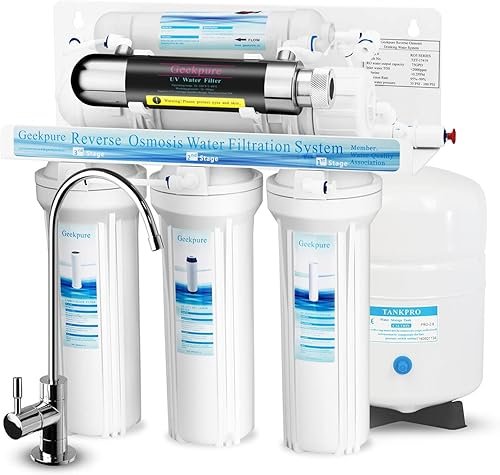
Geekpure 6-Stage Reverse Osmosis with UV
This is a solid all-in-one drinking water solution. We like that the NSF-certified RO membrane handles the heavy lifting—removing dissolved solids, lead, and chemicals—before the water even hits the UV stage. The UV lamp here acts as a final microbial safeguard. It’s a popular setup for homeowners who want lab-grade purity from their tap.
- Complete 6-stage system in one box
- UV lamp lasts min. 9,000 hours
- Includes lead-free faucet
- ISO9001-certified manufacturer
- Professional install recommended
- Only treats one faucet
- UV is a secondary, not primary, disinfection
Greeshow GS-2809 Portable Water Purifier
This isn’t a home UV system, but it’s a clever piece of kit for camping or emergency prep. It uses a hollow membrane filter for physical removal, and the electric/solar charging is a huge plus. The UV function here is more of a supplemental feature. We wouldn’t rely on it for primary purification of suspect water, but as a backup? It’s handy.
- Solar and USB charging
- Massive 30,000L claimed capacity
- Built-in SOS LED light
- Very portable with storage case
- UV efficacy unclear from specs
- Not for continuous home use
- Manufacturer warranty may not apply
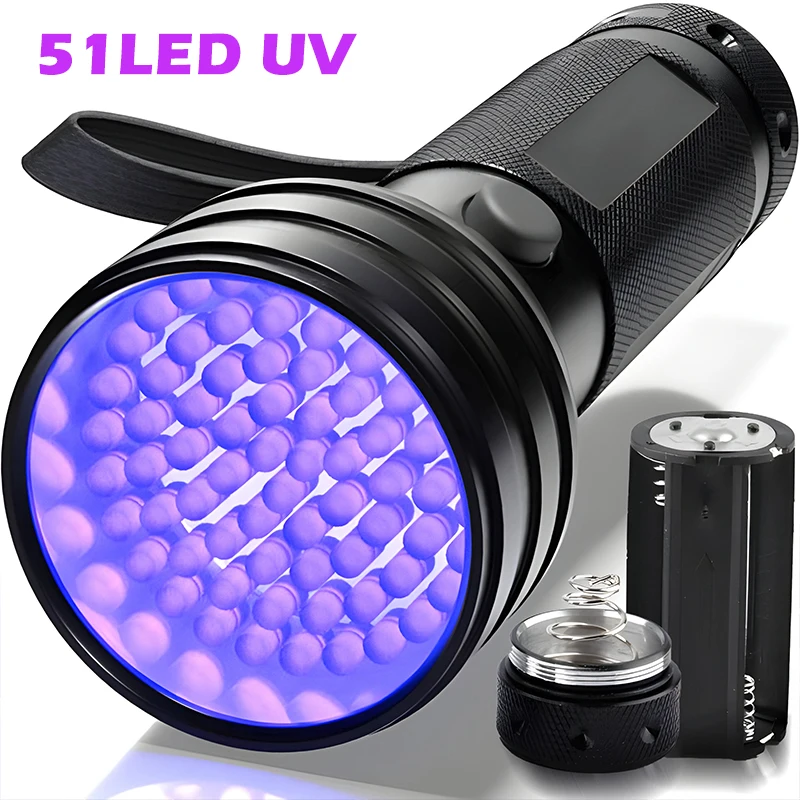
AliExpress Budget Pick: UV Flashlight
Okay, this isn’t a water filter at all. But if you’re installing a UV system, a cheap UV flashlight is a secret weapon. Use it to check for leaks in fluorescent dye tests or to verify if certain contaminants glow. It’s a diagnostic tool, not a purifier. For under five bucks, it’s a no-brainer addition to your toolkit.
- Extremely affordable
- Useful for system diagnostics
- 98.3% positive rating
- Portable and battery-powered
- Not a water treatment device
- Quality can vary
- Primarily a novelty/detection tool
Frequently Asked Questions
- Does UV filtration remove chlorine or improve taste?
- No. UV light only inactivates microorganisms. It does not remove chemicals, chlorine, heavy metals, or dissolved solids. For taste and odor improvement, you need an activated carbon filter stage.
- How often do I need to change the UV lamp?
- Replace the lamp annually or after about 9,000 hours of use. The lamp may still glow after this point, but its germicidal intensity drops below effective levels. Always follow the manufacturer’s schedule.
- Can I use UV filtration with well water?
- Yes, it’s highly recommended for wells. However, well water often requires extensive pre-treatment for sediment, iron, manganese, and hardness before the UV stage to ensure clarity and effectiveness.
- Is UV filtration safe?
- The process is completely safe. The UV-C light is contained within a stainless steel chamber and never contacts you. It doesn’t alter water chemistry or create harmful byproducts like some chemical disinfectants can.
- What’s the difference between UV and a ceramic filter?
- They work differently. A ceramic filter physically blocks bacteria and protozoa using tiny pores. UV light inactivates them genetically. Many travelers use both for redundancy—a ceramic filter first, then a UV pen for viruses.
- Do I need UV if I already have reverse osmosis?
- It depends. RO membranes remove a high percentage of microbes, but not 100%. Adding a UV stage as a final safeguard is a common and smart practice, especially if your source water has a high microbial risk.
Final Thoughts
UV filtration is a powerful tool, but it’s a specialist. It does one job—killing microbes—and does it exceptionally well without chemicals. For city water users on a treated supply, it’s often an optional extra layer of security. For well owners or anyone with boil-water advisory concerns, it’s a near-necessity.
Our advice? Don’t buy a UV system in isolation. Think about your complete water treatment chain. Start with sediment and carbon filtration, then consider UV if microbial safety is a priority. And always, always size it correctly for your flow rate. Get that right, and you’ll have one less thing to worry about coming out of your tap.
