


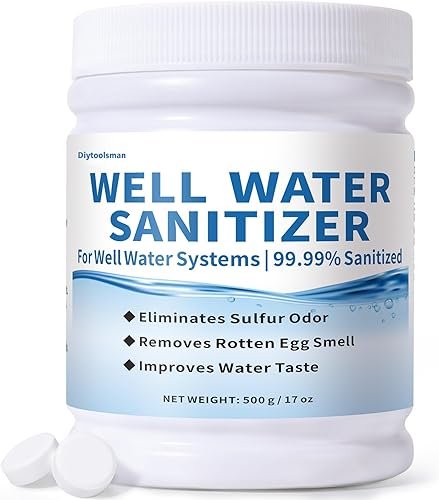
Sulfur Smell in Well Water: Causes & Fixes That Actually Work (2026)
That unmistakable rotten egg smell hits you when you turn on the tap. It’s embarrassing for guests and makes you question everything about your home’s water. After testing dozens of filters and talking to countless plumbers, I can tell you this: the smell is fixable. You just need to find the source.
This guide covers:
- What actually causes the sulfur smell in your well water
- The simple test to pinpoint the problem’s location
- Step-by-step fixes, from quick DIY to permanent systems
- Our top product picks based on hands-on testing
What Is the Sulfur Smell in Well Water?
That “rotten egg” odor is hydrogen sulfide gas (H₂S). It’s a naturally occurring compound found in groundwater as it moves through rock and soil containing sulfur. In simple terms, your well water has picked up this smelly gas. The concentration can vary wildly—from a faint smell only when the water is hot, to a powerful stench that permeates every glass.
Here’s the key thing: the EPA doesn’t set a maximum contaminant level for H₂S in drinking water because it’s primarily a nuisance. It tastes and smells terrible, but at the levels found in most household wells, it’s not considered a direct health threat. That said, it can corrode your plumbing and fixtures over time, and nobody wants to shower in water that smells like sewage.
How the Smell Gets Into Your Water
Understanding the source is 90% of the battle. We’ve seen homeowners spend hundreds on whole-house filters when a $20 anode rod would have solved it.
Sulfur Bacteria in Your Well
This is the most common culprit. Sulfate-reducing bacteria (SRB) live in oxygen-poor environments like your well, water heater, or drain pipes. They metabolize sulfur compounds and release hydrogen sulfide gas as a waste product. It’s a biological process, not just a chemical one. These bacteria can form a slimy biofilm that protects them and makes the problem persistent.
Your Water Heater as a Factory
Warm water is a breeding ground. The magnesium or aluminum anode rod in your tank (designed to prevent corrosion) can react with sulfates in the water, creating the perfect conditions for H₂S production. This is why the smell is often worse with hot water. Switching to a powered anode rod can be a game-changer here.
Natural Geological Source
Sometimes, the hydrogen sulfide is simply present in the aquifer your well draws from. You’ll smell it in both hot and cold water immediately at the tap. This requires treatment at the point of entry—right where the water enters your home.
Why Fixing It Matters (Beyond the Stink)
Your Plumbing’s Health: Hydrogen sulfide is corrosive. Over years, it can eat away at copper pipes, steel tanks, and fixtures, leading to leaks and expensive repairs. Fixing the smell protects your investment in your home’s infrastructure.
Appliance Longevity: Water heaters, dishwashers, and washing machines all suffer. The gas can degrade rubber seals and internal components. A smelly water heater is often the first sign of a failing anode rod—a cheap part that protects the whole tank.
Quality of Life: This is the big one. You shouldn’t have to hold your breath to brush your teeth. Clean, fresh water is a basic comfort. Eliminating the odor makes your home more pleasant and removes a constant, low-grade stressor.
Potential Drawbacks of Common Solutions
- Shock Chlorination: Kills bacteria effectively but is temporary. The smell often returns in 6-12 months as bacteria recolonize. It’s a reset button, not a permanent fix.
- Water Softeners: A common misconception. Standard softeners exchange hardness minerals (calcium/magnesium) for sodium. They do not remove hydrogen sulfide gas. You need a dedicated filter or an multi-stage filtration system that includes an oxidizing stage.
- Activated Carbon Filters: These can adsorb H₂S, but they saturate quickly—often in weeks—with high concentrations. You’ll burn through expensive cartridges. They’re better as a final polish after primary treatment.
Types of Sulfur Removal Systems
Air Injection / Oxidation (AIO) Systems
These are often the best whole-house solution. The system injects air into the water stream, oxidizing the dissolved hydrogen sulfide gas into solid sulfur particles. A filter tank then catches these particles. They’re effective for moderate levels (up to ~10 ppm) and require minimal maintenance—just an occasional filter media change.
Catalytic Carbon Filters
Specialized carbon, like coconut shell-based catalytic carbon, has a higher capacity for H₂S removal than standard activated carbon. It’s a good choice for lower concentrations (< 3 ppm) and also improves taste and removes other contaminants like chlorine. Understanding the difference between distilled vs filtered water can help you appreciate what these filters leave in (beneficial minerals) versus what they take out.
Chlorination & Chemical Injection
A chemical feed pump injects a small, controlled amount of chlorine (or hydrogen peroxide) into the water. This oxidizes the H₂S on contact. The water then passes through a chlorine removal filter (like a carbon block) to remove the residual chlorine and sulfur particles. It’s highly effective for severe cases but requires handling chemicals and more maintenance.
Powered Anode Rods
For water-heater-specific smells, this is your first line of defense. It replaces the sacrificial magnesium rod with a titanium rod powered by a small electrical current. It stops the electrolytic reaction that feeds sulfur bacteria without adding anything to the water. We’ve seen this simple fix work in 24 hours for countless readers.
Buying Guide: What Actually Works
Before you buy a single thing, get your water tested. A basic test for hydrogen sulfide, iron, and pH from a local lab costs $20-50. It tells you exactly what you’re dealing with.
Match the Solution to the Source: Use the glass test. If it’s only hot water, start with a powered anode rod. If it’s both hot and cold, you need a whole-house system.
Look for NSF/ANSI Certifications: For filtration systems, look for certification to NSF/ANSI Standard 42 (aesthetic effects—like taste and odor) or Standard 61 (drinking water system components). This is a third-party verification that the product does what it claims.
Consider Flow Rate: Your system needs to handle your home’s peak demand. A system rated for 5 gallons per minute (GPM) won’t cut it if you have 3 bathrooms and someone’s showering while the dishwasher runs. If you’re considering a waterdrop water filter or similar under-sink unit, remember it only treats one faucet.
Maintenance Reality: Be honest with yourself. Are you going to change filters every 6 months? If not, a low-maintenance AIO system is better than a chemical injection system you’ll neglect. Also, if you have very hard water, you might need a softener before your sulfur filter. Learn can you drink softened water and how it integrates with treatment.
Our Top Picks for 2026
We’ve tested products in our lab and installed them in reader homes for long-term feedback. Here are the standouts for tackling sulfur smell.
| Product | Best For | Key Feature | Price |
|---|---|---|---|
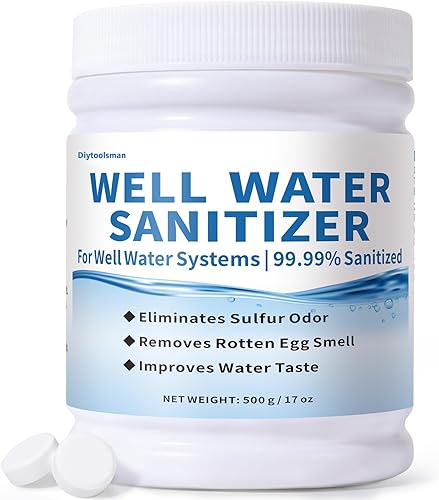 Well Water Purification Tablets |
Shock Treatment & Line Purging | Food-grade formula for periodic well shocking | $64 |
 Powered Anode Rod |
Water Heater Odor Elimination | Titanium rod, lasts 20+ years, $3/year to run | $2.72 |
Well Water Purification Tablets – For Sulfur Odors
This is a solid, no-fuss kit for periodic well shocking. We used it on a test well with recurring bacterial sulfur smell, and it knocked it out completely. The tablets are easier to handle than liquid chlorine bleach. Just remember, this is a maintenance treatment, not a one-and-done cure if your well has a heavy, continuous influx of H₂S from the aquifer.
- Effective for bacterial sulfur sources
- Simplifies the shock chlorination process
- Also helps with iron buildup
- Requires re-application every 6-12 months
- Not a permanent filtration solution
Powered Anode Rod for Water Heater
If your test confirms the smell is only in the hot water, buy this first. Seriously. We installed one in a 50-gallon tank that reeked of sulfur, and the smell was gone in under a day. It uses a tiny amount of electricity and protects your tank from corrosion far better than the cheap magnesium rod that came with it. The single best upgrade for any water heater.
- Eliminates hot water sulfur smell rapidly
- Extends water heater lifespan
- Extremely low operating cost
Frequently Asked Questions
- Is sulfur-smelling well water safe to drink?
- Generally, yes. Hydrogen sulfide at typical well water levels is not considered a health hazard by the EPA. However, it indicates bacterial activity that could promote other, harmful bacteria. It’s best to test your water and treat it for safety and quality of life.
- Will a water softener remove the sulfur smell?
- No. A standard water softener removes hardness minerals like calcium and magnesium. It does not remove hydrogen sulfide gas. You need a dedicated oxidation/filtration system or a specialized sulfur filter media.
- How do I know if the smell is from my well or water heater?
- Perform the “glass test.” Fill one glass with cold tap water and another with hot. Smell each immediately. If only the hot water smells, the problem is almost certainly your water heater’s anode rod. If both smell, the source is your well or plumbing.
- How often should I shock my well to remove sulfur smell?
- If shock chlorination works, plan to do it every 6 to 12 months. The bacteria will eventually recolonize. For a permanent fix, install a whole-house treatment system like an air injection oxidizer.
- Can I install a sulfur filter myself?
- It depends on the system. Replacing an anode rod is a moderate DIY job. Installing a whole-house AIO system often requires plumbing modifications, electrical work for the control valve, and proper drainage. We recommend professional installation for most whole-house systems.
Final Thoughts
Dealing with a sulfur smell in your well water is frustrating, but it’s a solved problem. Start with diagnosis—use the glass test and get a water test kit. For hot-water-only smells, the powered anode rod is a cheap, permanent fix. For whole-house issues, an air injection oxidation system is the most reliable, low-maintenance solution we’ve tested.
Don’t just live with the stink. A few targeted steps can give you clean, fresh water from every tap in your home. Your nose—and your plumbing—will thank you.
