


You’re standing in the aisle, staring at two boxes. One says “softener,” the other says “filter.” They both claim to fix your water. But they do very different jobs. I’ve spent years testing these systems, and the single biggest mistake I see is people buying the wrong one for their problem. This guide will clear up the confusion for good.
- What a water softener actually does (and doesn’t do)
- How a water filter’s job differs completely
- Which system solves your specific water woes
- Our top picks for different needs and budgets
- What Is the Difference Between a Water Softener and a Water Filter?
- How They Work: The Technical Stuff Made Simple
- Key Benefits: Why You Might Need One or Both
- Potential Drawbacks & Considerations
- Types of Systems on the Market
- Buying Guide: How to Choose
- Top Picks for 2026
- Water Softener vs Water Filter FAQ
- Final Thoughts
What Is the Difference Between a Water Softener and a Water Filter?
Let’s get this straight from the start. They are not the same thing. A water softener is a specialist. Its one job is to tackle “hardness”—those dissolved calcium and magnesium ions that leave crusty white scale on your kettle, shower head, and inside your pipes. It uses a process called ion exchange, swapping those hardness ions for sodium ions.
A water filter is a generalist. It’s designed to remove a wide array of contaminants that affect taste, odor, and safety. This can include chlorine, sediment, volatile organic compounds (VOCs), heavy metals like lead, and even some microorganisms. The method varies wildly, from simple activated carbon blocks to complex reverse osmosis membranes.
So, the core difference is the target. Softeners fight scale. Filters fight contaminants. If your water is hard but otherwise tastes fine, a softener might be all you need. If your water tastes like a swimming pool or you’re worried about pollutants, you need a filter. Many homes, especially those with well water, end up needing a sediment filter first, then a softener, and maybe a final polishing filter. It’s a team effort.
How They Work: The Technical Stuff Made Simple
The Water Softener Process
Inside a softener tank, you’ll find thousands of tiny resin beads. These beads are loaded with sodium ions. As hard water flows over them, the calcium and magnesium ions—which have a stronger positive charge—stick to the beads, knocking the sodium ions off into the water. That’s the “exchange.” Eventually, the beads get coated in hardness minerals. The system then automatically runs a regeneration cycle, flushing a concentrated salt brine (from the separate brine tank) through the beads to wash away the calcium and magnesium and reload them with sodium. It’s a clever, self-cleaning loop.
The Water Filter Process
This is where it gets diverse. A simple chlorine removal filter might use activated carbon, which adsorbs chlorine and organic compounds onto its vast, porous surface area. A sediment filter is just a physical barrier, like a super-fine screen, catching dirt, rust, and sand. The king of filtration is reverse osmosis (RO). It forces water through a membrane with pores so tiny (0.0001 microns) that only water molecules get through, rejecting up to 99% of dissolved salts, contaminants, and even some bacteria. For a deep dive on RO for challenging sources, check out our guide on an RO system for well water.
Key Benefits: Why You Might Need One or Both
Benefits of a Water Softener:
- Stops Scale Buildup: Protects your water heater, dishwasher, coffee maker, and pipes from costly damage and efficiency loss.
- Cleans Better: Soap lathers more easily. You’ll use less shampoo, laundry detergent, and dish soap. Your glasses will sparkle.
- Softer Skin & Hair: Many people notice a significant reduction in dry, itchy skin and dull, brittle hair after installing a softener.
Benefits of a Water Filter:
- Improves Taste & Odor: Removes the chlorine, “rotten egg” sulfur smell, or metallic taste that makes tap water unpleasant. A good sulfur filtration system is a lifesaver for well water users.
- Reduces Health Risks: A certified filter can remove lead, PFAS (“forever chemicals”), pesticides, and cysts like Giardia. Look for NSF/ANSI 53 certification for lead reduction.
- Provides Cleaner Water for Cooking & Drinking: From your morning coffee to your pasta water, filtered water just makes everything taste better.
Potential Drawbacks & Considerations
Types of Systems on the Market
Water Softener Types
Traditional Ion-Exchange Softeners: The most common and effective for true hardness removal. They’re the ones with two tanks (resin and brine). Salt-Free “Conditioners”: These don’t actually remove hardness minerals. They use a template-assisted crystallization (TAC) process to change the minerals’ structure so they don’t stick as scale. Results vary dramatically based on water chemistry.
Water Filter Types
Point-of-Entry (Whole House): Installed where water enters your home. A large sediment filter is often the first stage. Point-of-Use: Filters water at a single tap. This includes Brita filter pitcher filters, faucet-mounted units, and under-sink systems. For a dedicated drinking water tap, a kitchen faucet with a filter built-in can be a sleek, convenient option.
Buying Guide: How to Choose
Forget the marketing hype. Start with data. Get your water tested. A simple test for hardness (in grains per gallon or ppm) tells you if you need a softener. A more comprehensive test from a lab reveals contaminants and guides your filter choice.
For Softeners: Size matters. Match the softener’s grain capacity to your household’s water hardness and daily usage. A family of four with very hard water needs a larger system than a couple with moderately hard water. Look for a high-efficiency, on-demand regeneration model.
For Filters: Target your contaminant. Chlorine taste? A basic carbon filter works. Lead or PFAS? You need a system certified to NSF/ANSI 53 or P473. Want pure water for drinking/cooking? A reverse osmosis system is the gold standard. Check the filter’s micron rating—a lower number means finer filtration.
Top Picks for 2026
| Product | Best For | Key Feature | Price | Links |
|---|---|---|---|---|
| Philips Shower Filter 3-Stage | Shower-specific softening & filtration | 50,000L capacity, suits hot/cold water | $61 | Amazon eBay |
| weAQUA Premium Heavy Duty Shower Filter | Advanced shower contaminant removal | Claims 99% removal of chlorine, fluoride, metals | $35 | Amazon eBay |
| weAQUA Premium Heavy Duty 2-Pack | Families wanting a year of filtered showers | 12-month supply, same advanced filtration | $69 | Amazon eBay |
| Waterdrop X8 RO System | Under-sink drinking water purification | 800 GPD, 2:1 pure-to-waste ratio, NSF certified | $719 | Amazon eBay |
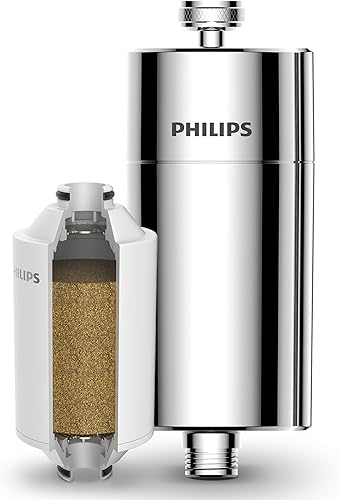
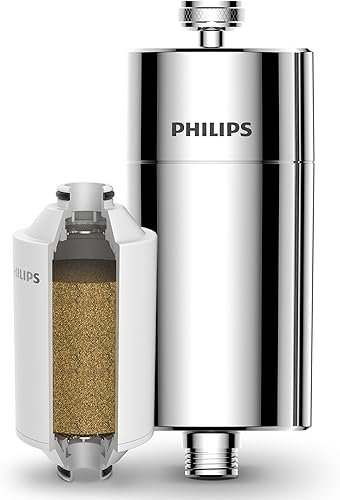
Philips Shower Filter 3-Stage Water Softener
This is a popular showerhead filter that combines KDF and mesh filtration. In our experience, shower filters are great for immediate skin and hair feel, but manage your expectations. The “softener” label here is a bit of a stretch—it’s more of a conditioner and chlorine filter. It won’t actually remove hardness minerals from your whole house. The 50,000-liter capacity is solid, and it handles hot water well.
- Easy, no-plumber install
- Good capacity for the price
- Noticeable reduction in chlorine smell
- Does not truly “soften” water
- Won’t fix whole-house scale issues
- Filter media needs replacement
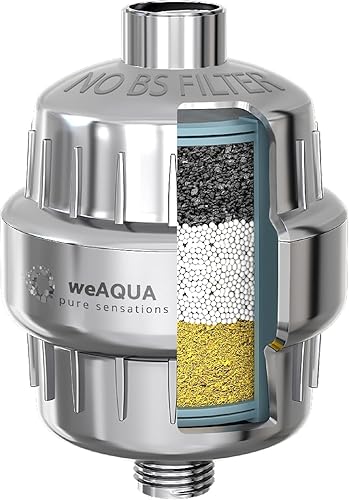
weAQUA Premium Heavy Duty Shower Filter
This filter packs a lot of media—sediment, carbon, KDF, calcium sulfite—into a sleek chrome housing. The claim of 99% removal for everything from chlorine to fluoride is bold. We’ve found these multi-stage filters can significantly improve shower water quality, especially for chlorine and odor. The real-world benefit for skin and hair is often dramatic. At $35, it’s a low-risk way to test if filtered showers help you.
- Multiple filtration media types
- Affordable entry point
- Claims broad contaminant reduction
- 99% claim is hard to verify independently
- 6-month lifespan is average
- Still a point-of-use shower solution only
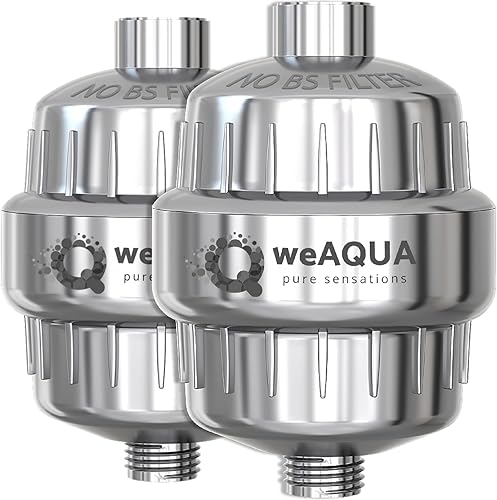
weAQUA Premium Heavy Duty 2-Pack
Same filter, but in a two-pack. Honestly, this is the smarter buy if you have more than one shower or just don’t want to think about reordering for a full year. The per-unit cost drops, and you get 12 months of coverage. The filtration performance is identical to the single pack. For families, this is the way we’d go.
- Better value per filter
- 12-month hassle-free supply
- Ideal for multiple bathrooms
- Higher upfront cost
- Same performance questions as single pack
- You’re committed to the brand for a year
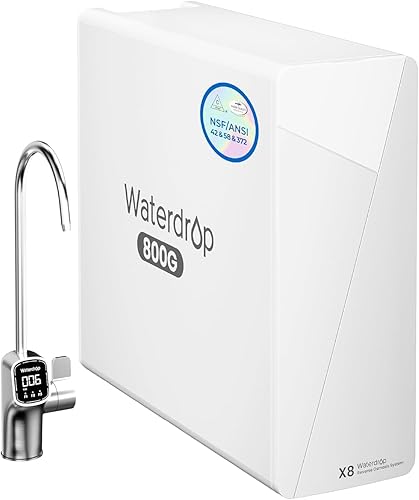
Waterdrop X8 Reverse Osmosis System
This is a serious under-sink drinking water system. The 800 GPD (gallons per day) flow rate means you won’t be waiting around for a glass of water. The 2:1 pure-to-drain ratio is excellent—it wastes far less water than older RO systems. The NSF/ANSI 42, 58, and 372 certifications are the real deal, verifying claims for material safety, TDS reduction, and lead-free construction. If you want the purest water from your tap, this is a top-tier choice.
- High flow rate, no tank needed
- Excellent water efficiency (2:1 ratio)
- Multiple NSF/ANSI certifications
- Premium price point
- Requires under-sink installation
- Replacement filters are an ongoing cost
Water Softener vs Water Filter FAQ
- Can a water filter soften hard water?
- No, standard filters cannot soften water. Only a water softener using ion exchange or a salt-free conditioner designed for hardness can address the calcium and magnesium minerals that cause scale. Filters target different contaminants.
- Do I need a water softener if I have a whole-house filter?
- It depends on your water hardness. A whole-house filter removes sediment, chlorine, and other contaminants, but it will not stop scale buildup. If you have hard water, you’ll still see limescale on fixtures and inside appliances without a softener.
- Is softened water safe to drink?
- For most people, yes. The process adds a small amount of sodium. If you’re on a strict low-sodium diet, you can use potassium chloride salt instead, or install a separate drinking water tap that bypasses the softener and uses a filter like an RO system.
- What’s the most important certification for a water filter?
- For health-related contaminant reduction (like lead, cysts, or PFAS), look for NSF/ANSI 53 or P473 certification. NSF/ANSI 42 covers aesthetic effects like chlorine taste and odor. Don’t just trust marketing claims—look for the official certification mark.
- How often do I need to change the filters?
- This varies wildly. Sediment filters might need changing every 3-6 months. Carbon filters every 6-12 months. Reverse osmosis membranes every 2-5 years. Always follow the manufacturer’s schedule based on your water usage and quality—ignoring this can ruin performance.
Final Thoughts
After testing dozens of systems, here’s the straight talk: a water softener vs water filter isn’t an either/or choice for most homeowners. It’s about diagnosing your water’s specific issues. Got scale? You need a softener. Got bad taste, odors, or health concerns? You need a filter. Got both? Welcome to the club—you need a combined approach.
Start with a water test. Don’t guess. Then, invest in the right tool for the job. A proper softener will save your appliances. A good filter will protect your health and make your water enjoyable. Your pipes, your skin, and your taste buds will thank you.
