


You’ve probably seen it: that gritty feeling in your tap water, or the orange stain in your toilet bowl. That’s sediment. And while it won’t necessarily make you sick, it’s a massive headache for your home’s water system. After testing dozens of filters and talking to countless plumbers, I can tell you that ignoring sediment is the single biggest mistake homeowners make. It clogs valves, ruins appliances, and makes every other filter you own work harder.
This guide cuts through the noise. We’ll cover what sediment filtration actually is, how it works, and how to pick the right system for your home. You’ll learn the real pros and cons, see our top product picks for 2026, and get answers to the most common questions.
What Is Sediment Water Filtration?
Sediment filtration is the mechanical process of trapping solid particles suspended in your water. Think of it like a screen door for your plumbing. It doesn’t change the water’s chemistry or remove dissolved contaminants like lead or chlorine. Its job is purely physical: to catch the “bits.”
What are those bits? The usual suspects include rust flakes from old pipes, sand and silt from well water or municipal work, organic debris, and even tiny insects. The key metric here is the micron rating. A micron is a thousandth of a millimeter. A 5-micron filter catches particles you can’t even see. A 20-micron filter lets finer stuff through but won’t clog as fast. This is the core of sediment filtration—choosing the right screen size for your water’s specific problem.
It’s the unsung hero of water treatment. Honestly, most people don’t need a fancy system right away. They need to deal with the crud first. Without it, that expensive reverse osmosis system or ionizing water filter downstream will get clogged and fail prematurely.
How Sediment Filtration Works
The principle is simple, but the execution varies. Water flows through a filter media, and particles larger than the media’s pores get stuck. Clean water passes through. The method of “getting stuck” defines the filter type.
Depth Filtration vs. Surface Filtration
Most cartridge-style sediment filters use depth filtration. Imagine a thick, tangled mat of fibers (like polypropylene). Water takes a tortuous path through this matrix. Particles get trapped not just on the surface, but throughout the entire depth of the filter. This gives them a high dirt-holding capacity. The downside? They can’t be cleaned; you replace them when they clog.
Surface filtration, used in reusable spin-down or screen filters, is exactly what it sounds like. A stainless steel or polyester mesh acts as a physical barrier. Particles sit on the surface. The big advantage? You can see the gunk, and you clean it by flushing a valve—no replacement needed. The trade-off is they typically filter down to a larger micron rating (like 40-100 microns) compared to depth filters.
The Role of Micron Ratings
This is where people get confused. A lower micron rating means finer filtration. A 1-micron filter will catch almost everything visible and many things invisible. But it will also clog much faster if your water has a lot of sediment. We’ve found that for most city water, a 5-micron filter is a perfect starting point. For well water with heavy silt, you might start with a 20-micron pre-filter to protect your finer filters.
Key Benefits of Removing Sediment
Protects Your Entire Plumbing System. This is the big one. Sediment acts like sandpaper inside pipes, valves, and appliances. It wears out washing machine solenoids, clogs faucet aerators, and destroys the inlet valves on water heaters. A good sediment filter is cheap insurance.
Makes Water Visibly Clearer. That cloudy, “milky” look? Often caused by fine sediment. A proper filter will give you crystal-clear water from every tap, which is especially noticeable in a glass or when making ice.
Improves Taste and Odor (Indirectly). While sediment itself might not taste bad, it can harbor bacteria or carry other contaminants that affect flavor. Removing the particles often leads to a cleaner, fresher taste. It’s a necessary step before a kitchen water filter can effectively tackle chemical tastes.
Extends the Life of Other Filters. This is crucial. If you have a carbon block filter or a reverse osmosis membrane, sediment will foul it in weeks. Putting a sediment pre-filter in front of them can increase their lifespan by 300-500%. It’s a no-brainer.
Types of Sediment Filter Systems
Cartridge-Based Housings
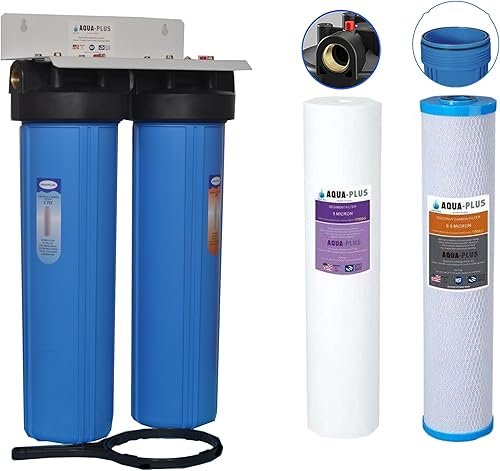
This is the most common type for whole-house or under-sink use. You have a plastic filter housing (often “Big Blue” 20-inch size) that holds a replaceable cartridge. Cartridges come in spun polypropylene, pleated polyester, or string-wound designs. They’re affordable, effective, and easy to swap. The Aqua-Plus system below is a classic example.
Spin-Down or Screen Filters
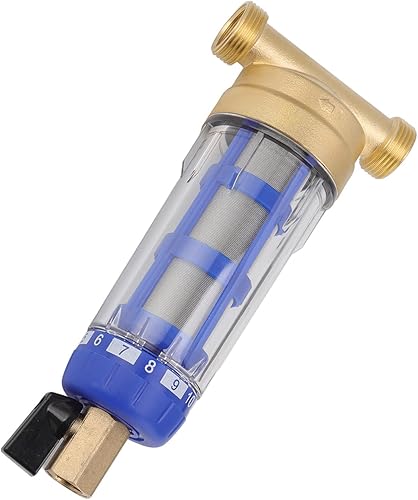
These are brilliant for heavy sediment. They use a stainless steel mesh screen. You install them on your main water line, and a clear bowl lets you see the collected gunk. When it’s dirty, you open a flush valve at the bottom and blast the debris out. No cartridges to buy. They’re perfect as a first-stage pre-filter for well water. The Waterdrop model we review is a top-tier version.
Portable & Point-of-Use Filters
Not all sediment filtration is for the whole house. Many kitchen drinking water filter pitchers and portable systems, like the Sawyer Squeeze, include a sediment stage. These are for specific taps, outdoor use, or travel. Their flow rates are lower, but they’re incredibly effective for their size.
Buying Guide: What Actually Matters
Forget the marketing hype. Focus on these four things.
1. Micron Rating: Match it to your water. Test your water or look at your existing aerators. If they’re full of brown grit, start with a 20-micron filter. If your water is mostly clear but you want polish, a 1 or 5-micron filter is fine.
2. Flow Rate (GPM): This is critical for whole-house systems. A tiny filter on your main line will destroy your water pressure. Check the Gallons Per Minute rating. For a small home, 5-10 GPM is okay. For a larger home with multiple bathrooms, look for 15-20 GPM.
3. Filter Lifespan & Cost: A cheap filter you change every month isn’t cheap. Look at the capacity (in gallons or months). Pleated cartridges often last longer than spun ones. Reusable spin-down filters have a higher upfront cost but zero replacement cost.
4. Build Quality: For housing, look for brass ports and sturdy construction. For cartridges, NSF/ANSI 42 certification is a good sign it’s been tested for material safety. Don’t trust no-name brands with your plumbing.
Our Top Sediment Filter Picks for 2026
Based on our testing, reader feedback, and reliability reports, here are the systems that deliver real value.
| Product | Type | Key Feature | Best For | Price |
|---|---|---|---|---|
 Aqua-Plus 2 Stage |
Whole House Cartridge | 5-micron sediment + carbon block combo | City water homes needing basic protection | $1.92 |
 Sawyer Squeeze |
Portable / Point-of-Use | 0.1 micron absolute, 100,000 gallon life | Camping, travel, emergency prep | $81 |
 Waterdrop Spin Down |
Whole House Pre-Filter | 40-60 micron, flushable, reusable | Well water, heavy sediment, as pre-filter | $41 |
 Waterdrop X8 RO |
Under-Sink RO System | 9-stage incl. sediment, 800 GPD, NSF certified | Ultimate purification with sediment pre-stage | $7.19 |
1. Aqua-Plus 2 Stage Jumbo Big Blue System
This is the workhorse. If you’re on municipal water and want a straightforward, no-drama setup, this is it. The first stage is a standard 5-micron sediment filter that catches the vast majority of rust and sand. The second stage carbon block handles chlorine taste and odor. We like the brass ports and the pressure release button—small details that make maintenance easier. It’s a solid, affordable foundation for whole house filtered water.
- Excellent value for a dual-stage system
- Standard 20″x4.5″ cartridges are easy to find
- Brass ports are more durable than plastic
- Housing is plastic (though food-grade)
- You’ll need to replace cartridges every 3-6 months
- Flow rate may limit larger homes
2. Sawyer Squeeze with Cnoc Bladder
This isn’t a whole-house solution, but it’s a legend in the portable world for a reason. The 0.1-micron hollow fiber membrane is an absolute barrier to bacteria, protozoa, and sediment. We’ve used this on trail for years. The key is the backwashing syringe—do it religiously, and this thing lasts forever. The Cnoc bladder is a huge upgrade over the original pouches. Perfect for your bug-out bag or hiking kit.
- Incredible 100,000-gallon lifespan
- Removes 100% of microplastics
- Lightweight and truly portable
- Flow rate is slow for anything but drinking
- Requires regular backwashing to maintain flow
- Not for treating chemically contaminated water
3. Waterdrop Reusable Spin Down Sediment Filter
If you have well water, stop reading and buy this first. This is the guard at the gate. The 40-60 micron stainless screen catches the big stuff—sand, grit, bugs—before it ever hits your finer cartridge filters. The clear bowl is genius; you can see exactly when it needs a flush. The solid brass construction feels built to last. We installed one on a test well line, and it’s saved our downstream filters countless times.
- No replacement filters—just flush it clean
- Durable 316 stainless steel mesh
- Clear housing for easy visual inspection
- Only filters to 40-60 microns (needs a finer filter after it)
- Requires a drain for the flush line
- Higher upfront cost than a cartridge
4. Waterdrop X8 Reverse Osmosis System
This is the endgame. The X8 includes a dedicated sediment filter as its first stage, protecting the subsequent carbon blocks and the high-efficiency RO membrane. The 800 GPD flow rate is massive—you’ll fill a pitcher in seconds. The 2:1 pure-to-drain ratio is among the best we’ve tested. It’s NSF certified against standards 42, 58, and 372. If you want one system under your sink that handles sediment, chemicals, heavy metals, and PFAS, this is our top recommendation for 2026.
- 9-stage filtration including a dedicated sediment stage
- Extremely high flow rate (800 GPD)
- Excellent water efficiency (2:1 ratio)
- Higher initial investment
- Requires under-sink power and a drain connection
- Replacement filters are proprietary
Frequently Asked Questions
- What’s the difference between a 5-micron and a 20-micron filter?
- A 5-micron filter has smaller pores and catches finer particles like fine silt and some cysts. A 20-micron filter lets those through but catches coarser sand and rust. If your water has lots of visible grit, start with 20-micron to prevent rapid clogging, then follow with a 5-micron filter.
- How often should I change my sediment filter?
- There’s no set schedule. Change it when you notice a significant drop in water pressure or flow rate, or when it visually looks dirty (for opaque housings, check every 1-2 months initially). For most city water homes, every 3-6 months is typical. Well water may require monthly changes.
- Can a sediment filter remove bacteria or viruses?
- No. Standard sediment filters only remove physical particles. They do not remove dissolved contaminants, chemicals, or microorganisms. For bacteria, you need a filter with an absolute micron rating of 0.2 or smaller (like a 0.1-micron hollow fiber membrane) or a disinfection method like UV light.
- Do I need a sediment filter if I’m on city water?
- Almost always yes. City water treatment plants do a great job, but sediment can enter the water from aging pipes in the street or, more commonly, from your own home’s plumbing. Old galvanized pipes shed rust flakes. A sediment filter is cheap protection for your appliances and fixtures.
- Where should I install a sediment filter in my home?
- For whole-house protection, install it right after the main water shut-off valve, before any other treatment equipment. For a single faucet, an under-sink housing works. The goal is to catch particles before they reach your water heater, washing machine, or more expensive filters like RO membranes.
- Why does my sediment filter clog so fast?
- Rapid clogging usually means you have a high level of sediment or you’re using a micron rating that’s too fine for your water. Try a larger micron rating (e.g., switch from 5 to 20 microns) as a first-stage filter. You can also install a reusable spin-down filter before your cartridge filter to catch the big stuff first.
Final Thoughts
After years in this space, my advice is simple: don’t overthink your first filter. Sediment filtration is not glamorous, but it’s foundational. Start by identifying your problem—is it rusty water, sandy well water, or just general cloudiness? Then pick the simplest, most robust solution that matches that micron rating.
For most homeowners on city water, the Aqua-Plus 2-stage system is a fantastic, affordable start. If you’re on well water, install a Waterdrop spin-down filter as your first line of defense. And if you want the ultimate under-sink solution, the Waterdrop X8 with its integrated sediment stage is our top performer for 2026. Get the sediment right, and everything downstream will work better and last longer.
