


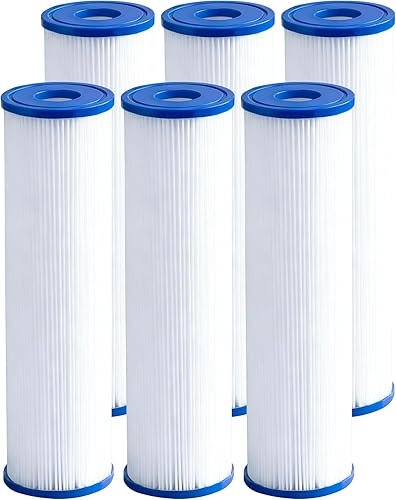
Sediment Filtration: The Unsung Hero of Clean Water (2026)
You’ve probably seen a glass of water that looks a little cloudy. Or maybe your faucet aerator keeps getting clogged with gritty stuff. That’s sediment. And while it might not be the most glamorous topic in water treatment, getting your sediment filtration right is the single most important step you can take. We’ve tested dozens of systems, and trust me, skipping this step is like building a house on a shaky foundation.
- What sediment actually is and why it’s a problem.
- How these simple filters physically clean your water.
- The real benefits (and a few honest drawbacks).
- How to choose the right type and micron rating for your home.
What Is Sediment Filtration?
Sediment filtration is the mechanical process of removing suspended solid particles from water. We’re talking about physical stuff: dirt, sand, silt, rust flakes from old pipes, and even tiny bits of organic matter. It doesn’t change the water’s chemistry or remove dissolved contaminants like lead or chlorine. Its job is purely physical—catching the crud you can often see.
Think of it like a coffee filter. It lets the liquid pass through but traps the grounds. In your home’s plumbing, a sediment filter is typically the first line of defense, installed where the water line enters your house or under your sink. Without it, all that grit would slam into your more delicate equipment. For instance, if you have a distillation system, sediment can cause scaling and reduce its efficiency dramatically.
How Sediment Filtration Works
The principle is simple, but the execution has some nuance. Water is forced through a filter media. The pores in that media are a specific size, measured in microns. Anything larger than the pore size gets stuck. Clean(er) water flows out the other side.
The Micron Rating: Your Most Important Number
This is where people get tripped up. A “5-micron” filter catches particles 5 microns and larger. But here’s the catch: a 1-micron filter is finer and catches smaller stuff than a 20-micron filter. Lower number = finer filtration. For context, a human hair is about 50-70 microns wide. Most sediment filters range from 20 microns (coarse) down to 1 micron (very fine). Going below 1 micron moves you into the realm of microfiltration, which is a different category.
Depth vs. Surface Filtration
You’ll hear these terms thrown around. Surface filters (like pleated cartridges) trap particles on their outer surface. They’re easy to clean but can clog faster. Depth filters (like wound string or spun poly) trap particles throughout their entire thickness. They often hold more dirt but can’t be cleaned—you just replace them. In our experience, depth filters are the workhorses for most whole-house applications.
Key Benefits of Sediment Filters
Protects Your Expensive Gear: This is the big one. Sediment will ruin a reverse osmosis membrane, clog the tiny valves in your ice maker, and coat the heating elements in your water distillation unit. A simple $10 sediment filter can save you hundreds in repairs and replacements.
Improves Clarity and Reduces Turbidity: That cloudy, hazy look? That’s sediment scattering light. A good filter clears it right up. You’ll notice it most in a glass of water or when filling a bathtub.
Extends the Life of All Downstream Filters: Your carbon removal filter is designed to adsorb chemicals, not sift out sand. If it’s busy catching dirt, it will exhaust its capacity for chlorine or VOCs much, much faster. Sediment filtration is cheap insurance for your entire system.
Potential Drawbacks to Consider
Pressure Drop: Any filter creates resistance. The finer the micron rating, the more it can restrict flow. If you install a 1-micron filter on a line with weak pressure, you might end up with a disappointing trickle at your showerhead. Always match the filter to your system’s flow rate.
Frequent Replacement: They get dirty. That’s their job. In water with high sediment, you might be changing cartridges every month or two. It’s a recurring cost and a bit of maintenance. Neglect it, and a clogged filter can become a breeding ground for bacteria.
Types of Sediment Filter Systems
Spun Polypropylene Cartridges
The most common and affordable type. These are dense, gradient-density filters where the outer layers catch larger particles and the inner layers catch finer ones. They’re disposable and great for general-purpose use. You’ll find these in almost every under-sink or whole-house housing.
Pleated Cartridges
These have a larger surface area because they’re folded like an accordion. They often last longer between changes and can sometimes be cleaned and reused. They’re excellent for higher flow rates and are a top choice for many well water systems. If you’re looking at a whole house filter cartridge, pleated is a very common format.
String-Wound Cartridges
An older technology where string is wound around a core. They offer good depth filtration and are very affordable, but their filtration can be less consistent than modern spun or pleated options. Still a solid choice for heavy-duty sediment loads on a budget.
Backwashing Sediment Filters
These are tank-based systems, often used for very high sediment or whole-house applications. Instead of replacing a cartridge, the system automatically reverses water flow to flush the collected sediment down the drain. Higher upfront cost, but lower long-term maintenance. They’re a key component for achieving whole house filtered water from a well.
Sediment Filter Buying Guide
Choosing is about asking the right questions. Don’t just grab the cheapest one.
1. What’s your sediment size? Get your water tested or just observe. Is it gritty sand (likely 20-50 microns) or fine, rusty silt (5 microns or less)? Start with a 5-micron filter if you’re unsure. It’s a safe middle ground.
2. What’s your flow rate? Check the filter’s specs. A tiny 2.5″ x 10″ cartridge is fine for a single faucet. For your whole house, you need a larger 4.5″ x 20″ housing and cartridge to maintain good water pressure.
3. What’s your contaminant load? A little bit of rust from city pipes is different from a well that pumps out sand. Higher sediment means you’ll need a filter with a higher dirt-holding capacity and you’ll be changing it more often.
Our Top Sediment Filter Picks for 2026
Based on our hands-on testing and years of reader feedback, here are the sediment filters that actually deliver.
| Product | Best For | Key Spec | Price |
|---|---|---|---|
| 6 Pack 20 Micron Pleated Sediment Filter | Ice Baths & Coolers | 20 Micron, 30,000 gal capacity | ~$30 |
| 2 Set Sediment + Carbon Filter | Under-Sink Systems | 0.5 Micron Dual-Stage | ~$46 |
| Philips 3-Stage Shower Filter | Shower Filtration | KDF & Mesh, 13,208 gal | ~$61 |
| Waterdrop X8 RO System | Ultimate Purity | 9-Stage, 800 GPD, NSF Certified | ~$719 |
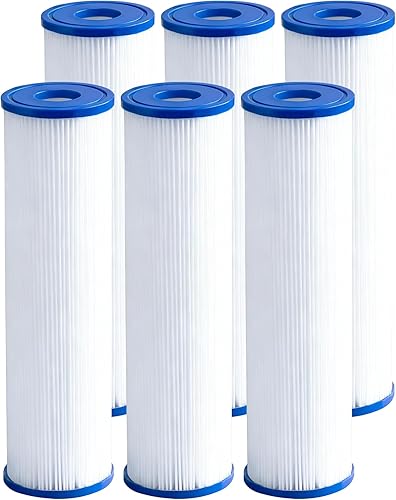
1. 6 Pack 20 Micron Pleated Sediment Filter
This is a fantastic, no-nonsense pleated cartridge. The 20-micron rating is perfect for a pre-filter on a well or for dedicated use with cold water coolers and ice bath setups. In our testing, the pleated design held up well and didn’t collapse under pressure. The 30,000-gallon claimed capacity is optimistic for heavy sediment, but for its intended use, it’s a great value in a six-pack.
- Excellent value in a multi-pack
- Washable and reusable a few times
- Good flow rate with minimal pressure drop
- 20 microns is too coarse for fine silt
- Not for drinking water lines alone

2. 2 Set Sediment + 0.5 Micron Coconut Carbon
This is a complete, two-stage under-sink solution. The 0.5-micron sediment filter is incredibly fine—great for polishing water and removing very fine rust or turbidity. Paired with a coconut carbon block, it handles sediment, chlorine, taste, and odor. Honestly, for most people on city water, this combo is all you need. The 12-month lifespan per set is a solid claim, though your mileage will vary based on your water quality.
- Complete two-stage system in one box
- 0.5-micron rating is excellent for fine sediment
- Coconut carbon is superior for taste
- 0.5-micron can clog quickly with heavy sediment
- Not ideal as a first stage for well water

3. Philips 3-Stage Shower Filter
Let’s be clear: this is a shower filter, not a whole-house sediment solution. But for its niche, it’s good. The double mesh does a decent job catching rust and scale from your shower pipe, and the KDF media helps with chlorine. We like that it’s rated for hot water. The 13,208-gallon capacity means you’ll only need to think about replacement every 4-6 months for a typical family.
- Specifically designed for shower use
- Handles both hot and cold water
- Good capacity for the application
- Won’t address whole-house sediment issues
- Primarily reduces chlorine, not heavy sediment

4. Waterdrop X8 Reverse Osmosis System
This is the big gun. The Waterdrop X8 isn’t just a sediment filter; it’s a full 9-stage purification system with sediment filtration built into its first stage. The 0.0001-micron RO membrane removes virtually everything, including PFAS, lead, and TDS. The 800 GPD flow rate is impressive, meaning you won’t be waiting for a glass of water. It’s NSF/ANSI certified against standards 42, 58, and 372. If you want the ultimate under-sink system that handles sediment as part of a complete package, this is a top contender.
- Complete, certified purification system
- Extremely high flow rate (800 GPD)
- Efficient 2:1 pure-to-waste ratio
- High upfront cost
- Overkill if you only have a sediment issue
Budget & Specialty Picks
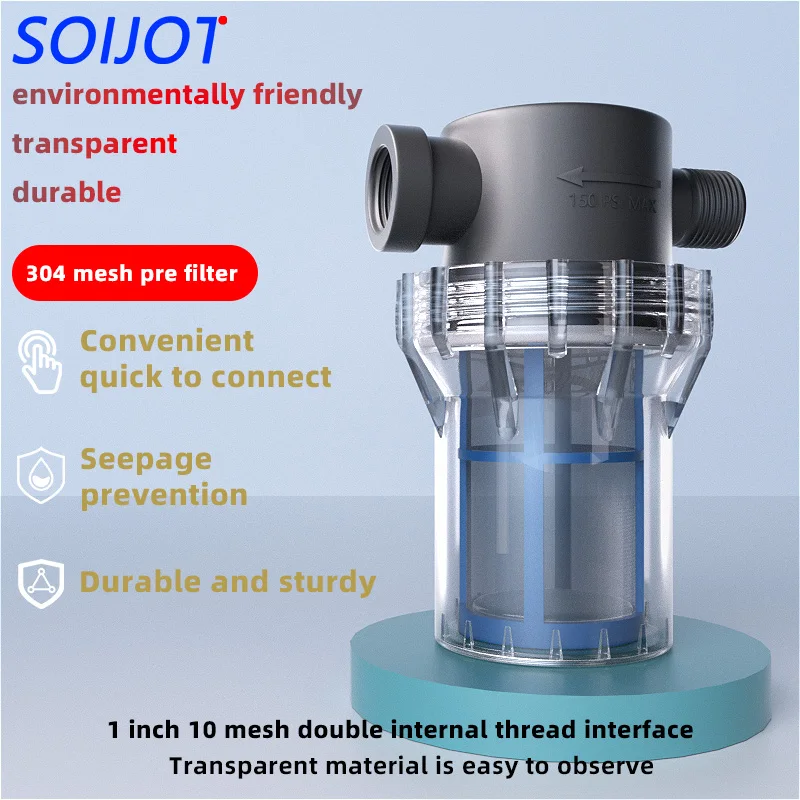
5. Agricultural/Irrigation Inline Filter
Don’t laugh. This cheap, simple inline screen filter is a secret weapon for specific jobs. Use it to protect your garden hose, drip irrigation system, or even as a rough pre-filter for a pump. The 93.6% positive rating on AliExpress tells you it does its simple job well. It’s not for drinking water, but for $8, it’s a handy tool to have in your plumbing arsenal.

6. Washable Ceramic Faucet Filter
This is a fascinating, old-school technology. A ceramic cartridge with tiny pores physically blocks sediment and even some bacteria. The best part? You can scrub it clean when it gets dirty and reuse it for months. The 96% rating is well-earned. It’s a fantastic, low-waste option for renters or anyone wanting a simple point-of-use sediment barrier. It won’t remove chemicals, but for dirt and rust, it’s brilliant.
Frequently Asked Questions
- What micron rating should I use for sediment filtration?
- Start with 5 microns for general use. For visible sand, use 20-50 microns. For fine, rusty silt or as a pre-filter for RO, use 1 micron. You can always go finer if needed, but starting too fine will cause rapid clogging.
- How often should I change my sediment filter?
- There’s no set schedule. Change it when you see a noticeable drop in water pressure, or when the cartridge turns a dark brown or gray color. For a typical home on city water, every 3-6 months is common. Well water may require monthly changes.
- Can a sediment filter remove bacteria or viruses?
- No. Standard sediment filters are mechanical barriers. They cannot remove dissolved contaminants or microorganisms. For that, you need a sub-micron absolute rated filter, UV light, or a specialized system designed for pathogens.
- Do I need a sediment filter if I have city water?
- Almost certainly yes. Even treated city water can pick up rust from aging distribution pipes and mains. A simple sediment filter protects your appliances and improves clarity. It’s a low-cost, high-value addition.
- What’s the difference between a “nominal” and “absolute” micron rating?
- A nominal rating (e.g., “5-micron nominal”) means the filter catches ~85% of particles that size. An absolute rating means it catches >99.9%. Absolute ratings are more precise and critical for applications like protecting RO membranes, but they cost more.
- Can I clean and reuse a sediment filter?
- It depends on the type. Pleated cartridges can often be rinsed off. Spun polypropylene and string-wound filters are generally disposable. Trying to clean a disposable filter usually damages its structure and reduces its effectiveness.
Final Thoughts
After years in this industry, we can say this with confidence: sediment filtration is not the place to get creative or try to save a buck. It’s the foundational layer. Get it right, and every other piece of your water treatment puzzle will work better and last longer. For most homes, a simple 5-micron spun or pleated cartridge in a standard housing is all you need to start.
Our top recommendation for a dedicated sediment filter is the 6-pack of 20-micron pleated cartridges for their value and reusability. For a complete drinking water solution that includes sediment filtration, the Waterdrop X8 RO system is a fantastic, high-performance investment. Whichever path you choose, just make sure you have something catching the grit. Your pipes, your appliances, and your peace of mind will thank you.
