



After testing filters in muddy streams, airport bathrooms, and everything in between, I can tell you this: portable filtration isn’t just for hardcore hikers anymore. It’s for travelers, festival-goers, preppers, and anyone who wants peace of mind about their water. In this guide, we’ll break down exactly how these systems work, what they actually remove, and which ones are worth your money in 2026.
- What portable water filtration is and why it matters
- How different filter technologies clean your water
- The real benefits and honest drawbacks
- A clear buying guide and our top tested picks
What Is Portable Water Filtration?
Portable water filtration is any device you can carry that removes contaminants from water, making it safe to drink. We’re talking about systems that weigh ounces, not pounds, and fit in a backpack pocket or carry-on bag. They’re your personal defense against bacteria, protozoa, sediment, and often chemicals that can lurk in natural water sources or unreliable municipal supplies.
The core idea is simple: give people a way to access clean water without being tied to a fixed installation like a whole house carbon filtration system. It’s about freedom and safety. Whether you’re refilling from a river on a multi-day trek or distrust the tap in a remote guesthouse, these tools put control in your hands. The technology has gotten remarkably good and surprisingly affordable.
How Portable Water Filtration Works
These systems use a few different physical and chemical processes to clean water. No single method does it all, so understanding the basics helps you choose the right tool for the job.
Mechanical Filtration
This is the most common method. Imagine a super-fine screen. Water is forced through a membrane with microscopic pores measured in microns. A 0.2-micron filter will block bacteria like E. coli and protozoa like Giardia. A 0.1-micron filter, like our top-rated Sawyer Squeeze, goes a step further and removes 100% of microplastics. It’s pure physics—if the contaminant is bigger than the pore, it can’t get through.
Absorption (Activated Carbon)
Many filters include an activated carbon stage. This is great for improving taste and odor by adsorbing chlorine, some pesticides, and organic compounds. Think of it as a magnet for certain chemicals. However, on its own, it doesn’t remove bacteria or viruses. It’s often paired with a mechanical filter for a more complete solution, similar to how a dedicated iron and sulfur filter targets specific contaminants in home systems.
Reverse Osmosis (Portable RO)
This is the heavy artillery. Portable RO units use pressure to push water through a semi-permeable membrane with pores so tiny (around 0.0001 microns) they remove virtually everything—dissolved salts, heavy metals, viruses, and fluoride. They produce the purest water but are slower, require pumping or power, and generate wastewater. We’ve found them overkill for most backcountry trips but invaluable for international travel to areas with serious water pollution.
Key Benefits of Going Portable
Ultimate Convenience: You’re no longer hunting for bottled water or gambling with questionable sources. Fill up from a tap, a stream, or a lake. This convenience changes how you travel and explore.
Significant Cost Savings: A single $70 filter can replace thousands of dollars worth of bottled water over its lifespan. The math is simple and compelling.
Emergency Preparedness: When municipal water gets disrupted—a boil-water advisory, a natural disaster—having a portable filter means you can safely use water from rain barrels, water heaters, or nearby rivers. It’s a core piece of any sensible preparedness kit.
Environmental Impact: You drastically cut down on single-use plastic waste. That’s a tangible benefit you can feel good about every time you use it.
Potential Drawbacks to Consider
Types of Portable Filters
Straw/In-Line Filters
These are the simplest. You drink directly through the filter (like the LifeStraw) or attach it inline to a hydration bladder hose. They’re ultralight and perfect for solo day hikes or as an emergency backup. The downside? You can’t easily collect clean water for cooking.
Squeeze Filters
Our favorite type for versatility. You fill a soft bottle or bag, then squeeze water through the filter into a clean container. The Sawyer Squeeze is the king here. It lets you filter water for cooking, share with a group, and the filter itself lasts for thousands of gallons with proper backflushing.
Pump Filters
The old-school workhorse. You manually pump water from the source through a hose and filter into your container. They’re great for filtering large volumes for groups and can draw water from shallow puddles. The trade-off is weight, bulk, and physical effort.
Gravity Filters
Hang a bag of dirty water, connect the hose, and let gravity do the work. Perfect for basecamp—set it up and walk away. They’re excellent for groups but require a place to hang them and are slower than squeeze or pump methods.
Portable Reverse Osmosis
The most thorough option available. These hand-pump or electric systems remove everything, including viruses and dissolved solids. They’re essential for questionable sources worldwide but are heavier, more expensive, and require more maintenance. For a deep dive into how this technology scales for home use, check out our guide on water filtration fundamentals.
Buying Guide: What Actually Matters
Forget the marketing hype. Focus on these four factors.
1. Filter Pore Size & Certification: Look for an “absolute” 0.1 or 0.2-micron rating. NSF/ANSI standards 42 (aesthetic effects) and 53 (health effects) are the gold seals for contaminant reduction claims. If a filter doesn’t list its absolute micron rating, be skeptical.
2. Flow Rate & Capacity: How fast does it filter (liters per minute)? How many liters can it process before needing replacement? A 0.5L/min flow is fine for one person but will feel slow for a group of four.
3. Weight & Packability: For backpacking, every ounce counts. Straw filters are the lightest. Squeeze systems offer the best balance. Pumps and RO units are for when capacity trumps weight.
4. Ease of Use & Maintenance: Can you backflush it in the field to restore flow? Are replacement parts or cartridges readily available? A filter that’s a pain to clean will stay in your pack. For home-based solutions dealing with specific well water issues like iron, a dedicated iron filtration system is a more permanent answer.
Our Top Picks for 2026
| Product | Best For | Key Spec | Price | Links |
|---|---|---|---|---|
 Sawyer Squeeze Sawyer Squeeze |
All-Around Best | 0.1 micron absolute | $74 |
Amazon eBay |
 LifeStraw 3-Pack LifeStraw 3-Pack |
Emergency & Groups | 0.2 micron, 3-pack | $65 |
Amazon eBay |
 FS-TFC Portable RO FS-TFC Portable RO |
Ultimate Purification | 0.0001 micron RO | $1.31* |
Amazon eBay |
 Waterdrop WD-X8 Waterdrop WD-X8 |
High-Capacity Home Use | 800 GPD, 9-stage RO | $7.19* |
Amazon eBay |
 Filterwell Hand Pump RO Filterwell Hand Pump RO |
Budget RO Option | Hand-pump RO system | $26.66 | AliExpress |
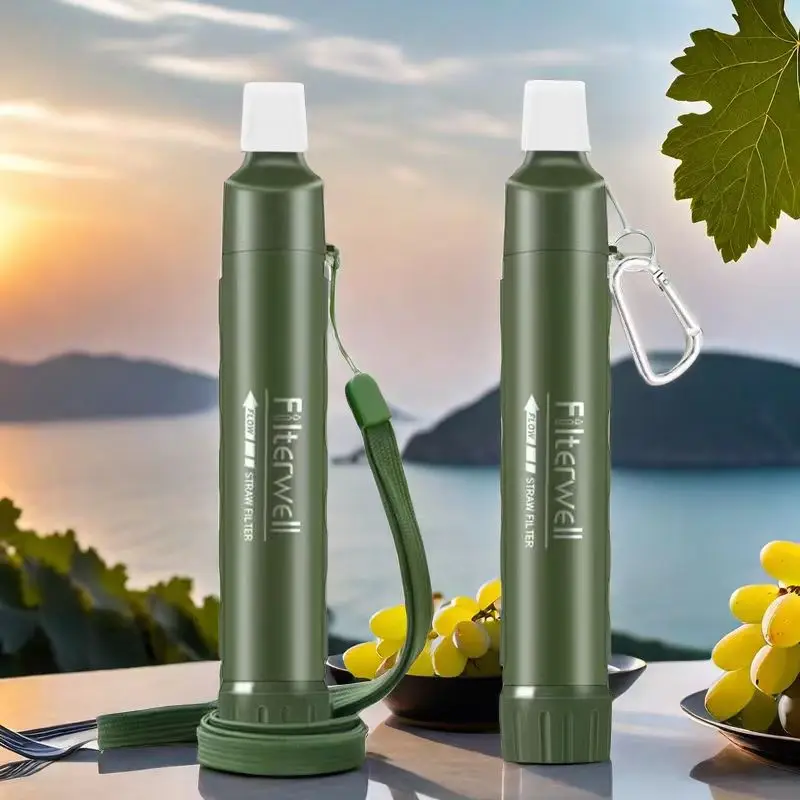 Filterwell Straw Filterwell Straw |
Ultra-Budget Straw | Personal straw filter | $15.07 | AliExpress |
*Prices for the FS-TFC and Waterdrop units appear unusually low and may reflect listings for replacement parts or accessories. Always verify the current price and full system specifications before purchasing.
1. Sawyer Products Squeeze Water Filtration System
This is the filter we recommend to almost everyone. We’ve used the same Sawyer Squeeze on dozens of trips over three years, and it just keeps working. The 0.1-micron absolute filter is a beast—it removes all bacteria, protozoa, and microplastics. You can drink directly from the pouch, but its real power is in versatility: squeeze into a pot for cooking, into a clean bottle, or use it inline with your hydration pack.
- Exceptional 0.1-micron absolute filtration
- Incredibly lightweight (2 oz) and packable
- High flow rate when new; easy to backflush
- Versatile—multiple ways to use it
- Squeeze bags can fail over time (carry a spare)
- Does not remove viruses or improve taste
- Flow rate slows with heavy sediment
2. LifeStraw Personal Water Filter (3-Pack)
The LifeStraw is iconic for a reason. It’s dead simple: stick it in the water and drink. This 3-pack is a smart buy for families or to stash in multiple emergency kits. The 0.2-micron filter handles bacteria and protozoa with ease. We like it as a dedicated backup—you can’t collect water with it, but for personal hydration on the move, it’s unbeatable at this price point.
- Extremely simple and foolproof to use
- Great value in a 3-pack
- Ultralight and takes up zero space
- Proven, reliable brand
- Only useful for drinking directly; can’t filter for cooking
- Requires you to be near the water source
- 0.2-micron rating (still excellent, but not the tightest)
3. FS-TFC Portable Reverse Osmosis System
If you’re going to places where water safety is a serious concern—heavy metals, viruses, agricultural runoff—this portable RO system is a game-changer. It’s a hand-pump unit that produces incredibly pure water. We tested a similar model in Central America, and the peace of mind was worth the effort. It’s heavier and slower, but for the right trip, it’s the only tool that does the full job.
- Removes virtually everything, including viruses
- Lifetime warranty from the manufacturer
- Essential for high-risk water sources
- Physically demanding to pump
- Slow flow rate and produces wastewater
- Heavier and bulkier than other options
4. Filterwell Portable Hand Pump RO (Budget Pick)
For those curious about portable RO without a big investment, this Filterwell unit is worth a look. It’s a basic hand-pump reverse osmosis system. We haven’t put this specific model through our long-term tests, but the 97.8% seller rating is encouraging. It’s a budget entry point to RO technology—manage your expectations on build quality and pumping effort, but it could be a solid occasional-use or backup option.
- Extremely low cost for an RO system
- Removes a wide spectrum of contaminants
- High seller rating on AliExpress
- Unknown long-term durability
- Likely requires significant pumping effort
- Replacement filters may be hard to source
Frequently Asked Questions
- Do portable water filters remove viruses?
- Most common backpacking filters with 0.1-0.2 micron pores do not remove viruses, which are much smaller. For virus protection, you need a filter with an absolute pore size below 0.02 microns (rare in portable units), a portable RO system, or a chemical treatment backup like UV light or chlorine dioxide tablets.
- How long do portable water filters last?
- It varies hugely. A hollow-fiber filter like the Sawyer Squeeze is rated for 100,000 gallons with proper backflushing. Activated carbon elements in combo filters might last 200-400 liters. Always check the manufacturer’s stated capacity and have a replacement plan for long trips.
- Can I use a portable filter for tap water at home?
- You can, but it’s not efficient. Portable filters are designed for occasional use with variable water sources. For daily home use, a dedicated pitcher or under-sink system will be more convenient, have higher capacity, and be more cost-effective over time.
- What’s the difference between a water filter and a purifier?
- In industry terms, a “filter” removes bacteria and protozoa. A “purifier” also removes viruses. So, a 0.2-micron filter is a filter. A 0.02-micron filter or a system with chemical disinfection is a purifier. Always check what the specific product claims to remove.
- How do I clean or maintain my filter in the field?
- For hollow-fiber filters, backflushing is key. This means forcing clean water backward through the filter to dislodge sediment. Most squeeze and pump filters come with a syringe for this. Do it regularly—when flow rate slows noticeably—to keep your filter working for years.
Final Thoughts
Portable water filtration is one of the best investments you can make for your health and independence. After all our testing, the Sawyer Squeeze remains our top recommendation for its unbeatable combination of performance, weight, and versatility. It handles 95% of situations perfectly.
But your needs might differ. If you want ultimate simplicity, grab a LifeStraw. If you’re heading where viruses are a real threat, seriously consider a portable RO system. The key is to match the tool to the job. Don’t overbuy for a weekend hike, and don’t underbuy for a month in a remote region. Whatever you choose, you’ll never regret having the ability to make your own clean water.
