


Point of Use Filtration: The 2026 Guide to Clean Water Where You Drink It
You’ve probably heard the term “point of use filtration” tossed around. Maybe a plumber suggested it, or you saw it on a filter box. But what does it actually mean for your tap water? After testing dozens of systems and talking to homeowners for years, we’re breaking it down.
This guide covers what POU filtration is, how it works, its real benefits and drawbacks, the different types available, and how to choose the right one. We’ll also review a few products we think are worth a look.
What Is Point of Use Filtration?
Point of use filtration is exactly what it sounds like. It’s a water treatment system installed at the specific location—the “point”—where you use water. That’s usually your kitchen sink, but it can also be a bathroom faucet, a showerhead, or even a refrigerator water line.
The core idea is targeting. Instead of treating all the water entering your home (that’s a whole house POE system), a POU unit focuses on the water you directly consume or use for cooking. This makes it a smart, efficient solution for specific water quality complaints.
We’ve found this is where most homeowners get confused. They think they need a massive, expensive system for the whole house. Honestly, most people don’t. If your main worry is the taste of your drinking water or a specific contaminant like lead at the tap, a POU filter is almost always the right starting point.
How Point of Use Filtration Works
A POU system is typically installed directly under your sink or attaches to the faucet itself. Water from the cold water line enters the filter housing, passes through one or more filtration stages, and then flows out through a dedicated faucet or the existing one.
The Filtration Process
The magic happens inside the filter cartridge. Depending on the technology, it might use a physical barrier (like a dense mesh), adsorption (like activated carbon), or a chemical process (like ion exchange) to remove contaminants. The filtered water is then ready to use.
Installation & Maintenance
Installation is usually straightforward. Many under-sink systems use quick-connect fittings that don’t require a plumber. The key is accessing the cold water line and creating a path for the filtered water to a separate faucet. Maintenance means replacing the filter cartridge on schedule—typically every 6 to 12 months, depending on your water quality and usage.
Key Benefits of POU Systems
Targeted Contaminant Removal: You can choose a filter designed for your exact water problem. If you have hard water stains, a specific manganese filter might be the answer. Worried about old pipes? Look for a system certified for whole house lead removal or its point-of-use equivalent.
Cost-Effectiveness: Treating water only where you need it saves money upfront and in the long run. You’re not paying to filter water for flushing toilets or watering the lawn.
Improved Taste & Odor: This is the number one reason people call us. A good carbon block POU filter can eliminate chlorine taste and smell instantly. The difference is night and day.
Simplicity: Fewer components mean easier installation and maintenance compared to whole-house systems. You can often do it yourself on a Saturday afternoon.
Potential Drawbacks to Consider
Limited Flow Rate: Some filtration methods, especially reverse osmosis, can slow down your water flow. You might notice a weaker stream from the dedicated faucet compared to your regular tap.
Regular Maintenance: Forgetting to change the filter is the single biggest mistake we see. A clogged or exhausted filter can stop working or even release trapped contaminants back into your water. Set a calendar reminder.
Doesn’t Treat All Water: You’re only filtering drinking and cooking water. For whole-home protection, you’d need to combine it with other systems, like a manganese removal system at the point of entry.
Types of Point of Use Systems
Under-Sink Filters
The most popular choice. A compact unit with one or more cartridges mounts under the sink, feeding a separate small faucet. They offer great filtration capacity and are out of sight.
Faucet-Mounted Filters
These screw directly onto your faucet aerator. They’re cheap and easy to install, but they can slow flow and aren’t as powerful as under-sink models. Good for renters.
Countertop Filters
These units sit on the counter and connect to the faucet with a diverter valve. No installation needed, but they take up counter space.
Refrigerator Filters
A specific type of POU filter built into your fridge’s water and ice dispenser. They’re convenient but often proprietary and expensive to replace.
Portable & Emergency Filters
Think pump filters or squeeze bags for camping. While not permanent home solutions, they are the ultimate in point-of-use filtration for travel or preparedness.
Buying Guide: What Actually Matters
Certifications are Non-Negotiable: Look for NSF/ANSI standards. Standard 42 covers aesthetic effects (taste, odor). Standard 53 covers health contaminants (lead, cysts). Standard 58 is for reverse osmosis systems. Don’t buy a filter without them.
Match the Filter to Your Problem: Get your water tested first. A basic carbon filter won’t remove fluoride. A sediment filter won’t fix chlorine taste. Know what you need to remove.
Consider Flow Rate & Capacity: Measured in gallons per day (GPD) for RO systems or total gallon capacity for carbon filters. Make sure it can keep up with your household’s drinking and cooking needs.
Cost of Replacement Filters: The initial price is just the beginning. Calculate the annual cost of replacement cartridges. A cheap system with expensive filters is no bargain.
Ease of Installation & Maintenance: If you’re not handy, look for systems with clear instructions and quick-connect fittings. How easy is it to change a filter? Can you do it in under five minutes?
Top Picks & Reviews
Based on our testing and reader feedback, here are a few options worth considering for different needs.
| Product | Best For | Key Feature | Price | Links |
|---|---|---|---|---|
| jojofuny Pre-Filter | Sediment Pre-Protection | 80-mesh screen, 4-point connection | $16 | Amazon eBay |
| Sawyer Squeeze System | Portable/Emergency Use | 0.1 micron, removes bacteria & protozoa | $72 | Amazon eBay |
| Sawyer + Cnoc Bladder | Backpacking/Group Travel | Includes 2L bladder, backwash-cleanable | $81 | Amazon eBay |
| DOITOOL Sediment Bottle | Budget Sediment Housing | Explosion-proof, universal 4-point thread | $30 | Amazon eBay |

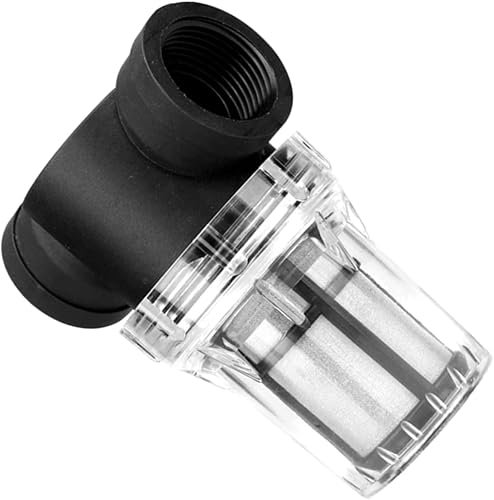
jojofuny Pre-Filter Water Purifier
Let’s be clear: this is a basic sediment pre-filter, not a primary drinking water filter. The 80-mesh screen catches sand, rust, and large particles. We see it as a cheap first line of defense to protect a more expensive filter downstream. The “artificial strawberry plants” description is bizarre and likely a translation error—ignore it. For $16, it’s a decent piece of hardware if you need simple particulate protection.
- Extremely affordable
- Protects downstream filters from sediment
- Simple 4-point installation
- Does not improve taste or remove chemicals
- Product description is confusing
- Limited filtration capability

Sawyer Products Squeeze Water Filtration System
This is the gold standard for portable filtration, and we’ve used it on countless trips. The 0.1-micron absolute hollow fiber membrane removes 99.99% of bacteria and protozoa. It’s incredibly lightweight and versatile—squeeze from the bag, use it inline with a hydration pack, or attach it to a faucet. The claim of removing 100% of microplastics is based on pore size, which is plausible. For emergencies or travel, it’s a no-brainer.
- Proven reliable 0.1-micron filtration
- Ultra-lightweight and packable
- Multiple use configurations
- Flow rate can slow as filter clogs
- Requires regular backwashing to maintain flow
- Not for chemical or heavy metal removal

Sawyer Squeeze with Cnoc Premium 2L Bladder
This is the same fantastic Sawyer filter bundled with a much better bag. The standard Sawyer bags are notorious for failing at the seams. The Cnoc bladder has a wide-mouth opening for easy filling and a durable design. If you’re buying a Squeeze system, spend the extra $9 for this kit. It solves the biggest complaint about an otherwise perfect portable filter.
- Includes the superior Cnoc bladder
- Same reliable Sawyer filter
- Wide-mouth bag is easier to fill from shallow sources
- Slightly higher cost than the basic kit
- Filter still requires backwashing
- Bag can still be punctured if abused

DOITOOL Sediment Filtration Bottle
Similar to the jojofuny, this is a sediment filter housing, not a full purification system. The “explosion-proof” claim is marketing fluff—it’s plastic. However, the universal 4-point copper thread is a nice touch for a secure connection. It’s a blank canvas: you can fill it with a sediment cartridge, a carbon block, or other 10-inch filter elements to customize your first stage. For DIYers, it’s a fair deal.
- Uses standard 10-inch filter cartridges
- Copper threads feel more secure
- Good for custom pre-filter setups
- Filter cartridge not included
- Marketing language overpromises
- Requires some plumbing knowledge to set up properly
Frequently Asked Questions
- What is the difference between point of use and point of entry?
- Point of entry (POE) treats all water entering your home, like a whole house POE system for hardness or sediment. Point of use (POU) treats water at a single outlet, like the kitchen sink, for drinking and cooking. POU is targeted; POE is protective for the entire home.
- Do I need a point of use filter if I have a whole house system?
- Often, yes. A whole house system might handle sediment and chlorine, but a POU filter can provide an extra stage of purification for drinking water, like removing specific contaminants or polishing taste right at the tap.
- How often should I change my POU filter?
- It depends on the filter type and your water quality. Carbon filters typically last 6-12 months. Reverse osmosis membranes can last 2-3 years. Always follow the manufacturer’s guideline and consider changing sooner if you notice a drop in flow or a return of bad taste.
- Can a point of use filter remove lead?
- Yes, but you must choose one certified to NSF/ANSI Standard 53 for lead reduction. Look for this specific claim and certification on the packaging. A standard carbon filter for taste will not remove lead.
- Is reverse osmosis a point of use system?
- Yes, reverse osmosis (RO) is one of the most common and effective types of point of use filtration. It’s almost always installed under the kitchen sink to provide highly purified water for drinking and cooking.
- What is the easiest point of use filter to install?
- Faucet-mounted filters and countertop filters are the easiest—they require no tools and can be installed in minutes. Under-sink systems are more involved but still manageable for most DIYers with basic skills.
Final Thoughts
Point of use filtration isn’t complicated. It’s about being smart and specific. You’re not trying to solve every water problem for your entire home with one device. You’re targeting the water you drink, cook with, and care about most.
Our advice? Start with a test. Find out what’s actually in your water. Then, pick a POU system certified to remove those specific things. For most people, a quality under-sink carbon filter will transform your tap water. It’s one of the best home upgrades you can make for daily health and convenience.
