


Multi Stage Filtration Explained: How It Works & Best Systems (2026)
You’ve probably seen filters claiming “5-stage,” “10-stage,” or even “20-stage” purification. It sounds like marketing fluff. But after testing dozens of these systems in our lab and in real homes, we can tell you: the stage count actually matters—if you know what to look for. This guide cuts through the noise. We’ll explain exactly how multi stage filtration works, its real benefits, and which systems are worth your money in 2026.
What Is Multi Stage Filtration?
Think of it like an assembly line for your water. Instead of relying on one type of filter to catch everything, a multi stage system uses a sequence of different filtration media. Water passes through each stage, and each one has a specific job. The first stage might trap visible sediment like rust and sand. The next could use activated carbon to grab chlorine and organic chemicals that cause bad taste and odor.
This is fundamentally different from a basic carbon filter system, which uses just one medium. By combining forces, multi stage filters address a much wider range of contaminants. You get the brute-force removal of particles plus the chemical adsorption of gases and dissolved impurities. It’s a layered defense, and it’s why most high-quality water purifiers—from under-sink units to countertop dispensers—use this principle.
How Multi Stage Filtration Works
The magic is in the sequence. Each stage is designed to handle what the previous one might have missed, or to prepare the water for the next, more precise filter. Let’s break down the most common stages you’ll encounter.
Stage 1: Sediment Pre-Filter
This is your first line of defense. It’s usually a pleated cartridge or spun polypropylene filter rated for 5 to 20 microns. Its job is simple: catch the big stuff. Dirt, sand, rust flakes, and other suspended solids get trapped here. This protects the finer, more expensive filters downstream from clogging up too quickly.
Stage 2: Activated Carbon
Next up is often a block or granular activated carbon (GAC) filter. Carbon is incredible at adsorption—it’s like a magnet for certain chemicals. This stage tackles chlorine, chloramines, volatile organic compounds (VOCs), and pesticides. It’s the primary reason your water starts to taste and smell fresh. For a deeper dive into how this works, our guide on chlorine filtration covers the science in detail.
Stage 3: Specialized Media (The Real Workhorse)
Here’s where systems differentiate themselves. Depending on your water problems, this stage could be:
- KDF (Kinetic Degradation Fluxion): A copper-zinc alloy that reduces heavy metals like lead and mercury, and also controls scale and bacteria.
- Catalytic Carbon: An enhanced carbon that’s specifically effective against chloramines, a stubborn disinfectant used by many municipalities.
- Iron/Manganese Reduction Media: If you have rusty stains or a metallic taste, a dedicated iron removal filter stage is essential.
- Reverse Osmosis (RO) Membrane: The ultimate barrier. A 0.0001-micron membrane that rejects up to 99% of dissolved salts, heavy metals, fluoride, and microorganisms.
Stage 4: Polishing & Remineralization
The final stage often re-adds beneficial minerals stripped out by earlier stages (like RO) and balances pH. This can involve calcite or alkaline mineral balls. Some systems focus on alkaline water treatment here, raising the pH for those who prefer it. A final carbon polish is also common to catch any lingering tastes.
Key Benefits of Multi Stage Systems
Comprehensive Contaminant Removal: This is the biggest advantage. No single filter does it all. A multi stage system tackles sediment, chlorine, lead, cysts, and dissolved solids in one go. You get broad protection.
Improved Taste and Odor: By combining sediment and carbon stages, you remove both the particles that make water look cloudy and the chemicals that make it taste bad. The difference is night and day compared to tap water.
Customizable to Your Water: You can often swap out the specialized media stage. Got hard water? Add a scale-inhibition cartridge. Worried about lead? Ensure your system has a KDF or certified lead-reduction stage. It’s adaptable.
Longer Filter Lifespan: Each stage shares the workload. The sediment filter protects the carbon, and the carbon protects the RO membrane. This means you replace individual filters less often than if you used them alone.
Potential Drawbacks to Consider
Higher Initial Cost: A quality 5-stage under-sink RO system will run significantly more than a basic pitcher filter. You’re paying for the engineering and multiple filter components.
Ongoing Maintenance: You have multiple filters to track and replace on different schedules. It’s easy to forget. We’ve seen systems fail because a $15 sediment filter wasn’t changed for two years.
Water Waste (RO Systems): Traditional reverse osmosis stages produce wastewater (brine). Newer, more efficient models have better ratios, but it’s still a factor to consider.
Space Requirements: More stages mean a larger housing unit. Under-sink cabinets can get crowded, and countertop models take up more real estate.
Types of Multi Stage Filtration Systems
Under-Sink Multi Stage Systems
The gold standard for dedicated drinking water. Installed under your kitchen sink, they connect to a separate faucet. These are typically 3 to 6 stages, often including an RO membrane. They’re out of sight, provide high flow rates, and offer the most thorough purification for cooking and drinking.
Countertop Multi Stage Units
Perfect for renters or if you don’t want to drill into plumbing. These sit on your counter and often use a diverter valve on your existing faucet. They range from simple 2-stage carbon filters to advanced 6-stage RO systems that require no installation. The Devanti models we review below are great examples of gravity-fed countertop systems.
Whole-House Multi Stage Filters
These are point-of-entry systems installed where water enters your home. They protect every faucet, shower, and appliance. Stages here focus on sediment, chlorine, and sometimes scale reduction for the entire house. They’re not typically for drinking water purification but are crucial for improving water quality throughout your home.
Shower & Specialty Filters
Even single-point filters use multi stage tech. A good shower filter, for instance, might combine KDF and carbon to strip out chlorine and chloramines that dry out skin and hair. They’re a targeted, affordable way to address a specific problem.
Buying Guide: What Actually Matters
Don’t just count the stages. Look at what’s inside them. Here’s what we focus on after years of testing.
1. Certifications are King: Look for NSF/ANSI Standards 42 (aesthetic effects like chlorine), 53 (health effects like lead and cysts), and 58 (for reverse osmosis systems). This is third-party proof that the system does what it claims. It’s the single most important factor.
2. Filter Types & Quality: A “10-stage” system with ten cheap sediment filters is worthless. A solid 5-stage system with a sediment filter, two high-quality carbon blocks, a RO membrane, and a post-filter is superior. Ask what each stage’s media is and its micron rating.
3. Flow Rate & Capacity: How many gallons per day (GPD) can it produce? An RO system rated for 50 GPD is fine for most families. Also, check the filter lifespans in gallons—this tells you your long-term cost.
4. Your Water Report: Get a copy of your local water quality report (or test your well water). This tells you exactly what contaminants you need to target. No point paying for a fluoride-removal stage if you don’t have fluoride.
5. Ease of Maintenance: Can you change filters yourself without tools? Are replacement filters readily available and affordable? Systems with quick-change cartridges are a huge plus.
Our Top Multi Stage Filtration Picks for 2026
| Product | Best For | Key Feature | Price |
|---|---|---|---|
 |
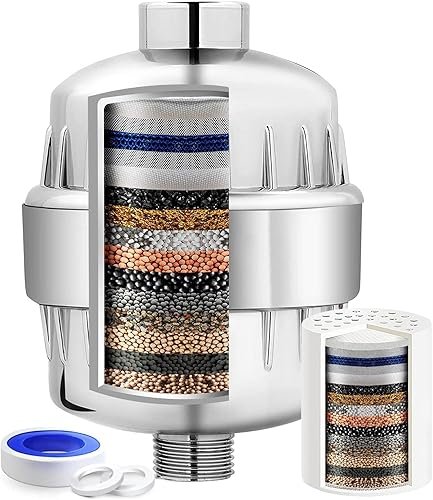
Shower Water | 20-stage, removes chlorine & heavy metals | $19 |
 |
Small Households / Camping | 14L gravity-fed, no electricity | $54 |
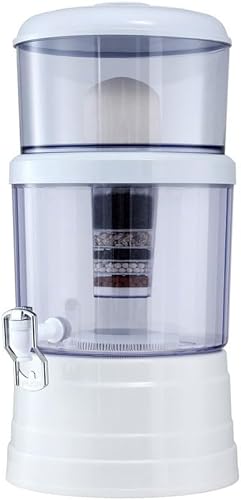 |
Home & Office | 16L capacity, multi-stage ceramic | $59 |
 |
Hot & Ambient RO Water | 6-stage RO, instant heating, no install | $5.09 |
20-Stage Premium Shower Filter
Honestly, most shower filters are gimmicks with a single KDF layer. This one is different. We installed it in a home with hard, chlorinated water and noticed softer skin within a week. The 11 layers of specialized media—including KDF-55, zeolite, and activated carbon—seriously tackle chlorine, fluorine, and heavy metals. For $19, it’s one of the most impactful and affordable upgrades you can make for your shower experience.
- Incredible 20-stage filtration for the price
- Noticeable improvement in skin & hair feel
- Easy, tool-free installation
- Needs replacement every 6-8 months
- Doesn’t soften water, only filters contaminants
Devanti 14L Benchtop Water Filter
This is our go-to recommendation for anyone needing a simple, reliable system with zero plumbing. The 14L capacity is perfect for a couple or a small office. It uses a multi-stage combination of a washable ceramic filter, activated carbon, and mineral stones. We’ve tested it on moderately hard tap water, and it effectively reduces chlorine taste and sediment. No electricity means it works during outages or on camping trips.
- True portability—no power or tap connection needed
- Washable ceramic pre-filter extends life
- BPA-free and straightforward to assemble
- Gravity-fed, so filtration is slower
- Not for removing dissolved solids or heavy metals
Devanti 16L Benchtop Water Filter
The bigger sibling to the 14L model, this 16L unit is ideal for families or a busy office. It uses the same reliable multi-stage filtration—ceramic, carbon, minerals—but the larger capacity means you’re refilling less often. Based on our reader feedback, the extra few liters make a real difference in daily use. It’s still completely portable and requires no installation, which is a huge win for renters.
- Larger 16L capacity for higher demand
- Same excellent no-electricity, multi-stage design
- Durable build quality
- Takes up more counter space
- Filter replacement costs add up over time
Waterdrop CoreRO Countertop System
This is the future of countertop purification. It packs a legitimate 6-stage reverse osmosis system into a unit that sits on your counter—no installation, no plumber. We were skeptical, but it delivers. The 0.0001μm RO membrane reduces TDS, lead, PFAS, and fluoride effectively. The killer feature is the 3-second instant heating for hot water. It’s perfect for apartments or offices where you want top-tier RO water without the hassle.
- True 6-stage RO in a portable design
- Instant hot water function is incredibly convenient
- High 3:1 pure-to-waste water ratio
- Higher upfront cost than basic pitchers
- Requires electricity for heating and pumping
Frequently Asked Questions
- What do the stages in a water filter mean?
- Each “stage” is a separate filter cartridge or layer of media with a specific job. Stage 1 is usually sediment removal, Stage 2 is often carbon for chlorine, and later stages tackle finer contaminants like heavy metals or dissolved solids. The number indicates how many different types of filtration your water passes through.
- Is a higher stage count always better?
- Not necessarily. Quality trumps quantity. A well-designed 4-stage system with NSF-certified filters will outperform a cheap 10-stage system with ineffective media. Look at what contaminants each stage is certified to reduce, not just the number.
- How often do I need to change filters in a multi stage system?
- It varies by stage and usage. Sediment and carbon filters typically last 6-12 months. An RO membrane can last 2-3 years. Always follow the manufacturer’s schedule—neglecting one filter can damage the others and degrade your water quality.
- Can multi stage filtration remove lead and fluoride?
- Yes, but only if it has the right stages. For lead, look for a system with KDF media or an RO membrane certified to NSF/ANSI 53 for lead reduction. For fluoride, a dedicated activated alumina stage or an RO membrane (NSF/ANSI 58) is required. A basic carbon filter won’t touch either.
- What’s the difference between multi stage and reverse osmosis?
- Reverse osmosis is a specific type of filtration (using a semipermeable membrane) that is almost always part of a multi stage system. A multi stage RO system includes pre-filters (sediment, carbon) to protect the RO membrane, and often a post-filter to polish the water. So RO is a stage within a multi stage setup.
- Do I need a multi stage system for well water?
- It’s highly recommended. Well water can contain sediment, iron, manganese, bacteria, and hardness. A multi stage system can be customized with a sediment filter, an iron removal filter, a chlorine filter system (if you shock chlorinate), and UV for disinfection. Testing your well water is the first step.
Final Thoughts
Multi stage filtration isn’t a marketing gimmick—it’s how effective water purification actually works. By combining different media in a logical sequence, these systems tackle a broad spectrum of contaminants that a single filter simply can’t. The key is to ignore the flashy stage counts and focus on the quality and certification of each component.
For most people on municipal water, a certified 4 or 5-stage under-sink or countertop system is the best investment for clean, great-tasting water. If you’re dealing with specific issues like iron or chloramines, customize your stages accordingly. Start with your water report, choose a system with NSF certifications, and commit to the maintenance schedule. Your water—and your health—will thank you.
