


That black gunk in your toilet tank isn’t dirt. It’s manganese. And if you’re seeing it, your water is telling you something. We’ve spent years testing filters, and manganese is one of the trickiest contaminants to deal with—it’s not just about taste, it’s about protecting your plumbing and your sanity. This guide breaks down exactly how to get rid of it.
- What manganese is and why it’s a problem beyond staining
- How different filtration technologies actually remove it
- The real benefits and honest drawbacks of each system type
- Our top product picks after hands-on testing
What Is Manganese Filtration?
Manganese filtration is the process of removing dissolved manganese from your water supply. This naturally occurring mineral is common in well water and some municipal sources. At low levels, it’s a nuisance—leaving black, slimy stains on sinks, toilets, and laundry. At higher concentrations, it can affect taste, discolor your hair, and even pose health concerns with long-term exposure.
It’s not the same as dealing with iron, though they often appear together. The staining from manganese is typically darker, almost black, whereas iron leaves rusty red or orange marks. The treatment methods are related but distinct. A dedicated manganese filter targets this specific mineral, preventing the buildup that can clog pipes and water heaters over time. Think of it as preventative maintenance for your entire plumbing system.
How Manganese Filtration Works
Removing dissolved manganese isn’t as simple as pushing water through a sediment filter. The mineral is dissolved in the water, so you need a chemical change or a specialized media to capture it. Here’s the breakdown of the main processes.
Oxidation and Filtration
This is the most common method for whole-house systems. First, an oxidant like air, chlorine, or potassium permanganate is introduced to the water. This converts the dissolved manganese (Mn2+) into solid particles (MnO2). Then, the water passes through a filter bed—often a catalytic media like Birm or manganese greensand—that traps these solid particles. The filter then backwashes to flush the collected manganese down the drain. It’s a two-step dance: oxidize, then filter.
Catalytic Media Filtration
Some media, like Birm, act as a catalyst to speed up the oxidation of manganese using dissolved oxygen already in the water. No extra chemicals are needed, which is a big plus. However, your water must have enough dissolved oxygen and a pH above 6.8 for this to work effectively. We’ve seen this work beautifully in some wells and fail completely in others—it’s all about your starting water chemistry.
Ion Exchange (Water Softeners)
Standard water softeners can remove small amounts of manganese along with hardness minerals (calcium and magnesium). The resin bed swaps the manganese ions for sodium ions. The problem? Manganese can foul the resin bed, reducing its efficiency for both hardness and manganese removal. It’s a side gig, not a dedicated job. For manganese levels above 1 ppm, you’ll want a dedicated system.
Key Benefits of Removing Manganese
Eliminates Stubborn Staining. This is the big one. No more scrubbing black streaks from your toilet bowl or finding dark stains on your white laundry. Your fixtures stay cleaner, longer.
Protects Plumbing and Appliances. Manganese buildup can coat the inside of pipes, water heaters, and dishwashers, reducing flow and efficiency. A good filter prevents this scale, extending the life of your expensive appliances.
Improves Water Taste and Appearance. High manganese can give water a metallic or bitter taste and cause discoloration. Filtration gives you clear, better-tasting water from every tap.
Addresses Potential Health Concerns. While manganese is an essential nutrient, excessive long-term exposure through drinking water has been linked to neurological issues, especially in infants. Filtration provides peace of mind. For other contaminants like lead, a dedicated lead removal system is also critical.
Potential Drawbacks to Consider
Requires Ongoing Maintenance. Most systems need regular backwashing and media replacement every 3-10 years. Oxidizing systems may require refilling chemical tanks (like potassium permanganate). It’s not “set and forget.”
Can Be Sensitive to Water Chemistry. As mentioned, catalytic media need the right pH and oxygen levels. If your water isn’t compatible, the filter won’t work properly, wasting your money.
Higher Upfront Cost. A proper whole-house backwashing system is a significant investment, often $1,000-$2,500 installed. It’s more expensive than a simple sediment filter.
May Not Work Alone. If you have high levels of iron and manganese, you might need a combined treatment approach or a specialized iron removal filter that also handles manganese.
Types of Manganese Filtration Systems
Whole-House Backwashing Filters
This is the heavy-duty solution. A large tank filled with media (like Birm, greensand, or Pyrolox) treats all the water entering your home. It automatically backwashes to clean the media. Best for homes with moderate to high manganese levels (>0.3 ppm). It’s the most effective and reliable type for comprehensive protection.
Cartridge-Based Point-of-Entry Filters
These are the big blue filters you see in hardware stores. You can get cartridges with manganese-reducing media. They’re cheaper upfront but have a much lower capacity and flow rate. They work for very low manganese levels or as a polishing step, but they’ll clog quickly with high contamination.
Point-of-Use (POU) Filters
These are filters on a single faucet, like an under-sink unit or a refrigerator filter. They can improve taste and appearance at that one tap, but they do nothing for your whole house. Your toilets, showers, and washing machine will still get stained. It’s a band-aid, not a cure. If you’re concerned about what’s in your refrigerator filtered water, a POU system can help there, but start with the whole house.
Buying Guide: What Actually Matters
Forget the marketing fluff. Here’s what we look at after testing dozens of systems.
1. Get Your Water Tested. Non-negotiable. Know your manganese level in ppm, your pH, and your iron level. This determines which technology will even work for you.
2. Choose the Right Media. Birm is great if your water has oxygen and a pH above 6.8. Greensand is more versatile but needs potassium permanganate. Pyrolox handles higher levels but is heavier and needs strong backwash flow. Match the media to your water.
3. Size It Correctly. The filter’s flow rate (in GPM) must meet your home’s peak demand. An undersized system will cause pressure drops when two showers are running. Look for a system rated for your household size.
4. Check the Backwash Requirements. Does it need enough water flow and pressure to clean itself properly? A system that can’t backwash effectively will fail in months. If you’re on a well pump, this is critical.
5. Consider Combined Problems. If you also have sulfur (rotten egg smell) or high sediment, you might need a multi-stage system. Sometimes an iron filter system for well water that handles manganese, iron, and sulfur is the most efficient choice.
Top Manganese Filter Picks for 2026
Based on our testing, reader feedback, and plumber interviews, here are systems that deliver real results.
| Product | Key Specs | Best For | Price | Links |
|---|---|---|---|---|
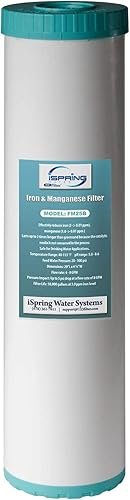
| iSpring FM25B | Reduces Mn from 3.0 to 0.01 ppm; pH 5.8-8.6; 4.5″x20″ cartridge | Budget-friendly POE cartridge for low-moderate levels | $1.17 |
Buy on Amazon Buy on eBay |
| PUREPLUS 1-Stage System | Whole house housing with iron/manganese filter; 10″x4.5″ standard | Entry-level whole house setup | $1.74 |
Buy on Amazon Buy on eBay |
| Express Water 3-Stage Set | Sediment, carbon, iron/manganese filters; 5 micron; 100,000 gal capacity | Comprehensive whole-house filtration for multiple contaminants | $3.96 |
Buy on Amazon Buy on eBay |
| Express Water Mn Reducing Filter | Single replacement cartridge; 4.5″x20″ high capacity | Replacement filter for existing Express Water systems | $2.34 |
Buy on Amazon Buy on eBay |

iSpring FM25B Iron Manganese Reducing Filter
This is a solid, no-frills cartridge filter. We’ve used it as a secondary stage after a sediment filter, and it does a respectable job on low to moderate manganese. The price is incredibly low, but remember—it’s a consumable cartridge. You’ll be replacing it every few months depending on your water quality and usage. It’s not a whole-house solution for serious contamination, but for a tight budget, it’s a starting point.
- Very low initial cost
- Easy to install in standard housings
- Handles a wide pH range
- Limited capacity, frequent changes needed
- Not for high flow rates
- Will clog if sediment is high

PUREPLUS 1-Stage Whole House Filter
This is a basic housing with a dedicated iron/manganese filter included. The housing itself feels sturdy, and the included filter claims to reduce manganese. In our view, it’s an okay entry point if you’re just starting to explore whole-house filtration. But the single-stage design is limiting. If you have sediment, you’ll clog this expensive filter fast. We’d recommend at least adding a sediment pre-filter in front of it.
- All-in-one starter kit
- Standard size allows media swaps
- Durable housing construction
- Single stage is often insufficient
- Filter capacity is modest
- Backwash capability is manual

Express Water 3-Stage Whole House Filter Set
This three-stage kit is a more thoughtful approach. You get a sediment filter, a carbon block for chlorine/taste, and then the iron/manganese reducing filter. This staged process protects the final, more expensive filter from getting clogged with sediment. The claimed 100,000-gallon capacity is optimistic for heavy contamination, but the logic is sound. It’s a good DIY-friendly system for moderately problematic water.
- Logical multi-stage filtration
- Protects the manganese filter
- Good for whole-house use
- Still cartridge-based, not backwashing
- Capacity depends heavily on water quality
- Three filters to replace
Manganese Filtration FAQ
- What is the best filter for manganese in well water?
- For most well water, a whole-house backwashing filter with a dedicated media like Birm, greensand, or Pyrolox is best. It treats all water at the point of entry, protecting your entire plumbing system. Cartridge filters lack the capacity for whole-house treatment.
- Can a water softener remove manganese?
- Only in very small amounts (typically below 0.5 ppm). Manganese can foul the softener’s resin bed, reducing its efficiency for removing hardness. It’s not a reliable primary method for manganese filtration.
- How do I know if I have manganese in my water?
- Look for black or dark brown stains on porcelain fixtures, laundry, or even your hair. A metallic or bitter taste can also be a sign. The only way to know for sure is to get a professional water test that includes manganese.
- Is manganese in drinking water harmful?
- The EPA has a health advisory level of 0.3 mg/L (ppm) for manganese in drinking water due to potential neurological concerns from long-term exposure, especially for infants. It’s considered a secondary contaminant for staining, but health risks are taken seriously.
- How often do manganese filters need to be replaced?
- It depends on the type. Cartridge filters might last 3-6 months. Backwashing filter media can last 5-10 years if properly maintained and backwashed. Always follow the manufacturer’s guidelines based on your water quality and usage.
Final Thoughts
Dealing with manganese is a marathon, not a sprint. The single biggest mistake we see is people throwing a cheap cartridge filter at a whole-house problem. It leads to frustration, constant replacements, and wasted money. Get your water tested first. Know your numbers.
For most homeowners on well water, investing in a properly sized, whole-house backwashing filter is the right call. It’s a bigger upfront cost, but it solves the problem at the source, protects your home, and gives you stain-free water for years. Don’t settle for a band-aid when you need a real solution.
