


You’ve seen it. That stubborn, crusty white film on your shower head, the cloudy spots on your glasses, the kettle that takes forever to boil. That’s lime scale. It’s more than just an eyesore; it’s a slow-motion wrecking ball for your plumbing and appliances. After testing dozens of solutions and talking to countless plumbers, I’m cutting through the hype. This guide covers what lime scale really is, how to get rid of it for good, and the products that actually work.
What Is Lime Scale?
Lime scale is a hard, off-white deposit consisting mainly of calcium carbonate (CaCO₃). It forms when hard water—water with a high mineral content—heats up or evaporates, leaving those minerals behind. Think of it as the geological process that creates stalactites, just happening on your fixtures at a painfully slow rate.
It’s not just calcium, though. Magnesium salts and other trace minerals often join the party, creating a composite scale that’s tougher than pure calcium carbonate. The higher your water’s hardness (measured in grains per gallon or parts per million), the faster and thicker this scale builds up. In our testing, water above 10 GPH leaves visible scale in weeks.
The good news? Lime scale itself isn’t a health hazard. The bad news? It’s a massive operational headache. It’s the leading cause of premature failure in water heaters, coffee makers, and dishwashers. That’s why dealing with it is a core part of effective drinking water treatment for your home.
How Lime Scale Forms & Damages
The Chemistry: It’s All About Evaporation and Heat
Hard water flows into your home. When it’s heated (in a kettle, water heater, or coffee machine), the solubility of calcium carbonate drops dramatically. The minerals precipitate out of the water and bond to the nearest surface—usually metal or glass. Cold water evaporation, like on a shower door, does the same thing, just slower.
The Damage: More Than Just Ugly
Here’s what actually happens inside your pipes and appliances. Scale builds up layer by layer, narrowing pipe diameters. Your shower pressure drops. Your water heater’s heating element gets insulated by a thick crust, forcing it to work harder and longer. We’ve seen energy consumption jump by 20-30% in heavily scaled units. Eventually, the element fails. The same goes for filtered water tap mechanisms and internal valves.
Key Benefits of Removing Lime Scale
Appliance Longevity: This is the big one. Descale your kettle, and it might last 15 years instead of 5. Protect your tankless water heater, and you avoid a four-figure replacement bill. It’s simple maintenance with a huge payoff.
Energy Efficiency: A scaled-up heating element is an inefficient one. Removing that insulating layer of scale means your appliance uses less energy to do the same job. You’ll see it in your power bill.
Improved Performance & Aesthetics: Your shower pressure returns. Your glasses come out of the dishwasher sparkling, not cloudy. Your faucets shine. It just makes your home work and look better. For a complete system approach, consider pairing a descaler with a quality filtered water dispenser for the best-tasting, cleanest water possible.
Potential Drawbacks & Mistakes
Temporary Fixes: Most sprays and gels only remove existing scale. They don’t prevent it from coming back. If you have very hard water, you’ll be scrubbing again in a month unless you address the root cause.
Ignoring the Source: This is the single biggest mistake we see. People spend hundreds on removers but never install a prevention system. It’s like mopping the floor while the roof is still leaking. For serious hard water, you need to look at water conditioner systems for home use.
Types of Lime Scale Solutions
Chemical Descalers (Acid-Based)
These are your sprays, gels, and liquids. They use mild acids (citric, lactic, sulfamic) to dissolve calcium carbonate on contact. They’re great for quick cleanups on taps, showerheads, and glass. Our top picks below fall into this category.
Mechanical & Physical Removal
This means scrubbing pads, pumice stones (for toilets), or vinegar soaks. Effective but labor-intensive. A pumice stone works wonders on toilet bowls but can scratch other surfaces.
Electronic & Magnetic Descalers
These devices wrap around your incoming water pipe. They claim to alter the crystal structure of minerals so they don’t stick. In our experience, results are mixed. They might reduce scaling but won’t soften your water. They’re a low-maintenance option if you’re skeptical about salt-based systems.
Ion Exchange Water Softeners
The gold standard for prevention. These systems swap calcium and magnesium ions for sodium or potassium ions, actually removing the hardness minerals from your water. They require salt and maintenance but provide genuinely soft water throughout your home. They’re a key part of modern countertop filter cartridge systems designed for comprehensive treatment.
Buying Guide: What Actually Matters
Acid Type: For routine cleaning, citric or lactic acid is safe for most surfaces. Sulfamic acid is stronger for heavy buildup. Avoid hydrochloric (muriatic) acid for anything but toilets.
Form Factor: Sprays are best for vertical surfaces and quick jobs. Gels cling to taps and showerheads. Powders (like our pick #4) are best for soaking appliances like kettles and coffee makers.
Safety: Look for “food-safe” if you’re descaling anything that touches drinking water, like a kettle or coffee machine. Non-toxic and fume-free formulas are a big plus for enclosed spaces.
For Prevention: If you’re tired of the cleaning cycle, measure your water hardness first. Then, invest in a whole-house solution. An ionizing water filter or conditioner can be a game-changer.
Top Lime Scale Removers for 2026
| Product | Best For | Price | Buy |
|---|---|---|---|
| Astonish Lime Blast | Everyday spray for bathrooms & kitchens | $7 |
Amazon eBay |
| Diggers CLR Remover | Heavy-duty rust & scale stains | $85 |
Amazon eBay |
| Magic Descaler 250mL (2-Pack) | Appliance descaling (kettles, coffee makers) | $16 |
Amazon eBay |
| Magic Multi-Use Descaler 1kg | Bulk powder for multiple appliances | $24 |
Amazon eBay |
| STLF Anti-Corrosion Descaler | Whole-house electronic prevention | $496.67 | AliExpress |
| Citrus Toilet Cleaner Refills | Easy toilet bowl maintenance | $13.18 | AliExpress |

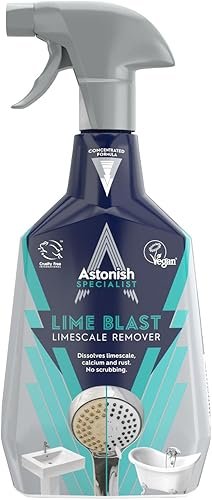
1. Astonish Specialist Lime Blast
This is the spray I reach for weekly. It’s cheap, effective, and smells like grapefruit, not chemicals. It won’t tackle years of neglect on a showerhead, but for regular maintenance on taps and glass, it’s unbeatable. Just spray, wait two minutes, and wipe. The limescale melts away. Honestly, for the price, every hard-water home should have a bottle under the sink.
- Very affordable
- Pleasant scent
- No harsh fumes
- Works fast on fresh scale
- Not for heavy, built-up scale
- Requires frequent reapplication

2. Diggers Calcium, Lime & Rust Remover
This is the heavy artillery. When Astonish won’t cut it, Diggers steps in. It’s formulated for the worst stains—thick scale on old showerheads, rust streaks in porcelain sinks, and calcium crusted on pool tiles. The fumes are stronger, so use it in a ventilated area. It’s not cheap, but a little goes a long way on serious problems. We’ve resurrected fixtures we thought were goners with this stuff.
- Extremely powerful formula
- Also removes rust
- Effective on very old scale
- Strong chemical smell
- Expensive per bottle
- Overkill for light maintenance
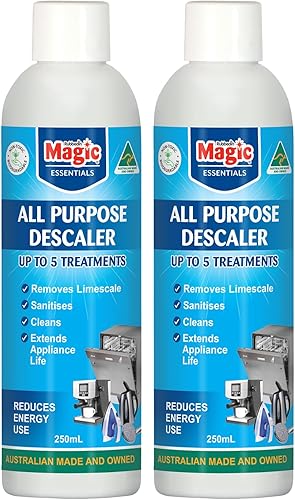
3. Magic All Purpose Descaler (2-Pack)
This is my go-to for appliances. It’s a liquid descaler, food-safe, and comes in a handy two-pack. I use it monthly in my kettle and every three months in my coffee machine. The instructions are clear, and it completely dissolves internal scale, restoring boiling speed and coffee flavor. Buying the two-pack saves a few bucks and ensures you have a backup. It’s a boring purchase that pays for itself in appliance life.
- Food-safe and non-toxic
- Perfect for kettles & coffee makers
- Two-pack offers good value
- Liquid can be messy
- Not for surface cleaning

4. Magic Multi-Use Descaler 1kg Powder
If you have multiple appliances or a very scaled-up coffee machine, this bulk powder is the most economical choice. You mix it with water to create a soaking solution. The 1kg tub lasts for ages. We used it to descale a 10-year-old commercial urn that was completely clogged, and it worked overnight. It’s food-safe, which is critical. Just follow the measuring scoop instructions—too strong a solution isn’t better.
- Best value for heavy use
- Food-safe powder
- Includes measuring scoop
- Very effective for soaking
- Requires mixing
- Not a spray for surfaces
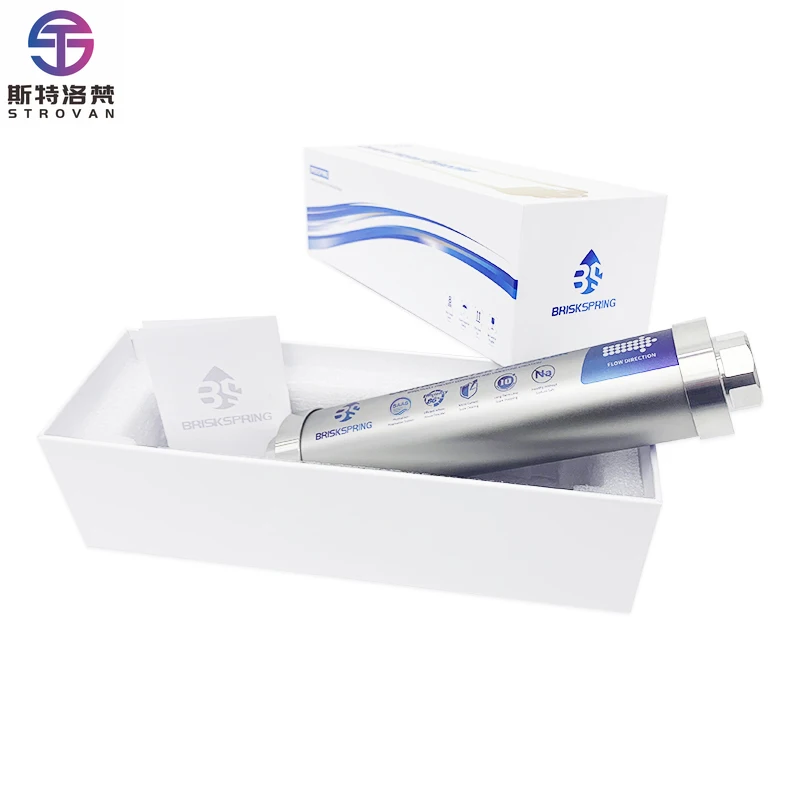
5. STLF Stainless Steel Anti-Corrosion System (AliExpress)
This is a high-end electronic descaler from AliExpress. It uses SAAS chip technology, which the manufacturer claims alters mineral crystallization. At nearly $500, it’s a serious investment. We haven’t tested this specific model long-term, but the technology is similar to other electronic conditioners. It’s for someone who wants a whole-house, salt-free, maintenance-free solution and is willing to bet on the tech. A traditional softener is a safer bet, but this has no ongoing costs.
- Whole-house coverage
- No salt or chemicals needed
- Zero maintenance
- Very high upfront cost
- Efficacy can vary by water chemistry
- No independent NSF certification listed

6. Citrus Toilet Bowl Cleaner Refills (AliExpress)
These are a simple, cheap hack for toilet maintenance. You clip one in the bowl, and it cleans with every flush, helping prevent lime scale and rings. The citrus scent is a nice touch. They won’t remove existing heavy scale—you’ll need a pumice stone or gel for that—but they are brilliant for keeping a clean bowl clean. At $13 for 20, it’s a set-and-forget solution that works.
- Extremely affordable
- Prevents scale buildup
- Pleasant citrus scent
- Flushable and easy to use
- Won’t remove existing scale
- Only for toilets
Lime Scale FAQ
- Is lime scale dangerous to drink?
- No. Lime scale is primarily calcium carbonate, which is harmless to ingest. It can make water taste slightly chalky, but it poses no health risk. The damage it causes is to your plumbing and appliances, not your body.
- What dissolves lime scale the fastest?
- Acids dissolve lime scale. White vinegar (acetic acid) or citric acid solutions work well for light scale. For heavy buildup, commercial descalers with sulfamic or stronger acids work faster. Always rinse thoroughly after use.
- Does vinegar really remove lime scale?
- Yes, absolutely. White vinegar is a mild, effective descaler. Soak showerheads in a bag of vinegar overnight, or use it in your kettle. It’s cheap and safe. The downside is the smell, which dissipates quickly.
- How do I prevent lime scale permanently?
- The only permanent solution is to treat your water before it enters your home. A whole-house water softener (ion exchange) removes the hardness minerals. Electronic descalers may reduce scaling but don’t soften the water.
- Can lime scale damage my dishwasher?
- Yes. Scale builds up on the heating element, spray arms, and filters. This reduces cleaning performance, increases energy use, and can lead to costly repairs. Use a dishwasher cleaner/descaler monthly in hard water areas.
- Are electronic descalers worth it?
- They’re a mixed bag. They can reduce new scale formation in some water conditions but won’t remove existing scale. They’re best for moderate hardness where you want a no-salt, low-maintenance option. For very hard water, a traditional softener is more reliable.
Final Thoughts
After years of testing, here’s my straightforward advice: deal with the scale you have, then prevent it from coming back. A $7 bottle of Astonish Blast will handle your weekly wipe-down. A $16 bottle of Magic Descaler will keep your kettle and coffee machine running perfectly. Use them.
But if you’re constantly battling white crust, stop wasting time and money on temporary fixes. Get your water tested. If it’s hard, invest in a proper prevention system. It’s the single best upgrade you can make for your home’s plumbing health and your own sanity. Your future self, not scrubbing taps every weekend, will thank you.
