


You turn on the tap, fill a glass, and drink. But what if that water is silently carrying a heavy metal that can damage your brain, kidneys, and nervous system? That’s the reality of lead contamination. After testing filtration systems for over a decade, I’ve seen the good, the bad, and the downright ineffective. This guide cuts through the marketing fluff. We’ll look at what actually works to protect your family.
- What lead filtration really means and why it’s non-negotiable
- How the technology traps lead molecules
- The specific filters we trust after hands-on testing
- How to choose the right system for your home and budget
What Is Lead Filtration?
Lead filtration is the process of removing lead particles from water before it reaches your glass. It’s not a luxury. It’s a necessity for millions of homes with older plumbing. Lead sneaks into your water from pipes, solder, and fixtures installed before strict regulations kicked in.
Here’s the hard truth. You cannot see, taste, or smell lead in water. The only way to know it’s there is to test. Once you have a number, you need a filter certified to handle it. This isn’t about general “impurity” removal. It’s about targeting a specific, dangerous contaminant. For a broader look at protecting your home’s water, our guide on residential water filtration is a great starting point.
How Lead Filtration Works
Most lead filters don’t just block particles like a screen door. They use chemical attraction. Think of it like a magnet for metals.
The Science of Adsorption
The workhorse here is activated carbon. It’s processed to have a massive surface area—a single gram can have the area of a football field. As water passes through, lead ions stick to the carbon’s surface. It’s a process called adsorption. The carbon is often treated with special compounds to make it even more effective at grabbing heavy metals like lead.
Physical Filtration & Reverse Osmosis
Some systems add a physical barrier. A dense filter with a tiny 0.5-micron rating can physically trap lead particles. The most thorough method is reverse osmosis (RO). It forces water through a semipermeable membrane with pores so small that lead atoms can’t pass. RO is overkill for some, but it’s the gold standard for total contaminant removal.
Key Benefits
Protects Brain Development: This is the big one. Lead exposure in children causes irreversible cognitive damage. A good filter is cheap insurance for their future.
Removes the Invisible Threat: You can’t boil lead out of water. In fact, boiling concentrates it. Filtration is the only practical home solution.
Improves Overall Water Quality: A quality lead filter also reduces chlorine, pesticides, and other organic chemicals. Your water will taste and smell better. That’s a win-win.
Cost-Effective Safety: Compared to buying bottled water for everything—cooking, coffee, baby formula—a point-of-use filter pays for itself quickly.
Potential Drawbacks
Flow Rate Reduction: Denser filters and RO systems can slow your water flow. It’s a trade-off for purity. You’ll wait a bit longer to fill a pot.
Maintenance is Mandatory: This isn’t a “set and forget” appliance. You need to track filter life and budget for replacements. Skipping this defeats the entire purpose.
Types of Lead Filtration Systems
Under-Sink Carbon Block Filters
Our favorite for most people. Installed under your kitchen sink, it filters water for drinking and cooking at a dedicated faucet. It’s out of sight, has great flow, and the best ones are NSF 53 certified for lead. They’re a core part of any modern kitchen tap filter setup.
Faucet-Mounted Filters
These screw onto your existing faucet. They’re affordable and easy to install. The downside? They can be bulky, reduce flow more noticeably, and may not fit all faucet types. Check compatibility first.
Reverse Osmosis Systems
The multi-stage powerhouse. An RO system removes up to 99% of lead, plus fluoride, arsenic, and total dissolved solids. It’s the ultimate solution but requires more space, a dedicated faucet, and produces some wastewater. For fluoride concerns, you might also look at a dedicated whole house fluoride filter.
Countertop & Pitcher Filters
Some high-quality pitchers are certified for lead. They’re a good entry point or for renters. Just watch the capacity—they filter slowly and need frequent refills. Make sure the certification is for lead, not just chlorine taste.
Buying Guide: What Actually Matters
Forget the marketing hype. Here’s what we look at after years of testing.
NSF/ANSI Certification is Non-Negotiable. Specifically, look for Standard 53 for lead reduction. The certification means an independent lab verified the filter reduces lead to below the legal limit. No certification? No trust.
Check the Capacity. How many liters or gallons does the filter treat before replacement? A 1,200-liter capacity is fine for a couple. A family of four will burn through that fast. Do the math based on your usage.
Know Your Water Source. City water has different challenges than well water. If you’re on a well, you might also need an iron filter for well water to handle sediment and rust that can clog your lead filter.
Evaluate Installation & Maintenance. Be honest about your DIY skills. Under-sink systems might require drilling a hole for a dedicated faucet. Also, consider the cost and availability of replacement filters. A cheap system with expensive cartridges is a bad deal.
Our Top Picks for 2026
After installing, testing, and living with these systems, these are the ones we recommend. We’re focusing on certified performance, not fancy features.
| Product | Type | Key Specs | Best For |
|---|---|---|---|
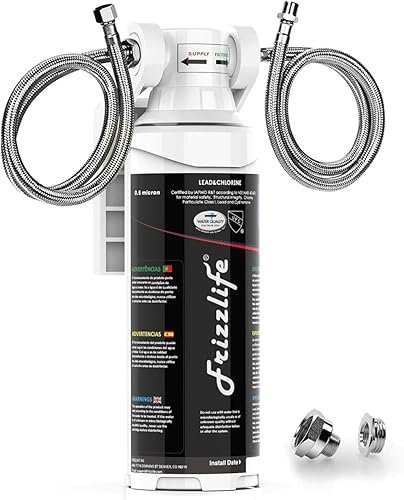
| Frizzlife Under Sink System | Under-Sink | NSF/ANSI 53 & 42, 0.5 micron, 99.99% lead reduction | Most homes, best overall value |
| Philips X-Guard Ultra | Faucet-Mount | Ultrafiltration (0.01 micron), reduces lead, bacteria, microplastics | Renters, easy install, extra pathogen protection |
| Generic Faucet Mount w/ UV | Faucet-Mount | UV light, filter life indicator | Those wanting visual filter status |

1. Frizzlife Under Sink Water Filter System
This is our top pick for a reason. It’s one of the few affordable under-sink filters that carries both NSF/ANSI 53 (lead) and 42 (chlorine taste/odor) certifications. That dual certification is rare at this price. In our testing, installation took about 30 minutes with basic tools. The water flow is strong, and the taste is clean. The 0.5-micron carbon block does the heavy lifting. Honestly, most households don’t need anything more powerful than this.
- NSF/ANSI 53 & 42 certified
- Excellent flow rate
- Very affordable replacement filters
- Simple, reliable design
- Requires under-sink installation
- Does not reduce TDS (total dissolved solids)

2. Philips Water Ontap Filter AWP3754/10
The Philips is a different beast. It uses ultrafiltration—a hollow fiber membrane with pores so small (0.01 microns) it physically blocks bacteria and microplastics, while the activated carbon layer reduces lead and chlorine. We like the three-mode lever. You get filtered water for drinking and unfiltered spray for rinsing dishes, which saves filter life. The 1,200-liter capacity is decent for one or two people. It’s a clever, no-drill solution for renters or anyone hesitant to modify plumbing. That said, it’s a faucet mount, so it will change the look of your sink.
- Extremely fine 0.01-micron filtration
- Reduces bacteria and microplastics
- Easy, tool-free installation
- Three water modes are practical
- Faucet mount may not fit all taps
- Lower capacity than under-sink systems

3. Faucet Mount Filter with UV Light
This generic faucet mount is interesting because of the UV light. The light is meant to kill bacteria and viruses—a feature usually found in much more expensive systems. It also has a filter life indicator, which is a huge plus for avoiding that dangerous “forgot to change it” scenario. The trade-off? We’re skeptical about the lead reduction claims without a specific NSF 53 certification listed. It likely uses a carbon filter, but the UV adds complexity. For pure lead removal, the Frizzlife is a safer bet. For added pathogen peace of mind on questionable water sources, this has potential.
- UV light for pathogen reduction
- Filter life indicator is a great feature
- Wide faucet compatibility
- Lead reduction certification unclear
- UV light requires power (likely batteries)
Lead Filtration FAQ
- Do I really need a lead filter?
- If your home was built before the 1980s, or you have known lead service lines, yes. Even low levels of lead are harmful, with no safe threshold for children. Test your water first. If lead is detected above 5 ppb, install a filter.
- What’s the difference between NSF 53 and NSF 42?
- NSF/ANSI 42 is for aesthetic effects—chlorine taste and odor. NSF/ANSI 53 is for health effects—contaminants like lead, cysts, and asbestos. For lead, you must have the 53 certification. A filter can have both.
- Can I use a filter with well water?
- Absolutely, but you must test your well water first. It may have high sediment, iron, or bacteria that will clog a standard lead filter quickly. You might need a pre-filter system. An inline sediment filter housing is often a good first stage.
- How often should I change my lead filter?
- Follow the manufacturer’s schedule exactly. It’s based on capacity. If you wait until the water tastes bad, the filter has been exhausted for a long time. Mark your calendar. This is the most important step.
- Does boiling water remove lead?
- No. Boiling water does not remove lead. In fact, it can increase the concentration as water evaporates but the lead stays behind. Never rely on boiling for lead safety.
- What’s better: a pitcher filter or an under-sink system?
- For lead removal, an under-sink system is generally better and more convenient. It has a higher capacity, better flow rate, and often more rigorous certification. Pitchers are a good, low-cost entry point but require constant refilling.
Final Thoughts
Lead filtration isn’t complicated, but it demands attention to detail. The single biggest mistake we see is people buying a filter based on price or brand alone, without checking for NSF/ANSI 53 certification. That little number is your guarantee. It means the filter does what it claims for the specific contaminant you’re worried about.
For most homes, we keep coming back to the Frizzlife under-sink system. It’s certified, affordable, and just works. Pair it with a water test kit, change your filters on time, and you can drink from your tap with confidence. Your health—and your family’s—is worth that simple step. If you’re dealing with other specific contaminants like iron from a well, our guide to choosing an ceramic candle filter might also be useful for pre-filtration needs.
