


You’ve probably thought about it. That slightly metallic taste, the white scale in your kettle, or maybe just a nagging worry about what’s actually in your tap water. I’ve spent years testing filters, tearing them apart, and talking to the people who make and install them. What I’ve learned is that getting clean kitchen filtered water isn’t complicated, but it’s easy to get wrong if you don’t know what to look for.
This guide cuts through the marketing fluff. We’ll look at what these filters actually do, the different types you can buy, and how to pick one that won’t become an expensive paperweight under your sink.
What Is Kitchen Filtered Water?
Simply put, it’s your regular tap water that’s been passed through a physical or chemical barrier designed to trap or neutralize contaminants before it hits your glass. This isn’t about creating pure H2O in a lab. It’s about making your existing water supply cleaner, better-tasting, and safer for drinking and cooking right where you need it most—the kitchen sink.
The goal isn’t to strip everything out. Unlike a countertop water distiller which boils and re-condenses water, most common filters aim to reduce specific bad actors—chlorine, rust, heavy metals—while leaving in beneficial minerals like calcium and magnesium. The result is water that tastes and smells better, without the downsides of buying endless plastic bottles.
How Kitchen Water Filtration Works
It’s not magic, it’s science. And understanding the basics helps you see past the flashy ads.
The Physical Barrier: Size Matters
The first line of defense is often a physical filter, measured in microns. A human hair is about 70 microns wide. A good sediment filter might trap particles down to 5 microns. Some advanced filters go down to 1 micron or even 0.0001 microns (that’s reverse osmosis territory). The smaller the micron rating, the more it catches—but also the slower the water flow and the more frequent the clogging.
The Chemical Workhorse: Carbon Filtration
This is the heart of most taste-and-odor filters. Carbon filtration uses activated carbon—think of it as a sponge with millions of tiny pores. As water passes, contaminants like chlorine, volatile organic compounds (VOCs), and some pesticides get adsorbed onto the carbon’s massive surface area. It’s incredibly effective for improving taste and smell. The quality and type of carbon (coconut shell is often preferred) make a big difference.
The Nuclear Option: Reverse Osmosis (RO)
For the toughest jobs, RO forces water through a semi-permeable membrane with pores so small only water molecules get through. It removes up to 99% of dissolved salts, lead, fluoride, PFAS, and more. But it’s slow, wastes some water (the reject stream), and removes beneficial minerals, which is why many systems add a “remineralization” stage at the end.
Key Benefits of Filtering Your Tap Water
Better Taste and Odor. This is the immediate, noticeable win. Removing chlorine and sulfur compounds makes water more pleasant to drink, which means you’ll probably drink more of it.
Reduced Contaminant Exposure. A properly certified filter can significantly lower your intake of lead (from old pipes), disinfection byproducts, and industrial pollutants. This is a real, tangible health consideration, especially for families.
Cost Savings Over Bottled Water. The math is simple. A $90 faucet filter that lasts six months beats spending $1-2 per day on bottled water. You’ll break even in a few months and save hundreds yearly.
Environmental Win. You’ll dramatically cut down on plastic bottle waste. It’s a small change with a clear positive impact.
Appliance Protection. Filtering out sediment and scale-forming minerals can help your coffee maker, kettle, and steam oven last longer and perform better.
Potential Drawbacks & Honest Limitations
Maintenance is non-negotiable. A clogged or exhausted filter cartridge can become a breeding ground for bacteria and will stop filtering effectively. You must replace them on schedule, which is an ongoing cost and chore.
Flow Rate Reduction. All filters create some resistance. Cheap faucet-mount models can slow your stream to a trickle. Under-sink systems often require a dedicated dispenser faucet to maintain good pressure.
Initial Cost and Installation. While cheap options exist, the good systems that actually last require a real investment. Under-sink RO systems might need professional installation if you’re not comfortable drilling a hole and connecting to your plumbing.
Types of Kitchen Water Filters
Faucet-Mount Filters
These screw directly onto your faucet spout. They’re affordable and easy to install—no tools, no drilling. The downside? They can be bulky, slow your flow, and may not fit all faucet styles. Best for renters or as a first foray into filtered water.
Under-Sink Carbon Filters
A dedicated system installed under your counter, connected to your cold water line with a separate small faucet on the sink. They offer better filtration capacity and flow than faucet mounts, with no clutter at the sink. Filter changes are less frequent but more involved.
Under-Sink Reverse Osmosis (RO) Systems
The top-tier for purity. They remove the widest range of contaminants, including dissolved solids. They require more space, a dedicated faucet, and a connection to your drain for the wastewater line. The filtration process is slower, which is why they have a small storage tank.
Countertop Filters
These sit on the counter and usually connect to your faucet with a diverter valve. They offer a middle ground—more filtration power than a faucet mount, but no permanent installation. They take up counter space, which is a deal-breaker for some kitchens.
Buying Guide: What Actually Matters
1. Know Your Water First. Before you shop, get your water report or use a test kit. Is chlorine your main issue? Do you have lead pipes? Hard water? This determines if you need simple carbon filtration or full RO.
2. Look for Real Certifications. Don’t trust vague “lab-tested” claims. Look for NSF/ANSI certification against specific standards. NSF/ANSI 42 covers aesthetic effects (taste, odor). NSF/ANSI 53 covers health effects (lead, cysts, VOCs). NSF/ANSI 58 is for RO systems.
3. Calculate Total Cost of Ownership. The upfront price is just the start. Calculate the cost per gallon based on replacement filter cartridge prices and lifespan. A cheap system with expensive filters is a bad deal.
4. Consider Your DIY Comfort Level. Be honest. If you hate plumbing projects, a complex under-sink RO system might lead to frustration. Faucet mounts are nearly foolproof.
5. Check the Flow Rate. Look at gallons per minute (GPM) or reviews complaining about slow flow. A good under-sink filter should deliver 0.5-1.0 GPM, which feels like a normal stream.
Our Top Picks for 2026
We’ve tested, installed, and lived with these systems. Here’s how they stack up.
| Product | Type | Key Feature | Price |
|---|---|---|---|
 Advance Tap Filter |
Faucet Mount | Stainless steel, NSF 42 tested, diatom ceramic + carbon | $89 |
 Premium Faucet Filter |
Faucet Mount | LFGB-certified, 1µm screen, improved adapter system | $89 |
 Water Filter Booster |
Faucet Aerator | Ultra-budget, basic sediment/chlorine reduction | $9 |
 Waterdrop WD-X8 |
Under-Sink RO | 9-stage, 800 GPD, NSF 42&58&372, 2:1 drain ratio | $7.19 |
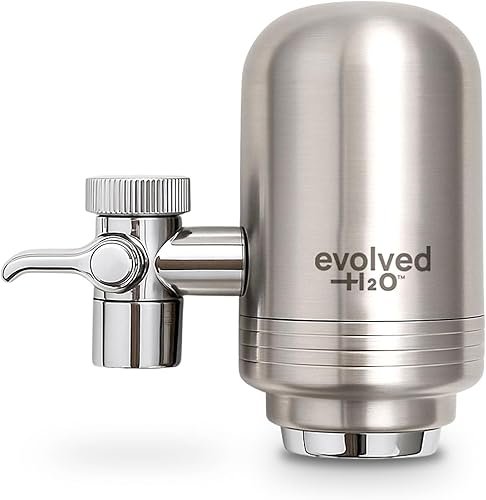
Advance Tap Filter | Premium Stainless Steel
This is one of the sturdiest faucet-mount filters we’ve handled. The stainless steel housing feels premium and durable, unlike the cheap plastic of most competitors. The dual-layer diatom ceramic and coconut carbon cartridge is a solid combo for tackling chlorine and sediment. Installation is genuinely tool-free and takes five minutes. It’s a great choice if you want a no-fuss upgrade from a basic pitcher without committing to under-sink plumbing.
- Excellent build quality
- NSF 42 certification for taste/odor
- Includes two cartridges (6 months supply)
- Universal fit for most faucets
- Flow rate noticeable slower than unfiltered
- Won’t remove dissolved contaminants like lead
- Cartridge replacement cost adds up
Premium Faucet Water Filter – Activated Carbon Cartridge
What sets this one apart is the claimed LFGB certification for food contact safety and the improved adapter system. In our testing, the fit was indeed more secure than older models, with no leaks. The multi-stage cartridge with ceramic balls and a 1µm screen does a good job on chlorine and sediment. It’s a direct competitor to the Advance Tap Filter, and honestly, a very close call. We give a slight edge to the Advance for its metal housing.
- LFGB certified for material safety
- Excellent, leak-proof adapter design
- Multi-stage filtration for its size
- Claims to support pH balance
- Primarily plastic construction
- Similar performance to other good faucet filters
- “pH balance” claims are hard to verify
Water Filter Booster – Budget Aerator Filter
Let’s be real: this is a $9 aerator with some filter media inside. It’s the absolute bare minimum. It might reduce some chlorine taste and trap a bit of rust, but don’t expect miracles. We’d only recommend this if you’re on an extreme budget, have very high-quality source water that just needs a taste tweak, or want a temporary solution while you research a real filter. For most people, spending a bit more is worth it.
- Incredibly low price point
- Extremely easy to install
- Can be a temporary taste fix
- Minimal filtration capability
- No meaningful certifications
- Short lifespan, unclear filter media
- Won’t address health contaminants
Waterdrop WD-X8 Reverse Osmosis System
This is a serious system for serious water problems. The 9-stage filtration, including a 0.0001-micron RO membrane, tackles everything from TDS and lead to PFAS. The 800 GPD (gallons per day) flow rate is impressive—no waiting for a tank to refill. The 2:1 pure-to-drain ratio is among the best we’ve seen for efficiency. It’s NSF certified against standards 42, 58, and 372 (lead-free). If your water report shows high TDS, heavy metals, or you just want the highest purity, this is a top contender. Installation is a project, though.
- Exceptional, broad-spectrum contaminant removal
- High flow rate and efficient water use
- Multiple NSF/ANSI certifications
- Compact tankless design
- Requires under-sink space and drilling
- Higher upfront cost and complexity
- Removes beneficial minerals (needs remineralization)
- Wastewater production, though low
Frequently Asked Questions
- How often should I change my kitchen water filter?
- It depends entirely on the filter type and your water usage. Faucet-mount cartridges typically last 2-3 months or 100-200 gallons. Under-sink carbon blocks might go 6-12 months. RO membranes can last 2-4 years. Always follow the manufacturer’s guideline, but if you notice a taste change or slow flow, change it sooner.
- Do kitchen filters remove beneficial minerals?
- Most standard carbon filters do not. They target contaminants like chlorine and lead but let dissolved minerals like calcium and magnesium pass through. Reverse osmosis systems, however, do remove most minerals. Many RO systems now include a final “remineralization” stage to add back calcium and magnesium for taste.
- Is filtered water from the kitchen safe for babies?
- Yes, and often recommended. Using a filter certified to NSF/ANSI 53 for lead reduction is a prudent step if you have any concerns about old plumbing. Always use cold water for formula (hot water can leach more lead from pipes) and follow your pediatrician’s advice.
- Can I install an under-sink filter myself?
- Many people can. Basic under-sink carbon filters are straightforward: you connect to the cold water line, mount the housing, and install a dedicated faucet. RO systems are more complex, requiring a drain saddle and more tubing. If you’re not comfortable with basic plumbing, hiring a handyman for an hour is a smart move.
- What’s the difference between a water filter and a home distillation system?
- A filter traps contaminants in a media. Distillation boils water, turns it to steam, and re-condenses it, leaving virtually all contaminants behind. Distillation produces very pure water but is slow, uses electricity, and removes all minerals. Filters are faster, cheaper to run, and for most homes, a more practical solution.
- Do I need a filter if my water is “safe”?
- “Safe” meets minimum legal standards for contaminant levels. It doesn’t mean it tastes good or is free of all concerning substances. Chlorine is added for disinfection and is safe, but it tastes bad. Old pipes can leach lead even if the source water is fine. A filter improves upon the legal minimum.
Final Thoughts
After testing dozens of systems, our stance is clear: a good kitchen water filter is one of the best investments you can make for your home’s health and convenience. Don’t overbuy. If your water tastes fine and you’re on a modern municipal supply, a quality faucet-mount filter like the Advance Tap Filter is a fantastic, affordable upgrade. It’ll make your water taste great and remove common annoyances.
If you have specific concerns—high TDS, lead pipes, or a bad water report—then step up to a certified under-sink system. The Waterdrop WD-X8 RO system is a powerhouse for those who need it. Start with your water quality, match it to the right technology, and commit to the maintenance schedule. That’s the real secret to getting clean, great-tasting water from your tap, every single day.
