


You turn on the tap every day. But do you really know what’s in that glass? After testing water from hundreds of homes, I can tell you this: assumptions are dangerous. Your water might look clear but carry invisible problems. Home water testing puts you back in control. This guide covers what to test for, which kits actually work, and how to read the results without a chemistry degree.
- What home water testing is and why your municipality’s report isn’t enough
- How test strips, lab kits, and digital meters work (and their limits)
- The key contaminants to check based on your home’s age and location
- Our hands-on reviews of the top test kits you can buy in 2026
What Is Home Water Testing?
It’s exactly what it sounds like: analyzing your tap, well, or filtered water for specific contaminants using kits you can use at home. We’re not talking about sending samples to a lab (though that has its place). Modern home kits use chemical strips, reagents, or digital sensors to give you a snapshot of your water quality in minutes.
But here’s the thing most people get wrong. They think their city water report tells the whole story. It doesn’t. That report tests water leaving the treatment plant. It doesn’t account for the journey through miles of aging pipes, your home’s plumbing, or that old best fridge water filter you haven’t changed in three years. Home testing fills that gap. It tells you what’s actually coming out of your faucet.
We’ve found that homes built before 1986, those with wells, or anyone noticing a change in taste, odor, or color should test immediately. It’s your first line of defense.
How Home Water Testing Works
The Science in a Strip
Most affordable kits use test strips. These are plastic strips with small pads impregnated with chemical reagents. Each pad reacts with a specific contaminant, changing color based on concentration. You dip the strip, wait 30-60 seconds, and compare the colors to a chart. Simple. The chemistry is similar to a pool test kit, but calibrated for drinking water standards.
Reading the Results
This is where people stumble. Color matching isn’t perfect. Lighting matters—always compare in natural daylight, not under a yellow kitchen light. And read the time exactly. A pad that says “read at 30 seconds” will look different at 45. The results give you a range (e.g., “0, 0.1, 0.3, 0.5 ppm”), not a precise number. That’s fine for screening. If you see lead at 0.1 ppm, you know you have a problem. You don’t need to know if it’s 0.12 or 0.15.
Key Benefits of Testing Your Water
Peace of Mind for Pennies. Honestly, most people don’t need a $200 lab test upfront. A $20 strip kit can tell you if your water is safe from the most common threats. It’s the cheapest insurance you’ll ever buy.
Target Your Filtration. Why buy a generic filter if your problem is specifically hardness or chlorine? Testing tells you exactly what to look for in a system. If hardness is sky-high, you might need a water softener system for home use, not just a carbon filter.
Track Changes Over Time. Test every 6 months. You’ll spot trends. Maybe your nitrate levels creep up each summer. Or hardness spikes after municipal work. Data lets you act before it becomes a health issue.
Verify Your Filter Works. Installed a new under-sink system? Test before and after. It’s the only way to know it’s actually removing what it claims. We’ve seen plenty of filters that do almost nothing for lead.
Potential Drawbacks & Limitations
The biggest mistake? Panicking over a single result. If a strip shows a faint positive for lead, don’t assume the worst. Retest. Contamination can be patchy. A single flake of solder from a pipe joint can spike a test. If you get a positive for a serious contaminant like lead or mercury, your next step is a certified lab test for confirmation.
Also, don’t trust the cheapest no-name strips on the market. We’ve tested some that were wildly inaccurate, giving false negatives on chlorine. Stick to reputable brands with clear instructions and recent manufacture dates.
Types of Home Water Tests
Test Strips (The Everyday Choice)
These are your workhorses. Dip-and-read. They test for 5 to 18 parameters at once. Perfect for regular monitoring of hardness, pH, chlorine, nitrates, and basic heavy metals. Fast, cheap, and easy to store. The downside? They’re less sensitive than other methods.
Color Disk Kits & Reagent Drops
A step up in accuracy. You add a reagent drop or powder to a water sample, swirl, and compare the color to a spinning disk or gradient chart. These are more precise for single parameters like chlorine or iron. They take a bit longer and cost more per test, but the results are more trustworthy.
Digital Meters
For specific measurements. A TDS (Total Dissolved Solids) meter tells you overall mineral content. A pH meter gives a precise number. They’re great for ongoing monitoring if you have a specific concern, like checking your kinetico water softener system‘s output. But they only test one thing at a time.
Mail-In Lab Kits
The gold standard. You collect a sample and mail it to a certified lab. They test for hundreds of contaminants using advanced equipment. This is what you do if home tests show a problem, or if you have a well and need a comprehensive baseline. It’s expensive ($100-$500), but it’s the only way to get legally defensible, precise data.
Buying Guide: What Actually Matters
Parameters Covered: Don’t just buy the strip with the most tests. Buy the one that tests for what you need. For city water, prioritize chlorine, lead, pH, and hardness. For well water, add nitrates, iron, and bacteria. The 18-in-1 kits are a great all-around start.
Sensitivity & Range: Check the color chart. Does it measure lead at 0, 15, and 30 ppb? Or at 0, 5, and 10 ppb? Lower detection limits are better for screening. The EPA action level for lead is 15 ppb. You want a strip that can tell you if you’re close.
Shelf Life & Storage: Heat and humidity kill test strips. Look for a recent manufacture date and a sealed, desiccant-packed container. Store them in a cool, dry place—not under the sink.
Clarity of Instructions: This sounds basic, but it’s critical. Bad instructions lead to bad tests. The best kits have clear, step-by-step guides with visual charts. Some even include links to video tutorials.
Top Home Water Testing Kits for 2026
After testing dozens of kits over the years, these are the ones we keep coming back to. They’re reliable, easy to use, and give consistent results.
| Product | Key Specs | Best For | Price | Link |
|---|---|---|---|---|
18-in-1 Water Quality Test Strips (125ct) |
18 parameters, 125 strips, includes test tube | All-around screening for city & well water | $27 |
Buy on Amazon Buy on eBay |
All-New 18 in1 Drinking Water Test Kit (125 Strips) |
18 parameters, 125 strips, fast 30s results | Quick, frequent testing | $20 |
Buy on Amazon Buy on eBay |
9 Way Heavy Metals Water Test Strips (100ct) |
9 heavy metals, 100 strips | Focused heavy metal screening | $16 |
Buy on Amazon Buy on eBay |
16 in 1 Water Testing Kits For Drinking Water |
16 parameters, includes ebook guide | Beginners wanting detailed guidance | $26 |
Buy on Amazon Buy on eBay |
10 in1 Complete Heavy Metal Water Test Kit (100 Strips) |
10 heavy metals, 100 strips | Budget-focused heavy metal check | $11.15 | Buy on AliExpress |
10Pcs Lead Testing Paper Heavy Metal Detection Kit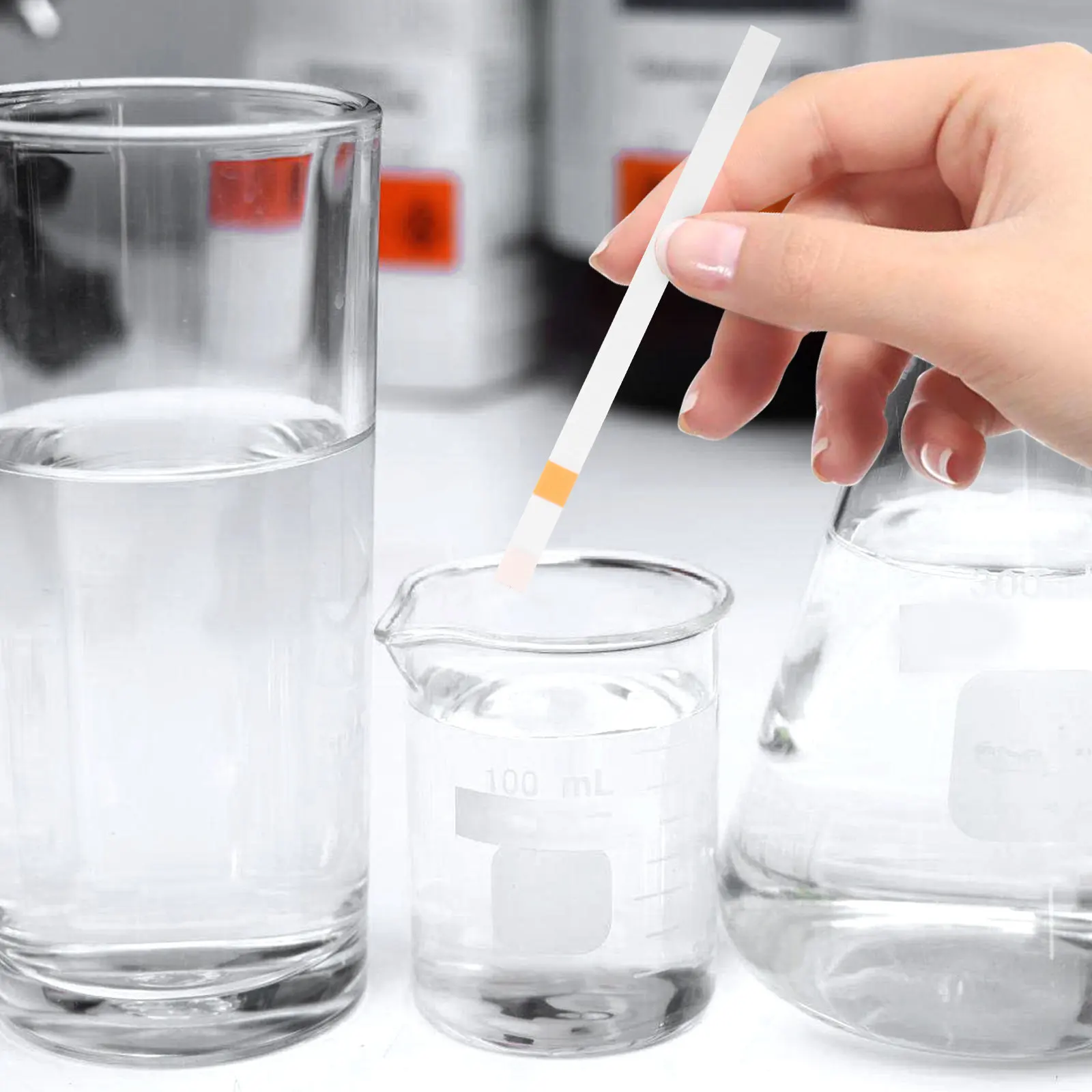 |
Lead-specific, 10 strips | Quick, cheap lead spot-check | $13.20 | Buy on AliExpress |
1. 18-in-1 Water Quality Test Strips (125ct)
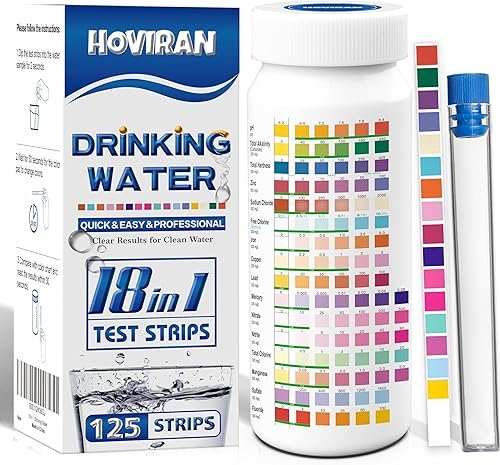
This is our top pick for a reason. It covers everything a homeowner needs to know in one dip. We’ve used these for years in reader consultations. The color chart is clear, and the inclusion of a test tube is a small but smart touch—it makes dipping consistent. The 125-count box means you can test every tap in your house and still have plenty left for rechecks.
- Tests 18 parameters including lead, mercury, and hardness
- 125 strips offer great long-term value
- Test tube ensures consistent sample size
- Color matching for pH can be subtle
- Not as sensitive as a lab test for low-level contaminants
2. All-New 18 in1 Drinking Water Test Kit (125 Strips)
A very close second. This kit tests the same 18 parameters but is marketed for faster results—30 seconds versus the typical 60. In our testing, the times were similar, but the color pads reacted quickly. It’s a solid, budget-friendly alternative if our top pick is out of stock. Good for testing after installing a new aquasana filter shower head, too.
- Fast 30-second read time for most parameters
- Excellent value with 125 strips
- Clear, easy-to-follow instructions
- Packaging can be flimsy; store carefully
- Some users report inconsistent iron readings
3. 9 Way Heavy Metals Water Test Strips (100ct)
If you live in an older home or near industrial areas, heavy metals are your primary concern. This kit focuses on that. It won’t tell you about chlorine or hardness, but it’s sharp on metals like lead, copper, and mercury. We recommend pairing this with a basic 5-parameter strip for a complete picture.
- Specialized for heavy metal screening
- Tests for chromium and cadmium, which are often missed
- Affordable for targeted testing
- Limited to metals only—no pH, chlorine, or nitrates
- 100 strips is less value than 125-count kits
4. 16 in 1 Water Testing Kits For Drinking Water
This kit is perfect for the beginner who feels overwhelmed. The included ebook is genuinely helpful, explaining what each result means in plain language. It covers 16 key parameters. The strips themselves are reliable. Honestly, most people don’t need the extra two parameters from an 18-in-1 kit. This does the job well.
- Excellent educational ebook included
- User-friendly for first-time testers
- Tests all critical contaminants for home use
- Ebook is digital only; no printed guide
- Slightly fewer strips per dollar than top picks
5. AliExpress Budget Pick: 10 in1 Complete Heavy Metal Water Test Kit
For pure, no-frills heavy metal screening on a tight budget, this is hard to beat. It tests for 10 metals. The quality is decent for the price, but don’t expect the same clarity in the color chart as the Amazon kits. Use this for an initial, cheap check. If it shows positives, invest in a more sensitive kit or a lab test.
- Extremely affordable entry point
- Tests 10 different metals
- Good for testing multiple water sources cheaply
- Color chart can be hard to read accurately
- Shipping times can be long
- Less consistent pad saturation between strips
6. AliExpress Budget Pick: 10Pcs Lead Testing Paper
A single-parameter lead test. That’s it. If you have a specific, urgent worry about lead—say you’re pregnant and live in a 1970s home—this is a dirt-cheap way to get a quick answer. It’s not comprehensive. But for $13, it’s a focused tool. Just remember, a negative on this doesn’t mean your water is safe from everything else.
- Very low cost for a specific lead check
- Simple to use with clear positive/negative results
- Good for peace-of-mind spot checks
- Only tests for lead, nothing else
- Only 10 strips per package
- Not a substitute for a broad-spectrum test
Frequently Asked Questions
- How often should I test my home water?
- Test at least once a year for city water. For well water, test every spring. Always test after any plumbing work, if you notice a change in taste or appearance, or if there’s a nearby construction or environmental incident.
- Are home water test strips accurate?
- For screening purposes, yes. They’re excellent at telling you if a contaminant is present or absent and giving a rough range. They are not lab-precise. Think of them like a thermometer: good for telling if you have a fever, but not for measuring to a tenth of a degree.
- What should I do if my test shows high lead?
- First, don’t panic. Retest to confirm. Then, stop using that tap for drinking or cooking. Use bottled water. Contact your local water authority or a certified lab for a definitive test. You may need to replace pipes or install a filter certified for lead reduction (NSF/ANSI 53).
- Can I test my water softener’s performance?
- Absolutely. Use a hardness test strip before and after the softener. The “after” water should show near-zero hardness. If it doesn’t, your softener may need servicing, or you might be looking at different water softener brands for a replacement.
- Do I need to test if I already have a filter?
- Yes! This is the most common oversight. A filter’s performance degrades over time. Test your filtered water every 6 months to make sure it’s still working. Also, test your raw tap water to know exactly what your filter is up against. If you have sediment issues, understanding filter water sediment basics can help you choose the right pre-filter.
- What’s the difference between a test strip and a lab test?
- Cost, speed, and precision. Strips are fast ($0.20-$0.50 per test) and give you a ballpark figure in minutes. Lab tests are slow (1-2 weeks) and expensive ($100+), but they give you precise, certified numbers for hundreds of contaminants, including ones strips can’t detect, like PFAS.
Final Thoughts
Home water testing isn’t about fear. It’s about knowledge. You wouldn’t drive your car without ever checking the oil. Don’t drink your water without knowing what’s in it. The 18-in-1 kits we’ve recommended are your best starting point. They’re cheap, easy, and surprisingly informative.
Start there. Test your kitchen tap, your bathroom tap, and your garden hose. See what the data says. If everything comes back clean, you’ve bought peace of mind for less than a pizza. If something looks off, you now know exactly where to focus your time and money—whether that’s a better filter, a plumbing fix, or a call to the city. You’re in control.
