


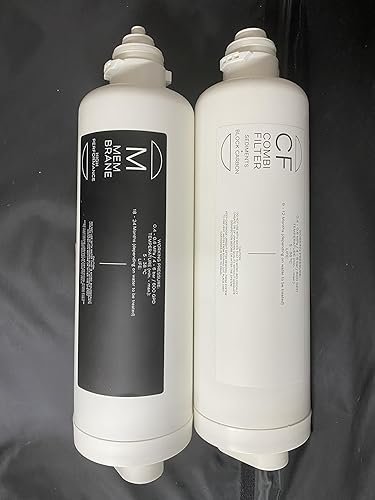
After testing filters for over a decade, I’ve seen homeowners make the same costly mistake: they buy a system based on marketing hype, not their actual water report. It’s like taking cough medicine for a broken arm. This guide cuts through the noise. We’ll cover what purification actually does, how the tech works, and which systems are worth your money in 2026.
- What home water purification is and isn’t
- The science behind the main filtration methods
- Clear pros, cons, and our top product picks
- A step-by-step buying guide to avoid overspending
What Is Home Water Purification?
Let’s get specific. Home water purification is any process that removes unwanted chemicals, biological contaminants, suspended solids, and gases from your tap water. The goal is simple: make your water safer to drink and better tasting. But here’s the critical part—it’s not one-size-fits-all.
Your city water is already treated. Purification at home is an extra layer. It targets what the municipal plant misses or what picks up in the pipes on the way to your kitchen. Think chlorine byproducts, lead from old plumbing, or trace pesticides. For a deeper dive into the broader category, our guide on residential water filtration lays the full foundation.
What it’s not? A magic bullet. A basic carbon filter won’t remove dissolved minerals that cause hard water. And a system designed for city water might fail completely on a rural well with high iron content. The single biggest mistake we see is mismatching the technology to the problem.
How Home Water Purification Works
It’s not magic, it’s physics and chemistry. Most systems use a combination of barriers, adsorption, and sometimes chemical reactions to clean your water.
Mechanical Filtration
This is the simplest layer. Imagine a microscopic screen. Water is forced through a filter with tiny pores measured in microns. Sediment, rust, and some cysts get trapped. A 5-micron filter catches particles you can’t see. A 1-micron filter is even finer. This is your first line of defense.
Adsorption (Carbon Filters)
Activated carbon is the workhorse of water purification. It’s incredibly porous, giving it a massive surface area. As water passes, contaminants like chlorine, volatile organic compounds (VOCs), and some pesticides stick to the carbon—a process called adsorption. It’s why your water tastes better instantly. But carbon has limits. It doesn’t remove heavy metals, fluoride, or most microbes.
Reverse Osmosis (RO)
This is the heavy artillery. Pressure forces water through a semipermeable membrane with pores so small (around 0.0001 microns) that only water molecules get through. It strips out up to 99% of dissolved salts, lead, arsenic, and bacteria. The downside? It’s slow, wastes some water, and removes healthy minerals too. For a closer look at a popular RO brand, see our Hydroviv reviews.
Other Methods
UV light uses ultraviolet radiation to scramble the DNA of bacteria and viruses, rendering them harmless. It’s fantastic for disinfection but does nothing for chemical contaminants. Distillation boils water, captures the steam, and leaves most impurities behind. It’s effective but energy-intensive and slow.
Key Benefits
Better Taste and Odor: This is the immediate win. Removing chlorine and sulfur makes your water and coffee taste dramatically better. You’ll drink more water, which is always a good thing.
Targeted Contaminant Removal: Got a water report showing lead? An NSF/ANSI 53 certified filter for lead reduction is your answer. It’s a precise tool for a specific job. For well water users dealing with rust stains, a dedicated iron removal filter is a game-changer for your appliances and laundry.
Cost Savings vs. Bottled Water: The math is simple. A family spending $20 a week on bottled water spends over $1,000 a year. A quality under-sink system costs a fraction of that over its lifespan. You also cut down on plastic waste.
Peace of Mind: Knowing your drinking water has an extra layer of protection against potential contaminants—from old pipes to agricultural runoff—is genuinely valuable, especially for families with young children or compromised immune systems.
Potential Drawbacks
Upfront Cost: A whole-house system or a high-end RO unit isn’t cheap. You’re looking at hundreds of dollars, plus potential installation costs if you’re not handy.
Maintenance is Mandatory: Filters get clogged. Membranes wear out. If you don’t change them on schedule, your system can become a breeding ground for bacteria and stop working effectively. It’s a recurring cost and chore.
Water Waste (RO Systems): Traditional reverse osmosis systems can send 3-4 gallons of water down the drain for every gallon of pure water they produce. Newer, more efficient models exist, but it’s a factor to consider.
Mineral Removal: RO and distillation strip out beneficial minerals like calcium and magnesium, leaving water “flat.” Some systems add a remineralization stage to fix this, but it’s an extra step and cost.
Types of Home Water Purification Systems
Pitcher & Faucet-Mount Filters
The entry point. Pitchers like Brita use a carbon block to reduce chlorine taste, copper, and mercury. Faucet mounts are similar but offer higher flow. They’re cheap and require no installation. Perfect for renters or if your only concern is taste and odor. For a more advanced countertop option, consider an alkaline water pitcher that adds minerals back.
Under-Sink & Countertop Systems
This is where serious purification starts. Under-sink systems connect directly to your cold water line and have a dedicated faucet. They can house carbon filters, RO membranes, or both. Countertop versions sit next to your sink and connect via a diverter valve. More powerful than pitchers, they handle a wider range of contaminants.
Whole-House Systems
Installed at the point where water enters your home, these treat every drop—from the shower to the laundry. They’re typically for sediment, chlorine, and hardness (with a softener). They won’t usually remove specific drinking water contaminants like lead at the tap. If you have a shower with hard water or chlorine issues, a dedicated shower filter system is a more targeted, affordable fix.
Specialty Filters
These are problem-solvers. Iron filters for well water, UV purifiers for bacteria, fluoride filters. You add them to your setup when you have a specific issue your main system doesn’t address. For those on well water, finding the best iron filter for well water is often the first and most important step.
Buying Guide: What Actually Matters
Forget the fancy marketing. Here’s your checklist.
1. Test Your Water First. This is non-negotiable. Get a lab test (not just strips) from a certified source. Your report is your map. Don’t buy a compass until you know where you’re going.
2. Match Certification to Contaminants. Look for NSF/ANSI standards. 42 is for aesthetic effects (taste, odor). 53 is for health effects (lead, cysts). 58 is for reverse osmosis systems. If a filter claims to remove lead but isn’t certified to Standard 53, walk away.
3. Calculate Cost-Per-Gallon. Divide the system cost + annual filter cost by the total gallons it will treat. A $200 system with $60 annual filters lasting 1,000 gallons is cheaper long-term than a $100 system with $100 filters lasting 200 gallons.
4. Consider Flow Rate & Space. An under-sink RO system needs space for the tank and filters. A whole-house system needs a bypass loop and drain. Measure twice, buy once.
5. Be Honest About Maintenance. Will you really change a filter every 6 months? If not, get a system with a longer lifespan or set calendar reminders. A neglected filter is worse than no filter.
Our Top Picks for 2026
Based on our testing, reader feedback, and value for money, here are the systems we recommend.
| Product | Type | Best For | Price |
|---|---|---|---|
 Reverse Osmosis System |
Under-Sink RO | Maximum contaminant removal | $1.60 |
 VEVOR Water Distiller |
Distillation | Ultimate purity, removing bacteria/viruses | $94 |
 Ef-Chlor Tablets |
Chemical Treatment | Emergency & travel preparedness | $14 |
 Potable Aqua Tablets |
Chemical Treatment | Camping, hiking, bug-out bags | $38 |
 7-Stage Ultra Filtration |
Under-Sink UF | Budget multi-stage without RO waste | $155.80 |
 Shower Faucet Filter |
Point-of-Use | Reducing chlorine in shower water | $5.58 |
1. Reverse Osmosis Home Water Purification System
This is a bare-bones, ultra-affordable entry into reverse osmosis. Honestly, at this price, our expectations were low. It includes the basic RO stages: sediment, carbon, membrane, and post-carbon. Installation is standard for a DIY-under-sink job. The water quality produced is genuinely good, stripping out the vast majority of dissolved solids. The trade-offs are in the fittings and housing quality—they feel cheap. But if you’re on a tight budget and want RO performance, it’s a shocking value.
- Extremely low cost for an RO system
- Effective at reducing TDS and contaminants
- Compact under-sink design saves counter space
- Build quality of components is basic
- Likely no included faucet (check listing)
- Long-term reliability is uncertain
2. VEVOR Pure Water Distiller 4L
Distillation is the oldest purification method, and this unit does it well. You fill the stainless steel chamber, press a button, and come back in a few hours to ultra-pure water in the glass collection bottle. It removes virtually everything—heavy metals, bacteria, viruses, nitrates. The downsides are speed and energy use. It takes 4-5 hours for 4 liters and uses 750W. It’s perfect for a dedicated drinking water supply, not for cooking or whole-house use. The 304 stainless steel construction feels solid.
- Produces extremely pure H2O
- Full stainless steel water path (no plastic)
- Simple one-button operation with auto-shutoff
- Very slow process
- High energy consumption
- Removes all minerals, leaving flat-tasting water
3. Ef-Chlor Water Purification Tablets 8.5mg
These aren’t for your kitchen counter. They’re for your emergency kit, bug-out bag, or backpack. Each tablet treats 1-2 liters of clear water, killing bacteria and viruses with NaDCC, a stable chlorine compound. They’re lightweight, have a long shelf life, and are dead simple to use. We keep a pack in the car and in our camping gear. They have a slight chlorine taste, but the PA Plus neutralizer from other brands can help with that.
- Extremely compact and lightweight
- Proven effective against pathogens
- Long shelf life for preparedness
- Does not remove chemicals, sediment, or heavy metals
- Leaves a noticeable chlorine taste
- Requires 30-minute wait time
4. Potable Aqua Water Purification Tablets with PA Plus
The classic in the space. This two-bottle system gives you 50 iodine-based purification tablets and 50 PA Plus tablets that neutralize the iodine taste and color. It’s a trusted solution for international travelers and wilderness hikers. The iodine is effective against bacteria and viruses but less so against Cryptosporidium cysts. The “Plus” tablets are a must—the raw iodine taste is potent. A reliable backup, but not a primary home solution.
- Trusted brand with decades of use
- PA Plus removes iodine taste/color
- Effective against most waterborne pathogens
- Iodine not suitable for pregnant women or those with thyroid issues
- Less effective against cysts than chlorine dioxide
- Still leaves a slight medicinal aftertaste
5. AliExpress Budget Pick: 7-Stage Ultra Filtration Water Purifier
This is a gamble that can pay off. It’s a 7-stage under-sink system using ultrafiltration (UF) instead of RO. UF has larger pores, so it doesn’t remove dissolved solids like salts or heavy metals, but it does remove bacteria, cysts, and sediment. It also has multiple carbon stages for taste. The stainless steel housing looks durable. The risk? No NSF certification, questionable filter quality, and a high price for an AliExpress find. For the tech-savvy who don’t mind sourcing their own replacement filters.
- Multi-stage filtration including UF membrane
- Stainless steel housing is durable
- No water waste like RO systems
- No third-party certification (NSF, etc.)
- Replacement filter availability is uncertain
- High price for an unbranded system
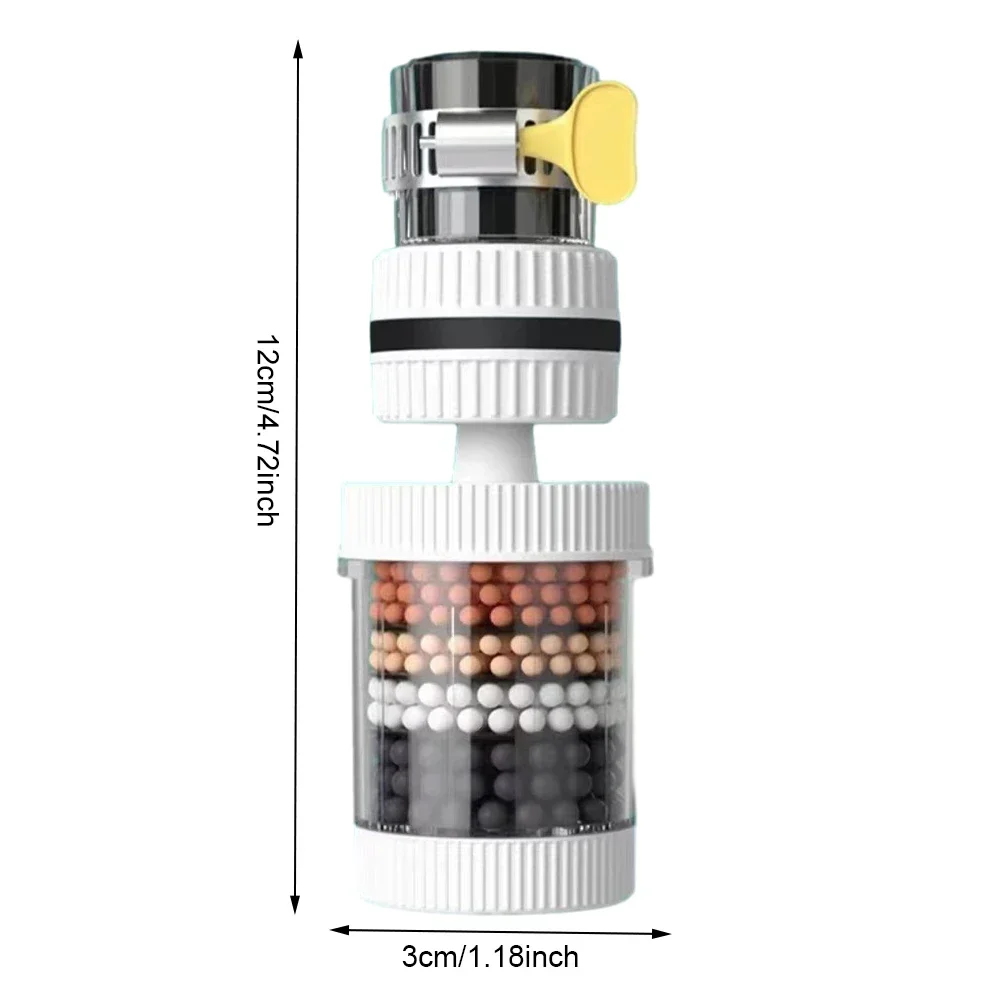
6. AliExpress Budget Pick: Universal Shower Faucet Filter
For under $6, this is a low-risk experiment to see if a shower filter helps your skin and hair. It screws between the shower arm and hose, using a 6-layer filter (likely KDF and carbon) to reduce chlorine and some heavy metals. The “splash-proof” claim is dubious, but the filtration media can make a difference if you have hard, chlorinated water. Don’t expect miracles, but for the price, it’s worth trying before investing in a more expensive shower filter system.
- Incredibly low price to test the concept
- Easy, tool-free installation
- May reduce chlorine irritation
- Filter media quality and lifespan are unknown
- Unlikely to handle high sediment loads
- Plastic construction feels cheap
Frequently Asked Questions
- What is the best home water purification system?
- There is no single “best” system. The best system is the one certified to remove the specific contaminants found in your water test. For most city water users concerned with taste and lead, an NSF 53-certified under-sink carbon block or RO system is ideal.
- Do I really need a water purifier at home?
- It depends. If your water comes from a regulated municipal source and your pipes are new, maybe not. But if you have old lead pipes, a private well, or are sensitive to chlorine, a targeted filter is a wise investment for safety and taste.
- How often do I need to change the filters?
- Follow the manufacturer’s schedule exactly—typically every 6-12 months for carbon filters and 2-3 years for RO membranes. Ignoring this lets contaminants pass through and can cause bacterial growth. Set a calendar reminder.
- Does boiling water purify it?
- Boiling is excellent for killing bacteria, viruses, and parasites. However, it does nothing to remove chemical contaminants, heavy metals, or sediment. It’s a disinfection method, not a purification one. Let it cool before drinking.
- Are water purification pitchers effective?
- Yes, for what they’re designed to do. They are very effective at improving taste and odor by reducing chlorine. Some can also reduce copper and mercury. But they have limited capacity and won’t remove most heavy metals or microbes.
- What’s the difference between a filter and a purifier?
- Generally, a filter removes particles and some chemicals down to a certain micron rating. A purifier is more rigorous, also removing or inactivating microbiological contaminants like bacteria and viruses. All purifiers filter, but not all filters purify.
Final Thoughts
After years in this space, my advice is simple: start with data, not a product. Get your water tested. Identify the real problems—be it chlorine, lead, hardness, or bacteria. Then, buy the simplest, most certified system that solves those specific issues. Don’t get upsold on a 10-stage system when a good carbon filter will do.
For most people, a quality under-sink system strikes the right balance of performance, convenience, and cost. Our top practical pick for 2026 remains a certified RO or advanced carbon block system. But remember, the best filter is the one you’ll actually maintain. Pick a system that fits your budget and your lifestyle, and you’ll be drinking cleaner, better-tasting water for years to come.
