


Home Water Filtration: A Practical Guide to Cleaner Water (2026)
After testing dozens of systems and crawling through more than my share of cramped utility closets, I can tell you this: clean water isn’t a luxury. It’s a baseline. But the world of home filtration is a maze of jargon and overhyped promises. This guide cuts through the noise. We’ll cover what these systems actually do, the different types you’ll encounter, and how to pick one that won’t leave you with buyer’s remorse.
What Is Home Water Filtration?
Simply put, it’s any device or system that removes impurities from your water before you drink, cook, or shower with it. Municipal treatment plants do a great job making water safe from pathogens, but they don’t catch everything. Trace chemicals, old pipe residues, and byproducts of the disinfection process can linger. That’s where your home system steps in.
Think of it as a final, personalized quality check. Your neighbor’s water might be fine straight from the tap. Yours might have a slight chlorine smell or leave white scale on your kettle. A good filtration setup targets your specific water issues. It’s not about distrusting your water provider; it’s about taking control of the last mile.
How Home Water Filtration Works
Most systems use one or more physical or chemical processes to trap or neutralize contaminants. The magic is in the media inside the filter cartridge. Here’s a quick breakdown of the main players.
Mechanical Filtration
This is the simplest idea: a physical barrier with tiny holes. Sediment filters are the workhorses here. They catch dirt, rust, sand, and other particulates. You’ll see them rated in microns—the smaller the number, the finer the particles they catch. A 5-micron filter is common for whole-house pre-filtration.
Adsorption (Carbon Filtration)
Activated carbon is a superstar. Its porous surface grabs onto chlorine, volatile organic compounds (VOCs), and bad tastes and odors. It’s the core of most pitcher filters and many under-sink units. The effectiveness of a carbon filter depends on the quality and amount of carbon, and the water’s contact time with it. For a deeper dive, our guide on carbon filtration covers the science.
Reverse Osmosis (RO)
This is the heavy artillery. RO forces water through a super-fine semipermeable membrane (around 0.0001 microns!) under pressure. It strips out dissolved salts, lead, fluoride, and even some microplastics. The result is exceptionally pure water. But it’s not perfect—it also removes beneficial minerals and produces wastewater.
Key Benefits of Filtering Your Water
Better Taste and Odor. This is the most immediate win. Filtering out chlorine and sulfur compounds makes your water taste and smell neutral. Your coffee and tea will thank you.
Reduced Contaminant Exposure. A properly certified system can significantly lower your intake of lead, cysts, and disinfection byproducts. This is especially important for households with older plumbing or specific health concerns.
Appliance Protection. Sediment and scale buildup can wreck your kettle, coffee maker, and even your hot water system. A whole-house sediment filter is cheap insurance for your appliances.
Peace of Mind. Honestly, knowing you have an extra barrier between your family and potential contaminants is worth a lot. It’s a proactive step for your home’s health.
Potential Drawbacks to Consider
Upfront and Ongoing Costs. Systems range from cheap pitchers to whole-house setups that require professional installation. Don’t forget the replacement filters—they’re a recurring expense.
Maintenance is Non-Negotiable. A clogged or exhausted filter is worse than no filter at all. It can become a breeding ground for bacteria. You must follow the replacement schedule.
Water Waste (for RO). Traditional reverse osmosis systems can send several gallons of water down the drain for every gallon they purify. Newer, more efficient models have improved this ratio.
Mineral Removal. RO and deionization systems produce very soft, mineral-free water. Some people find the taste flat. You can add a remineralization stage if this bothers you.
Types of Home Water Filtration Systems
Pitcher & Faucet-Mount Filters
The entry point. Pitchers are cheap and require no installation. Faucet mounts are a step up, offering better flow. Both are great for renters or tackling taste and odor in a single tap. Their capacity and flow rate are limited, though.
Under-Sink & Countertop Systems
This is where you get serious. Under-sink systems connect to your cold water line and often have a dedicated faucet. They can house powerful carbon blocks or full reverse osmosis setups. Countertop versions are a good non-permanent alternative. If you’re exploring options beyond basic carbon, look into an alkaline filtration system or an ionizing water filter for specific water profiles.
Whole-House Systems (Point-of-Entry)
Installed where the water line enters your home. They treat every drop—shower, laundry, kitchen sink. Most are sediment and carbon filters designed to protect plumbing and improve baseline quality. They won’t provide drinking-water purity at every tap, but they’re a fantastic first stage.
Reverse Osmosis Systems
The gold standard for drinking water purity. Installed under the sink, they typically use 3-5 stages of filtration, including sediment, carbon, and the RO membrane. They remove the widest range of contaminants. The output is slow, so they always come with a small storage tank.
Buying Guide: What Actually Matters
Ignore the marketing fluff. Focus on these four things.
1. Your Water Report. Get it. It tells you exactly what you need to filter out. No report? Use a test kit.
2. Certifications. Look for NSF/ANSI standards. 42 is for aesthetic effects (taste, chlorine). 53 is for health effects (lead, cysts). 58 is for reverse osmosis systems. This is your proof the filter does what it claims.
3. Flow Rate & Capacity. Measured in gallons per day (GPD) for RO or liters per minute (L/min) for whole-house systems. Make sure it can keep up with your household’s demand. A 75L/min whole-house system is solid for most homes.
4. Filter Cost & Lifespan. Calculate the annual cost. A cheap system with expensive, short-lived filters is a bad deal.
Our Top Picks for 2026
Based on our testing, reader feedback, and value for money, here are systems that deliver.
| Product | Type | Key Feature | Price |
|---|---|---|---|
 |
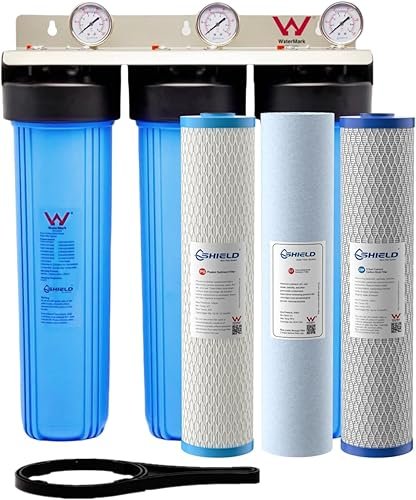
Whole House | 3-stage, 75L/min, WaterMark Certified | $6.75 |
 |
Whole House | Stainless steel cover, UV resistant | $9.75 |
 |
Whole House | 2-stage, budget-friendly entry | $1.92 |
 |
Under-Sink RO | 9-stage, 800 GPD, NSF Certified | $7.19 |
1. 20” x 4.5” Whole House Triple Stage Big Blue System
This is the workhorse we recommend for most homeowners on town water. It’s a no-nonsense, three-stage system that tackles sediment and chlorine before they reach any tap. The 75L/min flow rate means you won’t notice a pressure drop in the shower. We like the brass ports and the fact it’s WaterMark certified—it’s built to last and meet plumbing standards. For the price, it’s a fantastic entry point to whole-house filtration.
- Excellent value for a 3-stage system
- High flow rate for whole-house use
- Certified and durable construction
- Requires wall mounting and some plumbing skill
- Replacement cartridges are a recurring cost
2. Shield Water Filters Whole House System with Stainless Cover
This is essentially the same filtration guts as our top pick, but with a key upgrade: a UV-resistant stainless steel cover. If your filter housing is going in a garage, under a house, or in a spot that gets sun, this cover protects the plastic from degrading over time. It’s a smart, durable choice for exposed installations. You’re paying a small premium for that longevity.
- Stainless cover adds serious durability
- Same reliable 3-stage filtration
- Great for outdoor or exposed installs
- Slightly higher cost for the cover
- Filter cartridges are the same as standard models
3. Aqua-Plus 2 Stage Jumbo Big Blue System
On a tight budget? This two-stage system is a bare-bones starter. It’ll handle basic sediment and some chlorine taste/odor. We see it as a “better than nothing” option for protecting appliances and improving water clarity. Don’t expect it to tackle heavy chemical contamination. It’s a simple, low-cost way to get into whole-house filtration, but you may want to upgrade the cartridges down the line.
- Extremely low entry cost
- Simple to install and maintain
- Good for basic sediment protection
- Only two stages limits contaminant removal
- Cartridge quality may be basic
4. Waterdrop WD-X8 9-Stage Reverse Osmosis System
If you want the purest drinking water possible from your tap, this is the system we’d install in our own homes. The 9-stage filtration is thorough, and the 800 GPD capacity means you get water fast—no waiting for a tiny tank to refill. The 2:1 pure-to-waste ratio is among the best we’ve seen for efficiency. It’s NSF/ANSI certified against standards 42, 58, and 372, which covers a huge range of contaminants including PFAS. Installation is a weekend project, but the results are worth it.
- Exceptional contaminant reduction (PFAS, lead, TDS)
- High flow rate and efficient water use
- Strong NSF certifications
- Higher upfront cost
- Requires under-sink space and a drain connection
Budget & Gadget Picks from AliExpress
We always look at the budget end of the market. This 7-Stage Ultra Filtration unit (Buy on AliExpress) uses ultrafiltration (a finer membrane than carbon) and has a stainless steel housing. It’s an interesting middle ground between a pitcher and a full RO system. And while not a filter, this stainless steel funnel strainer (Buy on AliExpress) is a handy kitchen tool for pre-filtering when you fill your kettle or coffee maker. Sometimes the simple tools are the most useful.
Frequently Asked Questions
- What is the best home water filtration system?
- There’s no single “best” system. For whole-house sediment and chlorine removal, a multi-stage Big Blue system is excellent. For the purest drinking water, a reverse osmosis system under your sink is the top choice. Your water quality and budget decide the winner.
- How often should I change my water filter?
- Follow the manufacturer’s schedule exactly. It’s usually every 3-6 months for carbon and sediment filters, and 1-2 years for RO membranes. Ignoring this can lead to poor performance and bacterial growth.
- Do water filters remove healthy minerals?
- Reverse osmosis and deionization systems do. Standard carbon filters generally do not. If you use RO and are concerned, look for a system with a remineralization stage that adds calcium and magnesium back in.
- Is a whole-house filter enough for drinking water?
- Usually not. Whole-house filters are great for pre-treatment—removing sediment and chlorine that affect taste and appliances. For drinking water purity, you typically need a point-of-use system like an under-sink carbon block or RO unit at your kitchen tap.
- Can I install a water filter myself?
- Pitchers and faucet-mounts, yes. Under-sink systems are a moderate DIY project if you’re handy. Whole-house systems often require cutting into pipes and are best left to a plumber unless you have solid experience.
- What’s the difference between distilled water and filtered water?
- They are very different processes. Distillation boils water and re-condenses the steam, removing nearly everything. Filtration uses physical or chemical media to trap contaminants. For a full breakdown, see our guide on distilled water vs purified water.
Final Thoughts
Don’t overcomplicate it. Start by understanding your water. If you’re on town water and just want better-tasting water and appliance protection, a quality whole-house sediment and carbon system is a brilliant, cost-effective move. If your primary concern is drinking water purity—especially for lead, PFAS, or dissolved solids—invest in a certified under-sink reverse ossmosis system.
The worst thing you can do is buy a system blind. Use the certifications as your guide, calculate the long-term filter costs, and match the system to your actual needs. Clean water is a daily investment in your home and health. Choose wisely, maintain it properly, and you’ll reap the benefits for years.
