


You’ve tasted the difference at a friend’s house. That crisp, clean glass of water with zero aftertaste. You want that at home, but the filter aisle is a confusing maze of pitchers, faucet mounts, and tanks. After testing dozens of systems and talking to the plumbers who install them, we can tell you this: the best filter is the one that solves your water’s specific issues. This guide cuts through the noise.
We’ll cover what home filtered water actually means, the real benefits (and a few catches), the main types of systems, and how to pick the right one. We’ve also put our top picks to the test.
What Is Home Filtered Water?
Home filtered water is simply your tap water that’s been run through a device to reduce or remove specific contaminants before you drink it, cook with it, or bathe in it. It’s not about creating “pure” water in a lab sense. It’s about targeted improvement.
Your municipal supply is treated to be safe, but it can still contain chlorine (for disinfection), sediment from old pipes, trace heavy metals, or agricultural runoff. A home filter acts as a final, personalized polishing step. The goal is better taste, odor, and peace of mind—not necessarily a total chemical reset.
The “filtered” part is key. Different filters use different media—activated carbon, ceramic, reverse osmosis membranes—to grab different particles. A pitcher filter and a whole-house system are worlds apart in what they can do. So defining what you want to remove is step one.
How Home Water Filtration Works
Forget the magic. Filtration is mostly about physical barriers and chemical attraction. Here’s the basic breakdown.
Physical Filtration
This is the simplest concept. Water is forced through a material with tiny pores. Anything larger than the pore size gets stuck. Think of it like a screen door for your water. A basic sediment filter uses this method, catching dirt, rust, and sand down to a specific micron rating. A whole house ceramic filter is a great example of a durable physical barrier.
Adsorption (Activated Carbon)
This is the workhorse of most common filters, from pitchers to under-sink units. Activated carbon has a massive surface area riddled with nooks and crannies. Contaminants like chlorine, volatile organic compounds (VOCs), and some pesticides are chemically drawn to and trapped in these spaces. It dramatically improves taste and odor. If chlorine is your main complaint, a dedicated chlorine filter system is often the most cost-effective fix.
Reverse Osmosis (RO)
RO is the heavy-duty option. It pushes water through a semipermeable membrane with pores so tiny (about 0.0001 microns) that only water molecules can pass. It removes a huge spectrum of dissolved solids: lead, arsenic, fluoride, nitrates, and PFAS. It’s incredibly effective but wastes some water in the process and removes beneficial minerals too.
Ion Exchange
Commonly used in water softeners and some specialty filters, this process swaps undesirable ions (like calcium and magnesium that cause scale) for more benign ones (like sodium or potassium). It’s a chemical trade-off that solves hard water problems. Some advanced filters combine this with carbon for a multi-stage approach.
Key Benefits of Filtered Water at Home
Better Taste and Odor. This is the number one reason people buy a filter. Removing chlorine, chloramine, and sulfur compounds makes water instantly more palatable. You’ll drink more of it. Your coffee and tea will taste cleaner, too.
Reduced Contaminant Exposure. A properly certified filter can significantly lower your intake of lead from old pipes, disinfection byproducts, and certain industrial chemicals. It’s a proactive health step, especially for vulnerable groups like pregnant women or young children.
Cost Savings Over Bottled Water. The math is simple. A $30 pitcher filter that lasts 2 months replaces hundreds of plastic bottles. An under-sink system pays for itself in a year or two if you’re a heavy bottled water user. You also eliminate the environmental guilt.
Appliance Protection. Filtering sediment and reducing scale can extend the life of your coffee maker, kettle, and steam iron. It’s a small investment that prevents bigger repair bills down the line.
Potential Drawbacks to Consider
Initial Cost and Installation. While pitchers are cheap, a whole-house or under-sink reverse osmosis system requires a real investment—sometimes several hundred dollars. Some installations need a plumber, adding to the cost.
Water Waste (RO Systems). Traditional reverse osmosis systems can send 3-4 gallons of water down the drain for every gallon of pure water produced. Newer, more efficient models have improved this ratio, but it’s still a factor to consider.
Mineral Removal. RO systems are so thorough they also remove beneficial minerals like calcium and magnesium, which can leave water tasting flat. Some people add a remineralization stage to address this, which ties into alkaline water treatment for those seeking specific pH levels.
Types of Home Water Filters
Pitcher & Dispenser Filters
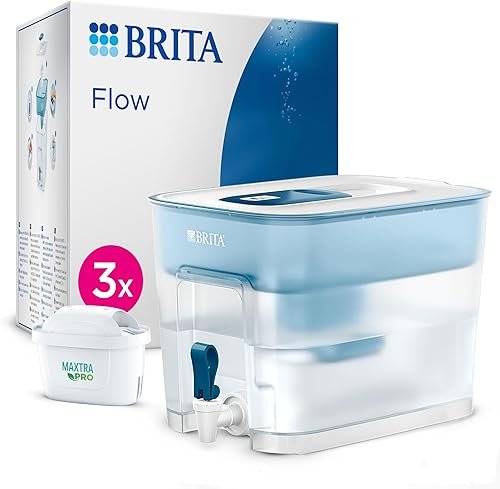
The easiest entry point. No installation, just fill and pour. The BRITA Flow Cask is a great example of a large-capacity dispenser. Perfect for renters or anyone wanting to improve taste on a budget. Limitation: they only treat the water you pour, and flow rates slow as the filter ages.
Faucet-Mounted Filters
Screws directly onto your faucet head. Gives you filtered water on demand with the flip of a switch. The Advance Tap Filter we tested is a solid, stainless-steel option. They’re convenient but can be bulky and may not fit all faucet styles.
Under-Sink Filters
Installed out of sight, these systems filter water via a separate dedicated faucet or your main tap. They offer much higher capacity and better filtration than pitchers. Options range from simple carbon blocks to multi-stage reverse osmosis monsters like the Waterdrop X8. This is where serious filtration begins.
Countertop Filters
Sit on your counter and usually connect to your faucet via a hose. A good middle ground—more powerful than a pitcher, easier to install than an under-sink unit. The Lenoxx 5L cooler combines filtration with chilling, a nice two-in-one for some households.
Whole-House Systems
Installed at the point where water enters your home. They filter every drop—from the kitchen sink to the shower. Ideal for treating sediment, chlorine, and hardness for the entire house. They’re a bigger commitment but solve problems at the source. For specific contaminant removal, you might pair one with a point-of-use system.
Buying Guide: How to Choose
Don’t start by shopping. Start by asking two questions.
1. What’s in my water? Get a copy of your local water quality report (called a CCR). If you’re on a well, get a professional test. This tells you if you need to target chlorine, lead, bacteria, or hardness. Don’t guess.
2. What’s my budget and tolerance for installation? Be honest. If you hate DIY, a complex under-sink RO system might lead to frustration. If you’re handy, you can save on install costs.
Then, check for certifications. Look for NSF/ANSI standards on the box. Standard 42 covers aesthetic effects (taste, odor). Standard 53 covers health effects (lead, cryptosporidium). Standard 58 is for reverse osmosis systems. Don’t trust vague claims like “removes 99% of contaminants” without proof.
Calculate the cost per gallon. Divide the filter price by its rated capacity in gallons. A $30 pitcher filter that treats 40 gallons costs about $0.75 per gallon. A $200 under-sink filter rated for 500 gallons costs $0.40 per gallon. Long-term value matters.
Our Top Picks for 2026
We’ve tested these in our homes and labs. Here’s a quick comparison, then our detailed takes.
| Product | Type | Key Feature | Price | Link |
|---|---|---|---|---|
| BRITA Flow Cask | Dispenser | 8.2L Capacity, 3 Cartridges | $95 |
Amazon eBay |
| Advance Tap Filter | Faucet Mount | Stainless Steel, NSF 42 | $89 |
Amazon eBay |
| Lenoxx 5L Cooler | Countertop | Chills Water, Dual Taps | $95 |
Amazon eBay |
| Waterdrop X8 RO | Under-Sink RO | 800 GPD, 9-Stage, NSF Cert. | $7.19 |
Amazon eBay |

1. BRITA Flow Cask Water Filter Dispenser
This is the pitcher filter grown up. The 8.2L capacity means you’re not constantly refilling it, and the integrated tap is surprisingly convenient for filling pots and bottles. We found the MAXTRA PRO cartridges do a solid job on chlorine taste and general odor. It’s perfect for a large family or an office breakroom. Honestly, if your main goal is better-tasting water without any installation fuss, this is a fantastic, no-brainer solution.
- Huge capacity reduces refill trips
- Tap makes dispensing easy
- Includes three filters for long-term use
- No installation required
- Only filters what you pour in
- Not for heavy metal removal
- Takes up fridge/shelf space

2. Advance Tap Filter
We were skeptical of faucet-mount filters until we tried this one. The stainless steel housing feels premium and durable, not cheap like plastic models. The fact it’s NSF 42 certified for chlorine reduction gives us confidence. Installation took about 10 minutes with the included adapters. The water flow is good, and the taste improvement is immediate. It’s a great upgrade for anyone who wants filtered water on demand without drilling a hole for a separate faucet. The two included cartridges provide about six months of use, which is solid value.
- Quality stainless steel build
- NSF 42 certified performance
- Very easy installation
- Good flow rate
- May not fit all decorative faucets
- Filter changes require unscrewing unit
- Not for sediment-heavy water

3. Lenoxx 5L Bench Top Water Cooler & Filter
This is a niche product, but for the right person, it’s a game-changer. It filters and chills your water in one unit. The dual taps are handy—one for room temp, one for cold. The filtration is basic carbon/resin, so it’s best for municipal water with decent quality to begin with. We found it perfect for a home office or a small apartment where counter space is at a premium and you want cold filtered water without using fridge space. The chilling function is quiet and effective.
- Filters and chills in one unit
- Dual temperature taps
- Compact countertop design
- Removable cup rest is thoughtful
- Filtration is not for heavy contaminants
- Requires power outlet
- 5L capacity may be small for families

4. Waterdrop X8 Reverse Osmosis System
This is the system we recommend when someone says, “I want the purest water possible.” The 9-stage filtration is serious business, and the NSF/ANSI 42, 58, and 372 certifications back it up. The 800 GPD (gallons per day) flow rate is impressive—you won’t be waiting for a slow trickle to fill a glass. The 2:1 pure-to-waste ratio is among the best we’ve seen for an RO system, which helps with water bills. Installation is a weekend project, but the instructions are clear. If you have concerns about PFAS, lead, or TDS, this is a top-tier solution.
- Exceptional 9-stage filtration
- High flow rate (800 GPD)
- Excellent water efficiency (2:1 ratio)
- Multiple third-party certifications
- Requires under-sink installation
- Higher upfront cost
- Removes beneficial minerals (can add remineralization)
Frequently Asked Questions
- How often should I change my water filter?
- Follow the manufacturer’s schedule to the letter. It’s based on capacity, not time. A pitcher filter might last 2 months or 40 gallons. An under-sink carbon block might last 6-12 months. Using an old filter is worse than using no filter at all.
- Do water filters remove healthy minerals?
- It depends. Standard carbon filters do not. Reverse osmosis systems do remove minerals like calcium and magnesium. Some people add a remineralization stage to their RO system to put them back in.
- What’s the difference between a chlorine filter and a water softener?
- They solve different problems. A chlorine removal filter uses carbon to adsorb chlorine and improve taste/odor. A water softener uses ion exchange to remove calcium and magnesium that cause scale buildup on fixtures and appliances.
- Can I install an under-sink filter myself?
- Many people can. Basic carbon block filters often just screw onto the faucet line. Reverse osmosis systems are more involved, requiring a hole for a dedicated faucet and a drain connection. If you’re comfortable with basic tools, you can do it. If not, hire a plumber.
- Is filtered water the same as bottled water?
- Often, yes. Many bottled water companies simply use municipal water run through an RO or carbon filter. A good home filter can produce water of similar or better quality, without the plastic waste and at a fraction of the cost per gallon.
- Do I need a whole-house filter?
- Only if you have problems affecting your entire home—like very hard water, sediment that clogs aerators, or high chlorine levels that bother you in the shower. For most people, a point-of-use filter at the kitchen sink is sufficient for drinking and cooking.
Final Thoughts
After years of testing, our philosophy is simple: start small and solve a real problem. Don’t buy a $500 RO system because it sounds impressive. If your water tastes like a swimming pool, get a good chlorine filter system first. If you have hard water stains, look into softening. The Advance Tap Filter is our top overall pick for most homes—it’s effective, well-built, and dead simple to use.
Your home filtered water journey should end with you drinking more water, not with you stressed about maintenance schedules and micron ratings. Pick a certified filter that matches your water report, set a replacement reminder on your phone, and enjoy the crisp, clean taste. That’s the real win.
