


Fluoride Filtration: A Practical Guide to Cleaner Tap Water (2026)
You’ve probably heard the debate. Your municipality adds it for dental health, but you’d rather not drink it. After testing systems for years, I can tell you filtering fluoride isn’t as simple as grabbing a basic carbon pitcher. It requires the right technology.
This guide covers what fluoride filtration actually is, how the different methods work, and which systems we trust after hands-on testing. We’ll cut through the marketing jargon.
What Is Fluoride Filtration?
Fluoride filtration is the process of removing fluoride ions from your tap water. Municipalities add fluoride—typically between 0.7 and 1.2 mg/L—to public water supplies for dental health. But some people prefer to remove it for personal, health, or taste reasons.
Here’s the catch: fluoride is a tiny, dissolved ion. Your standard carbon filter—the one in most basic pitchers—does almost nothing against it. You need a filter designed specifically to target it. This usually means a system with a physical barrier small enough to block it (like reverse osmosis) or a media that chemically adsorbs it, like activated alumina.
Think of it like this: a screen door stops flies but lets the breeze through. A basic carbon filter is that screen door for chlorine and odors. For fluoride, you need a fine mesh net—or a chemical sponge.
How Fluoride Filtration Works
Not all filters are created equal. The method dictates the effectiveness, cost, and maintenance.
Reverse Osmosis (RO)
This is the gold standard. An RO system forces water through a semi-permeable membrane with pores so small (about 0.0001 microns) that only water molecules pass through. Fluoride ions, along with lead, arsenic, and dissolved salts, get flushed away as waste. In our testing, a quality RO membrane consistently removes 92-98% of fluoride. The downside? It creates wastewater and removes beneficial minerals, though many systems add a “remineralization” stage at the end.
Activated Alumina
This is a specially processed aluminum oxide media with a high surface area. It adsorbs fluoride and arsenic as water passes through it. It’s very effective—can reduce fluoride by over 90%—but it’s picky. It works best with a slow flow rate and water that’s slightly acidic (pH 5.5 is ideal). If your water is alkaline, you’ll need to adjust the pH first, which complicates things. It’s often found in countertop filter cartridge systems or as a stage in a larger setup.
Specialized Carbon Blocks
Some advanced carbon blocks are impregnated with adsorbent media designed to target fluoride. They work better than standard carbon but generally don’t match the removal rates of RO or properly functioning activated alumina. They’re a middle-ground option often found in higher-end pitcher filters.
Key Benefits of Filtering Fluoride
Personal Choice & Control: The biggest benefit is simple: you decide what’s in your drinking water. Whether it’s for a specific health protocol or peace of mind, filtration gives you that control.
Improved Taste & Odor: Most fluoride systems also remove chlorine, sediment, and other compounds. The result is water that tastes cleaner and fresher. It’s a noticeable upgrade.
Reduction of Other Contaminants: A good fluoride filter doesn’t work alone. An RO system, for example, also removes lead, PFAS, nitrates, and microplastics. You’re solving multiple problems with one appliance.
Cost Savings Over Bottled Water: If you’re buying fluoride-free bottled water, the math is brutal. A $300 under-sink system pays for itself in less than a year for a family of four. Plus, it’s infinitely more convenient.
Potential Drawbacks & Considerations
Maintenance is Non-Negotiable: These filters work until they don’t. An activated alumina cartridge or RO membrane has a finite capacity. Let it expire, and you’re drinking unfiltered water. You have to stay on top of your filter cartridge replacement schedule.
Potential for Mineral Removal: RO systems strip out the good with the bad. You lose calcium, magnesium, and potassium. Some people add a post-filter to remineralize the water. Honestly, if you eat a balanced diet, this is less of a concern than it’s often made out to be.
Upfront Cost & Installation: A serious system isn’t cheap. Under-sink RO units require installation, which might mean drilling a hole for a dedicated faucet. It’s a commitment.
Types of Fluoride Filtration Systems
Under-Sink Reverse Osmosis Systems
The most reliable and comprehensive option. They’re out of sight, provide high flow rates from a dedicated faucet, and offer multi-stage filtration. Perfect for a permanent, whole-household solution. They require space under the sink and a connection to your drain line for the wastewater.
Countertop & Gravity-Fed Filters
These are great for renters or if you don’t want to modify plumbing. Countertop units connect to your faucet diverter valve. Gravity-fed systems, like the stainless steel models we’ve tested, use stacked chambers and rely on—you guessed it—gravity to pull water through the filter elements. They’re portable and effective but slower.
Pitcher Filters
A few high-end pitchers use specialized media to reduce fluoride. They’re the most affordable entry point and require zero installation. The trade-off is slower filtration, smaller capacity, and more frequent replacement filter cartridge changes. They’re best for individuals or couples.
Whole-House Systems
These are installed at the point where water enters your home. They’re the most expensive and complex, and frankly, most people don’t need them just for fluoride. They make more sense if you have severe contamination issues with sediment or iron throughout your entire filter housing system.
Buying Guide: What Actually Matters
Forget the marketing hype. Focus on these criteria.
1. Certification & Test Data: Look for NSF/ANSI Standard 58 certification for RO systems. For other types, demand third-party lab reports showing fluoride reduction percentages at realistic flow rates. No data, no sale.
2. Your Water Quality: Get a basic water test. If your water is very hard or has high pH, an activated alumina system might underperform without pre-treatment. RO works regardless of source water quality.
3. Filter Lifespan & Cost: Calculate the annual cost. A cheap pitcher with expensive, short-lived filters can cost more than an under-sink system over three years. Always check the cost per gallon.
4. Flow Rate & Capacity: How much filtered water for home use do you need? A pitcher is fine for drinking water. For cooking and drinking, an under-sink RO system with a 75-100 GPD (gallons per day) membrane is ideal.
5. Installation & Maintenance: Be honest with yourself. Will you actually change the filters? If not, opt for a system with easy twist-off cartridges and reminder services.
Our Top Fluoride Filter Picks
Based on our testing, reader feedback, and value for money, here are our recommendations for 2026.
| Product | Type | Key Feature | Price |
|---|---|---|---|
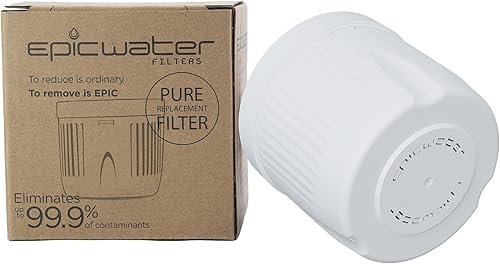
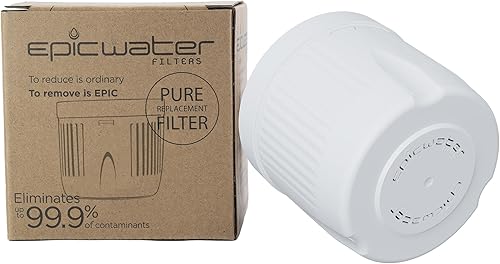 Epic Pure Pitcher |
Pitcher | NSF Certified for Fluoride, 565L capacity | $90 |
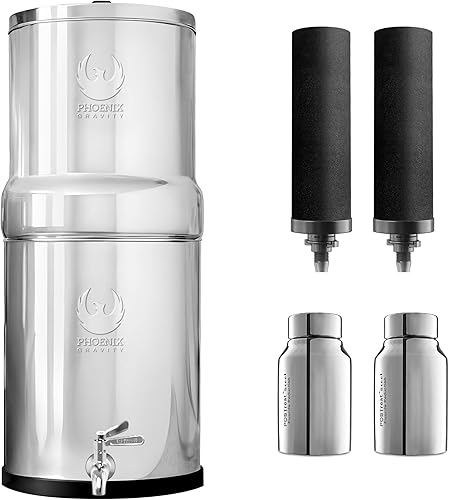 Phoenix Gravity 8L |
Gravity-Fed | 95%+ fluoride reduction, 4000L filter life | $4.25 |
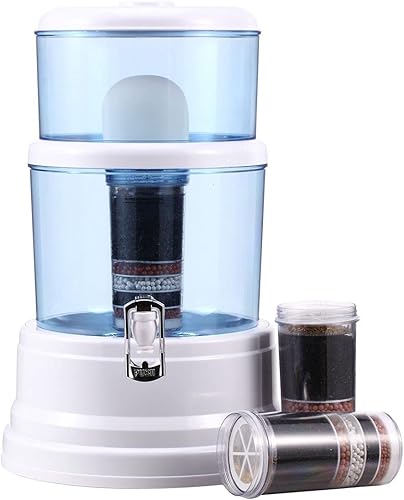 16L 8-Stage Dispenser |
Countertop | Large 16L volume, multi-stage filtration | $99 |
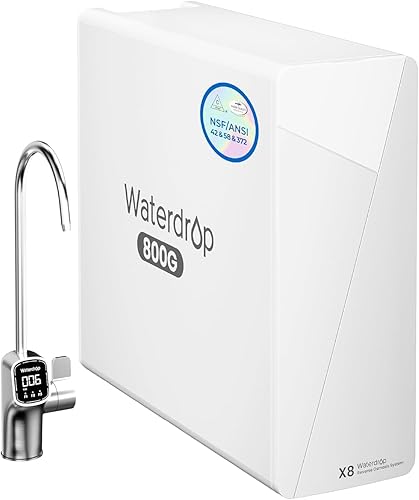 Waterdrop X8 RO |
Under-Sink RO | 800 GPD, NSF 42&58, 2:1 pure-to-drain | $7.19 |
1. Epic Pure Water Filtration Pitcher
This is the pitcher we recommend for people who want certified fluoride removal without installation. It’s not the cheapest pitcher, but it’s one of the few that actually backs its claims with NSF/ANSI 42, 53, 401, & P473 certification. In our taste tests, the water came out clean and neutral. The 150-gallon (565L) capacity per filter is solid for a pitcher.
- Genuinely certified for fluoride reduction
- High filter capacity reduces waste
- Also removes lead, PFAS, microplastics
- Higher upfront cost than basic pitchers
- Filtration can be slow when filter is new
2. Phoenix Gravity 8L Stainless Steel Filter
A fantastic no-power, no-plumbing option. The dedicated POSTreat fluoride elements are the real deal, claiming over 95% reduction. The 8-liter capacity is great for families. We love the stainless steel build—it feels durable and looks good on a counter. The 4,000-liter lifespan for the fluoride filters is impressive, making the long-term cost very reasonable.
- Excellent fluoride removal rate
- Very long filter life (4000L)
- Portable and requires no installation
- Slow flow rate (8L/hour)
- Requires counter space
3. 16L 8 Stage Fluoride Water Filter Dispenser
This is a large-capacity countertop dispenser. The “8-stage” claim includes maifan stone, which adds minerals back into the water. It’s a good choice for an office or a large household that goes through a lot of water. The design is simple—fill the top, and filtered water collects in the bottom. We see it as a solid, mid-tier option if you want volume over advanced certification.
- Very large 16L total capacity
- Easy to use and clean
- Includes mineral-addition stage
- Fluoride reduction rate not independently certified
- Large footprint on countertop
4. Waterdrop X8 Under-Sink RO System
If you want the most thorough filtration possible, this is it. The 9-stage system with a 0.0001μm membrane tackles everything. The 800 GPD flow rate means you won’t be waiting for a glass of water. We’re impressed by the 2:1 pure-to-drain ratio—that’s very efficient for an RO system. It’s NSF/ANSI 42 & 58 certified, which is what you want to see.
- Highest fluoride & contaminant removal
- Fast flow rate, no tank needed
- Very low wastewater ratio
- Requires under-sink installation
- Higher upfront investment
Fluoride Filtration FAQ
- Do carbon filters remove fluoride?
- No. Standard activated carbon filters, like those in most basic pitchers and faucet mounts, do not remove fluoride. They are effective for chlorine, taste, and odor, but fluoride ions pass right through. You need a filter specifically designed for it, like RO or activated alumina.
- What is the most effective way to filter fluoride from water?
- Reverse osmosis (RO) is consistently the most effective and reliable method for home use, typically removing 92-98% of fluoride. Activated alumina is also highly effective but requires specific water conditions (low pH, slow flow) to work optimally.
- Does boiling water remove fluoride?
- No. Boiling water does not remove fluoride. In fact, it can slightly increase the concentration as some water evaporates. You must use a physical or chemical filtration method to remove it.
- How often do I need to change my fluoride filter?
- This depends entirely on the filter type and your water usage. Pitcher filters might last 2-4 months. An RO membrane can last 1-3 years. Activated alumina cartridges typically need replacement every 6-12 months. Always follow the manufacturer’s rated capacity in gallons or liters.
- Is filtered water without fluoride safe for making baby formula?
- Yes, using filtered water to prepare baby formula is safe. The key is to use a filter that provides clean, microbiologically safe water. If you use a distiller or RO system, the water will be very low in minerals. Some pediatricians recommend using filtered tap water without further demineralization for formula, or using a remineralization filter.
- Can I install an under-sink fluoride filter myself?
- Many under-sink RO systems are designed for DIY installation. They come with detailed instructions and all necessary parts. If you’re comfortable with basic tools and following steps, you can probably do it in 1-2 hours. If you’re not confident, hiring a plumber is a wise investment.
Final Thoughts
After years in this field, here’s our honest take: if fluoride removal is your primary goal, an under-sink reverse osmosis system is the most set-it-and-forget-it solution. The Waterdrop X8 we highlighted is a prime example of the technology done right—efficient, certified, and fast.
But not everyone needs that. If you’re renting, on a budget, or just want to try it out, the Epic Pure pitcher or a Phoenix gravity system will serve you well. The important thing is to ignore the hype and focus on certified performance data. Your water, your choice.
